

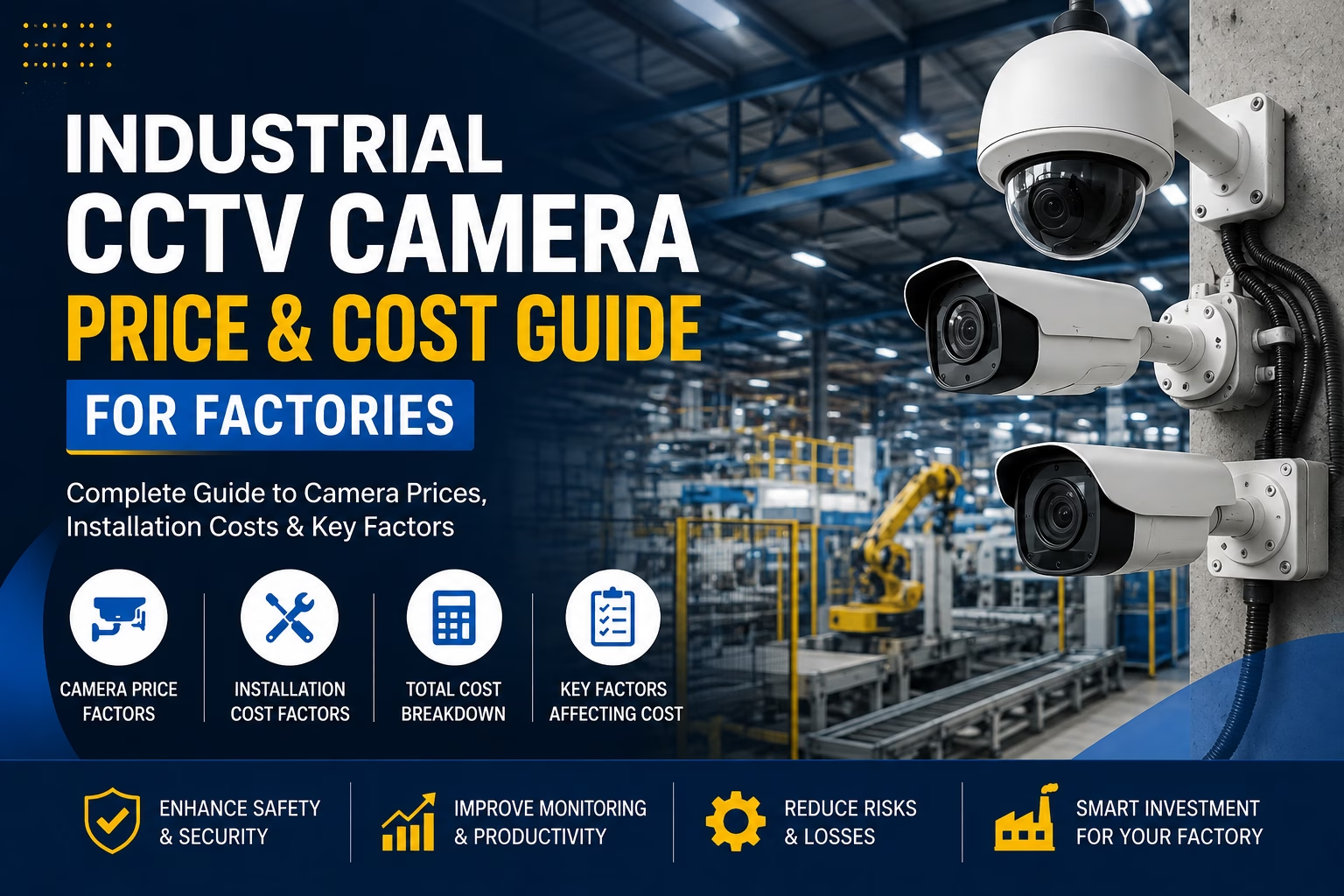
Industrial CCTV Camera Price & Cost Guide for Factories | Yendra Techno Solution Yendra Techno Solution share paymentsINDUSTRIAL CCTV · COST GUIDE Industrial CCTV Camera Price & Cost Guide for Factories What actually drives industrial CCTV cost, a calculator to build your own indicative estimate, and two real deployments that show why camera count alone never tells the full story. schedule16 min read personBy Yendra event_repeatUpdated Aug 2026 calculateCalculate Your CCTV Cost listJump to Section Summary Cost Overview Calculator Cost Factors Camera vs System By Size Compare Case Studies Storage Cost AI Cost Get a Quote FAQs summarizeSummary What This Guide Covers Industrial CCTV cost is built from the complete system — cameras, NVR, storage, network, cabling, installation, monitoring, and analytics — not camera count alone. check_circleWhat actually determines industrial CCTV cost, factor by factor check_circleAn interactive calculator to build your own indicative estimate check_circleWhy camera price and complete system cost are two different numbers check_circleHow system size relates to cost — and where it doesn’t check_circleWhy two factories with the same camera count can land in different cost brackets check_circleReal infrastructure evidence from a 32-camera and a 49-camera deployment check_circleWhat it actually takes to get an accurate, site-specific quote helpThe Direct Answer How Much Does Industrial CCTV Cost for a Factory? Q. How much does industrial CCTV cost for a factory?Industrial CCTV cost depends on the complete surveillance system rather than camera count alone. Camera type, resolution, NVR capacity, storage duration, cabling, PoE/network infrastructure, installation complexity, monitoring, and advanced analytics can all affect the final project cost. Use the calculator below for an indicative estimate and request a site-specific quotation for an accurate project price. There’s no single price for factory CCTV, because the number depends on far more than how many cameras you’re buying. Two factories with the same camera count can land in very different cost brackets once you account for cabling length, conduit requirements, storage duration, and how many zones need coverage — which is exactly what the calculator below is built to show you. calculateInteractive Tool Industrial CCTV Cost Calculator Estimate your industrial CCTV investment based on your camera requirements, storage, infrastructure, installation, and monitoring needs. Build Your Indicative Estimate Select your requirements below — the estimate updates as you go. videocamNumber of Cameras 81624324964100+ hdCamera Resolution 2MP4MP5MP8MPMixed resolutions photo_cameraCamera Type Standard fixed IPVarifocalPTZLow-lightAI-enabledMixed camera types dvrNVR / Recording Capacity 8-channel16-channel32-channel64-channel128-channelVMS / enterprise storageStorage Duration 7 days15 days30 days60 days90 daysCustom cableCabling Existing cablingNew Cat6Long-distance Cat6Fibre backboneMixed Cat6 + fibre foundationCable Routing Surface routingConduitUnderground conduitExisting cable pathwaysComplex industrial routing routerPoE / Network Infrastructure Existing PoE/networkNew PoE switchesMultiple PoE switchesFibre/network backboneNew network infrastructure engineeringInstallation Complexity StandardIndustrialHigh-heightMultiple buildingsComplex / production environment monitorMonitoring NVR / local monitoringRemote / mobile accessControl roomMulti-monitor control roomMulti-location monitoring smart_toyAI / Advanced Features No advanced analyticsAI video analyticsIntrusion detectionPeople / vehicle analyticsANPRMultiple AI functions descriptionWant an Accurate Project Quotation? info Build note: pricing constants in this calculator are placeholders (see FC_PRICING in the page script) until real Yendra costing data is added — see build notes. tuneThe Breakdown What Determines Industrial CCTV Cost? Ten factors combine to set the final number — camera count is just the first of them. 1Number of Camerasexpand_more Camera count is the most visible cost driver, but it’s an input — not the complete calculation. More cameras means more hardware, but it also scales up NVR channel requirements, storage volume, PoE demand, and cable runs. 2Camera Resolutionexpand_more Higher-resolution cameras cost more per unit, but resolution also affects storage volume and network bandwidth — a facility standardising on 8MP cameras needs meaningfully more storage than the same camera count at 2MP. 3Camera Typeexpand_more Fixed IP cameras are generally the most cost-effective; varifocal, PTZ, low-light, and AI-enabled cameras each add cost for the added capability. Most real deployments mix camera types by zone rather than standardising on one. 4NVR Capacityexpand_more NVR cost scales with channel count — it’s worth planning some spare capacity for future camera additions rather than sizing exactly to today’s count, since a maxed-out NVR becomes a replacement cost within a year or two. 5Storage Durationexpand_more Storage isn’t a fixed line item — it moves with camera count, resolution, bitrate, recording mode, and retention period. A facility storing 90 days of 8MP footage across 40 cameras needs substantially more storage than one at 15 days and 2MP. 6Cable Length & Routingexpand_more Cat6, long cable runs, fibre backbone, conduit, and underground routing all carry different costs. A facility needing 100m+ runs with underground conduit is a materially different cabling job than one with short in-building runs. 7Network Infrastructureexpand_more PoE switches, fibre backbone, and rack infrastructure add to the network side of the budget — particularly on larger deployments where multiple PoE switches are needed across a spread-out facility. 8Installation Complexityexpand_more Mounting height, site access, industrial environment conditions, multiple buildings, and production-floor restrictions on work timing all affect installation labour and time — reflected directly in cost. 9Monitoring Requirementsexpand_more Local NVR monitoring is the baseline; remote/mobile access, a dedicated control room, multi-monitor walls, or monitoring across multiple locations each add to cost and complexity. 10AI & Advanced Featuresexpand_more Advanced analytics can add meaningfully to project investment depending on camera capability requirements, the specific analytics needed, processing, and licensing. See our AI CCTV for Factory guide. layersThe Key Distinction CCTV Camera Price vs Complete CCTV System Cost Camera price is only one component. A complete system stacks together nine cost layers — not just the cameras. Cameras NVR Storage Network / PoE Cabling / Conduit Installation Monitoring AI / Analytics Representative cost stack — proportions are illustrative, not derived from real pricing data. Comparing factory CCTV projects by camera price alone can produce misleading conclusions, because two systems with the same number of cameras can have very different infrastructure, storage, and installation requirements — and therefore very different total costs. expandScale & Planning Factory CCTV Cost by System Size System Size Typical Planning Context 8–16 cameras Small facility / limited zones 16–32 cameras Medium facility 32–64 cameras Large facility

Warehouse CCTV Installation in Bangalore: A Security System Design Guide
YENDRA TECHNO SOLUTION Warehouse CCTV Installation in Bangalore: A Security System Design Guide Don’t start by choosing cameras. Start by engineering surveillance around your warehouse’s operations, risks, and future scale. Coverage engineered zone by zone — not camera by camera Get a Free Site Assessment See Coverage Zones 24×7 Industrial Monitoring Pan-Karnataka Projects Design-First Approach TL;DR If you’re planning CCTV installation for a warehouse in Bangalore or anywhere in Karnataka, design the surveillance system around operations, security risks, compliance, and future scalability first. The right solution eliminates blind spots, protects inventory, monitors loading bays, integrates with access control, and supports 24×7 industrial operations. The Real Problem Warehouse security starts before camera installation Most warehouses don’t fail because they bought poor cameras — they fail because nobody designed the surveillance system around warehouse operations. During industrial site visits, we often find: ! Cameras installed only around walls ! Loading docks with zero visibility ! High racks creating blind zones ! No monitoring of dispatch activities ! Poor night visibility ! No integration with access control ! Storage built for only a few days of recording A warehouse is a logistics ecosystem — not simply a building. Your CCTV system should monitor movement of: Goods Vehicles Employees Contractors Visitors Forklifts Loading Ops High-Value Inventory That requires engineering, not simply installation. Why It’s Different What makes warehouse surveillance different? Warehouses present unique challenges that differ from offices or retail spaces. Every factor below influences camera selection, mounting height, and network infrastructure. Swipe to explore all factors 01 High Ceilings & Long Aisles Affects mounting height, lens choice, and how far a camera must reliably identify activity. Design Input 02 Multi-Level Pallet Racks Create layered blind spots that shift as inventory is added or removed. Design Input 03 Dust & Temperature Swings Standard consumer cameras degrade fast — housings and ratings matter. Hardware 04 Large Vehicle Movement Trucks and forklifts need wider fields of view and motion-tolerant footage. Coverage 05 Multiple Access Points Every gate, dock, and door is a potential blind spot if not mapped early. Coverage 06 Round-the-Clock Operations 24×7 activity demands storage, redundancy, and low-light planning from day one. Infrastructure Coverage Planning What should a warehouse CCTV system cover? Instead of counting cameras, begin by identifying operational zones. Swipe through all 6 zones Perimeter Security Compound walls Entry gates & boundary fencing Vehicle entrances Purpose: Detect unauthorized entry and track after-hours movement. Loading & Unloading Bays Truck arrival & departure Material unloading Dispatch verification Risk level: Highest-risk zone in most warehouses. Storage Aisles Rack intersections High-value storage Forklift & picking movement Designed to minimize hidden areas, not just maximize coverage. Packing & Dispatch Order preparation Packaging & handling Shipment verification Supports quality assurance records. Employee Entry Points Staff entrances Visitor reception Contractor access Pairs with access control for a complete entry record. Parking & External Areas Staff & visitor parking Truck parking Outdoor storage & service roads Site-Visit Questions Questions decision-makers ask Real discussions we hear during warehouse security planning across Bangalore. How do I eliminate warehouse blind spots? + Blind spots occur because warehouse layouts constantly change — tall racks, pallet stacks, machinery, temporary storage, and structural columns all contribute. Instead of adding cameras randomly, surveillance should be engineered using: Camera height planning Lens optimization Coverage overlap Rack visibility analysis Traffic flow mapping The objective is operational visibility — not simply camera quantity. Which camera covers high-bay warehouse racks? + High-bay warehouses need specialized planning around ceiling height, rack height, viewing distance, required identification level, and lighting. Rather than one wide-angle camera, designers usually combine positions to keep aisle visibility while preserving image detail. Mounting location matters more than resolution alone. How many cameras does a 50,000 sq ft warehouse need? + There’s no standard number. It depends on layout, ceiling height, aisle count, rack arrangement, workflow, loading bays, entry points, and compliance requirements. Two warehouses of identical floor area can need very different designs — a professional site survey is far more accurate than estimating by floor size. Can CCTV monitor loading and unloading activities? + Yes. Loading docks are often the most valuable surveillance locations, documenting vehicle arrival, material receipt, dispatch verification, forklift activity, and shipment disputes. High-quality video simplifies investigations and improves accountability across operations. Which cameras work best in dusty industrial facilities? + Consumer-grade cameras aren’t built for industrial conditions. Selection should factor in dust resistance, environmental protection, temperature tolerance, low-light performance, and long-term reliability. Housings, mounting positions, and maintenance access matter as much as the imaging technology itself. Can warehouse CCTV integrate with access control? + Absolutely. Integration correlates door access, employee identity, visitor logs, video footage, time records, and security events. Instead of searching hours of recordings, teams can jump straight to footage tied to a specific access event. How can I monitor multiple warehouses from one location? + Modern platforms let authorized personnel view multiple sites, receive alerts, search recordings, monitor live feeds, manage permissions, and generate reports — valuable for logistics companies with distributed operations. Can CCTV improve employee safety? + Yes. Surveillance helps monitor restricted areas, forklift movement, unsafe practices, emergency exits, PPE compliance, and incident investigations. It should complement workplace safety programs, not replace them. Camera Strategy Bullet cameras or PTZ cameras? The answer depends on the surveillance objective. Many industrial projects layer both. Bullet Cameras PTZ Cameras Best for fixed coverage Commonly used for: Perimeter monitoring Loading docks Entry gates Parking areas Best for active monitoring Commonly used for: Large warehouse floors Active, on-demand monitoring Security control rooms Wide open storage yards Most industrial projects combine fixed and PTZ cameras as a layered strategy. Before You Install Warehouse CCTV design checklist This design-first approach reduces costly changes after installation. Operational workflow understood Risk assessment completed Entry and exit points identified Loading docks mapped Rack visibility analyzed High-value inventory zones protected Lighting evaluated Camera mounting heights planned Network infrastructure reviewed Recording storage planned Remote monitoring requirements identified Future expansion considered The Bigger Picture System design, not just camera installation
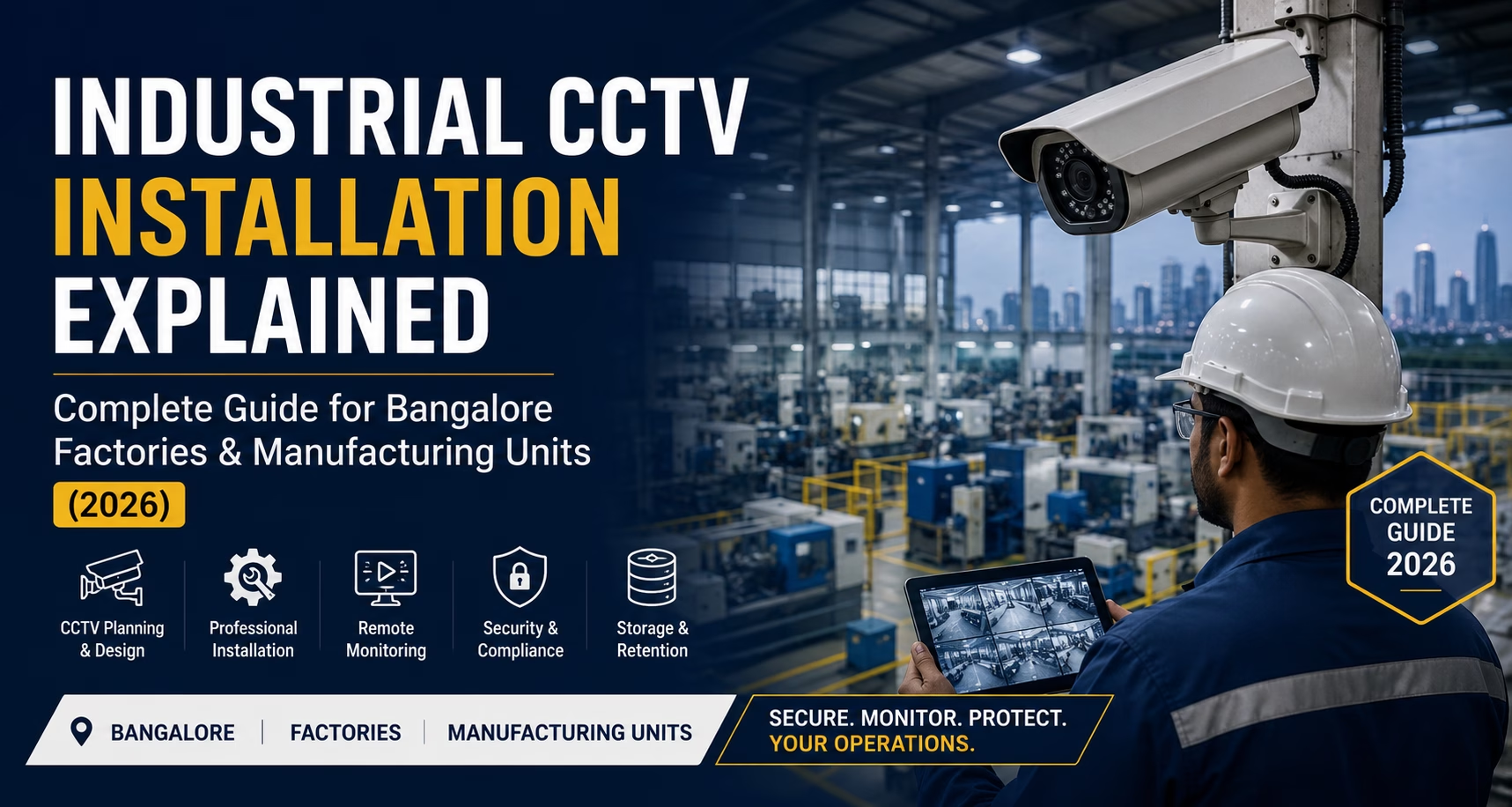
Industrial CCTV Installation Explained: Complete Guide for Bangalore Factories & Manufacturing Units (2026)
Industrial CCTV Installation: Complete Guide for Factories & Manufacturing Units | Yendra Techno Solution Yendra Techno Solution share cableINDUSTRIAL CCTV · PILLAR GUIDE Industrial CCTV Installation: Complete Guide for Factories & Manufacturing Units Site survey to handover, cabling and network infrastructure, NVR sizing, common mistakes, and two real factory installations — everything that goes into engineering industrial CCTV properly. schedule18 min read personBy Yendra Team event_repeatUpdated Aug 2026 fact_checkGet a Site Survey listJump to Section Summary What Is It Why It’s Different Installation Process Camera Placement Cabling & Network NVR & Storage Common Mistakes Cost Case Studies FAQs summarizeSummary What This Guide Covers Industrial CCTV installation is a defined engineering process — site survey, camera placement, cabling and network design, NVR sizing, installation, and testing — built for factories, not scaled up from a residential job. check_circleThe 10-step installation process, from site survey to handover check_circleHow to plan camera locations across production, gates, warehouse, and perimeter check_circleCat6, PoE, underground conduit, long cable runs, and surge protection explained check_circleHow NVR capacity and storage duration should actually be sized check_circleThe most common installation mistakes we’re called in to fix check_circleWhat drives installation cost, and where to get a full breakdown check_circleTwo real factory installations — a 32-camera and a 49-camera deployment This guide is the installation-focused deep dive in our factory CCTV resource — for the full commercial overview, see CCTV Surveillance for Factory. helpThe Basics What Is Industrial CCTV Installation? Q. What is industrial CCTV installation?Designing, cabling, mounting, and commissioning a surveillance system across a factory, warehouse, or manufacturing facility — engineered for the site, not scaled up from a residential setup. Industrial CCTV installation is the process of designing, cabling, mounting, and commissioning a surveillance system across a factory, warehouse, or manufacturing facility — as opposed to installing a handful of cameras in a home or a retail unit. The core difference isn’t the cameras themselves. It’s everything around them: cable runs that can stretch past 100 metres, network infrastructure that has to survive industrial electrical noise, recorders sized for 30–50+ channels instead of 4–8, and a physical environment with dust, heat, machinery vibration, and 24-hour operations. Industrial installation has to be engineered for that environment, not just scaled up from a smaller job. boltWhat Sets It Apart Why Industrial CCTV Installation Is Different A few things separate industrial installation from standard commercial or residential work. Q. How is industrial CCTV installation different from a home or office setup?Industrial installation covers far more cameras, longer cable runs, harsher environments, and continuous multi-shift operations — needing engineered infrastructure like PoE switching, underground conduit, and surge protection that residential jobs simply don’t require. 1Scaleexpand_more Factories commonly need 20–50+ cameras across production floors, warehouses, perimeters, and offices — not 4–8 cameras covering a single building. 2Distanceexpand_more Camera-to-NVR distances routinely exceed 100 metres, which changes cabling choices, PoE budgeting, and signal loss planning. 3Environmentexpand_more Dust, heat, vibration from machinery, and outdoor exposure demand IP-rated enclosures and cameras — not standard indoor hardware. 4Continuityexpand_more Many facilities run multiple shifts or operate 24/7, so installation has to be sequenced to avoid disrupting production. 5Infrastructureexpand_more Underground conduit, PoE switching, surge protection, and structured Cat6 networking are standard requirements, not optional upgrades. Skipping any of these considerations is usually where industrial CCTV projects go wrong — not because the cameras were the wrong choice, but because the infrastructure around them wasn’t engineered for the site. checklistThe Process Industrial CCTV Installation Process A properly executed installation follows a defined sequence. Skipping steps is where blind spots and rework come from. 1SITE SURVEY Walk the facility Map the layout, existing infrastructure, power points, and site constraints. 2REQUIREMENTS Security requirements analysis Map what the client needs to see and why, before any camera is chosen. 3PLACEMENT Camera placement Type and position planned area by area, catching blind spots on paper first. 4NETWORK Network planning PoE switch count, placement, and bandwidth sized to camera count and resolution. 5CABLING Cable routing Paths planned to minimise run length and protect cabling from machinery and weather. 6STORAGE NVR/storage planning Channel capacity and storage size calculated, not picked off a shelf. 7INSTALL Installation Cameras, NVR, switches, and cabling installed exactly as planned. 8CONFIGURE Configuration Resolution, motion zones, recording schedule, storage, and remote access set up. 9TEST Testing Every camera and channel checked for image quality, night vision, and retention. 10HANDOVER Handover Client’s team walked through the system, with documentation left behind. verifiedReal Installation Evidence Real Industrial Installation Engineering — Maigma Granite Exports A 32-camera IP surveillance system was deployed at Maigma Granite Exports (Shoolagiri, Tamil Nadu) using Hikvision and Prama cameras with a 32-channel Hikvision NVR and a dual-monitor monitoring wall. The installation included Cat6 cabling with 100m+ cable runs, underground conduit, PoE/PoE+ infrastructure, and surge protection — engineered for a continuous industrial granite manufacturing environment. The system supports 24/7 remote and mobile access. 32-camera deployment 100m+ cable runs 32-channel NVR Dual-monitor wall Remote/mobile access fact_checkGet an Industrial CCTV Site Survey This is how the process works end to end — if you’re ready to book the work itself, see our CCTV Camera Installation for Factory service page. mapPlacement Planning How to Plan CCTV Camera Locations in a Factory Placement isn’t about spreading cameras evenly — it’s about mapping coverage to risk, zone by zone. Zone What It Covers Key Consideration Production Floor Process areas, machine-adjacent activity Angles that avoid machinery or stock blocking the view Entry & Exit Gates Vehicle and personnel movement Positioned for clear identification, not just motion Warehouse & Storage Racking, loading docks, dispatch points Highest inventory risk areas get priority coverage Perimeter & Boundary Compound walls, approach roads Long-range coverage with adequate night vision Offices Administrative areas Lighter coverage, less conspicuous camera type Parking Areas Employee and visitor vehicles Covers both vehicle safety and traffic disputes Server / Control Rooms Restricted-access infrastructure Dedicated coverage — this protects the CCTV system itself The goal is to walk the site with a layout drawing and mark every angle — checking for overlap

CCTV Installation in Bangalore: Compliance Checklist for 2026
CCTV Installation in Bangalore: Compliance Checklist for 2026 CCTV Installation Bangalore Compliance: Checklist for 2026 CCTV installation Bangalore compliance in 2026 requires businesses to follow the MeitY CCTV Guidelines India 2026, which mandate the use of STQC Certification for CCTV Cameras in India-approved cameras, secure firmware, encrypted data storage, and protected network architecture. Non-compliant systems may be banned after April 1, 2026, making it essential to design surveillance systems that meet Essential Requirements (ER) and cybersecurity standards defined by the Ministry of Electronics and Information Technology. Quick Compliance Checklist ✔ Use STQC certified cameras✔ Ensure ER compliance✔ Remove default passwords✔ Secure network (no open access)✔ Define data storage policies✔ Verify firmware authenticity✔ Choose a compliance-focused integrator Introduction: Why Compliance Is Now Non-Negotiable If you’re planning a CCTV installation in Bangalore in 2026, you’re no longer just choosing cameras—you’re navigating a regulated security ecosystem. In 2026, CCTV installation bangalore compliance is no longer optional, as regulatory enforcement and audit risks have made compliance a critical business requirement. With the enforcement of the MeitY CCTV Guidelines India 2026, businesses, apartments, and industries must ensure their surveillance systems meet strict compliance standards. Non-compliant systems risk legal penalties, system bans, and complete replacement costs after April 1, 2026. Key Compliance Facts (2026) Mandatory regulation: MeitY CCTV Guidelines India 2026 Certification required: STQC Certification for CCTV Cameras in India Enforcing authority: Ministry of Electronics and Information Technology Deadline impact: Post April 1, 2026 Applies to: Businesses, apartments, industries, public infrastructure Risk: Ban on non-compliant CCTV systems What Does CCTV Installation Compliance Mean in 2026? What is CCTV installation compliance in Bangalore (2026)? CCTV installation compliance in Bangalore refers to adhering to MeitY guidelines, including using STQC-certified cameras, ensuring secure firmware, implementing encrypted data storage, and deploying protected network architecture to meet India’s 2026 surveillance regulations. CCTV compliance is no longer limited to installation quality. CCTV installation bangalore compliance in 2026 means deploying Hardware certification Firmware security Data handling protocols Network protection Vendor accountability At the center of this regulation is Ministry of Electronics and Information Technology (MeitY), which mandates that only certified and secure surveillance systems be deployed across India. Why Bangalore Businesses Are Under Higher Scrutiny What Changed in 2026 CCTV Regulations? The MeitY CCTV Guidelines India 2026 introduced strict controls to eliminate insecure surveillance systems in India. Under these rules: Only trusted hardware supply chains are allowed Devices must pass STQC testing protocols Data protection is now mandatory—not optional This shift aligns India with global surveillance security standards. Due to rapid urban digitization and regulatory focus, CCTV installation bangalore compliance is being closely monitored across IT parks, industries, and commercial spaces. Bangalore, as India’s tech capital, faces elevated compliance expectations due to: High density of IT parks and startups Increased cyber surveillance risks Smart city infrastructure integration Data protection enforcement trends This means CCTV installation Bangalore compliance is not optional—it’s a risk mitigation strategy. The 2026 CCTV Compliance Checklist (Step-by-Step) How to Ensure CCTV Installation Compliance in Bangalore (Step-by-Step) Choose STQC-certified CCTV cameras only Verify compliance with MeitY Essential Requirements (ER) Replace default passwords with secure authentication Design a closed and secure network (no open ports) Implement encrypted video storage and access control Use verified firmware from trusted OEMs Work with a compliance-focused CCTV integrator 1. Use Only STQC Certified Cameras The first and most critical requirement: ✔ Cameras must be certified under STQC Certification for CCTV Cameras in India This ensures: No hidden backdoors Secure firmware Trusted hardware origin Non-STQC cameras will be phased out under the CCTV ban policy. 👉 Read: What Is STQC Certification for CCTV Cameras in India? 2. Ensure ER (Essential Requirements) Compliance Under MeitY, CCTV systems must meet Essential Requirements (ER): Secure boot process Encrypted data transmission Access authentication controls Tamper detection These are not visible features—but critical for compliance audits. 3. Disable Default Passwords & Enforce Strong Authentication A major failure point in Bangalore installations: ❌ Default credentials still active❌ Shared admin access ✔ Compliance requires: Unique passwords for every device Multi-level user roles Periodic password rotation 4. Secure Network Architecture (No Open Ports) Improper network setup is one of the biggest compliance violations. ✔ Best practices: VLAN segmentation for CCTV network No direct internet exposure Firewall-restricted access VPN-based remote viewing 5. Ensure Data Storage Compliance CCTV footage is now considered sensitive data. ✔ You must define: Storage location (local/NVR/cloud) Retention period Access logs Backup policies For enterprises, this aligns with broader data governance frameworks. 6. Verify OEM & Firmware Integrity Compliance isn’t just about the camera—it’s about the ecosystem. ✔ Ensure: Firmware is signed and verified Regular updates are available OEM is authorized for Indian compliance Cheap imports without traceability = compliance risk 7. Work with a Compliance-Aware Integrator This is where most projects fail. A typical installer focuses on: Camera placement Cabling Cost reduction A compliance-focused integrator (like Yendra) ensures: Regulation alignment Documentation readiness Future-proof system design Common Non-Compliance Mistakes in Bangalore From real-world projects, here’s what goes wrong: Installing non-STQC cameras to save cost Ignoring firmware updates Using open cloud storage without encryption No audit trail for footage access Poor documentation These mistakes often lead to complete system reinstallation. Compliant vs Non-Compliant CCTV Systems Factor Compliant System Non-Compliant System Certification STQC Certified No certification Security Encrypted & secure Vulnerable Firmware Verified & updated Unknown source Network Protected Open access Legal Status Approved Risk of ban How Yendra Designs Compliance-Ready CCTV Systems At Yendra Techno Solutions, compliance is integrated at the design stage, not as an afterthought. Our Approach: Requirement Mapping Industry-specific compliance needs Risk assessment Certified Hardware Selection Only STQC-aligned OEMs Verified supply chain Secure Architecture Design Network isolation Controlled access layers Documentation & Audit Readiness Compliance reports Configuration logs Future-Proofing Upgrade-ready systems aligned with evolving policies 🧠 Expert Insight from Yendra Most CCTV failures in Bangalore are not due to camera quality—but due to non-compliant system design. A compliant system is: Designed with regulation in mind Built with certified components Secured at network and firmware level This is where professional system architecture
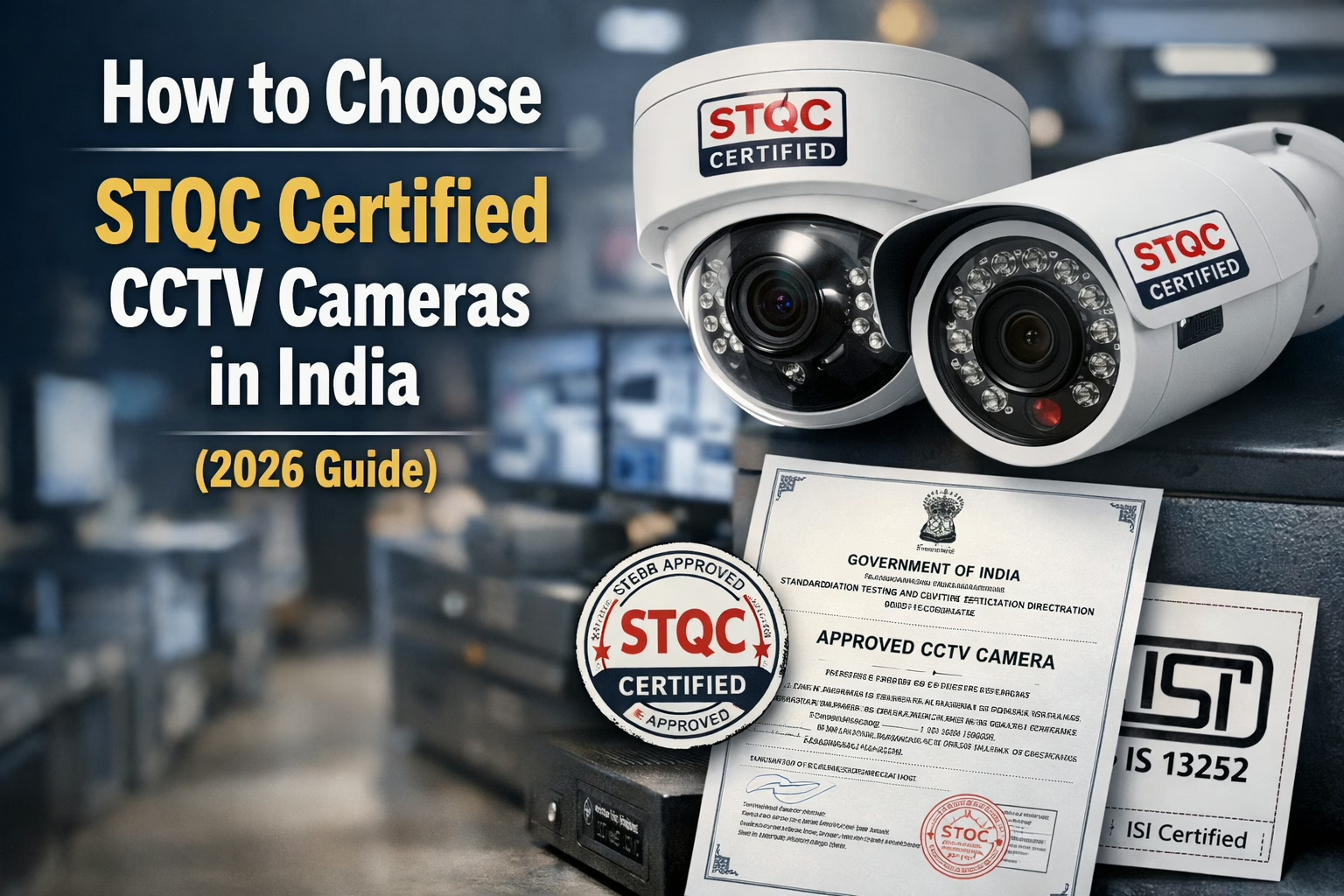
How to Choose STQC Certified CCTV Cameras in India (2026 Guide)
Choose CCTV India With STQC Certification How to Choose STQC Certified CCTV Cameras in India (2026 Guide) To choose CCTV India systems in 2026, verify STQC certification, ensure MeitY compliance, check data security features, confirm vendor expertise, and review documentation before purchase. Summary Choosing CCTV cameras in India now demands strict compliance. STQC certification is no longer optional after April 1, 2026. Non-compliant cameras risk bans and penalties. Therefore, buyers must follow a structured checklist before purchasing. This guide explains how to choose CCTV India solutions that meet MeitY norms, reduce risk, and ensure long-term ROI. Introduction Choosing the right surveillance system is no longer simple. In 2026, regulations have changed the buying process completely. Therefore, businesses must now focus on compliance as much as performance. If you plan to choose CCTV India solutions, you need to understand STQC certification and MeitY guidelines first. Moreover, non-compliant cameras may soon become unusable. This creates financial and operational risks for buyers. However, many decision-makers still rely on outdated selection methods. As a result, they end up investing in systems that fail audits later. To avoid such mistakes, you must follow a structured approach. This guide will help you choose CCTV India systems using a practical checklist. Additionally, it reflects real compliance challenges faced by Indian businesses. With the right insights, you can make a secure and future-ready investment. Why STQC Certification Matters in 2026 Why is STQC CCTV important for businesses? STQC CCTV systems protect businesses from legal risks and ensure data security. They also help organizations meet regulatory compliance and avoid costly system replacements. India’s surveillance industry is undergoing a compliance shift. The government mandates STQC certification under MeitY guidelines. As a result, non-compliant CCTV cameras will face restrictions. Moreover, businesses using such devices may face legal exposure. Therefore, choosing the right system is no longer just technical. It is also regulatory. For deeper understanding, read:MeitY CCTV Guidelines India 2026: Why Non-Compliant Cameras Will Be Banned After April 1 What Is STQC Certification in CCTV? STQC certification ensures that CCTV cameras meet Indian government security and quality standards. It is mandatory under MeitY guidelines for surveillance systems in India from April 1, 2026. STQC stands for Standardisation Testing and Quality Certification. It validates that CCTV systems meet Indian security standards. Additionally, it ensures data integrity and cyber safety. This becomes critical for enterprises and government-linked operations. Checklist to Choose CCTV India Systems (STQC Ready) What should buyers check before buying CCTV in India? Buyers should check STQC certification, MeitY compliance, secure storage, vendor credibility, and system scalability before they choose CCTV India solutions. 1. Verify STQC Certification Status Always confirm whether the camera is STQC certified. Do not rely on verbal claims. Check official certification listings or request documentation. Furthermore, verify firmware compliance as well. 2. Confirm MeitY Compliance Alignment STQC alone is not enough. The product must align with MeitY guidelines. Therefore, ensure the vendor understands compliance requirements. Yendra Techno Solutions often highlights gaps during audits. Many imported systems fail this step. 3. Assess Data Security Features Security is now a deciding factor. Choose CCTV India systems with encryption and secure firmware. Avoid cameras that store data on foreign servers. This reduces compliance risk and protects sensitive footage. 4. Check Supply Chain Transparency Many buyers overlook supply chain risks. However, hidden components may break compliance rules. Therefore, ask vendors about chipset origin and manufacturing details. Yendra has documented cases where projects failed due to undocumented imports. 5. Evaluate Vendor Technical Expertise A product is only as reliable as its integrator. Choose vendors with proven compliance experience. Yendra Techno Solutions often shares real audit insights on LinkedIn. These highlight common buyer mistakes. 6. Look for Long-Term Support Compliance is not a one-time task. Firmware updates and audits continue. Therefore, select vendors offering long-term support contracts. This ensures your system remains compliant after installation. 7. Validate Storage and Server Compliance Storage solutions must also meet regulations. Ensure NVRs and servers are compliant with Indian standards. Additionally, verify whether cloud integrations follow MeitY rules. 8. Avoid Cheap Non-Compliant Imports Low-cost cameras often skip certification. While they reduce upfront cost, they increase future risks. Several Indian businesses had to replace entire systems post audits. 9. Check Integration Capability Modern surveillance integrates with access control and analytics. Therefore, ensure your CCTV India system supports future expansion. This avoids additional compliance checks later. 10. Request Compliance Documentation Always ask for a compliance dossier. This should include STQC certificates, test reports, and declarations. Keep these records for audits and inspections. Real Industry Case Insights (Yendra Experience) What happens if CCTV is not STQC certified? Non-STQC certified CCTV systems may fail compliance audits and face government restrictions. Businesses may need to replace such systems, increasing costs and operational risks. Case 1: Manufacturing Unit Compliance Failure A large manufacturing unit installed imported CCTV cameras. Initially, the system worked perfectly. However, it lacked STQC certification. During an audit, the system failed compliance checks. As a result, the company replaced over 300 cameras. Yendra Techno Solutions later redesigned the system. The new setup passed all regulatory checks. Case 2: Corporate Office Risk Mitigation A corporate client approached Yendra for risk assessment. Their existing CCTV setup lacked proper documentation. Although functional, it posed compliance risks. Yendra conducted a full audit and suggested upgrades. The company achieved compliance before the deadline Common Mistakes When Choosing CCTV India Systems Many buyers repeat the same errors. They often prioritize price over compliance. Additionally, they trust vendors without verification. Some ignore documentation until audits occur. These mistakes lead to costly replacements. How to Choose CCTV India Systems Smartly Which is the best way to ensure CCTV compliance in India? The best way is to work with compliance experts and certified vendors. This ensures you choose CCTV India systems that meet all regulatory and security standards. Start with compliance, not features. Then evaluate security and scalability. Finally, choose a trusted implementation partner. This structured approach reduces long-term risks. STQC Certified CCTV Brands to Consider in India (2026) Which is the

AI CCTV Surveillance vs Traditional CCTV: What Bangalore Businesses Should Choose in 2026
AI CCTV Surveillance vs Traditional CCTV: What Bangalore Businesses Should Choose in 2026 AI CCTV Surveillance vs Traditional CCTV: What Bangalore Businesses Should Choose in 2026 Summary In 2026, Bangalore businesses must choose between conventional systems and AI CCTV Surveillance for smarter, faster, and proactive security. AI-powered systems detect threats in real time, reduce manpower, and improve evidence accuracy. Traditional CCTV remains affordable but lacks intelligent monitoring. For growing businesses, AI-driven solutions offer higher ROI and future readiness. Introduction: Security Is No Longer Passive Bangalore is expanding at a rapid pace. Tech parks, retail outlets, apartments, and warehouses are growing every year. However, security risks are also increasing. Theft, vandalism, and internal fraud continue to challenge businesses. Earlier, companies relied on conventional CCTV cameras. Those systems recorded footage for later review. Today, intelligent monitoring has transformed surveillance. Businesses now demand alerts, analytics, and automation. Therefore, the real question is clear. Should you stick to traditional cameras or upgrade in 2026? What Is AI CCTV Surveillance? AI CCTV Surveillance uses artificial intelligence to analyze video footage in real time. Instead of only recording video, the system interprets activities and detects unusual behavior instantly. These systems identify: Face recognition Vehicle number plate detection Intrusion alerts Object removal detection Crowd density analysis Fire and smoke detection Unlike conventional cameras, AI-enabled solutions do not rely only on manual monitoring. Instead, they send automated alerts when suspicious activity occurs. As a result, response time improves drastically. What Is Traditional CCTV? Traditional CCTV systems capture and store footage. Security staff must monitor live feeds or review recordings manually. Key characteristics include: Continuous recording DVR or NVR storage Limited automation Manual incident detection Lower upfront cost Although these systems still function effectively, they depend heavily on human intervention. Key Differences Between Smart and Conventional Systems When comparing AI CCTV Surveillance with traditional systems, the differences become immediately visible. 1. Real-Time Alerts AI-based cameras send instant notifications when detecting threats. Traditional systems only record incidents for later review. 2. Human Dependency Conventional CCTV requires staff to watch screens continuously. Intelligent systems reduce monitoring fatigue through automation. 3. Accuracy and Evidence AI solutions tag events automatically. Therefore, searching footage becomes faster and more accurate. 4. Cost Over Time Traditional cameras cost less initially. However, businesses spend more on manpower and monitoring in the long run. 5. Scalability AI systems integrate with access control, attendance tracking, and ERP platforms. Traditional systems rarely offer this flexibility. Comparison Table: Quick Decision Guide Feature Traditional CCTV AI-Based System Real-time alerts No Yes Facial recognition No Yes Remote monitoring Limited Advanced Automated reporting No Yes Manpower requirement High Low Search by event Manual Instant This comparison clearly highlights performance gaps. Why Bangalore Businesses Need Smarter Surveillance in 2026 Bangalore’s commercial environment is competitive and technology-driven. Therefore, businesses must adopt proactive security. Rising Commercial Spaces IT corridors like Whitefield, Electronic City, and Sarjapur Road continue expanding. Warehouses and logistics hubs are also increasing. With higher traffic, risks multiply. Compliance and Regulations Many industries must maintain surveillance records for legal compliance. Intelligent tagging simplifies audits and investigations. Labor Costs Hiring 24/7 monitoring staff increases operational costs. Automation reduces dependency on large teams. Data-Driven Security Modern businesses prefer data insights. AI dashboards provide analytics on visitor patterns, peak hours, and suspicious behavior trends. Use Cases Across Different Sectors Retail Stores Detect shoplifting instantly Monitor billing counters Analyze customer footfall Corporate Offices Facial access integration Attendance automation Restricted zone monitoring Warehouses Track goods movement Detect unauthorized entry Monitor loading docks Residential Apartments Visitor tracking Vehicle identification Perimeter intrusion alerts These applications make advanced systems versatile across industries. Cost Analysis: Investment vs Long-Term ROI Many customers ask about pricing first. However, evaluating value over time is more important. Initial Investment Traditional systems are cheaper upfront. AI-powered setups involve higher hardware and software costs. Operational Savings Smart systems reduce: Monitoring staff expenses Theft-related losses Investigation time Productivity Gains Management saves hours in reviewing footage. Automated reports improve efficiency. Over three to five years, intelligent systems often deliver better ROI. Yendra’s Leadership in AI CCTV Surveillance in Bangalore Yendra has positioned itself as a trusted provider of advanced surveillance systems across Bangalore. The company specializes in customized security solutions for homes, businesses, and industrial facilities. Yendra integrates AI-based monitoring with: Access control systems Biometric attendance Fire alarm integration Remote cloud storage Case Study 1: Retail Chain in Indiranagar A retail client faced recurring inventory shrinkage. Traditional cameras failed to identify the issue quickly. After upgrading, suspicious movement near storage areas triggered instant alerts. Management reduced losses by 38% within six months. Case Study 2: IT Office in Whitefield An IT company required automated visitor logging. Yendra implemented facial recognition integrated with access control. The result improved security while reducing front-desk workload. Case Study 3: Warehouse in Peenya A logistics warehouse experienced unauthorized after-hours entry. The new system detected motion in restricted zones. Real-time alerts enabled faster intervention and prevented major theft. For detailed service options, explore: https://www.yendra.in/cctv-installation-bangalore https://www.yendra.in/access-control-systems https://www.yendra.in/fire-alarm-systems 2026 Security Trends You Should Not Ignore In 2026, AI CCTV Surveillance will move beyond detection into predictive analysis. Systems will identify behavioral patterns and forecast potential threats. Key trends include: Cloud-based storage adoption Edge computing cameras Integration with IoT sensors Cyber-secure encrypted networks Smart city connectivity According to industry reports from sources like Gartner (https://www.gartner.com), AI-driven security adoption is growing annually. Similarly, insights from Statista (https://www.statista.com) show rising global investment in smart surveillance. Additionally, ASIS International (https://www.asisonline.org) highlights increased corporate demand for intelligent monitoring. Bangalore businesses must align with these trends to remain competitive. When Traditional CCTV Still Makes Sense Although intelligent systems dominate the future, conventional cameras still serve certain situations. Small shops with limited budgets Temporary construction sites Low-risk residential areas Backup surveillance layers However, these cases are gradually shrinking FAQs Is AI CCTV Surveillance worth the cost for small businesses? Yes, if theft risk or monitoring costs are high. The system reduces long-term expenses and improves incident response. Can AI systems work without the internet? Yes.

CCTV Installation Cost Bangalore 2025: Storage, Remote Monitoring & Construction Site Pricing Guide
CCTV Storage Planning Guide: Everything You Need to Know Before Installing CCTV in Bangalore Quick Summary for Decision-Makers This article Explains Storage is one of the biggest hidden costs of CCTV. Camera resolution directly affects storage. AI cameras require different storage planning. Recording duration determines HDD size. Compression technologies significantly reduce storage requirements. Businesses may require longer retention. Future expansion should always be considered. Modern Image Carousel CCTV Storage Planning Design the perfect storage solution with optimized recording, retention period, and high-performance surveillance systems. Learn More Enterprise Security Reliable surveillance solutions for offices, industries, schools, hospitals and commercial buildings. Explore 24×7 Monitoring Stay connected with remote viewing, instant alerts, playback and cloud-ready surveillance systems. View Solutions ❮ ❯ 1: Why CCTV Storage Planning Matters Many CCTV Buyers Focus on Cameras—Professionals Focus on Storage When people begin researching CCTV systems, most of their attention goes to camera resolution, night vision, mobile apps, or AI features. While these are important, one critical component is often overlooked—the storage system that records and preserves the footage. A CCTV camera only captures video. Without a well-planned storage solution, even the highest-quality surveillance system can fail to provide useful evidence when it is needed most. This is why CCTV storage planning should be part of every surveillance project before selecting cameras or recorders. Why Storage Planning Is Critical A properly designed storage system does much more than save video files. It determines how reliable your surveillance system will be over its entire lifecycle. Evidence Preservation The primary purpose of CCTV is to preserve visual evidence. If storage fills up unexpectedly, recordings may be overwritten before they can be reviewed, leaving critical incidents without usable footage. Whether investigating theft, property damage, unauthorized access, or workplace incidents, retaining complete and accessible recordings is essential. Supporting Investigations Security incidents are not always discovered immediately. A missing package, inventory discrepancy, or equipment malfunction may only come to light days or weeks later. A well-planned storage strategy ensures that recorded footage remains available for review when investigations begin, helping property owners and businesses reconstruct events with confidence. Meeting Compliance and Internal Policies Different organizations have different recording requirements. Residential communities, commercial offices, educational institutions, healthcare facilities, and industrial sites may each have their own operational policies or regulatory obligations regarding video retention. Planning storage in advance makes it easier to align surveillance systems with organizational requirements and adapt as policies evolve. Ensuring Business Continuity Surveillance systems operate continuously, often 24 hours a day throughout the year. A storage system that is designed for continuous operation reduces the risk of recording interruptions and helps maintain uninterrupted security coverage. Reliable storage planning also supports future system upgrades without requiring a complete redesign. Optimizing Long-Term Investment Choosing storage based only on today’s camera count can lead to expensive upgrades later. Planning for future expansion, additional cameras, higher resolutions, or AI-powered analytics helps avoid unnecessary replacement costs and extends the value of the original investment. Instead of treating storage as an accessory, professional security designers consider it a foundational component of the entire surveillance architecture. Key Takeaway: Cameras capture incidents, but storage preserves the evidence. Effective CCTV storage planning ensures your surveillance system remains reliable, scalable, and ready when you need it most. 2: How CCTV Recording Actually Works Understanding the CCTV Recording Process Many people assume that CCTV cameras simply save videos onto a hard disk. In reality, several technologies work together to capture, process, store, and retrieve surveillance footage. Understanding this recording workflow makes it much easier to plan the right storage solution for your home or business. Camera↓Video Encoding↓Compression↓Recorder↓Storage Device↓Playback & Retrieval Each stage plays an important role in determining recording quality, storage efficiency, and system performance. 1. Camera Captures Video The surveillance camera continuously captures video based on its configured recording mode, such as continuous recording, motion detection, event-based recording, or AI-triggered recording. The quality of the captured footage depends on factors such as resolution, frame rate, image settings, and scene complexity. 2. Video Encoding Before the video can be stored, it is digitally encoded into a format suitable for recording and playback. Encoding converts raw camera data into structured video streams that can be efficiently managed by the recording system. 3. Compression Reduces File Size Raw video consumes enormous amounts of storage. Compression technologies reduce file sizes while maintaining usable image quality. Modern surveillance systems use advanced compression standards that help increase recording duration without requiring proportionally larger storage capacity. The choice of compression technology directly influences storage efficiency and future scalability. 4. The Recorder Manages the System The recorder acts as the central management device for surveillance footage. Depending on the type of CCTV system, this may be: DVR (Digital Video Recorder): Used primarily with analogue CCTV cameras. The recorder receives video signals and stores them on connected hard drives. NVR (Network Video Recorder): Designed for IP-based surveillance systems. It records digital video streams from network cameras and supports advanced features such as higher resolutions, AI analytics, and remote management. The recorder controls recording schedules, user access, playback, storage allocation, and system health monitoring. 5. Footage Is Stored on Storage Devices Recorded video is then written to the selected storage platform. Common storage options include: Surveillance Hard Drives for dedicated CCTV recording Network Attached Storage (NAS) for centralized storage across multiple devices and locations Cloud Storage for remote backup, off-site retention, and secure access over the internet Hybrid Storage, combining local recording with cloud or network-based backup for improved resilience The most appropriate storage architecture depends on the size of the deployment, operational requirements, and future scalability. 6. Playback and Retrieval When an incident occurs, authorized users can search and retrieve recorded footage using the recorder or associated management software. Well-designed storage systems make it easier to locate recordings based on time, camera, events, or intelligent analytics, reducing investigation time and improving operational efficiency. Key Takeaway: CCTV recording is more than simply saving video to a hard disk. Every stage—from video capture and compression to storage architecture and

Complete Warehouse Surveillance System Guide for Bangalore Industries: From CCTV Cameras to Remote Video Monitoring Service
Warehouse Surveillance System Complete Warehouse Surveillance System Guide for Bangalore Industries: From CCTV Cameras to Remote Video Monitoring Service Summary If you run or manage a warehouse in Bangalore, you need Warehouse Surveillance System not just to prevent theft but to reduce pilferage, unauthorized entry, employee misconduct, inventory mismatch, nighttime intrusion, and accident liability.The safest & most profitable setup for 2025 includes AI CCTV cameras, access control, perimeter alarms, warehouse remote monitoring service, and 90-day video storage for audits. Introduction Bangalore’s industrial hubs — Peenya, Bidadi, Hoskote, Bommasandra, Anekal, Whitefield, Attibele & Nelamangala — operate supply chain warehouses worth crores in goods movement every day.With increasing inside theft, pilferage, fuel fraud, fake dispatch, loading mismatch and night trespassing, conventional CCTV alone is not enough. Modern Warehouse Surveillance System combines real-time monitoring, video analytics, access control and remote command centers to ensure that every movement inside the warehouse is recorded, audited and action-ready. This guide explains every component required to build a 2025-ready warehouse security blueprint. Why Warehouse Surveillance Systems Are Critical for Bangalore Industries Warehouses in Bangalore face unique operational security risks: Category Real-world risks Internal fraud Pilferage, stock swaps, fake returns Dispatch fraud Short-loading, label swapping, cargo stealing Outside threats Break-ins, vandalism, mob attacks, nighttime intrusion Safety & compliance Accidents, forklift collision, fire protocol violations Workforce issues Productivity loss, absentee supervision, unauthorized entry Warehouse Surveillance System helps businesses: Reduce shrinkage losses by 30–70% Strengthen night shift supervision Eliminate internal-external collusion theft Maintain proof for insurance & audits Improve operational efficiency & worker discipline Prevent false claims & disputes Industrial theft in Bangalore is now more internal than external — making end-to-end Warehouse Surveillance System the only reliable defense. How Warehouse CCTV Cameras Prevent Theft, Damage & Operational Loss CCTV alone does more than just evidence collecting — when designed for warehouses. Common warehouse pain points Security solution Goods missing after shift AI-based area watch + stock handling alerts Wrong items dispatched Dock & loading bay surveillance Vehicle gate misuse ANPR vehicle number plate tracking Unauthorized people in storage areas Access-controlled restricted zones Night movement without approval Motion-triggered intrusion alerts Warehouse Surveillance System delivers:✔ Monitoring of entry/exit & key zones✔ Tracking loading/unloading accuracy✔ Watch over aisles & segregation lines✔ Clear visibility even in low-light & dusty spaces✔ Direct escalation to management for violations For business ROI: warehouses that adopt a multi-layered surveillance approach save 2X in loss prevention compared to normal CCTV setups. Types of CCTV Cameras Used in Warehouse Surveillance Systems CCTV Type Best Use Advantage Disadvantage Bullet CCTV Perimeter walls & gates Long-range visibility Exposed to vandalism without housing Dome CCTV Indoor storage racks Tamper-resistant Narrower range PTZ Camera Loading bays & yards Rotating 360° + zoom Expensive & requires operator 4K CCTV High-value inventory rooms Crystal-clear identification Requires large storage Thermal Camera Dark & fog areas Detects body heat Very costly ANPR Camera Warehouse vehicle gates Captures number plates Needs strong lighting Pro Tip: For Indian warehouse dust & vibration, metal-body CCTV with IP67 rating & 8MP clarity is mandatory.Many Bangalore warehouses rely on this specialized service for complete end-to-end deployment:👉 https://yendra.in/business-cctv-solutions/ AI-Powered Warehouse Surveillance Systems for 2025 Traditional CCTV only shows incidents.AI-powered Warehouse Surveillance Systems detect and prevent incidents in real time. What AI can detect automatically inside warehouses AI Feature What it prevents Object removal alerts Pilferage & missing stock Restricted zone violation Unauthorized entry to sensitive inventory PPE compliance alerts Safety helmet & vest non-compliance Loitering alerts Idle workforce & rule violation Forklift collision alerts Accidents & insurance liabilities People count analytics Shift monitoring & workforce optimization Trip-wire perimeter alerts Night trespassing & perimeter breach These Warehouse Surveillance System transforms security from reactive to predictive, ensuring safety before financial loss occurs. Best Infrastructure Setup for 24×7 Warehouse Video Surveillance (Bangalore-Ready Blueprint) Below is the tested 2025 architecture used in most Bangalore freight, FMCG, e-commerce & cold-chain warehouses: 📌 Mandatory camera zones Main entrance & dispatch gate Internal warehouse floor (aisle monitoring) Loading docks & staging platforms High-value SKU storage zones Raw materials & return goods sections Parking & vehicle holding lanes Security cabin & staff entry areas Fuel storage & generator room Perimeter fencing / compound corner 📌 Technical configuration recommended Component 2025 Standard Camera resolution 5MP / 8MP / 4K Storage 90–180 days NVR/cloud Analytics AI + Video management software Network Gigabit + fiber backbone Lighting Low-light IR + floodlight zones Internet 10–40 Mbps dedicated uplink 📌 Key security principles for warehouses Risk Must-have protection Night break-ins Motion lights + IR + perimeter PTZ Fake dispatch & stock mismatch Dock & staging video stamping Internal collusion Multi-angle overlapping camera coverage Blind spot theft Aisle-view dome grid + PTZ support A strong Warehouse Surveillance System ensures no dark spots, no unmonitored touch points, and no untraceable movement Access Control Integration — The Missing Link in Warehouse Surveillance Systems A warehouse camera system without access control leaves 70% scope for internal fraud. Integrating access control with CCTV ensures: Every entry/exit is recorded ID credential + facial match = Identity proof Restricted areas enforced by permissions Zero tailgating / unauthorized entry Accurate attendance & shift change logs Best access control solutions for warehouses Location Recommended type Main gate Boom barrier + ANPR Employee entrance Biometric + face recognition High value storage RFID + card + face match Server room Advanced biometric Office areas Smart locks When done right, access control + CCTV gives: 📌 Real-time visibility of who accessed what zone at what time📌 Complete audit trail for loss prevention, insurance, compliance & HR ⚠️ Up to 92% of unauthorized warehouse access cases are internal staff linked — meaning automation is not optional. Warehouses needing end-to-end physical and CCTV security integration in Bangalore:👉 https://yendra.in/warehouse-security-service-bangalore/ Security Checklist for Warehouse Owners & Managers Use this 2025-verified evaluation checklist to determine whether your current security setup is sufficient: 📌 Camera coverage Every aisle, corridor & storage bay covered No blind spots behind racks Loading & dispatch areas recorded from 2 angles Night vision validated under actual warehouse lighting 📌 Safety & liability

Which Is the Best CCTV Camera for Warehouse Security in KR Puram and Nelamangala
Best Professional CCTV Installation in Bangalore: Which Is the Best CCTV Camera for Warehouse Security in KR Puram and Nelamangala TL;DR:Warehouses in KR Puram and Nelamangala face growing security and operational challenges. Smart CCTV systems are now essential for theft prevention, compliance, and 24/7 monitoring. This guide explains how Yendra’s 10+ years of expertise in installing the best CCTV camera for warehouse operations ensures complete visibility, safety, and ROI-driven solutions. Introduction In Bangalore’s fast-growing logistics corridors—KR Puram and Nelamangala—warehouses are the beating heart of trade and distribution. Warehouses in KR Puram and Nelamangala face unique security challenges due to high cargo movement, 24/7 operations, and growing industrial activity. Theft, poor lighting, limited manpower, and compliance requirements make traditional surveillance ineffective. These busy hubs require intelligent monitoring to manage vehicle access, prevent pilferage, and ensure safety compliance. Environmental risks like fire and temperature fluctuations add to the complexity. Upgrading to the best CCTV camera for warehouse—equipped with AI, motion detection, and thermal imaging—helps overcome these challenges. Smart surveillance ensures real-time visibility, data security, and operational control across Bangalore’s most active warehouse zones. At Yendra Techno Solution, we bring 10+ years of expertise in installing the best CCTV camera for warehouse facilities across Bangalore, empowering warehouse owners to prevent theft, meet safety standards, and manage operations intelligently. Why Warehouse Security in KR Puram & Nelamangala Needs Special Attention Warehouses in KR Puram and Nelamangala form two of Bangalore’s most critical logistics corridors. With major highways, transport hubs, and industrial parks nearby, these zones experience high cargo movement, heavy workforce activity, and frequent night operations. That’s why warehouse security in KR Puram & Nelamangala demands more than standard surveillance—it needs intelligent protection powered by smart CCTV systems. 1. High-Value Inventory and Constant Movement These areas host distribution centers for FMCG, e-commerce, manufacturing, and automotive sectors. Continuous loading and unloading create blind spots that traditional cameras can’t manage effectively.➡️ Smart cameras with AI motion tracking and automatic alerts help managers detect unusual activities in real time. 2. Increased Risk of Theft and Unauthorized Access KR Puram’s proximity to outer ring road and Nelamangala’s link to NH-75 make them transit-heavy. This accessibility, while advantageous, also increases exposure to theft risks.➡️ Installing the best CCTV camera for warehouse with license plate recognition (LPR) and facial identification prevents unauthorized entries and tracks vehicle movement. 3. Night Operations and Low Visibility Most warehouses in these zones operate 24/7. Poor lighting and vast layouts create vulnerabilities after dark.➡️ Infrared and night-vision-enabled smart CCTV cameras (like those from CP Plus and Hikvision) deliver clear footage even in zero-light conditions. 4. Compliance and Audit Pressures Warehouses storing perishable, chemical, or electronic goods must comply with ISO 27001, BIS, and OSH standards. Missing footage or unclear visuals during audits can cause penalties.➡️ Smart CCTV cameras with timestamped cloud backups meet compliance requirements and maintain data security under the Information Technology Act (2000). 5. Operational Efficiency and Accountability In large warehouse clusters, supervisors can’t be everywhere at once. Manual tracking wastes time and manpower.➡️ Smart cameras with AI analytics monitor worker movement, vehicle turnaround, and delivery schedules—boosting productivity while maintaining safety. 6. Industrial Growth and Security Complexity As KR Puram transitions into an integrated logistics hub and Nelamangala expands into an industrial powerhouse, the security landscape is evolving.➡️ Future-ready systems—like Yendra’s smart CCTV integration—offer scalable solutions that grow with your facility and business needs. In short:Warehouse operations in KR Puram and Nelamangala demand smarter, compliant, and AI-driven surveillance. Investing in the best CCTV camera for warehouse not only protects assets but also streamlines daily operations and ensures audit-ready compliance. CCTV Challenges in KR Puram & Nelamangala Warehouses Warehouses in these industrial zones handle diverse materials—FMCG, electronics, automotive, and perishables. Common Challenges: Unmonitored loading bays. Theft during shift changes. Accidental damage without evidence. Unauthorized access at night. Fire and safety compliance failures. Yendra’s Approach:With over a decade of installation experience across Bangalore’s commercial corridors, Yendra designs site-specific CCTV layouts for each warehouse type—cold storage, logistics hubs, or multi-floor storage units. What Makes a CCTV Camera “Best” for Warehouse Security? The best CCTV camera for warehouse operations combines clarity, intelligence, and adaptability to safeguard high-traffic environments like KR Puram and Nelamangala. 1. Critical Features for Warehouse Monitoring A warehouse needs clear, actionable visuals around the clock. High-resolution imaging ensures every movement is recorded in detail. Night vision enables visibility in low-light conditions, while motion detection and remote monitoring provide instant alerts and 24/7 access via mobile or desktop. 2. Types of Cameras for Different Warehouse Zones Bullet Cameras: Ideal for outdoor perimeters and loading docks. PTZ Cameras: Offer pan, tilt, and zoom for large areas. Dome Cameras: Perfect for indoor monitoring and discreet surveillance. 3. Scalability and Storage Options Warehouses expand quickly, so systems must scale effortlessly. NVR (Network Video Recorder) and cloud-based storage options provide flexible video archiving. Smart cloud integration ensures footage retention for audits and remote access from any location. 4. Smart Analytics and AI Detection Modern smart CCTV cameras use AI analytics to identify theft, fire, or unauthorized movement automatically. Features like heat mapping, facial recognition, and object tracking enhance situational awareness. By combining these capabilities, smart CCTV systems deliver not only security but operational intelligence—making them the best choice for warehouse surveillance in Bangalore’s fast-growing industrial zones. Why Smart CCTV Cameras Are Essential for Warehouse Security 1. 24/7 Remote Monitoring Warehouse owners can view live feeds via mobile apps or dashboards, enabling instant response during off-hours. 2. Real-Time Alerts and AI Detection Smart analytics detect motion, intrusion, or unusual heat signatures—sending instant alerts to managers. 3. Loss Prevention Evidence-based monitoring reduces theft, internal loss, and product misplacement. 4. Safety & Compliance Smart CCTV helps comply with Occupational Safety and Health (OSH) regulations and insurance audits. 5. Operational Insights Managers can track vehicle movement, worker efficiency, and delivery schedules. Top Brands Offering Smart CCTV Solutions for Warehouses Modern warehouse surveillance depends on both hardware quality and AI features. Here’s how leading brands enhance security: Brand Smart Features Ideal For CP

How Integrated CCTV and Access Control Systems Revolutionize Warehouse Security
Integrated CCTV and Access Control How Integrated CCTV and Access Control Systems Revolutionize Warehouse Security TL;DR Summary: Integrated CCTV and access control solutions unify security for people, vehicles, and assets. ANPR (Automatic Number Plate Recognition) enables 70% automation in Bangalore warehouses. Integration minimizes manual checks, cuts costs, and improves access consistency. Ideal for logistics and manufacturing firms managing high traffic and fleet movement What Is an Integrated CCTV and Access Control System? An integrated CCTV and access control system combines video surveillance with entry authorization mechanisms. Instead of managing separate systems for cameras and doors, both operate through one unified platform. This approach simplifies monitoring by: Allowing instant video verification of access events. Enabling centralized command over multiple facilities. Offering audit trails for security compliance. Modern integrated systems also link with vehicle tracking and personnel management modules, forming a complete security ecosystem. Why Logistics Companies Are Moving Toward Integration Warehouses in cities like Bangalore face increasing challenges with vehicle inflow and workforce management. Standalone CCTV or access systems often fail to provide real-time insights. By merging the two technologies, organizations gain: Automated Entry & Exit: ANPR cameras identify and log vehicles. Fleet Tracking: Integration enables seamless vehicle movement tracking. Visitor Management: Entry approvals happen digitally, reducing queues. Consistent Security: Central dashboards unify control across multiple access points. According to recent trends, over 70% of Bangalore warehouses have adopted integrated CCTV and access control setups to streamline operations. How ANPR and Access Control Work Together Component Function Benefit ANPR Cameras Detect and record license plates automatically. Eliminates manual gate logs. Access Controller Grants or denies access based on verified data. Improves entry accuracy. CCTV Surveillance Captures visual proof of every entry/exit. Enhances accountability. Central Platform Integrates and synchronizes data in real time. Enables unified monitoring. This setup not only automates fleet management but also strengthens security consistency. Every vehicle movement is tracked and verified without human intervention. Benefits of Integrated CCTV and Access Control Systems 1. Operational Efficiency Integration removes redundancy. Security staff manage fewer devices and dashboards. Automatic logging reduces paperwork and delays. 2. Enhanced Accuracy Real-time video verification ensures every access event is validated. Unauthorized entries trigger instant alerts. 3. Cost Savings By combining platforms, organizations reduce hardware duplication and maintenance expenses. Over time, automation lowers operational overhead significantly. 4. Compliance and Reporting Digital records simplify audits and compliance with safety standards. Reports are accessible instantly across departments. 5. Scalability As facilities grow, integrated systems easily expand without major rewiring or new software. Key Features to Look for in Integrated CCTV and Access Control Systems When evaluating systems, ensure they include: Cloud-based management dashboards. AI-enabled analytics and face/plate recognition. Multi-site control capabilities. Mobile alerts and remote access. Data encryption and cybersecurity safeguards. These features allow logistics and manufacturing firms to manage security at scale while maintaining flexibility Real-World Use Case: Bangalore Warehouses Bangalore’s booming logistics sector has adopted integrated CCTV and access control solutions to handle high vehicle traffic. Results include: 70% automation in gate management. 25% reduction in security staff workload. Zero manual log entries for fleet movement. These numbers reflect not just efficiency but also enhanced trust and reduced bottlenecks at entry points. 1: Read about ANPR technology benefits2: Smart warehouse automation trends3: Access control integration best practices Checklist: Implementing an Integrated CCTV and Access Control System Conduct a site audit. Identify existing CCTV and access devices. Choose compatible integration software. Configure centralized monitoring. Test with real-time access events. Train staff on dashboard operations Common Challenges and Solutions Challenge Solution Integration with legacy systems Use APIs or middleware for compatibility. Data privacy concerns Implement end-to-end encryption. Staff resistance Provide training and demonstrations. Maintenance issues Opt for cloud-based service updates. How Yendra Seamlessly Delivers Integrated CCTV and Access Control Solutions in Bangalore When it comes to integrated CCTV & access control systems in Bangalore, Yendra stands out as a trusted expert. With years of experience in CCTV installation, surveillance systems integration, and security automation, Yendra provides end-to-end solutions tailored to complex facility environments like logistics hubs, warehouses, and manufacturing units. Expertise in CCTV Installation and Integration Yendra’s certified engineers specialize in high-definition CCTV installation that ensures maximum coverage with minimal blind spots. Their team designs systems that connect seamlessly with access control, fire alarms, intrusion detection, and time attendance systems, creating a single, intelligent platform for complete facility management. Unified Security with Advanced Integration Through cutting-edge integration frameworks, Yendra connects CCTV surveillance systems with various access control mechanisms — from biometric devices to RFID gates and ANPR-based vehicle tracking systems. This unification allows real-time monitoring of personnel and vehicle movement across multiple entry points without manual intervention. Key capabilities include: Integration of IP cameras and smart NVRs for centralized video management. Automated license plate recognition (ANPR) for vehicle authentication. Role-based access control ensuring secure entry for staff and visitors. Real-time event alerts synchronized across all connected systems. Proven Results Across Bangalore’s Logistics and Industrial Facilities Yendra has successfully deployed integrated CCTV & access control setups across major logistics parks, industrial estates, and warehousing clusters in Bangalore. These installations have resulted in: Improved operational efficiency through automation. Enhanced visibility across multiple warehouse gates. Consistent security enforcement without manual oversight. Each deployment is customized to meet client requirements, ensuring scalability, reliability, and compliance with local and international security standards. Why Choose Yendra for Integrated Security Solutions End-to-End Expertise: From consultation and design to installation and maintenance. Vendor-Neutral Integration: Compatible with leading brands of CCTV and access control systems. 24/7 Support: Continuous monitoring and maintenance ensure zero downtime. Data-Driven Insights: AI-enabled analytics for predictive security and operational efficiency. Yendra’s commitment to seamless integration helps organizations transition from fragmented systems to unified, intelligent security networks — strengthening control, enhancing safety, and optimizing resource utilization across all access point Learn more about Yendra’s integrated CCTV solutions Conclusion: Why Integration Is the Future of Security Integrated CCTV & access control systems represent the next step in unified security infrastructure. They provide automation, consistency, and real-time intelligence — crucial for logistics and manufacturing