



Industrial CCTV Installation: Complete Guide for Factories & Manufacturing Units | Yendra Techno Solution Yendra Techno Solution share cableINDUSTRIAL CCTV · PILLAR GUIDE Industrial CCTV Installation: Complete Guide for Factories & Manufacturing Units Site survey to handover, cabling and network infrastructure, NVR sizing, common mistakes, and two real factory installations — everything that goes into engineering industrial CCTV properly. schedule18 min read personBy Yendra Team event_repeatUpdated Aug 2026 fact_checkGet a Site Survey listJump to Section Summary What Is It Why It’s Different Installation Process Camera Placement Cabling & Network NVR & Storage Common Mistakes Cost Case Studies FAQs summarizeSummary What This Guide Covers Industrial CCTV installation is a defined engineering process — site survey, camera placement, cabling and network design, NVR sizing, installation, and testing — built for factories, not scaled up from a residential job. check_circleThe 10-step installation process, from site survey to handover check_circleHow to plan camera locations across production, gates, warehouse, and perimeter check_circleCat6, PoE, underground conduit, long cable runs, and surge protection explained check_circleHow NVR capacity and storage duration should actually be sized check_circleThe most common installation mistakes we’re called in to fix check_circleWhat drives installation cost, and where to get a full breakdown check_circleTwo real factory installations — a 32-camera and a 49-camera deployment This guide is the installation-focused deep dive in our factory CCTV resource — for the full commercial overview, see CCTV Surveillance for Factory. helpThe Basics What Is Industrial CCTV Installation? Q. What is industrial CCTV installation?Designing, cabling, mounting, and commissioning a surveillance system across a factory, warehouse, or manufacturing facility — engineered for the site, not scaled up from a residential setup. Industrial CCTV installation is the process of designing, cabling, mounting, and commissioning a surveillance system across a factory, warehouse, or manufacturing facility — as opposed to installing a handful of cameras in a home or a retail unit. The core difference isn’t the cameras themselves. It’s everything around them: cable runs that can stretch past 100 metres, network infrastructure that has to survive industrial electrical noise, recorders sized for 30–50+ channels instead of 4–8, and a physical environment with dust, heat, machinery vibration, and 24-hour operations. Industrial installation has to be engineered for that environment, not just scaled up from a smaller job. boltWhat Sets It Apart Why Industrial CCTV Installation Is Different A few things separate industrial installation from standard commercial or residential work. Q. How is industrial CCTV installation different from a home or office setup?Industrial installation covers far more cameras, longer cable runs, harsher environments, and continuous multi-shift operations — needing engineered infrastructure like PoE switching, underground conduit, and surge protection that residential jobs simply don’t require. 1Scaleexpand_more Factories commonly need 20–50+ cameras across production floors, warehouses, perimeters, and offices — not 4–8 cameras covering a single building. 2Distanceexpand_more Camera-to-NVR distances routinely exceed 100 metres, which changes cabling choices, PoE budgeting, and signal loss planning. 3Environmentexpand_more Dust, heat, vibration from machinery, and outdoor exposure demand IP-rated enclosures and cameras — not standard indoor hardware. 4Continuityexpand_more Many facilities run multiple shifts or operate 24/7, so installation has to be sequenced to avoid disrupting production. 5Infrastructureexpand_more Underground conduit, PoE switching, surge protection, and structured Cat6 networking are standard requirements, not optional upgrades. Skipping any of these considerations is usually where industrial CCTV projects go wrong — not because the cameras were the wrong choice, but because the infrastructure around them wasn’t engineered for the site. checklistThe Process Industrial CCTV Installation Process A properly executed installation follows a defined sequence. Skipping steps is where blind spots and rework come from. 1SITE SURVEY Walk the facility Map the layout, existing infrastructure, power points, and site constraints. 2REQUIREMENTS Security requirements analysis Map what the client needs to see and why, before any camera is chosen. 3PLACEMENT Camera placement Type and position planned area by area, catching blind spots on paper first. 4NETWORK Network planning PoE switch count, placement, and bandwidth sized to camera count and resolution. 5CABLING Cable routing Paths planned to minimise run length and protect cabling from machinery and weather. 6STORAGE NVR/storage planning Channel capacity and storage size calculated, not picked off a shelf. 7INSTALL Installation Cameras, NVR, switches, and cabling installed exactly as planned. 8CONFIGURE Configuration Resolution, motion zones, recording schedule, storage, and remote access set up. 9TEST Testing Every camera and channel checked for image quality, night vision, and retention. 10HANDOVER Handover Client’s team walked through the system, with documentation left behind. verifiedReal Installation Evidence Real Industrial Installation Engineering — Maigma Granite Exports A 32-camera IP surveillance system was deployed at Maigma Granite Exports (Shoolagiri, Tamil Nadu) using Hikvision and Prama cameras with a 32-channel Hikvision NVR and a dual-monitor monitoring wall. The installation included Cat6 cabling with 100m+ cable runs, underground conduit, PoE/PoE+ infrastructure, and surge protection — engineered for a continuous industrial granite manufacturing environment. The system supports 24/7 remote and mobile access. 32-camera deployment 100m+ cable runs 32-channel NVR Dual-monitor wall Remote/mobile access fact_checkGet an Industrial CCTV Site Survey This is how the process works end to end — if you’re ready to book the work itself, see our CCTV Camera Installation for Factory service page. mapPlacement Planning How to Plan CCTV Camera Locations in a Factory Placement isn’t about spreading cameras evenly — it’s about mapping coverage to risk, zone by zone. Zone What It Covers Key Consideration Production Floor Process areas, machine-adjacent activity Angles that avoid machinery or stock blocking the view Entry & Exit Gates Vehicle and personnel movement Positioned for clear identification, not just motion Warehouse & Storage Racking, loading docks, dispatch points Highest inventory risk areas get priority coverage Perimeter & Boundary Compound walls, approach roads Long-range coverage with adequate night vision Offices Administrative areas Lighter coverage, less conspicuous camera type Parking Areas Employee and visitor vehicles Covers both vehicle safety and traffic disputes Server / Control Rooms Restricted-access infrastructure Dedicated coverage — this protects the CCTV system itself The goal is to walk the site with a layout drawing and mark every angle — checking for overlap

Indoor vs Outdoor Wireless CCTV Cameras: Which One Do You Need?
Indoor vs Outdoor Wireless CCTV Cameras: Which One Do You Need? Indoor vs Outdoor Wireless CCTV Cameras: Which One Do You Need? Summary Indoor wireless CCTV cameras are designed for monitoring rooms, hallways, children, elderly family members, and indoor assets. Outdoor wireless CCTV cameras are built to handle rain, dust, sunlight, and temperature changes. Weatherproof wireless cameras require appropriate IP ratings for long-term reliability. WiFi coverage is often the biggest challenge in wireless CCTV installations. Apartments typically require more indoor coverage than outdoor coverage. Villas require a combination of indoor and outdoor surveillance. Offices benefit from separate indoor and perimeter security monitoring. Choosing the correct camera type improves performance, image quality, and camera lifespan. Introduction Wireless CCTV cameras have become one of the most popular security solutions for homeowners, apartment residents, villa owners, offices, and businesses across Bangalore. Offering flexible installation, remote monitoring, smartphone alerts, and AI-powered security features, wireless surveillance systems provide a convenient way to protect people, property, and assets without extensive cabling. However, choosing the right camera type is just as important as choosing the right brand. Many buyers struggle to decide between an indoor wireless CCTV camera and an outdoor wireless CCTV camera, often assuming they serve the same purpose. In reality, each is designed for a specific environment. While an indoor wireless CCTV camera is optimized for monitoring rooms, hallways, offices, and living spaces, an outdoor wireless CCTV camera is built to withstand Bangalore’s rain, dust, heat, humidity, and changing weather conditions. Selecting the wrong camera can lead to poor performance, connectivity issues, reduced lifespan, and security blind spots. Understanding the differences between indoor wireless CCTV, outdoor wireless CCTV, and weatherproof wireless camera solutions will help you choose the right surveillance system for your apartment, villa, office, or commercial property. In this guide, we’ll compare their features, installation requirements, WiFi challenges, weather protection standards, and ideal use cases so you can make an informed security decision. 1. What Is an Outdoor Wireless CCTV Camera? Q: What is an outdoor wireless CCTV camera? An outdoor wireless CCTV camera is a weatherproof security camera that transmits video over WiFi while being designed to withstand rain, dust, heat, and outdoor environmental conditions. Most outdoor wireless CCTV cameras include night vision, motion detection, and IP65 or IP66 weather protection. An outdoor wireless CCTV camera is engineered to withstand harsh environmental conditions while continuously monitoring the perimeter of a property. These cameras are commonly installed at: Main gates Parking areas Driveways Compound walls Entry points Rooftops Loading bays Commercial entrances Benefits of Outdoor Wireless CCTV Early threat detection Property perimeter protection Vehicle monitoring Visitor tracking Intruder detection AI-based motion analytics Outdoor cameras serve as the first line of defense by detecting suspicious activity before someone enters the building. 2. What Is an Indoor Wireless CCTV Camera? Q: What is an indoor wireless CCTV camera? An indoor wireless CCTV camera is a WiFi-enabled surveillance camera designed for monitoring rooms, hallways, offices, children, pets, and elderly family members inside buildings. Indoor wireless CCTV cameras are compact, easy to install, and optimized for controlled indoor environments. An indoor wireless CCTV camera is designed specifically for enclosed spaces where environmental conditions are stable. These cameras connect through WiFi and are commonly installed in: Living rooms Hallways Children’s rooms Elderly care monitoring areas Home offices Retail stores Reception areas Small office workspaces 3. Indoor Wireless CCTV vs Outdoor Wireless CCTV Q: What is the difference between indoor wireless CCTV and outdoor wireless CCTV? The main difference is durability and environmental protection. Indoor wireless CCTV cameras are designed for enclosed spaces, while outdoor wireless CCTV cameras are weatherproof, dust-resistant, and built to handle rain, sunlight, and temperature changes. Q: Can an indoor wireless CCTV camera be used outdoors? No. Indoor wireless CCTV cameras lack weatherproof protection and can be damaged by rain, dust, humidity, and direct sunlight when installed outdoors. Feature Indoor Wireless CCTV Outdoor Wireless CCTV Installation Location Inside rooms and buildings Outside property Weather Resistance Not required Essential Size Compact Larger and rugged Night Vision Standard Enhanced IR or Color Night Vision Durability Moderate High Dust Protection Limited High Rain Protection None Required Price Lower Higher Primary Purpose Activity monitoring Intrusion prevention 4. WiFi Challenges in Wireless CCTV Installations Q: Why does my outdoor wireless CCTV camera keep disconnecting? Outdoor wireless CCTV cameras often disconnect due to weak WiFi signals, long distances from the router, concrete walls, metal structures, network congestion, or insufficient bandwidth. Q: How can I improve WiFi performance for wireless CCTV cameras? Improve wireless CCTV performance by using mesh WiFi systems, WiFi extenders, dual-band routers, strategic router placement, and dedicated security camera network configurations. Weak Signal Strength Signals weaken when passing through: Concrete walls Granite structures Metal gates Staircases Water tanks Network Congestion Modern homes often have: Smartphones Smart TVs Alexa devices Laptops IoT devices All competing for WiFi bandwidth. Distance Issues Outdoor cameras installed at: Gates Parking areas Boundary walls may be too far from the router. How to Improve Wireless CCTV Performance Install mesh WiFi systems Use dual-band routers Add WiFi extenders Position routers centrally Use dedicated CCTV network segments For larger properties, you may find that a hybrid system works better than a fully wireless setup. Read our detailed comparison of Wired vs Wireless CCTV Cameras to understand which architecture suits your property best. 5.Weather Exposure: Why Outdoor Wireless CCTV Cameras Need Special Protection Q: Do outdoor wireless CCTV cameras need weatherproof protection? Yes. Outdoor wireless CCTV cameras require weatherproof housing to protect against rain, dust, humidity, heat, and UV exposure. Without proper protection, camera performance and lifespan can be significantly reduced. Q: Can rain damage an outdoor wireless CCTV camera? Properly rated weatherproof wireless cameras can operate safely in heavy rain. Cameras without adequate IP ratings may experience water ingress and hardware failure. Bangalore experiences: Heavy monsoon rainfall High UV exposure Dust accumulation Humidity fluctuations Temperature changes A standard indoor wireless camera exposed outdoors can fail within months. Common failures include: Lens fogging Water ingress Corrosion
Prama Camera Installation in Bangalore: 7 Powerful Reasons Yendra is the Trusted Authorized Partner
Prama Camera Installation in Bangalore: 7 Powerful Reasons Yendra is the Trusted Authorized Partner Prama Camera Installation in Bangalore: 7 Powerful Reasons Yendra is the Trusted Authorized Partner Prama Camera Installation in Bangalore by Yendra ensures certified, high-performance CCTV deployment with accurate camera placement, AI-enabled security configuration, and reliable structured cabling. As an authorized Prama installation partner, Yendra delivers genuine equipment, valid warranty protection, and expert installation that maximizes surveillance coverage, reduces blind spots, and improves long-term security for homes and businesses. Summary Prama Camera Installation in Bangalore is more than buying CCTV cameras—it requires proper surveillance planning, correct camera placement, and long-term system design. Poor installation often leads to blind spots, weak recording quality, warranty issues, and expensive rework, even when good cameras are used. Prama India is trusted for enterprise-grade CCTV surveillance cameras, outdoor durability, AI-enabled monitoring, and reliable performance for Indian conditions. Yendra Techno Solution works as an authorized Prama installation partner, providing genuine products, certified deployment, OEM-backed support, and structured warranty handling. Certified engineers focus on surveillance architecture, including risk assessment, lens selection, storage planning, remote access, and compliance documentation—not just camera mounting. Industrial CCTV installation for factories and warehouses requires perimeter monitoring, loading bay surveillance, worker safety tracking, audit trails, and operational visibility. Authorized installation protects warranty validity, AMC continuity, firmware support, and faster product replacement compared to grey market CCTV purchases. 1. Introduction: In Bangalore, buying CCTV cameras is easy. Building a reliable, compliant, and future-ready surveillance system is not. Many homeowners, apartment associations, office managers, factory owners, and warehouse operators invest in cameras first and think about installation later. This often leads to poor coverage, blind spots, warranty issues, weak storage planning, and expensive rework. That is why Prama Camera Installation in Bangalore should never be treated as a simple product purchase. It should be approached as a security design decision. This is where Prama Camera Installation in Bangalore by an authorized partner like Yendra becomes critical. With certified processes, precision engineering, and deep domain expertise, Yendra ensures your security system is not just installed—but optimized for real-world protection. At Yendra Techno Solution, we focus on CCTV architecture—not just camera installation. As an authorized Prama installation partner, we help clients choose the right surveillance layout, deploy genuine products, ensure warranty protection, and build systems that support safety, operations, and audit readiness. Whether the requirement is for a home, apartment, office, factory, warehouse, or industrial facility, the goal remains the same: strong surveillance that works when it matters most. 2. Why Prama Camera Installation Matters More Than Just Buying CCTV Cameras Prama Camera Installation in Bangalore matters more than simply buying CCTV cameras because security depends on proper camera placement, blind spot coverage, storage planning, and system design. A professionally installed video surveillance system improves safety, compliance, and long-term reliability. A CCTV camera alone does not create security. The real value comes from how the system is planned, installed, and maintained. Wrong camera angles, poor cable routing, weak storage planning, and improper remote access setup can make even expensive systems ineffective. This is where professional Prama Camera Installation in Bangalore becomes critical. A properly designed video surveillance system helps with: Entry and exit monitoring Blind spot elimination Visitor tracking Employee safety Theft prevention Incident verification Audit documentation Compliance support Many low-cost installers focus only on mounting cameras. They do not assess risk zones, compliance needs, or future expansion requirements. If you want to understand why engineered deployment matters, read our detailed guide on Prama CCTV installation and professional setup strategy. 3. Why Bangalore Businesses Prefer Prama Camera for CCTV Surveillance Systems Businesses prefer Prama camera solutions because they offer reliable CCTV surveillance cameras, AI-enabled monitoring, strong outdoor durability, and enterprise-grade video surveillance systems designed for Indian conditions. Prama is widely trusted for residential, commercial, and industrial security needs. Prama India has become one of the most trusted names in enterprise surveillance across India. Prama CCTV systems are designed for modern surveillance environments where basic recording is not enough. Key advantages include: AI-powered motion detection and smart alerts High-definition clarity in low-light conditions Stable performance in large-scale deployments Smart storage optimization (DVR/NVR efficiency) Scalable architecture for businesses of all sizes However, these advantages are only fully realized when installed correctly by a certified Prama installation partner. From residential communities to factories and commercial campuses, Prama is known for reliable performance, strong product quality, and solutions built for Indian operating conditions. Businesses prefer Prama because it offers: IP cameras and PTZ cameras Dome, bullet, and turret cameras DVR and NVR solutions AI-enabled analytics Night vision and outdoor surveillance Remote monitoring capability Industrial-grade surveillance options For Bangalore businesses, reliability matters more than low upfront cost. Downtime, false security, and unsupported products create bigger losses later. This is why many decision-makers choose professional Prama Camera Installation in Bangalore over generic local alternatives. 4. Industrial CCTV Installation Needs More Than Standard Security Cameras Industrial CCTV installation requires more than standard cameras because factories and warehouses need perimeter security, loading bay monitoring, worker safety tracking, audit trails, and compliance support. Professional surveillance planning improves both security and operations. Factories and warehouses cannot depend on basic home-style surveillance systems. Industrial security requires stronger planning because the risk is higher and operations are more complex. Industrial environments need: perimeter monitoring material movement tracking loading bay surveillance employee safety monitoring unauthorized access prevention incident documentation shift operation visibility production area accountability This is why industrial Prama Camera Installation in Bangalore must be designed differently. Factories require audit-ready surveillance—not simple recording. For businesses planning larger deployments, our industrial CCTV installation guide explains how surveillance supports both operations and compliance. 5. Why Choosing an Authorized Prama Installation Partner Matters in Bangalore Not all CCTV installations deliver the same results—even with identical hardware. Choosing an authorized Prama Installation partner in Bangalore ensures: Genuine Prama equipment with verified sourcing Valid manufacturer warranty protection Compliance with installation standards Access to official firmware updates Priority technical support from the ecosystem Unauthorized installations often lead to performance issues, void warranties,

CP Plus vs Prama CCTV: 11 Key Differences That Decide the Best Security Camera in Bangalore (2026 Expert Guide)
2026 Expert Buying Guide CP Plus vs Prama CCTV: 11 Key Differences That Decide the Best Security Camera in Bangalore An expert, side-by-side comparison to help homes, offices, and factories in Bangalore choose the right surveillance system — not just the cheapest one. Written by Yendra Team 5 min read Updated Jun 2026 Compare CCTV Options for My Property Get Expert CCTV Recommendation The Simplest Expert Verdict CP Plus vs Prama CCTV — In 30 Seconds Budget Pick CP Plus CCTV Best suited for budget-conscious users who need basic surveillance coverage. Expert Pick Prama CCTV Designed for advanced security, AI-powered monitoring, and enterprise-grade reliability. Our Recommendation: For homes, apartments, offices, factories, and commercial spaces in Bangalore, Prama CCTV cameras installed by Yendra Techno Solution deliver better long-term security, smarter monitoring, and lower maintenance issues. 01 · Introduction Why CCTV Selection Matters More Than Ever in 2026 Security challenges in India have evolved significantly over the last decade. In Bangalore, surveillance is no longer just about recording footage — it’s about real-time intelligence, deterrence, and operational visibility. Modern CCTV systems are expected to: 01 Detect Suspicious Movement Automatically flags unusual activity instead of just recording it. 02 Remote Mobile Access Check live feeds and get alerts from anywhere, anytime. 03 Low-Light Night Vision Clear footage even in Bangalore’s dim streets and dark corners. 04 Heat, Dust & Monsoon Ready Stable performance through India’s toughest weather conditions. 05 Alarm & System Integration Works together with access control and alarm systems. Why To Compare Between CP Plus vs Prama CCTV? CP Plus vs Prama CCTV comparison helps buyers choose the right security camera system based on performance, durability, and surveillance intelligence. While CP Plus is popular for budget CCTV setups, Prama offers advanced AI-powered video surveillance systems ideal for homes, offices, and factories in Bangalore. 02 · Brand Overview Understanding CP Plus and Prama CCTV in India Mass-Market Brand CP Plus Overview Affordable pricing Easy availability Entry-level surveillance systems Basic DVR and IP camera setups Commonly used in small homes and retail shops. CP Plus systems are primarily designed for mass-market surveillance, not advanced security intelligence. See CP Plus products Enterprise-Grade Brand Prama CCTV Overview AI-powered surveillance systems Enterprise-grade CCTV infrastructure Industrial and commercial security deployments High-performance IP and PTZ camera systems Prama focuses on smart video surveillance ecosystems — ideal for smart homes, apartments, corporate offices, factories, and government projects. See Prama India products Swipe to compare CP Plus & Prama What is CP Plus vs Prama CCTV? CP Plus is known for affordable entry-level CCTV systems, while Prama focuses on enterprise-grade surveillance solutions with AI-powered monitoring, better reliability, and industrial security applications. Prama is often preferred for long-term security infrastructure in India. 03 · Technical Comparison CP Plus vs Prama CCTV: Side-by-Side The main difference: CP Plus offers basic surveillance for budget users, while Prama provides advanced image quality, better night vision, AI detection, stronger durability, and scalable video surveillance systems. Feature CP Plus CCTV Prama CCTV Recommended Image Quality Good for basic use High-definition AI-enhanced clarity Night Vision Standard IR Advanced low-light performance AI Features Limited Advanced motion & object detection Durability Moderate High industrial-grade durability Remote Monitoring Basic mobile app Advanced smart surveillance platform Scalability Limited Highly scalable enterprise systems Use Case Homes, small shops Homes, offices, factories, enterprises Scroll sideways to see full comparison Image Quality CP Plus Good for basic use Prama High-definition AI-enhanced clarity Night Vision CP Plus Standard IR Prama Advanced low-light performance AI Features CP Plus Limited Prama Advanced motion & object detection Durability CP Plus Moderate Prama High industrial-grade durability Remote Monitoring CP Plus Basic mobile app Prama Advanced smart surveillance platform Scalability CP Plus Limited Prama Highly scalable enterprise systems Use Case CP Plus Homes, small shops Prama Homes, offices, factories, enterprises AI FEATURES: AI capability is one of the clearest differentiators between the two brands. Prama focuses on intelligent analytics such as human and vehicle classification, intrusion detection, line crossing, and perimeter protection. CP Plus provides AI features on selected models, but the overall portfolio is broader on the Prama side. What is the main difference between CP Plus and Prama CCTV? The main difference between CP Plus and Prama CCTV is that CP Plus offers basic surveillance for budget users, while Prama provides advanced image quality, better night vision, AI detection, stronger durability, and scalable video surveillance systems for businesses and industrial use. 04 · The Prama Advantage Why Prama Leads in Video Surveillance Modern security is no longer passive recording — it’s intelligent monitoring. Here’s what sets Prama systems apart. AI-Based Motion Detection Prama differentiates between human movement, vehicle movement, and random motion like trees, animals, or lighting changes — reducing false alarms significantly. Smart Alerts in Real Time Users receive mobile alerts, email notifications, and event-based recordings the moment something needs attention. Better Video Analytics Supports heat mapping, intrusion detection, and zone-based alerts — a strong choice for businesses and homes in Bangalore. Swipe to explore all 3 advantages Why do Prama CCTV cameras lead in video surveillance? Prama CCTV leads in smart video surveillance because it supports AI-based motion detection, object recognition, intrusion alerts, and real-time monitoring. This reduces false alarms and improves security response for homes, offices, and factories in Bangalore. 05 · Use-Case Comparison CP Plus vs Prama, By Use Case Tap a category to see how each brand performs for that specific need. Home Security: Villas, Apartments & Gated Communities For home security in Bangalore, Prama CCTV is better than CP Plus because it offers clearer night vision, smart motion detection, remote mobile monitoring, and stronger outdoor performance. Prama Advantages Clear night vision even in low lighting Better motion detection accuracy Smart mobile alerts Stable long-term performance CP Plus CP Plus: suitable for basic recording, affordable installation, limited AI intelligence. Offices & Small Businesses Prama CCTV is better for offices and small businesses because it provides higher uptime, better employee monitoring, remote access control, and scalable surveillance systems. Prama Advantages Multi-camera synchronization Better
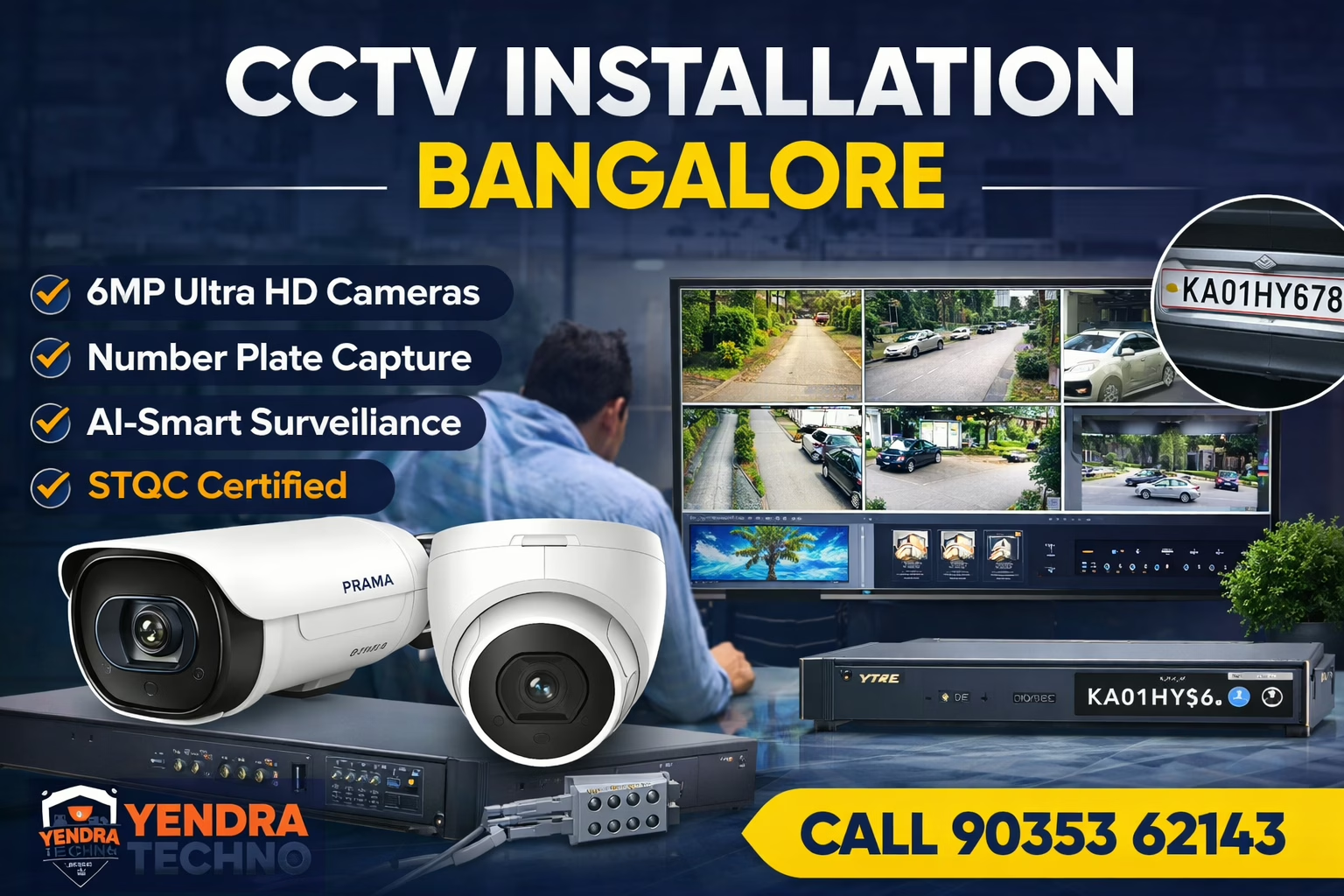
CCTV Installation Bangalore: Real 6MP AI Surveillance Project in Mathikere (Case Study 2026)
CCTV Installation Bangalore: Real Project (Case Study 2026) CCTV Installation Bangalore: Real 6MP AI Surveillance Project in Mathikere (Case Study 2026) What is CCTV installation in Bangalore? CCTV installation in Bangalore is the process of designing, selecting, and installing surveillance cameras with proper networking, storage, and monitoring systems. A professional installation ensures clear video footage, reliable performance, and compliance with government standards like STQC certification. Summary This is a real CCTV installation project in Mathikere, Bangalore 6MP IP cameras were used for high clarity STQC-certified cameras ensure compliance and reliability AI features enable smart surveillance Proper design and installation deliver real results Ideal for homes, apartments, and businesses Introduction: Why Most CCTV Installations Fail (And What This Project Proves) Why do most CCTV systems fail? Most CCTV systems fail due to poor system design, incorrect camera placement, low-quality hardware, and lack of compliance with standards. Without proper planning and professional installation, even expensive cameras may not deliver usable footage. When people search for CCTV installation Bangalore, they are not just looking for cameras—they are looking for reliable security, clear footage, and long-term performance. But here’s the reality:Most CCTV systems installed across Bangalore fail within months—not because of hardware failure, but because of: Poor system design Wrong camera selection No compliance with government standards Unprofessional installation practices This case study by Yendra Techno Solution demonstrates how a properly engineered CCTV system can deliver: Crystal-clear number plate capture Smart AI-based monitoring Reliable long-term performance Full compliance with Indian standards Let’s break down this real CCTV installation project in Mathikere, Bangalore and understand what actually works in 2026. Project Overview: CCTV Installation in Mathikere, Bangalore This project was executed in Mathikere, a busy residential and semi-commercial area in Bangalore where surveillance clarity is critical due to: High vehicle movement Mixed lighting conditions Security concerns in apartments and independent buildings Project Highlights Location: Mathikere, Bangalore Total Cameras Installed: 6 IP Cameras System Type: Smart Hybrid AI Surveillance Installation Type: Indoor + Outdoor Coverage Objective: Clear identification (vehicle number plates + human detection) https://www.youtube.com/watch?v=abbkOzd1eU0 Client Requirement: What Needed to Be Solved The client approached with a common but critical requirement: We need a CCTV system where we can clearly identify vehicle number plates and monitor activities in real-time. This is where most installations fail. Typical low-cost setups: Use 2MP/4MP cameras Ignore lighting conditions Lack AI capabilities Produce blurry or unusable footage Yendra’s Approach Instead of selling “cameras,”Yendra Techno Solution approached this as a security system design problem. System Design Strategy: Engineering, Not Guesswork A successful CCTV installation is not about the number of cameras—it’s about placement, specification, and integration. Key Design Considerations Entry & Exit Monitoring Focus on capturing vehicle number plates Angle optimization for clarity Lighting Conditions Night-time visibility planning Avoid glare and overexposure Coverage Optimization No blind spots Balanced indoor and outdoor surveillance AI-Based Detection Human detection Vehicle recognition Future Scalability NVR capacity planning Network infrastructure readiness This table clearly highlights how STQC vs Non-STQC CCTV Cameras differ across compliance, security, and long-term cost. Camera Selection: Why 6MP IP Cameras Were Chosen What is an IP camera system? An IP camera system uses internet protocol to transmit video data over a network. It offers higher resolution, remote access, and advanced features like AI-based detection compared to traditional analog CCTV systems. One of the most critical decisions in this project was selecting 6MP IP cameras instead of conventional lower-resolution options. Why 6MP Matters Compared to 2MP or 4MP cameras, 6MP cameras provide: Higher pixel density Better zoom capability Clear identification of faces and number plates Improved forensic usability Real Impact in This Project Vehicle number plates captured clearly Faces identifiable even at moderate distances Better performance in practical conditions Camera Models Used in This Project Why are 6MP CCTV cameras better? 6MP CCTV cameras provide higher resolution than 2MP or 4MP cameras, enabling clearer image quality, better zoom capability, and accurate identification of faces and vehicle number plates. They are ideal for environments where detail and clarity are critical for security Outdoor Cameras (5 Units) Model: PT-NC160D3-WNMS/AW(D2) Bullet IP cameras Designed for outdoor surveillance Weather-resistant Optimized for long-range clarity Indoor Camera (1 Unit) Model: PT-NC163D3-WNMS/AW(D2) Dome camera Ideal for indoor monitoring Wide-angle coverage All cameras used in this project are fromPrama India —known for manufacturing STQC-certified surveillance systems What Is STQC Certification (And Why It Matters in 2026) What is STQC certification for CCTV cameras? Standardisation Testing and Quality Certification Directorate (STQC) certification ensures that CCTV cameras meet Indian government standards for security, performance, and cybersecurity. It guarantees that surveillance systems are safe, reliable, and compliant for use in India. In 2026, CCTV compliance is no longer optional. The Indian government mandates the use of trusted and tested surveillance equipment, and this is whereStandardisation Testing and Quality Certification Directorate(STQC) plays a crucial role. Why STQC Certified Cameras Were Used Government-approved standards Cybersecurity compliance Data protection assurance Reliability in Indian conditions Risk of Non-STQC Cameras Using non-compliant cameras can lead to: Security vulnerabilities Data breaches Legal risks in regulated sectors Poor performance and early failure NVR Setup: The Brain of the System A CCTV system is only as strong as its recording and processing unit. NVR Used Model: PT-NRAS2A08-K2 Type: 8 Channel AI-Sense NVR Capabilities Real-time video processing AI-based detection Multi-camera live display Efficient storage management Network Infrastructure: The Hidden Backbone Most CCTV failures in Bangalore happen due to poor networking—not cameras. Infrastructure Used PoE Switch (Power over Ethernet) CAT6 LAN Cabling Why This Matters Stable video transmission Minimal signal loss Clean installation Long-term durability Live Output: Real-Time Monitoring Experience How many CCTV cameras are required for a home? A typical home requires 4 to 8 CCTV cameras depending on the size, layout, and security needs. Key areas include entry points, parking spaces, hallways, and perimeter zones to ensure complete coverage without blind spots. One of the standout features of this project was: 6 Camera Live Display on TV Real-time monitoring Multiple camera views Clear and lag-free output This is crucial for: Security personnel