



YENDRA TECHNO SOLUTION Warehouse CCTV Installation in Bangalore: A Security System Design Guide Don’t start by choosing cameras. Start by engineering surveillance around your warehouse’s operations, risks, and future scale. Coverage engineered zone by zone — not camera by camera Get a Free Site Assessment See Coverage Zones 24×7 Industrial Monitoring Pan-Karnataka Projects Design-First Approach TL;DR If you’re planning CCTV installation for a warehouse in Bangalore or anywhere in Karnataka, design the surveillance system around operations, security risks, compliance, and future scalability first. The right solution eliminates blind spots, protects inventory, monitors loading bays, integrates with access control, and supports 24×7 industrial operations. The Real Problem Warehouse security starts before camera installation Most warehouses don’t fail because they bought poor cameras — they fail because nobody designed the surveillance system around warehouse operations. During industrial site visits, we often find: ! Cameras installed only around walls ! Loading docks with zero visibility ! High racks creating blind zones ! No monitoring of dispatch activities ! Poor night visibility ! No integration with access control ! Storage built for only a few days of recording A warehouse is a logistics ecosystem — not simply a building. Your CCTV system should monitor movement of: Goods Vehicles Employees Contractors Visitors Forklifts Loading Ops High-Value Inventory That requires engineering, not simply installation. Why It’s Different What makes warehouse surveillance different? Warehouses present unique challenges that differ from offices or retail spaces. Every factor below influences camera selection, mounting height, and network infrastructure. Swipe to explore all factors 01 High Ceilings & Long Aisles Affects mounting height, lens choice, and how far a camera must reliably identify activity. Design Input 02 Multi-Level Pallet Racks Create layered blind spots that shift as inventory is added or removed. Design Input 03 Dust & Temperature Swings Standard consumer cameras degrade fast — housings and ratings matter. Hardware 04 Large Vehicle Movement Trucks and forklifts need wider fields of view and motion-tolerant footage. Coverage 05 Multiple Access Points Every gate, dock, and door is a potential blind spot if not mapped early. Coverage 06 Round-the-Clock Operations 24×7 activity demands storage, redundancy, and low-light planning from day one. Infrastructure Coverage Planning What should a warehouse CCTV system cover? Instead of counting cameras, begin by identifying operational zones. Swipe through all 6 zones Perimeter Security Compound walls Entry gates & boundary fencing Vehicle entrances Purpose: Detect unauthorized entry and track after-hours movement. Loading & Unloading Bays Truck arrival & departure Material unloading Dispatch verification Risk level: Highest-risk zone in most warehouses. Storage Aisles Rack intersections High-value storage Forklift & picking movement Designed to minimize hidden areas, not just maximize coverage. Packing & Dispatch Order preparation Packaging & handling Shipment verification Supports quality assurance records. Employee Entry Points Staff entrances Visitor reception Contractor access Pairs with access control for a complete entry record. Parking & External Areas Staff & visitor parking Truck parking Outdoor storage & service roads Site-Visit Questions Questions decision-makers ask Real discussions we hear during warehouse security planning across Bangalore. How do I eliminate warehouse blind spots? + Blind spots occur because warehouse layouts constantly change — tall racks, pallet stacks, machinery, temporary storage, and structural columns all contribute. Instead of adding cameras randomly, surveillance should be engineered using: Camera height planning Lens optimization Coverage overlap Rack visibility analysis Traffic flow mapping The objective is operational visibility — not simply camera quantity. Which camera covers high-bay warehouse racks? + High-bay warehouses need specialized planning around ceiling height, rack height, viewing distance, required identification level, and lighting. Rather than one wide-angle camera, designers usually combine positions to keep aisle visibility while preserving image detail. Mounting location matters more than resolution alone. How many cameras does a 50,000 sq ft warehouse need? + There’s no standard number. It depends on layout, ceiling height, aisle count, rack arrangement, workflow, loading bays, entry points, and compliance requirements. Two warehouses of identical floor area can need very different designs — a professional site survey is far more accurate than estimating by floor size. Can CCTV monitor loading and unloading activities? + Yes. Loading docks are often the most valuable surveillance locations, documenting vehicle arrival, material receipt, dispatch verification, forklift activity, and shipment disputes. High-quality video simplifies investigations and improves accountability across operations. Which cameras work best in dusty industrial facilities? + Consumer-grade cameras aren’t built for industrial conditions. Selection should factor in dust resistance, environmental protection, temperature tolerance, low-light performance, and long-term reliability. Housings, mounting positions, and maintenance access matter as much as the imaging technology itself. Can warehouse CCTV integrate with access control? + Absolutely. Integration correlates door access, employee identity, visitor logs, video footage, time records, and security events. Instead of searching hours of recordings, teams can jump straight to footage tied to a specific access event. How can I monitor multiple warehouses from one location? + Modern platforms let authorized personnel view multiple sites, receive alerts, search recordings, monitor live feeds, manage permissions, and generate reports — valuable for logistics companies with distributed operations. Can CCTV improve employee safety? + Yes. Surveillance helps monitor restricted areas, forklift movement, unsafe practices, emergency exits, PPE compliance, and incident investigations. It should complement workplace safety programs, not replace them. Camera Strategy Bullet cameras or PTZ cameras? The answer depends on the surveillance objective. Many industrial projects layer both. Bullet Cameras PTZ Cameras Best for fixed coverage Commonly used for: Perimeter monitoring Loading docks Entry gates Parking areas Best for active monitoring Commonly used for: Large warehouse floors Active, on-demand monitoring Security control rooms Wide open storage yards Most industrial projects combine fixed and PTZ cameras as a layered strategy. Before You Install Warehouse CCTV design checklist This design-first approach reduces costly changes after installation. Operational workflow understood Risk assessment completed Entry and exit points identified Loading docks mapped Rack visibility analyzed High-value inventory zones protected Lighting evaluated Camera mounting heights planned Network infrastructure reviewed Recording storage planned Remote monitoring requirements identified Future expansion considered The Bigger Picture System design, not just camera installation
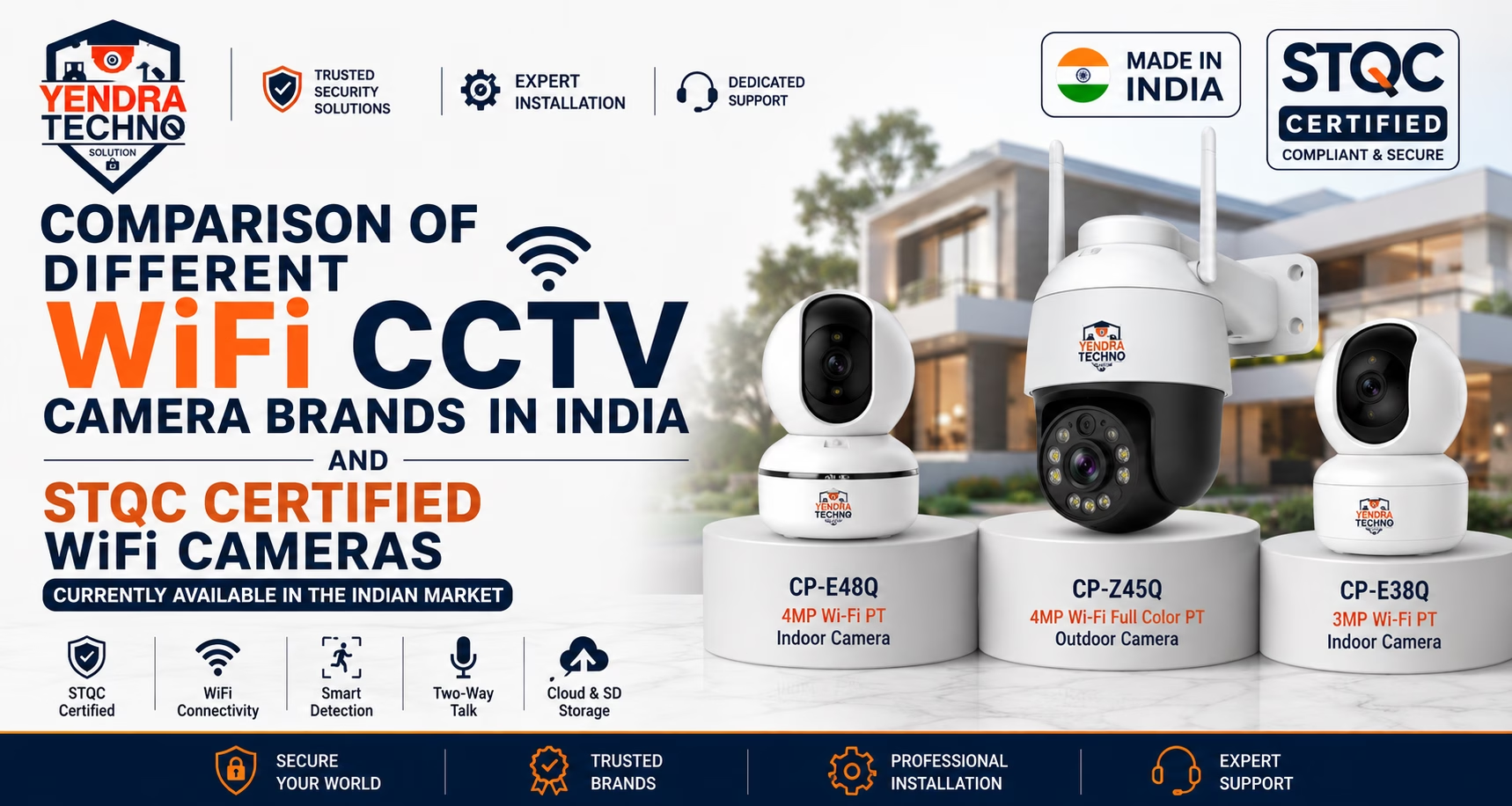
Best WiFi CCTV Camera Brands in India 2026 Comparison
Best Wifi CCTV brands in India Best WiFi CCTV Camera Brands in India (2026 Comparison Guide) Summary If you are planning to install a WiFi CCTV camera for your home, shop, office, apartment, villa, or small business, choosing the right camera is only part of the solution. Proper planning, installation, storage, power backup, and compliance are equally important. Yendra Techno Solution recommends selected CP Plus WiFi CCTV Cameras because they offer reliable performance, strong service support, smart security features, and STQC-certified options suitable for the Indian market. Yendra Recommendations: For Outdoor Security: Choose CP Plus CP-Z45Q (4MP Full Color PT WiFi Camera) For Indoor Security: Choose CP Plus CP-E48 (4MP WiFi PT Indoor Camera), CP Plus CP-E38Q (3MP WiFi PT Indoor Camera) Install near a power socket Connect camera and router to UPS/Inverter backup Use CCTV Surveillance SD Cards Use CP Plus Surveillance SD Cards or equivalent Check STQC Certification Before Buying Understand the applications for WiFi CCTV vs Wired CCTV Do not purchase CCTV cameras based only on online reviews or price. Choose the right CCTV Solution Architect, not just a camera seller. Introduction WiFi CCTV cameras are becoming one of the fastest-growing security solutions in India for homes, shops, small offices, villas, clinics, reception areas, and small business locations. Many customers search online for terms like: Best WiFi CCTV camera in India Wireless CCTV camera for home WiFi CCTV camera with mobile view Outdoor WiFi CCTV camera Indoor WiFi CCTV camera STQC certified WiFi camera CP Plus WiFi camera Best CCTV camera brand in India But in 2026, choosing a WiFi CCTV camera is not only about price, megapixel, night vision, or mobile app. Customers must also check STQC certification, cyber security compliance, service support, storage reliability, Indian weather suitability, and long-term brand availability. At Yendra Techno Solution, we always recommend customers to choose a camera based on proper technical planning, not only based on online offers. 1. What Is a WiFi CCTV Camera? A WiFi CCTV camera is a security camera that sends video data through a wireless WiFi network instead of using a wired LAN cable for data transfer. However, WiFi does not mean the camera works without power. Important technical point A WiFi camera still needs: Electrical power socket Stable WiFi signal Router connectivity Mobile app configuration SD card or cloud storage UPS / inverter backup for continuous operation WiFi means only the data transfer is wireless. The camera still needs power to work. 2. Why STQC Certification Is Important for WiFi CCTV Cameras in India CCTV cameras are connected devices. They are connected to routers, mobile apps, cloud platforms, internet networks, and sometimes business security systems. Because of this, CCTV camera security is not only physical security. It is also cyber security. STQC certification helps customers and businesses identify products that are tested under defined Indian compliance and security requirements. Before buying any WiFi CCTV camera in India, customers should ask: Is this camera STQC certified? Is the exact model number certified? Is the product suitable for Indian usage? Is the brand providing long-term service support? Is the app reliable? Is storage properly planned? Is the camera suitable for indoor or outdoor use? Is installation done by a trained CCTV solution provider? 3. Comparison of Popular WiFi CCTV Camera Brands in India 1. CP Plus WiFi Cameras CP Plus is one of the strongest WiFi CCTV camera brands in India for home, shop, office, and small business security. At Yendra Techno Solution, we recommend selected CP Plus WiFi cameras because of: Make in India product focus Good product quality Strong Indian market presence Better service support STQC-certified camera options Indoor and outdoor WiFi camera range Cloud recording option Mobile app support Motion detection features Two-way talk support Human body detection features Built-in speaker and siren options Recommended CP Plus WiFi Camera Models CP Plus CP-Z45Q – Outdoor WiFi Camera Best For House entrance Villa gate Shop front Parking area Small office outdoor area Balcony monitoring Farm house monitoring Key features 4MP WiFi Full Color PT Camera Color night vision Pan and tilt coverage Motion detection Motion tracking Human body detection Two-way talk Built-in siren Built-in speaker Cloud recording option Alarm notification push Suitable for Indian outdoor conditions CP Plus CP-E48Q – Indoor WiFi Camera Best For Living room Office cabin Reception area Small shop Baby monitoring Elderly care Pet monitoring Stock room Key features 4MP WiFi PT Indoor Camera Motion detection Motion tracking Two-way talk Built-in speaker Cloud recording option Alarm notification push CP Plus CP-E38Q – Indoor WiFi Camera Best For Home indoor monitoring Small rooms Office cabin Small shop monitoring Kids’ room Pet monitoring Key features 3MP WiFi PT Indoor Camera Motion detection Two-way talk Mobile viewing Cloud recording option Indoor pan and tilt monitoring Yendra’s technical rating for CP Plus WiFi Cameras Product reliability: HighService support: HighSTQC compliance availability: Strong, but verify exact modelBest use case: Homes, shops, villas, offices, small commercial spacesYendra recommendation: Strongly recommended for WiFi CCTV requirements 2. Qubo WiFi Cameras Qubo is a smart home security brand backed by the Hero Group. Qubo cameras are popular in the consumer smart home segment and are commonly used for home monitoring, indoor monitoring, baby monitoring, pet monitoring, and basic smart security. Strengths of Qubo WiFi Cameras Good smart home branding Easy mobile app usage Indoor camera options Smart doorbell and home security products Consumer-friendly design Good for simple home monitoring Limitations to check Exact STQC certification must be verified model-wise Not always suitable for professional CCTV-style projects Service and installation support depends on seller or location Better suited for DIY smart home users than complex CCTV projects Yendra’s technical rating for Qubo WiFi Cameras Product reliability: Good for home usageService support: Moderate to good, depending on locationSTQC compliance availability: Verify exact model before purchaseBest use case: Smart home indoor monitoringYendra recommendation: Suitable for simple home use, but model-level compliance must be checked 3. Trueview WiFi Cameras Trueview offers WiFi, 4G, solar, and smart CCTV camera options in
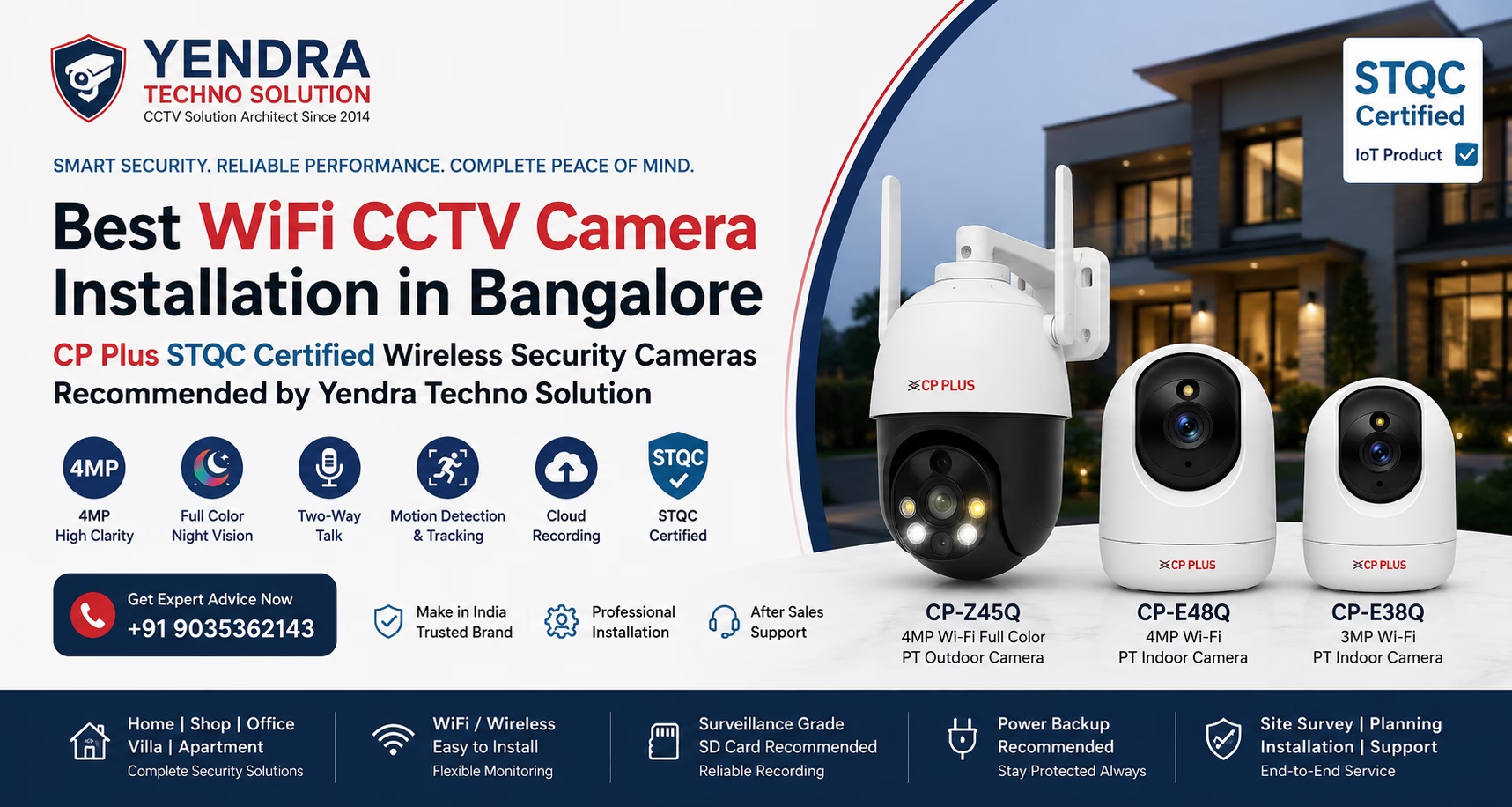
Best WiFi CCTV Camera Installation in Bangalore – CP Plus STQC Certified Wireless Security Cameras Recommended by Yendra Techno Solution
Best WiFi CCTV camera installation in Bangalore Best WiFi CCTV Camera Installation in Bangalore – CP Plus STQC Certified Wireless Security Cameras Recommended by Yendra Techno Solution Summary If you are planning to install a WiFi CCTV camera for your home, shop, office, apartment, villa, or small business, choosing the right camera is only part of the solution. Proper planning, installation, storage, power backup, and compliance are equally important. Yendra Techno Solution recommends selected CP Plus WiFi CCTV Cameras because they offer reliable performance, strong service support, smart security features, and STQC-certified options suitable for the Indian market. Yendra Recommendations: For Outdoor Security: Choose CP Plus CP-Z45Q (4MP Full Color PT WiFi Camera) For Indoor Security: Choose CP Plus CP-E48 (4MP WiFi PT Indoor Camera), CP Plus CP-E38Q (3MP WiFi PT Indoor Camera) Install near a power socket Connect camera and router to UPS/Inverter backup Use CCTV Surveillance SD Cards Use CP Plus Surveillance SD Cards or equivalent Check STQC Certification Before Buying Understand the applications for WiFi CCTV vs Wired CCTV Do not purchase CCTV cameras based only on online reviews or price. Choose the right CCTV Solution Architect, not just a camera seller. Introduction Are you planning to install WiFi CCTV cameras for your home, shop, office, villa, apartment, or small business in Bangalore? Many customers today search online for wireless CCTV cameras, WiFi security cameras, cloud CCTV cameras, and mobile-view cameras. But choosing the right camera is not only about buying a product online. A CCTV camera is a security device, and it must be selected based on clarity, reliability, storage, power backup, WiFi strength, weather condition, compliance, and long-term support. At Yendra Techno Solution, we work as a professional CCTV Solution Architect in Bangalore. We recommend security cameras only after understanding the actual site condition, customer requirement, indoor and outdoor camera placement, recording needs, internet availability, and long-term service expectations. For WiFi CCTV camera requirements, Yendra recommends selected CP Plus WiFi cameras because CP Plus offers reliable product quality, Make in India product focus, strong service support, and STQC-certified camera options for the Indian security market. 1. Why WiFi CCTV Cameras Are Popular in Homes and Small Businesses WiFi CCTV cameras are useful for customers who need simple and smart monitoring without full network cabling in every location. They are commonly used in: Homes Apartments Villas Small offices Shops Clinics Reception areas Baby monitoring Elderly care monitoring Pet monitoring Parking areas Farm houses Small warehouses WiFi cameras are preferred because they support mobile live view, cloud recording options, two-way talk, motion detection, and instant alert notifications. However, WiFi cameras must be planned properly. Poor WiFi signal, wrong SD card, no power backup, weak camera placement, or non-certified products can create problems in the long run. 2.Important Technical Point: WiFi Camera Does Not Mean No Power Cable One of the biggest misunderstandings among customers is that a wireless CCTV camera does not require any wire. Technically, this is incorrect. A WiFi or wireless CCTV camera still needs electrical power. The word “WiFi” means that the camera transfers video data through the wireless network to the router or mobile application. But the camera still needs a power source to switch on and work continuously. Yendra’s recommendation: Provide a proper electrical power socket near the camera location. Connect the camera power point to UPS or inverter backup. Avoid loose adapters or temporary extension boxes. Use weather-protected power points for outdoor cameras. Ensure stable WiFi signal at the camera location. This planning helps avoid frequent camera offline issues, recording gaps, and power failure problems. 3.Best Outdoor WiFi CCTV Camera Recommended by Yendra CP Plus CP-Z45Q – 4MP Wi-Fi Full Color PT Outdoor Camera For outdoor WiFi CCTV camera requirements, Yendra recommends the CP Plus CP-Z45Q. This camera is suitable for customers who need smart outdoor monitoring with clear image quality, mobile alerts, two-way communication, and full color night monitoring. CP Plus officially lists CP-Z45Q as a 4MP Wi-Fi Full Color PT Camera with 1/2.9” 4MP CMOS image sensor, 4mm lens, H.265 video compression, Wi-Fi support, 20fps at 4MP, 15m IR distance, and 8–10m white LED distance. Best use cases for CP-Z45Q House entrance Villa gate Shop front Parking area Small office entrance Farm house outdoor area Apartment balcony Outdoor delivery monitoring Small business perimeter monitoring Key features 4MP video clarity WiFi support Full color night vision Pan and tilt coverage Two-way talk support Motion detection Motion tracking Human body detection Alarm notification push Built-in siren Built-in speaker Echo cancellation Cloud recording option Suitable for Indian outdoor conditions STQC-certified camera option 4. Best Indoor WiFi CCTV Cameras Recommended by Yendra CP Plus CP-E48Q – 4MP Wi-Fi PT Indoor Camera For indoor monitoring, Yendra recommends CP Plus CP-E48Q for customers who need 4MP clarity with smart indoor monitoring features. CP Plus officially lists CP-E48Q with 4MP resolution, H.265 video compression, 4mm lens, motion detection support, and motion tracking support. Best use cases for CP-E48Q Living room Reception area Cash counter Baby monitoring Elderly care Small office room Shop indoor monitoring Stock room Pet monitoring Key features 4MP indoor video clarity WiFi support Pan and tilt monitoring Two-way talk support Cloud recording option Motion detection Motion tracking Human body detection Alarm notification push Built-in siren Built-in speaker Echo cancellation STQC-certified camera option CP Plus CP-E38Q – 3MP Wi-Fi PT Indoor Camera For customers looking for a practical indoor WiFi camera option, CP Plus CP-E38Q is also a good indoor camera model. CP Plus officially lists CP-E38Q as a 3MP Wi-Fi PT Camera with 1/2.7” 3MP PS CMOS image sensor, 4mm lens, H.265 video compression, Wi-Fi support, 20fps at 3MP, and 15m IR distance Best use cases for CP-E38Q Small rooms Indoor shop monitoring Home monitoring Kids’ room Pet monitoring Office cabin Small stock area Key features 3MP video clarity WiFi support Pan and tilt viewing Two-way talk support Cloud recording option Motion detection Motion tracking Human body detection Alarm notification push Built-in speaker Indoor smart monitoring support 5.Why STQC Certification Matters for
Best Wireless CCTV for Bangalore Offices & Small Businesses (2026 Guide)
Best Wireless CCTV for Bangalore Offices & Small Businesses (2026 Guide) Best Wireless CCTV for Bangalore Offices & Small Businesses (2026 Guide) Summary Wireless CCTV is ideal for offices, retail stores, clinics, startups, and small businesses in Bangalore. Installation is faster and less disruptive than traditional wired systems. Business owners can monitor their premises remotely through mobile apps. AI features such as person detection and intrusion alerts improve security efficiency. Small offices typically require 4–8 cameras, while larger businesses may need 8–16 or more. Office CCTV Bangalore installation costs generally depend on camera count, storage requirements, and monitoring features. Wireless CCTV works best when supported by a stable internet and business-grade network. Professional site surveys help determine the right camera placement and system design. Featured Questions Answered Q. What is a wireless CCTV system for offices? A wireless CCTV system for offices uses Wi-Fi or wireless network connectivity to transmit video from security cameras to a recording device or cloud platform. It enables surveillance, remote monitoring, mobile access, and video analytics without extensive cabling, making installation faster and more flexible for modern businesses. Q. What is a wireless CCTV system for offices? A wireless CCTV system for offices uses Wi-Fi or wireless network connectivity to transmit video from security cameras to a recording device or cloud platform. It enables surveillance, remote monitoring, mobile access, and video analytics without extensive cabling, making installation faster and more flexible for modern businesses. Q. Is wireless CCTV suitable for Bangalore businesses? Yes. Wireless CCTV is suitable for most Bangalore offices, clinics, retail shops, restaurants, and coworking spaces. It offers quick installation, remote monitoring, AI-powered security features, and easy scalability, making it an effective surveillance solution for growing businesses. Q. How many CCTV cameras does an office need? Most small offices require 4–8 CCTV cameras to monitor entrances, reception areas, workspaces, and server rooms. Medium-sized offices may need 8–16 cameras, while larger facilities often require a professional site survey to determine the optimal surveillance coverage. Q. What is the cost of office CCTV installation in Bangalore? Office CCTV installation in Bangalore typically depends on camera count, image quality, storage requirements, AI features, and installation complexity. Small office CCTV systems generally start with 4–8 cameras, while larger businesses may require customized surveillance solutions. Q. Can wireless CCTV work without internet? Yes. Wireless CCTV cameras can continue recording locally even when internet connectivity is unavailable. However, features such as remote monitoring, mobile viewing, cloud backup, and real-time alerts may not function until the internet connection is restored. Q. Can I view my office CCTV cameras on my phone? Yes. Most modern Office CCTV Bangalore systems include mobile applications that allow business owners and managers to view live footage, playback recordings, receive alerts, and monitor multiple locations from a smartphone or tablet. Q. What are the best locations for office CCTV cameras? The best locations for office CCTV cameras include entrances, reception areas, cash counters, server rooms, inventory storage areas, parking lots, and other high-risk zones. Strategic camera placement improves surveillance coverage and reduces security blind spots. Q. Is wireless CCTV secure for business use? Yes. Business-grade wireless CCTV systems use encrypted communication, secure user authentication, access controls, and protected mobile applications. When installed correctly, they provide a secure and reliable surveillance solution for commercial environments. Q. What features should businesses look for in a CCTV system? Businesses should look for high-resolution security cameras, remote monitoring, video analytics, motion detection, mobile access, cloud or local storage, access control integration, and reliable after-sales support when selecting a CCTV surveillance system. Should businesses choose wired or wireless CCTV? Wireless CCTV is ideal for businesses seeking quick installation, flexibility, and easy expansion. Wired CCTV is often preferred for larger facilities that require maximum reliability and uninterrupted surveillance across extensive areas. Introduction Security concerns are increasing for offices, retail stores, clinics, warehouses, startups, and small businesses across Bangalore. From unauthorized access and employee safety to theft prevention and remote monitoring, business owners need a surveillance system that is reliable, flexible, and easy to manage. This is where Office CCTV Bangalore solutions using wireless CCTV technology have become popular. Modern wireless CCTV systems offer faster installation, smartphone access, AI-powered alerts, cloud storage options, and lower infrastructure requirements compared to traditional systems. Whether you run a small office in Whitefield, a retail store in Indiranagar, a clinic in HSR Layout, or a startup in Electronic City, choosing the right CCTV system can help improve security, monitor operations, and provide peace of mind. In this guide, you’ll learn: Whether wireless CCTV is suitable for your business The advantages and limitations of wireless office surveillance How many cameras your office may require How do you plan for your CCTV installation budget Features to look for before purchasing How to choose the right CCTV installation company By the end of this guide, you’ll have a clear understanding of the best wireless CCTV options for Bangalore offices and small businesses. 1. Who Needs Wireless CCTV? Not every business has the same security requirements, but most modern workplaces can benefit from a wireless surveillance system. Today’s wireless security cameras offer remote monitoring, video analytics, smartphone alerts, and flexible installation, making them suitable for a wide range of commercial environments. If you’re researching Office CCTV Bangalore solutions, the first step is understanding whether wireless CCTV is the right fit for your business type. Business Types That Benefit from Wireless CCTV Business Type Common Security Challenges How Wireless CCTV Helps Offices Unauthorized access, employee safety, visitor management Remote monitoring, access control integration, surveillance recording Clinics & Medical Centers Patient safety, restricted areas, compliance requirements Security cameras for reception, pharmacy, and entry monitoring Salons & Spas Cash handling, customer disputes, staff accountability Video analytics and activity monitoring Restaurants & Cafés Billing disputes, inventory loss, kitchen monitoring Real-time surveillance and operational visibility Retail Shops Shoplifting, cash counter security, customer traffic Security system with AI-based monitoring and alerts Coworking Spaces Multiple users, shared access, visitor management Remote monitoring and access control support Office
Prama Camera Installation in Bangalore: 7 Powerful Reasons Yendra is the Trusted Authorized Partner
Prama Camera Installation in Bangalore: 7 Powerful Reasons Yendra is the Trusted Authorized Partner Prama Camera Installation in Bangalore: 7 Powerful Reasons Yendra is the Trusted Authorized Partner Prama Camera Installation in Bangalore by Yendra ensures certified, high-performance CCTV deployment with accurate camera placement, AI-enabled security configuration, and reliable structured cabling. As an authorized Prama installation partner, Yendra delivers genuine equipment, valid warranty protection, and expert installation that maximizes surveillance coverage, reduces blind spots, and improves long-term security for homes and businesses. Summary Prama Camera Installation in Bangalore is more than buying CCTV cameras—it requires proper surveillance planning, correct camera placement, and long-term system design. Poor installation often leads to blind spots, weak recording quality, warranty issues, and expensive rework, even when good cameras are used. Prama India is trusted for enterprise-grade CCTV surveillance cameras, outdoor durability, AI-enabled monitoring, and reliable performance for Indian conditions. Yendra Techno Solution works as an authorized Prama installation partner, providing genuine products, certified deployment, OEM-backed support, and structured warranty handling. Certified engineers focus on surveillance architecture, including risk assessment, lens selection, storage planning, remote access, and compliance documentation—not just camera mounting. Industrial CCTV installation for factories and warehouses requires perimeter monitoring, loading bay surveillance, worker safety tracking, audit trails, and operational visibility. Authorized installation protects warranty validity, AMC continuity, firmware support, and faster product replacement compared to grey market CCTV purchases. 1. Introduction: In Bangalore, buying CCTV cameras is easy. Building a reliable, compliant, and future-ready surveillance system is not. Many homeowners, apartment associations, office managers, factory owners, and warehouse operators invest in cameras first and think about installation later. This often leads to poor coverage, blind spots, warranty issues, weak storage planning, and expensive rework. That is why Prama Camera Installation in Bangalore should never be treated as a simple product purchase. It should be approached as a security design decision. This is where Prama Camera Installation in Bangalore by an authorized partner like Yendra becomes critical. With certified processes, precision engineering, and deep domain expertise, Yendra ensures your security system is not just installed—but optimized for real-world protection. At Yendra Techno Solution, we focus on CCTV architecture—not just camera installation. As an authorized Prama installation partner, we help clients choose the right surveillance layout, deploy genuine products, ensure warranty protection, and build systems that support safety, operations, and audit readiness. Whether the requirement is for a home, apartment, office, factory, warehouse, or industrial facility, the goal remains the same: strong surveillance that works when it matters most. 2. Why Prama Camera Installation Matters More Than Just Buying CCTV Cameras Prama Camera Installation in Bangalore matters more than simply buying CCTV cameras because security depends on proper camera placement, blind spot coverage, storage planning, and system design. A professionally installed video surveillance system improves safety, compliance, and long-term reliability. A CCTV camera alone does not create security. The real value comes from how the system is planned, installed, and maintained. Wrong camera angles, poor cable routing, weak storage planning, and improper remote access setup can make even expensive systems ineffective. This is where professional Prama Camera Installation in Bangalore becomes critical. A properly designed video surveillance system helps with: Entry and exit monitoring Blind spot elimination Visitor tracking Employee safety Theft prevention Incident verification Audit documentation Compliance support Many low-cost installers focus only on mounting cameras. They do not assess risk zones, compliance needs, or future expansion requirements. If you want to understand why engineered deployment matters, read our detailed guide on Prama CCTV installation and professional setup strategy. 3. Why Bangalore Businesses Prefer Prama Camera for CCTV Surveillance Systems Businesses prefer Prama camera solutions because they offer reliable CCTV surveillance cameras, AI-enabled monitoring, strong outdoor durability, and enterprise-grade video surveillance systems designed for Indian conditions. Prama is widely trusted for residential, commercial, and industrial security needs. Prama India has become one of the most trusted names in enterprise surveillance across India. Prama CCTV systems are designed for modern surveillance environments where basic recording is not enough. Key advantages include: AI-powered motion detection and smart alerts High-definition clarity in low-light conditions Stable performance in large-scale deployments Smart storage optimization (DVR/NVR efficiency) Scalable architecture for businesses of all sizes However, these advantages are only fully realized when installed correctly by a certified Prama installation partner. From residential communities to factories and commercial campuses, Prama is known for reliable performance, strong product quality, and solutions built for Indian operating conditions. Businesses prefer Prama because it offers: IP cameras and PTZ cameras Dome, bullet, and turret cameras DVR and NVR solutions AI-enabled analytics Night vision and outdoor surveillance Remote monitoring capability Industrial-grade surveillance options For Bangalore businesses, reliability matters more than low upfront cost. Downtime, false security, and unsupported products create bigger losses later. This is why many decision-makers choose professional Prama Camera Installation in Bangalore over generic local alternatives. 4. Industrial CCTV Installation Needs More Than Standard Security Cameras Industrial CCTV installation requires more than standard cameras because factories and warehouses need perimeter security, loading bay monitoring, worker safety tracking, audit trails, and compliance support. Professional surveillance planning improves both security and operations. Factories and warehouses cannot depend on basic home-style surveillance systems. Industrial security requires stronger planning because the risk is higher and operations are more complex. Industrial environments need: perimeter monitoring material movement tracking loading bay surveillance employee safety monitoring unauthorized access prevention incident documentation shift operation visibility production area accountability This is why industrial Prama Camera Installation in Bangalore must be designed differently. Factories require audit-ready surveillance—not simple recording. For businesses planning larger deployments, our industrial CCTV installation guide explains how surveillance supports both operations and compliance. 5. Why Choosing an Authorized Prama Installation Partner Matters in Bangalore Not all CCTV installations deliver the same results—even with identical hardware. Choosing an authorized Prama Installation partner in Bangalore ensures: Genuine Prama equipment with verified sourcing Valid manufacturer warranty protection Compliance with installation standards Access to official firmware updates Priority technical support from the ecosystem Unauthorized installations often lead to performance issues, void warranties,
CCTV Installation Bangalore: Real 6MP AI Surveillance Project in Mathikere (Case Study 2026)
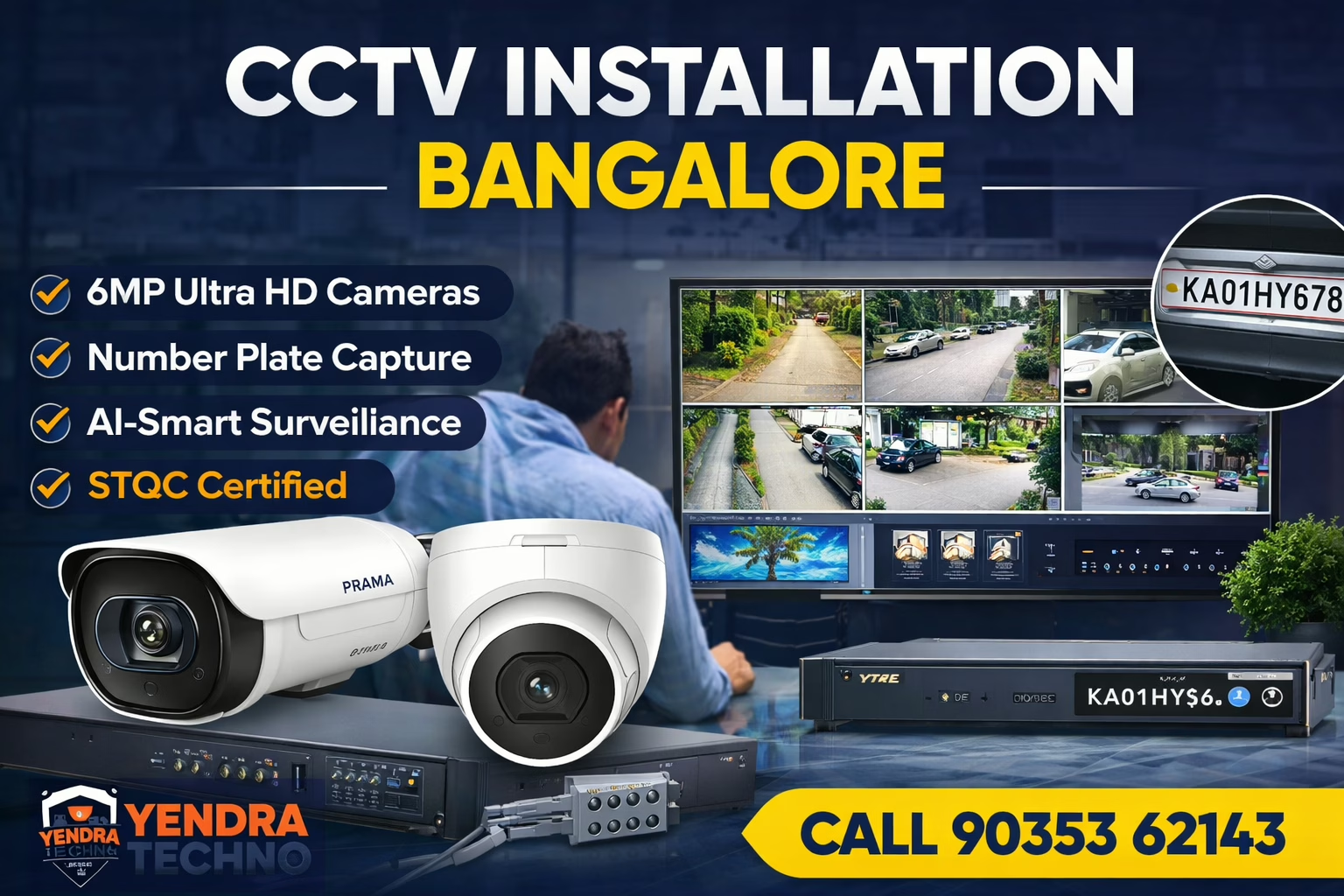
CCTV Installation Bangalore: Real Project (Case Study 2026) CCTV Installation Bangalore: Real 6MP AI Surveillance Project in Mathikere (Case Study 2026) What is CCTV installation in Bangalore? CCTV installation in Bangalore is the process of designing, selecting, and installing surveillance cameras with proper networking, storage, and monitoring systems. A professional installation ensures clear video footage, reliable performance, and compliance with government standards like STQC certification. Summary This is a real CCTV installation project in Mathikere, Bangalore 6MP IP cameras were used for high clarity STQC-certified cameras ensure compliance and reliability AI features enable smart surveillance Proper design and installation deliver real results Ideal for homes, apartments, and businesses Introduction: Why Most CCTV Installations Fail (And What This Project Proves) Why do most CCTV systems fail? Most CCTV systems fail due to poor system design, incorrect camera placement, low-quality hardware, and lack of compliance with standards. Without proper planning and professional installation, even expensive cameras may not deliver usable footage. When people search for CCTV installation Bangalore, they are not just looking for cameras—they are looking for reliable security, clear footage, and long-term performance. But here’s the reality:Most CCTV systems installed across Bangalore fail within months—not because of hardware failure, but because of: Poor system design Wrong camera selection No compliance with government standards Unprofessional installation practices This case study by Yendra Techno Solution demonstrates how a properly engineered CCTV system can deliver: Crystal-clear number plate capture Smart AI-based monitoring Reliable long-term performance Full compliance with Indian standards Let’s break down this real CCTV installation project in Mathikere, Bangalore and understand what actually works in 2026. Project Overview: CCTV Installation in Mathikere, Bangalore This project was executed in Mathikere, a busy residential and semi-commercial area in Bangalore where surveillance clarity is critical due to: High vehicle movement Mixed lighting conditions Security concerns in apartments and independent buildings Project Highlights Location: Mathikere, Bangalore Total Cameras Installed: 6 IP Cameras System Type: Smart Hybrid AI Surveillance Installation Type: Indoor + Outdoor Coverage Objective: Clear identification (vehicle number plates + human detection) https://www.youtube.com/watch?v=abbkOzd1eU0 Client Requirement: What Needed to Be Solved The client approached with a common but critical requirement: We need a CCTV system where we can clearly identify vehicle number plates and monitor activities in real-time. This is where most installations fail. Typical low-cost setups: Use 2MP/4MP cameras Ignore lighting conditions Lack AI capabilities Produce blurry or unusable footage Yendra’s Approach Instead of selling “cameras,”Yendra Techno Solution approached this as a security system design problem. System Design Strategy: Engineering, Not Guesswork A successful CCTV installation is not about the number of cameras—it’s about placement, specification, and integration. Key Design Considerations Entry & Exit Monitoring Focus on capturing vehicle number plates Angle optimization for clarity Lighting Conditions Night-time visibility planning Avoid glare and overexposure Coverage Optimization No blind spots Balanced indoor and outdoor surveillance AI-Based Detection Human detection Vehicle recognition Future Scalability NVR capacity planning Network infrastructure readiness This table clearly highlights how STQC vs Non-STQC CCTV Cameras differ across compliance, security, and long-term cost. Camera Selection: Why 6MP IP Cameras Were Chosen What is an IP camera system? An IP camera system uses internet protocol to transmit video data over a network. It offers higher resolution, remote access, and advanced features like AI-based detection compared to traditional analog CCTV systems. One of the most critical decisions in this project was selecting 6MP IP cameras instead of conventional lower-resolution options. Why 6MP Matters Compared to 2MP or 4MP cameras, 6MP cameras provide: Higher pixel density Better zoom capability Clear identification of faces and number plates Improved forensic usability Real Impact in This Project Vehicle number plates captured clearly Faces identifiable even at moderate distances Better performance in practical conditions Camera Models Used in This Project Why are 6MP CCTV cameras better? 6MP CCTV cameras provide higher resolution than 2MP or 4MP cameras, enabling clearer image quality, better zoom capability, and accurate identification of faces and vehicle number plates. They are ideal for environments where detail and clarity are critical for security Outdoor Cameras (5 Units) Model: PT-NC160D3-WNMS/AW(D2) Bullet IP cameras Designed for outdoor surveillance Weather-resistant Optimized for long-range clarity Indoor Camera (1 Unit) Model: PT-NC163D3-WNMS/AW(D2) Dome camera Ideal for indoor monitoring Wide-angle coverage All cameras used in this project are fromPrama India —known for manufacturing STQC-certified surveillance systems What Is STQC Certification (And Why It Matters in 2026) What is STQC certification for CCTV cameras? Standardisation Testing and Quality Certification Directorate (STQC) certification ensures that CCTV cameras meet Indian government standards for security, performance, and cybersecurity. It guarantees that surveillance systems are safe, reliable, and compliant for use in India. In 2026, CCTV compliance is no longer optional. The Indian government mandates the use of trusted and tested surveillance equipment, and this is whereStandardisation Testing and Quality Certification Directorate(STQC) plays a crucial role. Why STQC Certified Cameras Were Used Government-approved standards Cybersecurity compliance Data protection assurance Reliability in Indian conditions Risk of Non-STQC Cameras Using non-compliant cameras can lead to: Security vulnerabilities Data breaches Legal risks in regulated sectors Poor performance and early failure NVR Setup: The Brain of the System A CCTV system is only as strong as its recording and processing unit. NVR Used Model: PT-NRAS2A08-K2 Type: 8 Channel AI-Sense NVR Capabilities Real-time video processing AI-based detection Multi-camera live display Efficient storage management Network Infrastructure: The Hidden Backbone Most CCTV failures in Bangalore happen due to poor networking—not cameras. Infrastructure Used PoE Switch (Power over Ethernet) CAT6 LAN Cabling Why This Matters Stable video transmission Minimal signal loss Clean installation Long-term durability Live Output: Real-Time Monitoring Experience How many CCTV cameras are required for a home? A typical home requires 4 to 8 CCTV cameras depending on the size, layout, and security needs. Key areas include entry points, parking spaces, hallways, and perimeter zones to ensure complete coverage without blind spots. One of the standout features of this project was: 6 Camera Live Display on TV Real-time monitoring Multiple camera views Clear and lag-free output This is crucial for: Security personnel
STQC vs Non-STQC CCTV Cameras: Key Differences & Risks (2026 Guide)
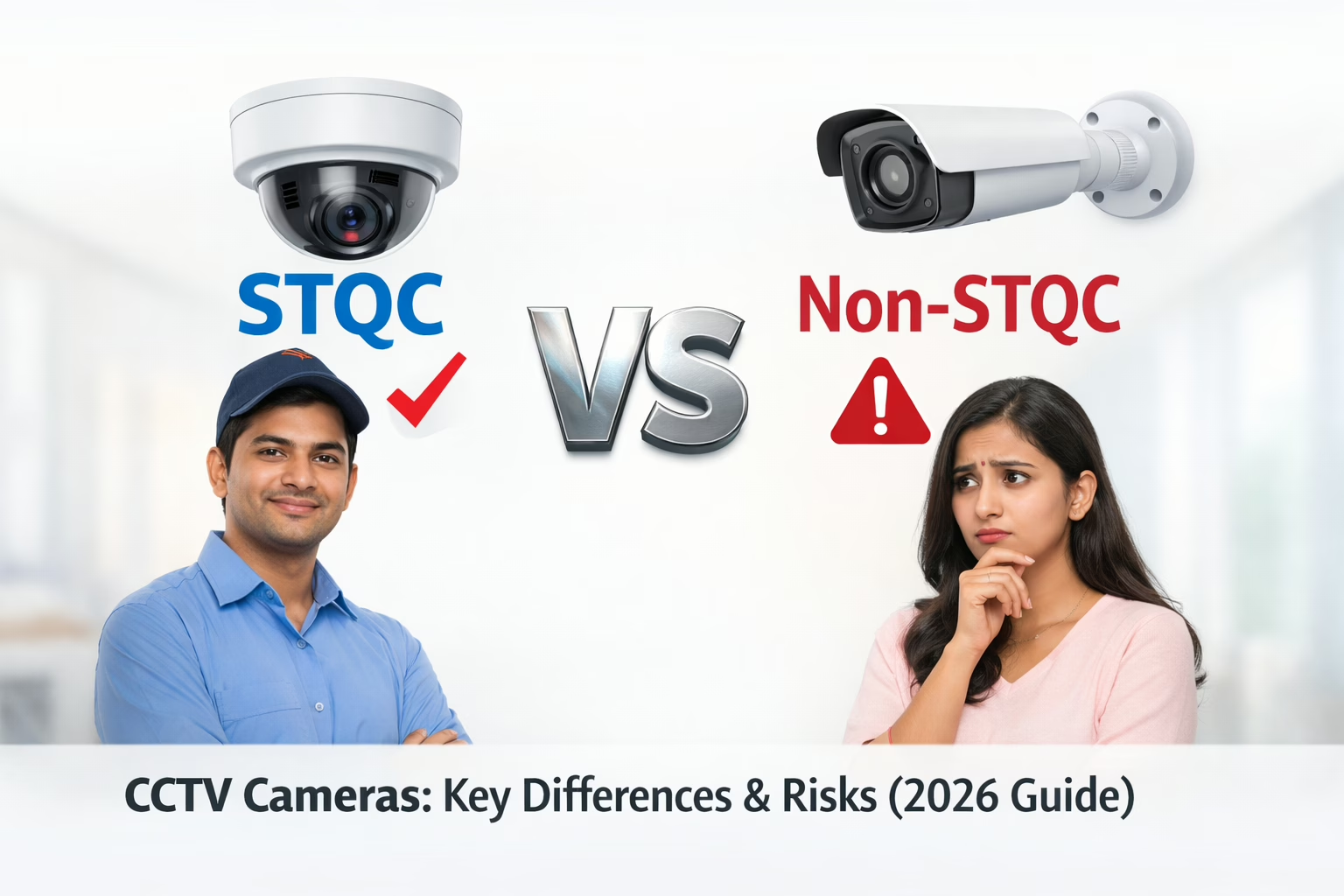
STQC vs Non-STQC CCTV Cameras: Key Differences & Risks (2026 Guide) STQC vs Non-STQC CCTV Cameras: Key Differences & Risks (2026 Guide) What is the difference between STQC and non-STQC CCTV cameras? STQC cameras are government-certified, secure, and compliant with MeitY CCTV Guidelines India 2026, while non-STQC cameras lack certification, pose security risks, and may be banned after April 2026. Summary STQC-certified cameras (under STQC Certification for CCTV Cameras in India) are secure, government-compliant, and future-ready. Non-STQC cameras are cheaper but risky—they may fail security standards and face restrictions under MeitY CCTV Guidelines India 2026. Key difference in STQC vs Non-STQC CCTV Cameras:👉 Compliance + Security vs Cost-saving + Risk Non-compliant systems can lead to:❌ Government ban / replacement❌ Cybersecurity vulnerabilities❌ Higher long-term costs Best choice in 2026: Always go for STQC-certified CCTV systems. 👉 Bottom line: STQC vs Non-STQC CCTV Cameras is no longer optional—it’s a compliance decision, not just a price decision. Introduction: The Biggest Mistake Buyers Still Make In 2026, choosing the wrong CCTV camera is no longer just a technical mistake—it’s a compliance violation. With the rollout of MeitY CCTV Guidelines India 2026, the gap between STQC-certified and non-certified cameras has become critical. Yet, many buyers in Bangalore still ask:👉 “Why pay more for STQC cameras?” Understanding STQC vs Non-STQC CCTV Cameras is now essential for any business planning a compliant surveillance system.. This blog answers that with clear comparisons, real risks, and expert insights, helping you make a compliance-safe decision. What Is STQC in CCTV? STQC Certification for CCTV Cameras in India is a government-approved certification ensuring that CCTV cameras: Meet cybersecurity standards Have no hidden vulnerabilities Use trusted hardware and firmware Comply with Indian surveillance regulations It is governed under the Ministry of Electronics and Information Technology (MeitY). When evaluating STQC vs Non-STQC CCTV Cameras, STQC certification becomes the most important differentiator for long-term safety and legality 👉 Read: What Is STQC Certification for CCTV Cameras in India? What Are Non-STQC CCTV Cameras? Non-STQC cameras are: Imported or locally assembled devices Without certified security validation Often cheaper—but high-risk They may still work technically—but fail compliance requirements under 2026 regulations. In the comparison of STQC vs Non-STQC CCTV Cameras, these devices may appear cost-effective initially but fail critical compliance standards. STQC vs Non-STQC CCTV Cameras (Comparison Table) Key Differences at a Glance Factor STQC Certified CCTV Non-STQC CCTV Certification Approved under STQC Certification for CCTV Cameras in India No certification Legal Status (2026) Fully compliant Risk of ban Security Encrypted, tested Vulnerable Firmware Verified & signed Unknown / unverified Data Protection Secure storage protocols No guaranteed protection Network Safety Protected architecture Open to hacking Compliance Meets MeitY CCTV Guidelines India 2026 Non-compliant Cost Higher upfront Cheaper initially Long-Term Cost Low (no replacement) High (replacement risk) This table clearly highlights how STQC vs Non-STQC CCTV Cameras differ across compliance, security, and long-term cost. Why Non-STQC Cameras Are a Serious Risk in 2026 🚨 1. Risk of Government Ban Under MeitY CCTV Guidelines India 2026, non-compliant cameras may: Be restricted from use Require mandatory replacement Be rejected in audits. The risk becomes obvious when analyzing STQC vs Non-STQC CCTV Cameras in terms of legal usability. 🔓 2. Cybersecurity Threats Non-certified cameras often: Have hidden backdoors Transmit unencrypted data Allow unauthorized access This is especially dangerous for: Offices Factories IT infrastructure From a security perspective, STQC vs Non-STQC CCTV Cameras is not just a comparison—it’s a risk assessment. 💸 3. Hidden Cost Explosion Cheap cameras = expensive mistakes You may face: Full system replacement Reinstallation costs Downtime losses The cost difference in STQC vs Non-STQC CCTV Cameras becomes significant over time due to compliance failures. 👉Read CCTV Installation Bangalore Compliance Checklist 2026 ⚖️ 4. Legal & Insurance Risks Non-compliant systems can lead to: Insurance claim rejection Legal liability in breaches Non-approval in audits Understanding STQC vs Non-STQC CCTV Cameras helps businesses avoid regulatory and financial consequences. Why STQC Cameras Are the Safer Investment ✅ 1. Regulatory Compliance STQC cameras are aligned with: MeitY CCTV Guidelines India 2026 Future surveillance policies In the debate of STQC vs Non-STQC CCTV Cameras, compliance is the strongest argument in favor of STQC systems. 🔐 2. Built-In Security Architecture STQC cameras are designed with cybersecurity in mind. This is a key advantage when comparing STQC vs Non-STQC CCTV Cameras for enterprise environments. They ensure: Secure boot Encrypted communication Controlled access 🔄 3. Long-Term Stability They eliminate future upgrade risks. The long-term value of STQC vs Non-STQC CCTV Cameras clearly favors certified systems. No forced upgrades No compliance risks Future-ready system design 📈 4. Business Trust & Credibility Compliance builds trust with clients and stakeholders.. Choosing correctly between STQC vs Non-STQC CCTV Cameras directly impacts business credibility. For enterprises, compliance signals: Data responsibility Security maturity Operational reliability Real Scenario: Bangalore Business Case A mid-sized office installs non-STQC cameras to save 25%. Within a year: Compliance audit fails System flagged under MeitY rules Full replacement required Total cost = 2.5x original budget How to Identify STQC-Compliant Cameras (Quick Checklist) ✔ Check STQC certification label✔ Verify OEM authorization✔ Confirm firmware authenticity✔ Ensure ER compliance✔ Buy from trusted integrators 👉 Read: How to Choose STQC Certified CCTV Cameras in India (2026 Guide) Who Should ONLY Use STQC Cameras? Mandatory for: Corporate offices Industries & factories Warehouses Apartments & gated communities Government-related projects Expert Insight: How Yendra Chooses CCTV Systems At Yendra, camera selection is not based on price—but on: Compliance readiness Firmware integrity OEM reliability Network security compatibility This ensures every system aligns with: STQC Certification for CCTV Cameras in India MeitY CCTV Guidelines India 2026 References To fully understand compliance, read: CCTV Ban in India 2026: Complete Breakdown of New Rules & Impact What Is STQC Certification for CCTV Cameras in India? How to Choose STQC Certified CCTV Cameras in India (2026 Guide) MeitY CCTV Guidelines India 2026 CCTV Installation Bangalore Compliance Checklist 2026 FAQs Is STQC certification mandatory for CCTV in India? Yes. Under MeitY CCTV Guidelines India 2026, STQC certification is required for compliance.

CCTV Installation in Bangalore: Compliance Checklist for 2026
CCTV Installation in Bangalore: Compliance Checklist for 2026 CCTV Installation Bangalore Compliance: Checklist for 2026 CCTV installation Bangalore compliance in 2026 requires businesses to follow the MeitY CCTV Guidelines India 2026, which mandate the use of STQC Certification for CCTV Cameras in India-approved cameras, secure firmware, encrypted data storage, and protected network architecture. Non-compliant systems may be banned after April 1, 2026, making it essential to design surveillance systems that meet Essential Requirements (ER) and cybersecurity standards defined by the Ministry of Electronics and Information Technology. Quick Compliance Checklist ✔ Use STQC certified cameras✔ Ensure ER compliance✔ Remove default passwords✔ Secure network (no open access)✔ Define data storage policies✔ Verify firmware authenticity✔ Choose a compliance-focused integrator Introduction: Why Compliance Is Now Non-Negotiable If you’re planning a CCTV installation in Bangalore in 2026, you’re no longer just choosing cameras—you’re navigating a regulated security ecosystem. In 2026, CCTV installation bangalore compliance is no longer optional, as regulatory enforcement and audit risks have made compliance a critical business requirement. With the enforcement of the MeitY CCTV Guidelines India 2026, businesses, apartments, and industries must ensure their surveillance systems meet strict compliance standards. Non-compliant systems risk legal penalties, system bans, and complete replacement costs after April 1, 2026. Key Compliance Facts (2026) Mandatory regulation: MeitY CCTV Guidelines India 2026 Certification required: STQC Certification for CCTV Cameras in India Enforcing authority: Ministry of Electronics and Information Technology Deadline impact: Post April 1, 2026 Applies to: Businesses, apartments, industries, public infrastructure Risk: Ban on non-compliant CCTV systems What Does CCTV Installation Compliance Mean in 2026? What is CCTV installation compliance in Bangalore (2026)? CCTV installation compliance in Bangalore refers to adhering to MeitY guidelines, including using STQC-certified cameras, ensuring secure firmware, implementing encrypted data storage, and deploying protected network architecture to meet India’s 2026 surveillance regulations. CCTV compliance is no longer limited to installation quality. CCTV installation bangalore compliance in 2026 means deploying Hardware certification Firmware security Data handling protocols Network protection Vendor accountability At the center of this regulation is Ministry of Electronics and Information Technology (MeitY), which mandates that only certified and secure surveillance systems be deployed across India. Why Bangalore Businesses Are Under Higher Scrutiny What Changed in 2026 CCTV Regulations? The MeitY CCTV Guidelines India 2026 introduced strict controls to eliminate insecure surveillance systems in India. Under these rules: Only trusted hardware supply chains are allowed Devices must pass STQC testing protocols Data protection is now mandatory—not optional This shift aligns India with global surveillance security standards. Due to rapid urban digitization and regulatory focus, CCTV installation bangalore compliance is being closely monitored across IT parks, industries, and commercial spaces. Bangalore, as India’s tech capital, faces elevated compliance expectations due to: High density of IT parks and startups Increased cyber surveillance risks Smart city infrastructure integration Data protection enforcement trends This means CCTV installation Bangalore compliance is not optional—it’s a risk mitigation strategy. The 2026 CCTV Compliance Checklist (Step-by-Step) How to Ensure CCTV Installation Compliance in Bangalore (Step-by-Step) Choose STQC-certified CCTV cameras only Verify compliance with MeitY Essential Requirements (ER) Replace default passwords with secure authentication Design a closed and secure network (no open ports) Implement encrypted video storage and access control Use verified firmware from trusted OEMs Work with a compliance-focused CCTV integrator 1. Use Only STQC Certified Cameras The first and most critical requirement: ✔ Cameras must be certified under STQC Certification for CCTV Cameras in India This ensures: No hidden backdoors Secure firmware Trusted hardware origin Non-STQC cameras will be phased out under the CCTV ban policy. 👉 Read: What Is STQC Certification for CCTV Cameras in India? 2. Ensure ER (Essential Requirements) Compliance Under MeitY, CCTV systems must meet Essential Requirements (ER): Secure boot process Encrypted data transmission Access authentication controls Tamper detection These are not visible features—but critical for compliance audits. 3. Disable Default Passwords & Enforce Strong Authentication A major failure point in Bangalore installations: ❌ Default credentials still active❌ Shared admin access ✔ Compliance requires: Unique passwords for every device Multi-level user roles Periodic password rotation 4. Secure Network Architecture (No Open Ports) Improper network setup is one of the biggest compliance violations. ✔ Best practices: VLAN segmentation for CCTV network No direct internet exposure Firewall-restricted access VPN-based remote viewing 5. Ensure Data Storage Compliance CCTV footage is now considered sensitive data. ✔ You must define: Storage location (local/NVR/cloud) Retention period Access logs Backup policies For enterprises, this aligns with broader data governance frameworks. 6. Verify OEM & Firmware Integrity Compliance isn’t just about the camera—it’s about the ecosystem. ✔ Ensure: Firmware is signed and verified Regular updates are available OEM is authorized for Indian compliance Cheap imports without traceability = compliance risk 7. Work with a Compliance-Aware Integrator This is where most projects fail. A typical installer focuses on: Camera placement Cabling Cost reduction A compliance-focused integrator (like Yendra) ensures: Regulation alignment Documentation readiness Future-proof system design Common Non-Compliance Mistakes in Bangalore From real-world projects, here’s what goes wrong: Installing non-STQC cameras to save cost Ignoring firmware updates Using open cloud storage without encryption No audit trail for footage access Poor documentation These mistakes often lead to complete system reinstallation. Compliant vs Non-Compliant CCTV Systems Factor Compliant System Non-Compliant System Certification STQC Certified No certification Security Encrypted & secure Vulnerable Firmware Verified & updated Unknown source Network Protected Open access Legal Status Approved Risk of ban How Yendra Designs Compliance-Ready CCTV Systems At Yendra Techno Solutions, compliance is integrated at the design stage, not as an afterthought. Our Approach: Requirement Mapping Industry-specific compliance needs Risk assessment Certified Hardware Selection Only STQC-aligned OEMs Verified supply chain Secure Architecture Design Network isolation Controlled access layers Documentation & Audit Readiness Compliance reports Configuration logs Future-Proofing Upgrade-ready systems aligned with evolving policies 🧠 Expert Insight from Yendra Most CCTV failures in Bangalore are not due to camera quality—but due to non-compliant system design. A compliant system is: Designed with regulation in mind Built with certified components Secured at network and firmware level This is where professional system architecture

CCTV Installation in Bangalore – Complete Guide to Security Camera Systems
Professional CCTV Installation in bangalore CCTV Installation in Bangalore – Complete Guide to Security Camera Systems Summary CCTV installation in Bangalore helps homeowners and businesses improve security through 24/7 video surveillance and remote monitoring. Different camera types such as dome, bullet, PTZ, IP, wireless, and night-vision cameras are used depending on the property size and security requirements. STQC certified CCTV cameras are recommended in India for better cybersecurity, government compliance, and protection from hacking risks. Installing a CCTV system provides benefits like crime prevention, employee monitoring, evidence recording, and improved safety. Professional installers follow a structured process including site inspection, camera placement planning, installation, system configuration, and testing. CCTV solutions are available for homes, apartments, offices, retail shops, warehouses, and industrial facilities. Modern systems include AI surveillance, motion detection alerts, mobile monitoring, and cloud storage for smarter security. Regular CCTV maintenance and AMC services ensure system reliability, camera performance, and long-term security coverage. Table of Contents Introduction to CCTV Security What is CCTV Installation? Why CCTV Surveillance is Important Types of CCTV Cameras STQC Certified CCTV Cameras Benefits of CCTV Installation CCTV Installation Process Cost of CCTV Installation in Bangalore Cameras in India Residential CCTV Systems Commercial CCTV Systems Smart Surveilance Technology Maintenance & AMC Services Why Choose Our CCTV Installation Services? Recommended Reading FAQs Conslusion Introduction to CCTV Security Security is a major concern for homeowners, apartment communities, offices, retail shops, warehouses, and industrial facilities in Bangalore. With increasing urban development and business activity, installing a reliable surveillance system has become a practical necessity rather than a luxury. CCTV installation in Bangalore helps property owners monitor activities, prevent crime, and maintain safety in both residential and commercial environments. Modern surveillance systems combine high-resolution cameras, remote monitoring, AI-powered analytics, and cloud storage to deliver a comprehensive security solution. Whether you want to secure your home, office, warehouse, or retail shop, professional CCTV installers in Bangalore can design and deploy systems tailored to your needs. What is CCTV Installation? CCTV installation is the process of setting up security cameras, recording devices, and monitoring systems to observe and record activities in homes, offices, and commercial spaces. Professional CCTV installation typically includes: Security assessment Camera placement planning Camera installation and wiring DVR or NVR configuration Mobile remote monitoring setup This helps property owners monitor their premises and improve safety. Protect Your Property with Professional CCTV Installation In Bangalore Looking for reliable CCTV installation in Bangalore for your home or business? Our expert security team provides: Site inspection and security assessment Professional camera installation Remote mobile monitoring setup STQC compliant surveillance solutions Affordable CCTV packages Get a Free Site Survey Today Call Now Request Quote on Whatsapp Book a Consultation Why CCTV Surveillance is Important CCTV systems provide multiple security and operational benefits: Crime deterrence: Visible cameras discourage theft, vandalism, and trespassing. 24/7 monitoring: Surveillance systems record activity around the clock. Remote access: Monitor your property from smartphones or computers. Evidence collection: Recorded footage helps in investigations. Employee monitoring: Businesses can track workplace activities and productivity. Improved safety: Helps prevent accidents in workplaces and public areas. Today, many businesses and homeowners are investing in security camera installation in Bangalore to ensure safety, accountability, and peace of mind. Types of CCTV Cameras Choosing the right camera type is essential for an effective surveillance system. Professional CCTV installers usually recommend camera types based on coverage area, lighting conditions, and monitoring requirements. Below are the most common types of CCTV cameras used in homes and businesses. 1. Dome Cameras Dome cameras are among the most widely used surveillance cameras for indoor and outdoor environments. Key features: Compact and discreet design Wide viewing angle Vandal-resistant housing Suitable for offices, retail stores, homes, and hotels Common applications: Reception areas Retail shops Apartment corridors Restaurants 2. Bullet Cameras Bullet cameras are long and cylindrical cameras designed for outdoor monitoring. Advantages: Long viewing distance Ideal for outdoor installations Weatherproof design Clear night vision capability Best used for: Building entrances Parking areas Perimeter security Warehouses 3. PTZ Cameras (Pan-Tilt-Zoom) PTZ cameras allow operators to remotely control camera movement. Capabilities include: 360-degree rotation Zoom functionality Real-time tracking Wide-area surveillance Typical installations: Large campuses Factories Airports Stadiums Traffic monitoring 4. IP Cameras IP cameras are modern digital cameras that transmit footage through internet networks. Benefits: High-definition video quality Remote monitoring Easy integration with smart security systems Scalable architecture IP cameras are becoming the preferred option for CCTV camera installation in Bangalore due to their flexibility and advanced features. 5. Wireless CCTV Cameras Wireless cameras transmit video over Wi-Fi networks. Advantages: Easy installation Reduced cabling Flexible camera placement Ideal for homes and small offices 6. Night Vision Cameras Night vision cameras capture clear images even in low-light conditions. Key features: Infrared (IR) LEDs Clear nighttime recording Suitable for outdoor surveillance These cameras are commonly installed in: Parking lots Industrial zones Residential gates Perimeter fences STQC Certified CCTV Cameras When installing surveillance systems in India, it is important to consider compliance with government standards. STQC (Standardisation Testing and Quality Certification) certification ensures that CCTV cameras meet cybersecurity and performance standards established by the Indian government. Why STQC Certification Matters STQC certified CCTV cameras offer: Improved cybersecurity protection Compliance with government surveillance regulations Secure data encryption Protection against hacking vulnerabilities Where STQC Cameras Are Required STQC-certified surveillance equipment is often recommended or required in: Government offices Public infrastructure Smart city projects Banking institutions Sensitive facilities Using STQC-compliant devices ensures that your CCTV services in Bangalore follow recommended security guidelines. Benefits of CCTV Installation Installing a surveillance system offers numerous advantages for both residential and commercial properties. 1. Crime Prevention Visible cameras discourage criminal activities such as: Theft Burglary Trespassing Vandalism Criminals are less likely to target properties that have active surveillance. 2. Remote Property Monitoring Modern CCTV systems allow users to monitor their property from anywhere. Using mobile apps, property owners can: Watch

CCTV Lens Calculator Guide: Why More Millimeters ≠ More Coverage
CCTV Lens Calculator Guide CCTV Lens Calculator Guide: Why More Millimeters ≠ More Coverage By Yendra Techno Solution | Since 2014, Bangalore When planning a CCTV surveillance system, one of the most common and costly mistakes people make is assuming that a higher mm lens means more coverage. In reality, it’s the exact opposite. The focal length of a CCTV camera lens (measured in millimeters) determines its Field of View (FOV): A lower mm lens gives you a wider view of the area. A higher mm lens gives you a narrower view, but with better detail at a distance. This simple misunderstanding is the reason many CCTV systems fail to deliver usable evidence when it actually matters. Understanding CCTV Lenses: Coverage vs Clarity Let’s simplify this: 2.8mm Lens = Wide angle view, covers more area, less detail far away 4mm Lens = Balanced view, moderate area + moderate detail 6mm to 12mm+ Lens = Narrow view, less area, but much better detail at distance So while a 2.8mm camera might show you the entire gate or lobby, it may not clearly identify a person’s face or a vehicle number plate. On the other hand, a 6mm or 12mm lens might cover a smaller portion of the scene, but it can provide clear identification-level footage from farther away.And in real security incidents, clarity is more important than just coverage. Why Wrong Lens Selection Fails During Investigations Many CCTV systems today: Detect motion Record activity Show movement But fail to provide: ❌ Clear facial details ❌ Readable number plates ❌ Court-useful evidence This happens because the lens was selected based on “how much area it shows” instead of “how clearly it shows the target.”In professional CCTV design, we focus not just on watching — but on proving what happened. Professional CCTV Design Uses the DORI Standard At Yendra Techno Solution, we design systems based on the DORI principle: Detection – Someone is present Observation – Basic details are visible Recognition – You can recognize the person Identification – You can clearly identify the person or number plate To achieve this, we calculate: Camera-to-subject distance Area width to be covered Installation height Angle of view Required pixel density on target This is why a CCTV Lens Calculator and on-site survey are essential before finalizing any camera or lens. CCTV Design: More Millimeters More Coverage A common mistake in security specs is assuming a “bigger number” for a lens means you see more. In reality, it’s the exact opposite. If you are choosing a CCTV camera, the Focal Length (measured in mm) determines your Field of View (FOV). As the focal length increases, your view narrows, but your “reach” gets better. Here is how to choose the right tool for the job: 2.8mm Lens: The Wide Angle The View: Ultra-wide (roughly 90°-110°). Best for: Small offices, lobbies, and residential front doors.The Goal: General surveillance and “big picture” situationalawareness. 4.0mm Lens: The Standard The View: Medium (roughly 70°-80°). Best for: Driveways, larger rooms, and parking lots. The Goal: A balance between seeing a wide area and getting enough detail on faces. 6.0mm to 12.0mm+: The Telephoto The View: Narrow and Focused. Best for: Cash registers, narrow hallways, or identifying license plates at a distance. The Goal: Detail over distance. You lose the periphery to gain “Identify” level resolution on a specific target. Pro-Tip: Don’t just look at the FOV on paper. Consider the DORI standard (Detection, Observation, Recognition, Identification) to ensure your focal length provides enough pixels on target to actually be useful in an investigation. Check out the diagram below to see how the “cone” of vision changes as you move from 2.8mm to 12mm! Real-World Examples Apartment Main Gate A 2.8mm lens may show the entire gate, but a 6mm or 12mm lens is needed to identify faces or number plates. Basement Parking Entry A wider lens shows more space, but a telephoto lens is required for clear plate capture. Office Reception or Lobby A 4mm lens often provides the right balance between coverage and facial clarity. Each location has a different security objective, and the lens must be chosen accordingly. Why You Should Always Consult a CCTV Expert Choosing the wrong lens means: Wasted investment Useless footage during incidents No usable evidence Re-installation and extra cost later At Yendra Techno Solution, we don’t guess. We design. We provide: ✔️ Professional CCTV Lens Calculation ✔️ Site-based camera placement planning ✔️ Identification-focused surveillance design ✔️ Solutions for villas, apartments, offices & commercial spaces Get a Free Site Survey in Bangalore If you’re planning to install or upgrade your CCTV system, don’t rely on assumptions or generic specs. 📍 Get your CCTV lens calculated professionally✅ Free Site Survey📞 Call: 9035362143🌐 Visit: www.yendra.in Yendra Techno Solution – Premium CCTV Solution ArchitectBecause real security is not about seeing more. It’s about seeing clearly. Related Posts, News & Articles May 14, 2026 Prama Camera Installation in Bangalore:… Read More May 12, 2026 Prama CCTV Installation in Bangalore:… Read More May 11, 2026 CP Plus vs Prama CCTV:… Read More