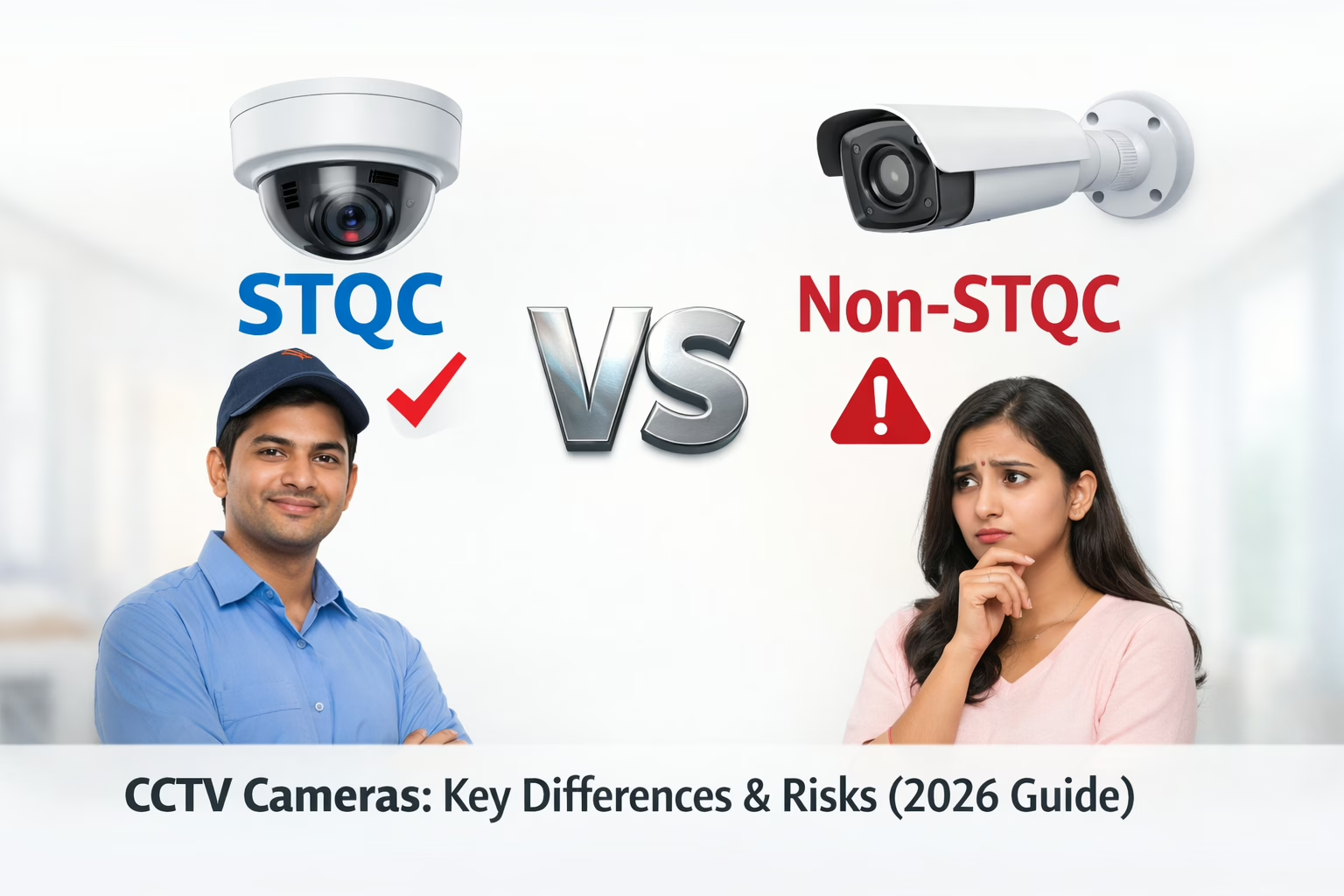
What is the difference between STQC and non-STQC CCTV cameras?
STQC cameras are government-certified, secure, and compliant with MeitY CCTV Guidelines India 2026, while non-STQC cameras lack certification, pose security risks, and may be banned after April 2026.
Summary
STQC-certified cameras (under STQC Certification for CCTV Cameras in India) are secure, government-compliant, and future-ready.
Non-STQC cameras are cheaper but risky—they may fail security standards and face restrictions under MeitY CCTV Guidelines India 2026.
Key difference in STQC vs Non-STQC CCTV Cameras: 👉 Compliance + Security vs Cost-saving + Risk
Non-compliant systems can lead to: ❌ Government ban / replacement ❌ Cybersecurity vulnerabilities ❌ Higher long-term costs
Best choice in 2026: Always go for STQC-certified CCTV systems.
👉 Bottom line: STQC vs Non-STQC CCTV Cameras is no longer optional—it’s a compliance decision, not just a price decision.
Introduction: The Biggest Mistake Buyers Still Make
In 2026, choosing the wrong CCTV camera is no longer just a technical mistake—it’s a compliance violation.
With the rollout of MeitY CCTV Guidelines India 2026, the gap between STQC-certified and non-certified cameras has become critical.
Yet, many buyers in Bangalore still ask: 👉 “Why pay more for STQC cameras?”
Understanding STQC vs Non-STQC CCTV Cameras is now essential for any business planning a compliant surveillance system.. This blog answers that with clear comparisons, real risks, and expert insights, helping you make a compliance-safe decision.
What Is STQC in CCTV?
STQC Certification for CCTV Cameras in India is a government-approved certification ensuring that CCTV cameras:
Meet cybersecurity standards
Have no hidden vulnerabilities
Use trusted hardware and firmware
Comply with Indian surveillance regulations
It is governed under the Ministry of Electronics and Information Technology (MeitY).
When evaluating STQC vs Non-STQC CCTV Cameras, STQC certification becomes the most important differentiator for long-term safety and legality
👉 Read: What Is STQC Certification for CCTV Cameras in India?
What Are Non-STQC CCTV Cameras?
Non-STQC cameras are:
Imported or locally assembled devices
Without certified security validation
Often cheaper—but high-risk
They may still work technically—but fail compliance requirements under 2026 regulations. In the comparison of STQC vs Non-STQC CCTV Cameras, these devices may appear cost-effective initially but fail critical compliance standards.
STQC vs Non-STQC CCTV Cameras (Comparison Table)
Key Differences at a Glance
Factor
STQC Certified CCTV
Non-STQC CCTV
Certification
Approved under STQC Certification for CCTV Cameras in India
No certification
Legal Status (2026)
Fully compliant
Risk of ban
Security
Encrypted, tested
Vulnerable
Firmware
Verified & signed
Unknown / unverified
Data Protection
Secure storage protocols
No guaranteed protection
Network Safety
Protected architecture
Open to hacking
Compliance
Meets MeitY CCTV Guidelines India 2026
Non-compliant
Cost
Higher upfront
Cheaper initially
Long-Term Cost
Low (no replacement)
High (replacement risk)
This table clearly highlights how STQC vs Non-STQC CCTV Cameras differ across compliance, security, and long-term cost.
Why Non-STQC Cameras Are a Serious Risk in 2026
🚨 1. Risk of Government Ban
Under MeitY CCTV Guidelines India 2026, non-compliant cameras may:
Be restricted from use
Require mandatory replacement
Be rejected in audits.
The risk becomes obvious when analyzing STQC vs Non-STQC CCTV Cameras in terms of legal usability.
🔓 2. Cybersecurity Threats
Non-certified cameras often:
Have hidden backdoors
Transmit unencrypted data
Allow unauthorized access
This is especially dangerous for:
Offices
Factories
IT infrastructure
From a security perspective, STQC vs Non-STQC CCTV Cameras is not just a comparison—it’s a risk assessment.
💸 3. Hidden Cost Explosion
Cheap cameras = expensive mistakes
You may face:
Full system replacement
Reinstallation costs
Downtime losses
The cost difference in STQC vs Non-STQC CCTV Cameras becomes significant over time due to compliance failures.
Understanding STQC vs Non-STQC CCTV Cameras helps businesses avoid regulatory and financial consequences.
Why STQC Cameras Are the Safer Investment
✅ 1. Regulatory Compliance
STQC cameras are aligned with:
MeitY CCTV Guidelines India 2026
Future surveillance policies
In the debate of STQC vs Non-STQC CCTV Cameras, compliance is the strongest argument in favor of STQC systems.
🔐 2. Built-In Security Architecture
STQC cameras are designed with cybersecurity in mind. This is a key advantage when comparing STQC vs Non-STQC CCTV Cameras for enterprise environments.
They ensure:
Secure boot
Encrypted communication
Controlled access
🔄 3. Long-Term Stability
They eliminate future upgrade risks. The long-term value of STQC vs Non-STQC CCTV Cameras clearly favors certified systems.
No forced upgrades
No compliance risks
Future-ready system design
📈 4. Business Trust & Credibility
Compliance builds trust with clients and stakeholders.. Choosing correctly between STQC vs Non-STQC CCTV Cameras directly impacts business credibility.
For enterprises, compliance signals:
Data responsibility
Security maturity
Operational reliability
Real Scenario: Bangalore Business Case
A mid-sized office installs non-STQC cameras to save 25%.
Within a year:
Compliance audit fails
System flagged under MeitY rules
Full replacement required
Total cost = 2.5x original budget
How to Identify STQC-Compliant Cameras (Quick Checklist)
Yes. Under MeitY CCTV Guidelines India 2026, STQC certification is required for compliance.
They are not outright illegal yet, but may be restricted or banned under upcoming enforcement.
Because they undergo security testing, certification, and compliance validation.
In most cases, replacement is required, not upgrades.
Work with certified integrators, use compliant hardware, and follow a structured compliance checklist.
CCTV installation compliance means following MeitY CCTV Guidelines India 2026, including using STQC Certification for CCTV Cameras in India-approved cameras and secure system architecture.
Yes. Non-compliant systems may be restricted or replaced under MeitY enforcement policies.
Bottom Line
STQC-certified CCTV cameras are secure, compliant, and future-ready, while non-STQC cameras pose security risks, legal issues, and potential bans under MeitY CCTV Guidelines India 2026
Don’t risk installing a non-compliant CCTV system.
Yendra Techno Solutions helps businesses in Bangalore deploy: