Best CCTV Camera Near You

CCTV Ban in India
CCTV Ban in India Explained

CCTV Ban in India: April 2026 Crackdown on Chinese Surveillance Giants Explained

Summary
  • India to restrict sale of certain CCTV brands from April 1, 2026
  • Major brands impacted
  • Not a direct “ban” — but a compliance restriction
  • Government tightening cybersecurity norms
  • Primary reason: National security concerns
  • Deadline enforcement begins April 2026
  • Impact on market dynamics
  • Expected price increase
  • No immediate ban on existing users
  • Businesses face higher compliance pressure
  • China has reacted negatively to India’s move
  • Opportunity for Indian ecosystem
Bottom Line

👉 The CCTV Ban in India is essentially a compliance-driven market reset
👉 Non-certified (especially Chinese-origin) cameras are being phased out
👉 Future of surveillance in India = secure, certified, and locally aligned systems

Introduction

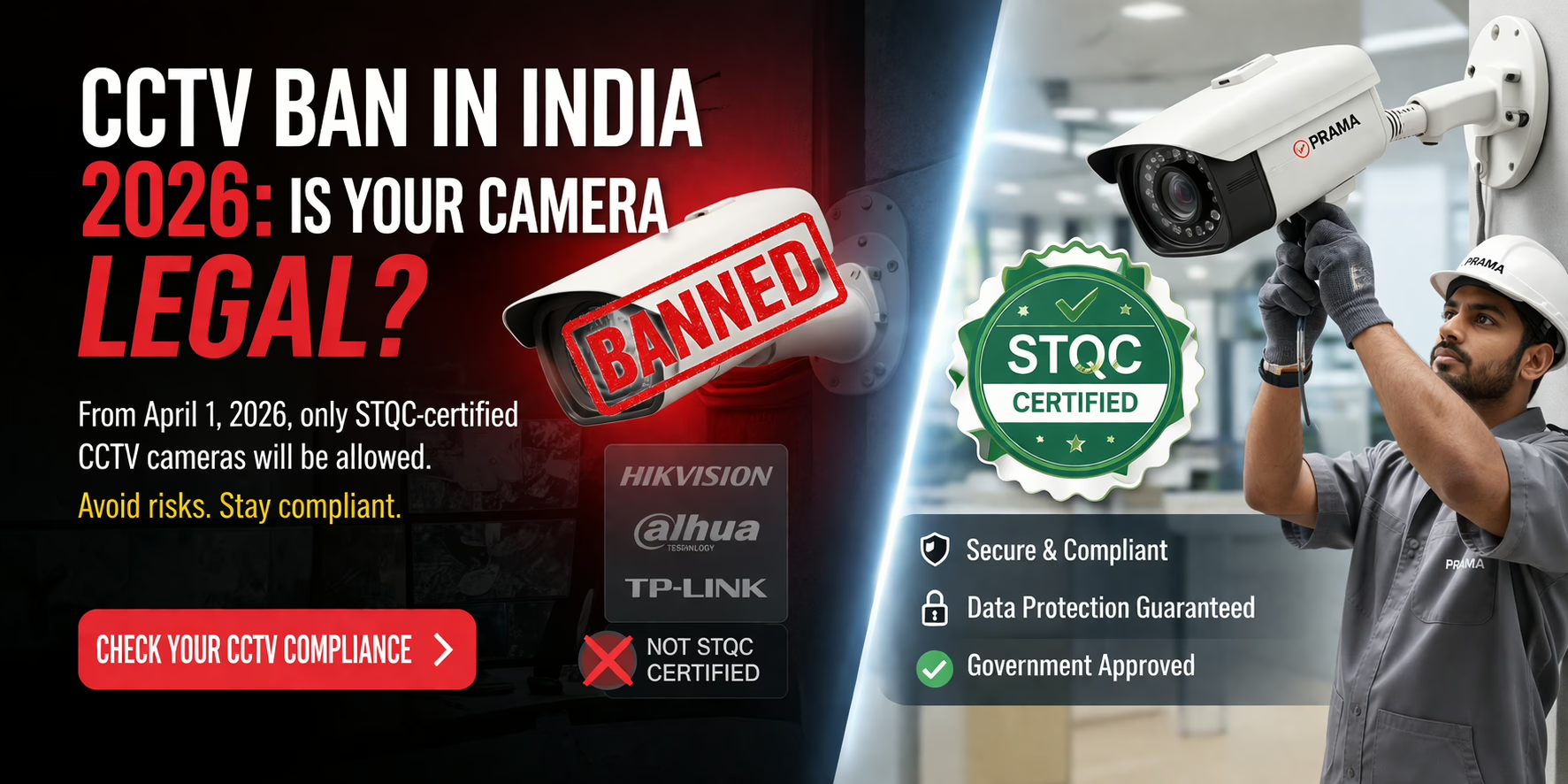
India’s surveillance industry is undergoing its biggest transformation yet. In a decisive regulatory move, the government has effectively triggered a CCTV Ban in India targeting non-compliant and Chinese-origin surveillance equipment starting April 1, 2026.

Over the past week, multiple reports from leading publications confirm that brands like Hikvision, Dahua, and TP-Link are being pushed out of the Indian market—not through a direct “ban law,” but via strict certification denial under new cybersecurity and compliance norms.


What Is the CCTV Ban in India (April 2026)?

Key Rule:
  • From April 1, 2026, only STQC-certified and ER-compliant CCTV cameras can be:
    • Manufactured
    • Imported
    • Sold in India
What This Means:
  • Cameras without certification = illegal to sell
  • Devices with Chinese chipsets/firmware = unlikely to get certification
  • Result: Effective ban on major Chinese brands

Major News Developments (Last 7 Days)

1. India to Block Hikvision, Dahua & TP-Link Sales

Recent reports confirm that India is set to block the sale of internet-connected CCTV systems from Chinese manufacturers.

  • Certification for such devices is being denied under STQC rules
  • These brands previously held ~30% market share in India

👉 This is the strongest indicator of a functional CCTV ban in India

2. Full Ban on Non-Certified CCTV Cameras from April 1

Another major update clarifies:

  • All non-certified CCTV cameras are banned from sale
  • Applies especially to Chinese-origin hardware or firmware
  • Ends a 2-year transition period given to the industry

👉 This confirms that the CCTV ban in India is policy-driven, not sudden.

3. Market Reset: Indian Brands Take Control

Reports highlight a massive shift:

  • Indian companies now control ~80% of the market
  • Chinese players are:
    • Exiting
    • Entering joint ventures
    • Facing liquidation risks

👉 The CCTV ban in India is also a Make in India opportunity

4. Prices Expected to Rise by 15–20%

Due to supply chain shifts:

  • CCTV system costs may increase 15–20%
  • Component sourcing shifting from China to Taiwan/local suppliers

👉 Short-term pain, long-term security gain.

5. China Reacts Strongly to India’s Decision

China has officially reacted:

  • Accused India of violating trade norms
  • Raised concerns over economic impact

👉 Shows geopolitical implications of the CCTV ban in India.

Why Is India Enforcing the CCTV Ban?

1. National Security & Surveillance Risks

India has growing concerns that:

  • Foreign-controlled cameras may enable:
    • Remote access
    • Data leaks
    • Espionage

Earlier global actions (like US bans) influenced this stance.

2. Cybersecurity Compliance (ER + STQC)

New rules require:

  • Hardware + firmware disclosure
  • Source code verification
  • Lab testing via STQC

👉 Ensures no backdoors or vulnerabilities


3. Supply Chain Transparency

Manufacturers must now declare:

  • Origin of chipsets (SoC)
  • Firmware sources
  • Testing certification

👉 Eliminates opaque Chinese supply chains


4. Push for Atmanirbhar Bharat

The CCTV ban in India directly supports:

  • Local manufacturing
  • Indian OEM brands
  • Domestic cybersecurity ecosystem

Which Brands Are Affected?

Likely Impacted

  • Hikvision
  • Dahua
  • TP-Link
  • Other Chinese OEM/ODM brands

👉 These depend heavily on Chinese chipsets & firmware.

Not Directly Banned (But Must Comply)

  • Indian brands (CP Plus, Prama, Matrix, Sparsh)
  • Global brands (Bosch, Honeywell)

👉 As long as they meet certification norms.

Is It a Complete Ban? (Important Clarification)

Technically:

❌ Not a blanket ban
✅ A compliance-based restriction

Reality:
  • If a product fails certification → cannot be sold
  • Most Chinese cameras fail due to origin dependencies

👉 So practically, it behaves like a CCTV ban in India

Impact on Different Stakeholders

1. Homeowners

  • Existing cameras → No immediate ban
  • New purchases → Must be compliant

👉 Recommendation: Upgrade only when necessary


2. Businesses & Offices

  • Compliance becomes mandatory for audits
  • Non-compliant systems = risk in tenders & insurance

3. CCTV Dealers & Integrators

Biggest impact segment:

  • Must shift inventory immediately
  • Risk of dead stock (Chinese brands)
  • Need to educate customers on compliance

4. Builders & Real Estate

  • New projects must install:
    • ER-compliant systems
    • Certified surveillance

👉 Non-compliance can delay approvals

Impact on CCTV Prices & Availability

Short-Term Effects
  • Price increase: 15–20%
  • Supply shortages
  • Reduced options
Long-Term Effects
  • Stable pricing
  • Better quality products
  • Stronger domestic ecosystem

Indian Brands Gaining Momentum

The CCTV ban in India is creating a massive opportunity:

Leading Beneficiaries:
  • CP Plus
  • Prama India
  • Matrix
  • Sparsh
  • Qubo

👉 These brands are shifting to:

  • Non-Chinese chipsets
  • Local firmware
  • Certified manufacturing

Global Context: India Is Not Alone

India’s move aligns with global trends:

  • USA banned Hikvision & Dahua (FCC)
  • UK restricted Chinese surveillance
  • Australia imposed limitations

👉 India is now part of a global surveillance security shift

What Should Buyers Do Now?

Before Buying CCTV in India (Post-April 2026)

Checklist:

✅ STQC Certification

✅ ER Compliance

✅ Non-Chinese chipset (preferred)

✅ Verified firmware source

Avoid:
  • Grey market imports
  • Cheap unbranded IP cameras
  • “Rebranded Chinese OEM” devices

Future Outlook of CCTV Ban in India

What to Expect Next

  • Stricter enforcement checks
  • Possible audits for enterprises
  • Expansion to:
    • IoT devices
    • Smart home security

Market Forecast

  • Indian brands dominance: 80%+
  • Increased R&D in surveillance tech
  • Rise of AI-based compliant systems

CCTV Ban in India: What It Means for Bangalore Homes & Businesses

With Bangalore being a major tech and business hub, the impact of the CCTV Ban in India is even more significant here.

Why Bangalore Is Highly Affected

  • High adoption of IP-based CCTV systems
  • Widespread use of imported/Chinese OEM cameras
  • Increasing compliance checks in:
    • Tech parks
    • Warehouses
    • Gated communities

CCTV Compliance Requirements in Bangalore (2026)

For installations across Bangalore, systems must now ensure:

  • STQC-certified cameras
  • ER-compliant devices
  • Secure network configuration
  • Proper documentation for audits

👉 This is especially critical for:

  • Offices in Whitefield, ORR, Electronic City
  • Retail & hospitality businesses
  • Apartment complexes & villas

Why Local Expertise Matters

Choosing a local compliance-focused integrator like Yendra ensures:

  • Faster site visits
  • Better understanding of Bangalore infrastructure
  • Immediate support for AMC & upgrades

How Is Yendra Techno Solution Leading in The Midst of CCTV Ban In India

With the CCTV Ban in India reshaping the industry, customers now face a critical question:

👉 Is your CCTV system just installed—or is it compliant?

By already aligning with STQC-certified ecosystems, secure OEM partnerships, and compliance-driven execution, Yendra ensures:

  • No regulatory risk
  • No cybersecurity vulnerabilities
  • No future replacement costs due to non-compliance

What Yendra Is Already Doing on Ground

1. Designing Compliance-Ready CCTV Systems

Instead of basic installations, Yendra focuses on:

  • Surveillance planning using real-world site conditions
  • DORI-based camera placement (Detect, Observe, Recognize, Identify)
  • Eliminating blind spots and ensuring evidentiary footage quality

2. Deploying STQC-Certified Hardware Only

Across residential, commercial, and industrial projects, Yendra has already:

Their website and services clearly emphasize deployment of STQC-certified systems across Bangalore and Karnataka.


3. Focusing on Cybersecurity & Compliance (Not Just Hardware)

Yendra’s approach reflects a key industry shift:

CCTV failures are rarely hardware failures—they are planning and compliance failures.

To address this, Yendra ensures:

  • Secure network configuration (no open ports)
  • Password hardening and encryption setup
  • Stable firmware ecosystems
  • Long-term service reliability

4. Delivering End-to-End, Audit-Ready Installations

Yendra’s execution model includes:

  • Site survey & risk assessment
  • Structured wiring & infrastructure planning
  • Secure system configuration
  • Client training & documentation

This ensures systems are not just installed—but fully compliant and future-ready.

What Yendra Will Continue to Do in 2026 and Beyond

As the CCTV Ban in India becomes fully enforced, Yendra is positioned to support customers with:

✔ Compliance-First Consulting
  • Helping clients choose government-approved CCTV systems
  • Avoiding non-compliant purchases
✔ Upgrade & Migration Support
  • Replacing legacy/non-compliant systems
  • Retrofitting existing setups with secure components
✔ STQC-Certified Installations at Scale
  • Residential (apartments, villas)
  • Commercial (offices, retail)
  • Industrial & infrastructure projects
✔ Ongoing Maintenance & Compliance Audits
  • AMC services aligned with compliance norms
  • Firmware updates and security checks
  • Audit support for enterprises and government projects

FAQs About CCTV System for Office Security

No. Only non-certified CCTV cameras are banned from sale.

Brands like Hikvision, Dahua, and TP-Link are effectively restricted due to certification issues.

It is a government certification ensuring:

  • Cybersecurity compliance
  • Hardware and firmware verification

Yes. Existing systems are not banned, but upgrading is recommended.

Yes, by 15–20% initially, due to supply chain shifts.

Yes. Many now offer:

  • Certified systems
  • Secure firmware
  • Better compliance

You may face:

  • Legal issues (in business setups)
  • Compliance failures
  • Security risks

Final Thoughts

The CCTV Ban in India marks a turning point in the country’s surveillance ecosystem. What appears as a restriction is actually a strategic shift toward secure, transparent, and locally controlled surveillance infrastructure.

For businesses and homeowners, this is not just about compliance—it’s about future-proofing security systems against cyber threats and regulatory risks.

The message is clear:

👉 Non-compliant CCTV is no longer an option in India.

Stay Compliant. Stay Secure. Upgrade Your CCTV Before It’s Too Late

The CCTV Ban in India is not just a regulation—it’s a deadline that directly impacts your security system’s legality and reliability.

If your current CCTV system is:

  • Non-STQC certified
  • Installed before 2024
  • Using unknown or imported firmware

👉 You may already be at compliance risk.et a Free CCTV Compliance Check in Bangalore

Yendra Techno Solution helps homeowners, offices, and industries transition to fully compliant, STQC-certified CCTV systems—without confusion or hidden risks.


What You Get:

✔ Free site inspection & compliance audit

✔ Identification of non-compliant cameras

✔ Upgrade plan aligned with 2026 regulations

✔ Transparent quote with certified products

✔ Professional installation with

Book Your Compliance Assessment Today

📞 Call Now: +91-XXXXXXXXXX

🌐 Visit: https://yendra.in

📍 Service Area: Bangalore & Nearby Regions

👉 Don’t wait for enforcement—act before your system becomes non-compliant.

documentation

Professional CCTV installation in Yelahanka by Yendra Techno Solution – smart security systems 2025

Related Posts, News & Articles

Get Free Quote