


Smart Door Locks and AI Integration Smart Door Locks and AI Integration TL;DR (Summary) Smart Door Locks use AI to boost home security and personalization. AI integration enables facial recognition, voice control, and predictive access. Modern systems sync with smart homes for seamless automation. Learn how to choose, install, and maintain AI-powered Smart Door Locks effectively. The Rise of Smart Door Locks in Modern Homes Smart Door Locks have redefined home security. Unlike traditional locks, these digital systems combine convenience, control, and connectivity. As homes evolve into smart ecosystems, AI integration has become the game-changer driving this transformation. AI-powered Smart Door Locks don’t just open doors—they learn from user behavior, predict needs, and adapt to unique household patterns. How AI Enhances Smart Door Locks Artificial Intelligence adds intelligence and intuition to standard digital locks. Here’s how AI integration transforms home access: 1. Predictive Access Control AI analyzes usage patterns and grants or denies access automatically. It recognizes frequent visitors, schedules, and routines to minimize manual input. 2. Facial and Voice Recognition Modern AI-powered Smart Door Locks use biometric authentication. Facial recognition and voice commands make entry hands-free and highly secure. 3. Threat Detection and Alerts AI identifies unusual activity—like repeated failed attempts or forced entry—and sends real-time alerts to the homeowner’s phone. 4. Integration with Smart Home Systems AI allows Smart Door Locks to connect with cameras, thermostats, and lighting. This ecosystem automates responses, such as lighting up entryways when doors unlock. Key Benefits of AI-Powered Smart Door Locks Feature Benefit AI Recognition Personalized access for family members Remote Monitoring Control locks via smartphone or smartwatch Energy Efficiency Automation reduces manual device use Voice Control Integration with Alexa, Google Assistant, and Siri Real-Time Alerts Instant notifications on suspicious activity Smart Door Locks with AI not only strengthen security but also enhance lifestyle convenience and peace of mind. Which Smart Locks with AI Are Most Popular in Bangalore Now Bangalore’s tech-savvy homeowners are rapidly adopting AI-powered Smart Door Locks to enhance security and convenience. The city’s smart home market is booming, with demand for intelligent, connected devices that offer both safety and style. Here are some of the most popular Smart Door Locks with AI integration in Bangalore right now: 1. Yale YDM 7116 Smart Lock A favorite among premium apartment owners, this lock features AI-based facial recognition and biometric access. It integrates seamlessly with Alexa and Google Home, making it ideal for smart homes across Bangalore’s modern neighborhoods like Indiranagar and Koramangala. 2. Godrej Advantis Revolution Smart Lock Designed for Indian households, this lock combines AI-driven access patterns and touchscreen controls. It’s known for its reliability, user-friendly mobile app, and advanced intrusion alerts—perfect for Bangalore’s urban lifestyle. 3. Qubo Smart Door Lock by Hero Group This India-made smart lock offers AI-assisted remote access control and real-time visitor monitoring through its mobile app. Its compatibility with Wi-Fi and fingerprint recognition makes it a top choice for villas and gated communities in Whitefield and Electronic City. 4. Samsung SHP-DH538 Digital Door Lock With AI-enabled auto-locking and tamper detection, this lock stands out for its sleek design and performance. Many Bangalore tech professionals prefer it for its global reliability and multi-access options. These Smart Door Locks with AI integration are redefining home security in Bangalore, offering intelligent features that fit perfectly with the city’s growing smart living trend. How to Choose the Right Smart Door Lock When selecting a Smart Door Lock with AI integration, consider: Compatibility: Ensure it works with your existing smart home system. Connectivity: Wi-Fi and Bluetooth locks offer broader control. Security Features: Choose locks with encryption, biometrics, and tamper alerts. Ease of Installation: Some models offer DIY setup with mobile app guidance. Always check firmware update options to maintain AI performance and security. Integration Tips for AI and Smart Door Locks To maximize efficiency, link your lock to home assistants and security cameras. Checklist for Seamless Integration: Connect with Alexa or Google Home. Set automation routines (e.g., lock doors at 10 PM). Enable remote notifications for access logs. Pair with smart lighting for safety cues. AI integration ensures your lock becomes an active part of your smart ecosystem. Security and Privacy Concerns While Smart Door Locks enhance security, data privacy is vital. Protect Your Smart Door Locks with AI by: Using strong, unique passwords. Enabling two-factor authentication. Regularly updating firmware. Reviewing access permissions frequently. Leading brands now use end-to-end encryption and cloud-based AI to ensure safety without compromising convenience. Future of Smart Door Locks with AI The future of Smart Door Locks lies in predictive intelligence and seamless automation. AI will soon enable emotion detection, gesture recognition, and advanced access prediction. Expect deeper integration with IoT devices, allowing homes to anticipate needs and adjust security dynamically. AI-driven Smart Door Locks are evolving into central components of smart living, ensuring both safety and simplicity. Explore our detailed articles on Learn more about AI in Home Automation in our Smart Home Trends 2025 Guide. Explore Best Home Security Devices for modern households here. Read our comparison of Smart Home Assistants here FAQs About Smart Door Locks and AI Integration Are Smart Door Locks safe against hacking? Yes, modern Smart Door Locks use encrypted AI algorithms and cloud-based security to prevent unauthorized access. Can AI Smart Locks work without Wi-Fi? Some models function via Bluetooth or offline PIN modes, but remote control requires Wi-Fi. How long do AI Smart Locks last? Most Smart Door Locks last 3–5 years with regular battery changes and firmware updates. Do Smart Door Locks support multiple users? Yes, AI allows multiple user profiles with customizable access levels. Can Smart Door Locks integrate with my home security camera? Absolutely. AI systems sync with doorbell cameras for video verification and automated unlocking. Conclusion Smart Door Locks powered by AI integration are transforming home security and convenience. With predictive technology, real-time alerts, and seamless automation, these intelligent systems redefine what it means to feel safe at home. As smart homes become the new standard, investing in AI-enhanced Smart Door
Why AI CCTV Surveillance Is More Effective in Bangalore: 7 Reasons
Smart Protection for a Smarter Bangalore 7 Reasons Why AI CCTV Surveillance Is More Effective in Bangalore TL;DR Summary: Enhanced Safety: AI CCTV for home in Bangalore offers smarter, more proactive security. Smart Analytics: Detects unusual movements and identifies real threats instantly. Real-Time Alerts: Sends instant notifications to your phone or email for quick response. Cloud Monitoring: Provides 24/7 remote access and secure footage storage. Urban Adaptability: Designed to handle Bangalore’s busy, fast-paced environment. High Accuracy: Reduces false alarms and improves detection precision. Intelligent Protection: Continuously learns and adapts to household patterns for smarter surveillance. Understanding the Rise of AI CCTV for Home in Bangalore Bangalore’s rapid urbanization brings both growth and rising security concerns. Traditional surveillance systems fail to keep pace with dynamic city environments. That’s where AI CCTV for home steps in. With artificial intelligence, homeowners gain proactive security—not just passive recording. These systems detect unusual activity, identify threats, and alert you instantly. Key Reasons for Growing Adoption: Rising cases of home intrusions in residential areas. Increased affordability of AI-based devices. Seamless integration with smart home systems. 24/7 remote monitoring through cloud technology. According to security experts, AI-enabled CCTV cameras improve response time by over 50% compared to traditional systems. How AI CCTV for Home Improves Security Effectiveness Unlike standard CCTV, AI models process footage intelligently. They recognize faces, track movements, and differentiate between people, animals, or vehicles. Core Functionalities That Set AI CCTV Apart Feature AI CCTV Traditional CCTV Motion Detection Smart analytics Basic sensors Face Recognition Yes No Real-Time Alerts Mobile & email Limited False Alarm Rate Very low High Storage Cloud & local Mostly local These intelligent features make AI CCTV for home in Bangalore the preferred choice for residents who value precision and reliability. Smart Threat Detection in Urban Settings Bangalore’s urban housing—especially gated communities—faces evolving security challenges. AI cameras adapt to changing patterns. Benefits for Bangalore Homeowners Automatic Threat Differentiation: Detects suspicious activity instantly. Behavioral Analytics: Learns household routines and flags anomalies. Night Vision AI: Enhances visibility even in poor lighting. AI surveillance reduces dependency on human guards, cutting costs while improving accuracy. Integration with Smart Home Ecosystems AI CCTV for home easily connects with smart devices such as door sensors, alarms, and voice assistants. This integration transforms your home into an intelligent security ecosystem. Smart Integration Highlights Instant alerts via Alexa or Google Home. Sync with door locks for automated security. Remote access through mobile apps. With AI CCTV for home in Bangalore, you control your property anytime, anywhere. Data Privacy and Cloud Security While data security is a top concern, AI CCTV systems use encrypted cloud storage. They offer multi-layered protection against unauthorized access. Key Data Protection Features End-to-end encryption. Two-factor authentication for users. Regional cloud servers for faster access in India. These systems comply with the latest cybersecurity standards, ensuring peace of mind for Bangalore homeowners. Why Bangalore Homes Benefit Most from AI CCTV The city’s mix of independent houses, apartments, and villas creates diverse surveillance needs. AI CCTV for home in Bangalore offers customizable options suitable for every property type. Advantages Specific to Bangalore Handles dense traffic and visitor activity with precision. Filters out non-threatening movement like pets or delivery staff. Works seamlessly in humid or dusty conditions. Its smart algorithms continually evolve based on real-time data from your environment, making it more effective over time. Top Brands Offering AI CCTV for Home in Bangalore Here are a few reputed brands offering advanced AI-based surveillance solutions: Hikvision AI Series – Smart detection with cloud storage. CP Plus IntelliCam – Designed for Indian homes. TP-Link Tapo C420 – Compact, affordable, and app-controlled. These companies offer professional installation and support for AI CCTV for home in Bangalore. Checklist: Choosing the Right AI CCTV for Home When selecting your surveillance system, consider these essentials: ✅ Resolution of 1080p or higher.✅ Cloud and local storage compatibility.✅ Real-time alerts via mobile app.✅ AI motion and face recognition. ✅Night vision and weatherproof build. Make sure to verify brand credibility and after-sales service before purchase. Explore our detailed articles on Home Automation Trends in Bangalore Smart Door Locks and AI Integration Best Home Security Gadgets for 2025 for deeper insights. FAQs Why is AI CCTV for home better than regular cameras? AI CCTV uses intelligent analytics to detect real threats, minimizing false alarms and improving accuracy. Does AI CCTV for home work during power cuts? Yes, most systems have battery backups and store data in the cloud, ensuring continuous monitoring. Can I access my AI CCTV footage remotely? Absolutely. You can view real-time feeds and alerts from your smartphone or computer. Is installation complicated for AI CCTV for home in Bangalore? Not at all. Local service providers offer quick setup and integration with your home Wi-Fi system. How often should I maintain the AI CCTV system? Routine cleaning and software updates every three months keep the system running optimally. Conclusion: The Future of Home Security in Bangalore AI CCTV for home in Bangalore is redefining safety standards. From smart detection to seamless integration, these systems offer unmatched reliability. As the city continues to grow, investing in AI-powered security ensures smarter, safer, and more confident living. Related Posts, News & Articles October 17, 2025 Why AI CCTV Surveillance Is… Read More October 5, 2025 AI CCTV Cameras: Transforming Cybersecurity… Read More October 3, 2025 Best Security Systems for Apartments… Read More

Top 5 Reasons to Install CCTV for Construction Site Early
Why CCTV For Construction sites Top 5 Reasons to Install CCTV for Construction Sites Early TLDR Summary: Plan CCTV for construction sites at an early stage to ensure long-term safety and smooth smart home integration. Involve experts like Yendra Techno Solution during the design and electrical layout phase. This helps avoid re-cabling later and ensures full network coverage across the property. Integrating CCTV, WiFi mesh, video door phones, and smart locks during construction eliminates blind spots. It also enables remote monitoring once the home is completed. Building your dream home is exciting — and the planning stage is the perfect time to think about your CCTV for construction sites and other security systems. At Yendra, we specialize in end-to-end smart home solutions — from concept to completion — ensuring your new home in Bangalore is safe, connected, and future-ready. When Is the Right Time to Contact Experts? The best time to contact your security and smart home consultant is during the initial planning of your building. This is when CCTV, video door phones, WiFi mesh networks, and automated gate locks should be discussed and included in your building plans and electrical drawings. (Refer to India’s NBC 2016 Smart Building Safety Standards for compliance) By collaborating early with your architect and electrician, Yendra helps identify CCTV locations, WiFi access points, and smart lock placements to achieve full coverage — leaving no blind spots behind. Learn more about Yendra’s Smart Home Planning Solutions During Electrical & PVC Piping Stage When your site reaches the electrical piping or internal PVC piping stage, our experts coordinate with contractors to ensure every CCTV for construction sites point, cable route, and control box is properly marked.This avoids messy re-cabling or external wiring after construction, maintaining your home’s clean and modern appearance. We also ensure seamless integration of security systems in key areas like entrances, parking zones, terraces, and perimeters for complete protection. Why Choose Yendra? New homeowners in Bangalore trust Yendra for our end-to-end solutions — from initial design and planning to final execution and installation. We take care of every detail, so you don’t have to. CCTV for construction sites: Real-time monitoring from anywhere in the world. Video Door Phones & Yale Smart Locks: Immediate alerts when someone approaches your doorstep. WiFi Mesh Systems: Powerful and secure networking that covers every corner of your home. Smart Automation: Control your entire home’s security through your smartphone. Explore how Yendra enhances modern home safety with AI solutions The Outcome Imagine watching your property at your fingertips — anytime, anywhere. Whether you’re away or onsite, your CCTV for construction sites keeps you informed, alert, and in control. With Yendra, you can plan your network, install your systems right the first time, and enjoy peace of mind knowing your security is built into your home — not added later. FAQs About CCTV for Construction Sites in Bangalore Why is it important to install CCTV during the construction phase? Installing CCTV for construction site early ensures comprehensive security coverage and prevents the need for costly re-cabling later. Early installation allows integration with electrical piping and internal wiring plans, ensuring there are no blind spots and the system can be professionally integrated with other smart home devices like video door phones and automated locks. This proactive approach improves safety, operational monitoring, and asset protection during construction Can CCTV cameras help improve workplace safety on construction sites? Absolutely. Most AI CCTV systems come with mobile apps for remote viewing and control.Yes, CCTV cameras enhance workplace safety by monitoring compliance with safety protocols in real-time. They enable detection of unsafe practices, quick incident responses, and provide valuable evidence for training and accident analysis. Surveillance fosters accountability among workers, reducing accidents and liabilities. Advanced systems with AI analytics can even send automatic alerts about potential hazards What maintenance is required to keep CCTV systems effective on a construction site? Regular maintenance is critical. Cameras should be cleaned monthly to avoid lens obstruction, and wiring inspected for damage. Software and firmware need periodic updates to secure against vulnerabilities. System diagnostics and recording backups should be done quarterly or semi-annually. Professional servicing annually ensures long-term performance and uninterrupted security coverage, protecting your investment. Q4. How often should I update AI CCTV software? Monthly updates ensure improved accuracy, better facial recognition, and security patches. Conclusion & Next Steps for CCTV Procurement and Maintenance To maximize the benefits of your CCTV for construction sites, start by engaging with a trusted security provider like Yendra Techno Solution early in your building planning. This ensures expert guidance on camera placement, wiring routes, and integration with smart home systems before construction advances. Secure a comprehensive site survey to tailor the system to your property’s unique requirements. After installation, implement a robust CCTV maintenance plan including regular lens cleaning, cable inspections, software and firmware updates, and system diagnostics. Ideally, conduct weekly visual checks, monthly cleaning and software updates, quarterly thorough inspections, and an annual professional service. Maintaining your CCTV system preserves video quality, prevents outages, extends equipment life, and safeguards your investment. By combining early expert planning, professional installation, and ongoing maintenance, you create a reliable, high-performing security network that keeps your property safe long-term, offers peace of mind, and supports smart living. Contact Yendra for a free consultation and maintenance scheduling to keep your CCTV system operating at peak efficiency. This proactive approach ensures your CCTV protects your home seamlessly today and in the years to come, avoiding costly repairs or disruptions. Ready to protect your new home in Bangalore before construction ends? Connect with Yendra today for a free consultation and site survey. Your CCTV installation site survey in Bangalore can be scheduled directly with Yendra Techno Solution through their official channels. Call Yendra Today Yendra offers free on-site surveys in and around Mathikere to design a custom CCTV layout, ensuring full coverage and optimal camera placement before installation Booking Steps: Call or WhatsApp to request a CCTV site survey appointment. Provide your address, preferred date/time, and basic property details (residential/commercial). Yendra’s technical team will confirm and send a trained technician for an on-site e before installation Related Posts, News & Articles October 5, 2025 AI CCTV Cameras:

Why AI CCTV Camera Is Vital for Security in Bangalore’s Homes, Apartments, and Commercial Spaces
Smart Protection for a Smarter Bangalore Why AI CCTV Camera Is Vital for Security in Bangalore’s Homes, Apartments, and Commercial Spaces TL;DR Summary:AI CCTV Cameras are revolutionizing security in Bangalore. They offer real-time monitoring, intelligent threat detection, and remote access for homeowners and businesses. With rising urban crime and rapid development, AI-powered surveillance ensures safety, reduces human error, and provides actionable insights for better protection. The Growing Need for Advanced Security in Bangalore Bangalore, India’s tech capital, faces increasing security challenges. Rapid urbanization has led to a surge in residential complexes, corporate hubs, and commercial zones. With growth comes higher risks of theft, trespassing, and vandalism. Traditional CCTV systems often fail to detect threats in real time. This is where AI CCTV Cameras outperform standard solutions. They analyze footage instantly, recognize suspicious activities, and alert users automatically. Key reasons for rising demand: Increase in gated communities and high-rise apartments Expanding corporate parks and retail outlets Higher value assets and confidential data Need for 24/7 remote surveillance How AI CCTV Camera Technology Transforms Modern Security AI CCTV Cameras use machine learning and computer vision to enhance security. Unlike basic cameras, they do more than record video—they interpret what’s happening in real time. Key capabilities: Facial Recognition: Identifies known individuals or intruders. Motion & Behavior Analysis: Detects unusual activities automatically. Vehicle & Object Detection: Tracks movement in parking areas or entry points. Instant Alerts: Sends notifications through mobile apps or control centers. This intelligent automation reduces response time and eliminates false alarms. For instance, a camera can distinguish between a stray animal and a human intruder—ensuring only relevant alerts are sent. Benefits of Installing AI CCTV Cameras in Homes and Apartments For homeowners and apartment residents, safety and peace of mind are top priorities. AI CCTV provide real-time protection and convenience. Top Advantages: Remote Monitoring: Access live feeds from smartphones anytime, anywhere. Smart Alerts: Get instant notifications for unusual movements. Two-Way Communication: Talk to visitors directly via camera systems. Cloud Storage: Securely store recordings without worrying about physical drives. Night Vision Intelligence: AI enhances low-light image clarity for round-the-clock security. Modern apartments in areas like Whitefield and Electronic City are increasingly adopting AI-powered systems for integrated community safety. Why Commercial Spaces in Bangalore Rely on AI CCTV Cameras Businesses face different security challenges—unauthorized access, asset theft, and employee safety. AI CCTV Cameras are now standard in offices, tech parks, and retail outlets Key Benefits for Businesses: 24/7 Automated Surveillance: Monitors multiple zones simultaneously. Attendance & Access Control Integration: Tracks employees using facial recognition. Operational Insights: Helps analyze foot traffic and customer behavior. Regulatory Compliance: Maintains detailed video logs for audits and safety checks. By adopting AI CCTV systems, commercial establishments reduce the need for manual supervision while improving overall operational efficiency. Comparing Traditional CCTV vs. AI CCTV Camera Systems Feature Traditional CCTV AI CCTV Camera Detection Manual monitoring required Automated threat detection Alerts Delayed response Instant real-time alerts Storage Local DVR Cloud-based or hybrid Accuracy High false alarms AI-driven accuracy Analytics None Behavioral & pattern analysis The difference is clear—AI CCTV Cameras deliver smarter, faster, and more reliable protection. Integration With Smart Home and IoT Devices in modern Bangalore homes, AI CCTV Cameras integrate seamlessly with smart home systems. They connect with door locks, alarms, and lighting, creating a unified defense mechanism. For instance, when motion is detected, lights can automatically turn on, and homeowners receive a mobile alert. This level of intelligent automation is redefining residential safety standard Camera Maintenance and Cost Efficiency Although these Cameras may have a higher initial cost, they prove cost-effective over time. Automation reduces labor expenses and minimizes damage through early threat detection. Maintenance tips: Regular firmware updates for optimal AI performance Scheduled camera lens cleaning Secure cloud backup and periodic system checks A well-maintained system ensures uninterrupted surveillance and data integrity. Leading Manufacturing Brands in Bangalore Several trusted brands and local service providers offer AI-based security systems tailored for Bangalore’s environment. Top brands AI CCTV Camera (OEM) to consider: Hikvision AI Series CP Plus IntelliSense Godrej Smart Security For installation and maintenance, consult certified experts. Learn more about smart home security integration. Explore our detailed guides on smart home security solution in Bangalore, top residential security solutions, and commercial surveillance systems for deeper insights. FAQs About AI CCTV Cameras in Bangalore Q1. Are AI CCTV Cameras worth it for small apartments? Yes. They offer compact models ideal for apartments, providing efficient real-time monitoring and alerts. Q2. Can I access footage remotely? Absolutely. Most AI CCTV systems come with mobile apps for remote viewing and control. Q3. Do AI cameras work during power cuts? With UPS or solar backup, AI CCTV Cameras continue recording and sending alerts even during outages Q4. How often should I update AI CCTV software? Monthly updates ensure improved accuracy, better facial recognition, and security patches. Learn More Learn more about CCTV Installation Cost in Bangalore. Understand the Common CCTV Installation Mistakes. Explore [AI CCTV Camera Benefits in Bangalore]. References CNET: Smart Home Security Trends TechRadar: Best AI CCTV Cameras 2025 Forbes: The Rise of AI in Security Systems Conclusion: The Future of Smart Security in Bangalore AI CCTV Cameras are no longer a luxury—they are a necessity for Bangalore’s evolving urban spaces. They combine artificial intelligence, automation, and real-time analytics to create safer environments for homes, apartments, and commercial areas. As security threats evolve, AI CCTV Cameras empower residents and business owners with proactive protection and smarter control. Related Posts, News & Articles October 5, 2025 AI CCTV Cameras: Transforming Cybersecurity… Read More October 1, 2025 AI-Powered Construction Site Security: How… Read More August 11, 2025 AI-Powered CCTV Surveillance in Bangalore… Read More

What Are the Compliance CCTV Footage Storage Rules 2025 in Bangalore?
Compliance CCTV Footage in bangalore What Are the Compliance CCTV Footage Storage Rules 2025 in Bangalore Under Karnataka’s Public Safety Act, Compliance CCTV footage in Bangalore requires storage for at least 30 days in accessible format. For PG establishments, new BBMP rules raise this retention to 90 days for both hardware and software backups. TL;DR Summary: Commercial establishments in Karnataka must store CCTV footage for at least 30 days, with digital audit trails and secure access. Daily footage submission to local police is mandated for pubs/restaurants. Warehouses require digital storage and event logs for regulatory compliance. Failure to comply brings penalties and audit risks Compliance CCTV Footage: 30-Day Minimum Storage Requirement State law requires all commercial establishments with high footfall (100+ daily or 500+ monthly visitors) to retain CCTV recordings for at least 30 days. Applicable to retail outlets, restaurants, warehouses, offices, and similar properties. Storage must be reliable—typically via an NVR (Network Video Recorder), secure cloud solution, or encrypted disk array. Periodic purging is mandatory: recordings older than 30 days should be deleted, unless subject to police or legal investigations Quick Reference Table For Compliance CCTV Footage Requirement Details/Notes Minimum retention period 30 days Media type NVR, cloud storage, encrypted hard drive Applicable establishments Retail, restaurants, warehouses, offices Data purging Mandatory; post 30 days unless under investigation Penalties for non-compliance ₹5,000 first offense, ₹10,000 repeat; closure possible Daily Footage Submission: Police Requirements Pubs, restaurants, and busy venues must submit daily CCTV footage to the jurisdictional police station. File format and transmission protocols are specified by local authorities. Failure to submit may bring immediate fines or investigations. Most establishments automate this using secure FTP or cloud sharing. Checklist for compliance: Set up daily scheduled exports to police servers. Maintain logs of all submissions (date, time, location, officer receipt). Address technical failures within 24 hours to avoid penalties. Security, Encryption, and Data Protection All footage should be encrypted both at rest and in transit. Access must be restricted to authorized personnel only; maintain detailed access logs. Footage from sensitive areas (restrooms, changing rooms, prayer rooms) should not be recorded to avoid privacy violations. Penalties and Enforcement Violation Penalty First violation ₹5,000 fine Repeat offense ₹10,000; risk of temporary closure Audit trail missing Regulatory action under Companies Act and sector laws Compliance CCTV Footage: Practical Tips for Data Managers & IT Staff Use NVR/cloud storage with 30-day rolling retention, auto-deletion. Activate audit trail and event logging on all CCTV storage platforms. Schedule daily backup or export to police servers where required. Document staff access and train team members on compliance protocols. Conduct quarterly self-audits for compliance readiness. FAQs About Compliance CCTV Footage in Karnataka How long must commercial establishments retain CCTV footage? A minimum of 30 days as per Karnataka law, with longer retention if required by police or legal investigations. What are audit trails, and why are they required? Audit trails record every access, modification, or deletion event for stored CCTV footage. They are now required to ensure transparency, accountability, and regulatory compliance What happens if the system fails or footage is lost? Technical failures must be addressed within 24 hours. Missing or lost footage may incur fines and can escalate to police investigation or business disruption Conclusion For ongoing legal updates and compliance strategies, data managers should review specifications quarterly and coordinate with compliance officers to avoid fines and reputational risk Related Posts, News & Articles October 15, 2025 What Are the Compliance CCTV… Read More October 13, 2025 CCTV Installation Bangalore: Why Professional Installation Is the Best… Read More October 13, 2025 What Are the CCTV Compliance… Read More

CCTV Installation Bangalore: Why Professional Installation Is the Best Choice?
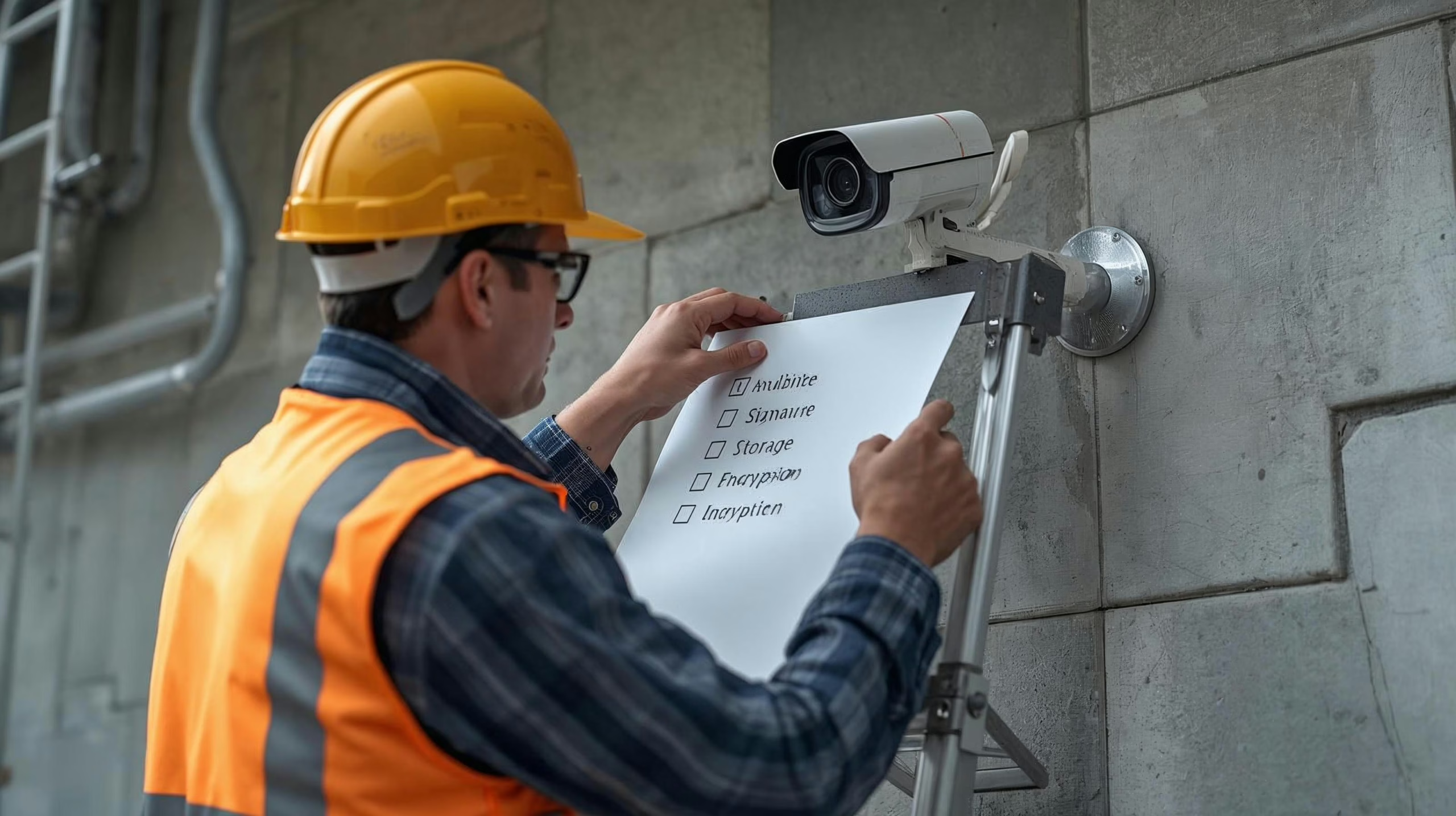
CCTV Installation Bangalore: Professional vs DIY CCTV Installation Bangalore: Why Professional Installation Is the Best Choice? In the rapidly growing urban landscape, CCTV installation Bangalore plays a crucial role in ensuring safety and security. Choosing professional installation over DIY guarantees optimal camera placement, fewer blind spots, legal compliance, and reliable system performance—providing homeowners and businesses complete peace of mind with long-term protection and expert support. Summary: Expert Camera Placement: Professionals know exactly where to install cameras to cover all key areas and minimize blind spots. Reliable System Setup: Professional installation ensures every component works seamlessly for round-the-clock security. Ongoing Support: You get after-installation service, maintenance, and troubleshooting when needed. Legal Compliance: Experts ensure your CCTV setup follows Bangalore’s surveillance and data storage regulations. Optimized Performance: Systems are configured for best coverage, recording quality, and remote access. Cost vs. Peace of Mind: While DIY might reduce initial costs, professional installation provides long-term reliability and security assurance. Why CCTV Installation Compliance Matters in Bangalore As Bangalore’s residential areas grow more security-conscious, CCTV installation Bangalore demands not just coverage but compliance with local laws and best practices. Professional installers ensure systems meet Karnataka’s regulations, providing legitimate surveillance that protects your privacy and property while adhering to privacy norms. Professional CCTV Installation vs. DIY: Key Differences Technical Expertise Guarantees Effective Security Professional installers understand the science of CCTV installation: optimal angles, lighting, and network integration vital for comprehensive coverage. DIY setups often miss critical elements like power stability, weatherproofing, or placement, leading to blind spots or poor video quality. Comprehensive Site Assessment Professionals conduct thorough property audits pinpointing vulnerabilities and planning scalable systems. DIY methods usually rely on guesswork, increasing risks. Aspect Professional Installation DIY Installation Property vulnerability Detailed assessment Basic visual check Camera placement Optimized for coverage without gaps Inconsistent, often with blind spots Equipment quality Access to latest technology May use off-the-shelf, limited options Warranty & support 2-3 years warranty, ongoing support Minimal to no warranty or technical help Top Benefits of Choosing Professional CCTV Installation in Bangalore 1. Optimal Camera Placement and Coverage Professionals ensure every entrance, corridor, and blind spot is monitored, maximizing security efficacy. 2. Reliability and Legal Compliance Professional installations adhere to privacy laws and building regulations, safeguarding homeowners from legal issues. 3. Long-term Support and Warranties Installation warranties and service agreements guarantee your system remains operational and updated. 4. Time and Stress Savings Expert teams complete installations within hours versus days for DIY, saving time and avoiding frustration. Bangalore-Specific Challenges Addressed by Professionals Monsoon-proofing: Ensures cameras withstand heavy rains and humidity. Heat management: Protects equipment from Bangalore’s high temperatures. Dust protection: Critical in rapidly developing urban areas. Power fluctuation handling: Stable operation amid inconsistent power supply. Common DIY Installation Mistakes Poor positioning causing blind spots or glare. Incorrect wiring risking system failure or hazards. Lack of integration with home networks or mobile apps. Ignoring local regulations possibly leading to penalties. What to Look for in a Professional CCTV Installation Partner Not all CCTV installation providers deliver the same level of quality. While two companies may offer similar camera brands, the effectiveness of the surveillance system depends on how well it is designed, installed, configured, and supported over time. Choosing an experienced installation partner helps ensure your CCTV system performs reliably from day one and continues to meet your security needs as your property evolves. Look Beyond Camera Brands High-quality cameras are only one part of a successful surveillance system. A professional installer should also evaluate: Property layout and security risks Camera placement for maximum coverage Indoor and outdoor lighting conditions Network and power infrastructure Recording and storage requirements Future expansion possibilities A well-designed surveillance system reduces blind spots and improves the quality of recorded evidence. Verify Technical Expertise Professional installation requires more than mounting cameras. Look for a provider that can demonstrate expertise in: IP and PoE networking Structured cabling NVR and storage configuration Remote viewing setup Mobile app configuration Firmware management Cybersecurity best practices Proper configuration ensures the system remains stable, secure, and easy to manage. Choose a Scalable Solution Security requirements rarely remain the same. Whether you’re protecting a home, office, retail store, apartment, or industrial facility, your surveillance system should be capable of supporting: Additional cameras AI-powered video analytics Multiple buildings or branches Access control integration Video door phones Alarm systems Centralised monitoring Planning for future growth today helps avoid costly redesigns later. Consider Long-Term Support A CCTV system is not a one-time installation. Like any critical infrastructure, it requires ongoing attention to maintain performance. Ask whether the provider offers: Preventive maintenance Remote technical support Firmware updates System health checks Troubleshooting assistance Upgrade recommendations as technology evolves Reliable post-installation support helps maximise system uptime and extends the life of your investment. Questions to Ask Before Choosing an Installer Before finalising your CCTV installation partner, consider asking: ✔ Will a site survey be conducted before recommending a solution?✔ How will camera locations be determined?✔ Is the system designed for future expansion?✔ How will recordings be stored and managed?✔ What cybersecurity measures are included?✔ Will I receive training on using the system?✔ Is post-installation support available if I need assistance? The answers to these questions often reveal more about the quality of an installation than the equipment list alone. Professional Installation Is an Investment in Reliability A professionally installed CCTV system is designed to deliver dependable performance for years—not just on the day it is installed. Careful planning, correct camera placement, secure networking, proper configuration, and ongoing technical support all contribute to a surveillance system that captures clear evidence, minimises blind spots, and remains ready to adapt as your security needs change. FAQs About CCTV Installation in Bangalore Q1: How long does professional CCTV installation take in Bangalore? Professional setups usually finish within a day, significantly faster than DIY efforts that can stretch multiple days due to troubleshooting. Q2: Will professional installation void my camera warranty? No, professional installers often provide extended warranties covering equipment and installation. Q3: Can professional installers help with mobile app integration? Yes, they ensure seamless real-time access via
What Are the CCTV Compliance Requirements and Legal Rules in Bangalore?
CCTV Compliance in Bangalore What are the legal considerations and compliance requirements for CCTV installation in Bangalore? Installing CCTV cameras in Bangalore requires strict adherence to the Karnataka Public Safety (Measures) Enforcement Act 2017 and related privacy laws. This comprehensive guide covers all legal requirements, technical specifications, and compliance procedures that businesses and institutions must follow when implementing surveillance systems in Karnataka. TL;DR Summary: Mandatory CCTV installation for establishments with 100+ daily visitors or 500+ monthly footfall Technical specs required: Full HD resolution, night vision, 30-day storage minimum Penalties: ₹5,000 for first violation, ₹10,000 for repeat offenses Privacy compliance: Signage mandatory, footage retention limited to 30 days Regular inspections: Quarterly police compliance checks required Legal Framework Governing CCTV Installation Karnataka Public Safety (Measures) Enforcement Act 2017 The primary legislation mandating CCTV installation in Bangalore is the Karnataka Public Safety (Measures) Enforcement Act 2017. This Act requires establishments with significant public footfall to install surveillance systems at their own cost to enhance public safety and security Key provisions include: Mandatory installation for establishments with 100+ people at a time or 500+ daily visitors 30-day minimum footage retention requirement Police authority to inspect premises without prior notice Graduated penalty structure for non-compliance Establishment Categories and Applicability The Act applies to diverse establishment types, each with specific requirements: Commercial Establishments Retail stores, restaurants, malls: Require Door Frame Metal Detectors (DFMD) and Hand-Held Metal Detectors (HHMD) for high-footfall locations Banks and financial institutions: Additional RBI guidelines may apply with extended retention periods. Educational and Religious Institutions Schools, colleges, religious places: Cannot be sealed for non-compliance but must install CCTV systems Special protection: Religious and educational institutions are exempt from closure penalties Healthcare and Industrial Facilities Hospitals: Must consider emergency access requirements Industrial establishments: Must comply with safety standards alongside CCTV requirements Residential Accommodations PG accommodations and hostels: Mandatory CCTV installation with resident ID card requirements Housing societies: Require resident consent and privacy considerations Technical Specifications and Requirements Karnataka’s CCTV compliance demands specific technical standards: Camera Specifications Resolution: Full HD 1920 x 1080 or higher Night vision capability: 0.01 Lux minimum illumination Lens focal length: 3.6mm or higher IR coverage: 50-yard minimum range with built-in IR LED Storage and Format Requirements Video format: ONVIF compliant or equivalent (H.264 compression) Storage capacity: Network Video Recorder (NVR) with minimum 30-day capacity Retention period: Mandatory 30-day footage retention Backup capability: Secure storage with controlled access Installation Requirements Coverage areas: Entry points, exit points, and designated parking areas Trained operators: Establishments must employ or outsource trained personnel for CCTV operation Maintenance: Regular system maintenance and functionality checks required The compliance process follows a structured approach: Assessment and Installation Footfall assessment: Determine if establishment meets 100+ daily or 500+ monthly visitor threshold Technical compliance: Ensure cameras meet specified technical requirements Strategic placement: Install at entry/exit points and common areas Operator training: Arrange for trained personnel to operate systemshecks required Penalties and Enforcement Karnataka’s enforcement mechanism includes graduated penalties: Financial Penalties First violation: ₹5,000 fine imposed by Assistant Commissioner of Police (ACP) Second violation: ₹10,000 fine for repeat offenses Continued non-compliance: Temporary closure of premises (except religious and educational institutions) Best Practices and Recommendations For Business Owners Proactive compliance: Install systems before receiving notices to avoid penalties Quality equipment: Invest in systems exceeding minimum specifications for better security Professional installation: Use certified technicians familiar with legal requirements Regular maintenance: Establish preventive maintenance schedules For Housing Societies Member consultation: Conduct meetings to discuss CCTV installation and privacy concerns Privacy protection: Ensure cameras don’t infringe on individual privacy rights Access control: Limit footage access to authorized committee members Legal compliance: Regular review of by-laws and compliance with current regulations Tips to Save Money on CCTV Installation Bundle multiple cameras under one installation package. Choose wired systems if Wi-Fi coverage is limited. Request maintenance-inclusive quotes. Compare prices from at least three vendors. FAQs About CCTV Compliance In Karnataka Do small shops with less than 100 daily customers need CCTV installation? No, CCTV installation is mandatory only for establishments with 100+ daily visitors or 500+ monthly footfall. However, installation is recommended for security purposes Can police access CCTV footage without a warrant? Under the Karnataka Public Safety Act, designated police officers can request footage for investigation purposes. However, requests should be documented and justified. Are there specific requirements for camera placement in residential areas? Cameras must not intrude on private spaces or neighboring properties. Focus should be on common areas, entry/exit points, and parking areas. What are the consequences of not displaying surveillance signage? Missing signage can result in compliance notices and penalties. Proper signage is mandatory under information technology regulations. Can residents object to CCTV installation in housing societies? In housing societies, member consent is generally required, especially for cameras that might affect privacy. Democratic decision-making through society meetings is recommended. Conclusion This comprehensive legal framework ensures that CCTV installation in Bangalore balances public safety requirements with individual privacy rights, creating a secure environment while maintaining compliance with Indian data protection laws. Related Posts, News & Articles October 3, 2025 Best Security Systems for Apartments… Read More September 29, 2025 Future of Surveillance in India… Read More September 29, 2025 Global CCTV Ban & Compliance Read More

Home CCTV Setup in Bangalore: How Much It Costs, A Complete Guide (2025)
Home CCTV Setup Bangalore : Plan the Right Residential Surveillance System Overview Summary A Home CCTV Setup Bangalore should be planned around your home’s security requirements rather than installation cost or camera count. Professional residential surveillance starts with a Residential Risk Assessment, Threat Analysis, and Coverage Planning before selecting cameras, AI features, storage, and networking infrastructure. This security-first approach helps homeowners eliminate blind spots, improve family safety, and build a future-ready surveillance system tailored to their property and lifestyle. Quick Takeaways 🏠 Start with security planning, not camera prices. 🛡 Understand your home’s unique risks before selecting equipment. 📍 Eliminate blind spots through professional coverage planning. 📷 Choose cameras based on the environment—not marketing specifications. 🤖 Consider AI-enabled surveillance for smarter monitoring and fewer false alarms. 🔗 Integrate CCTV with video door phones, smart locks, and alarm systems for layered protection. 📈 Build a future-ready surveillance system that can grow with your family’s needs. Don’t Start with Cost or Cameras. Start with Your Home’s Security. For most homeowners, the first question when planning a Home CCTV Setup in Bangalore is: “What is the cost of installing CCTV for my home?” It’s a natural question. Installing a CCTV system is an investment, and understanding the budget is an important part of the decision-making process. Many homeowners begin by comparing camera prices, browsing online marketplaces, or requesting quotations from multiple installers. However, focusing on cost before understanding your home’s security requirements often leads to the wrong decisions. A CCTV system should never be planned around a budget alone. It should be planned around what you’re trying to protect. Similarly, many homeowners immediately ask: How many cameras do I need? Which CCTV brand is the best? Should I choose 2MP or 5MP cameras? Should I buy wired or wireless cameras? While these are important questions, they’re not the first questions that should be answered. Professional surveillance planning starts much earlier. Instead of asking “Which cameras should I buy?”, Security Solution Architects begin by asking: What are the security risks around your home? Which entry points require monitoring? Where are the potential blind spots? Who lives in the home? How is the property used every day? What level of protection do you expect now—and in the future? The answers to these questions determine the right surveillance strategy. Only then do camera selection, storage, networking, and investment become meaningful. Should I decide my CCTV budget before planning my home surveillance system? Budget is an important part of any CCTV project, but it should follow security planning—not precede it. A professionally designed Home CCTV Setup begins with a Residential Risk Assessment, Threat Analysis, and Coverage Planning. Once your home’s security requirements are understood, the appropriate surveillance solution and investment can be recommended. Two Different Ways to Plan a Home CCTV System Product-First Thinking Security-First Thinking What will CCTV cost? What security risks does my home face? Which brand should I buy? Which areas need protection? How many cameras do I need? Where are the blind spots? Compare quotations Plan surveillance coverage Buy cameras Design the right security solution Install equipment Build a future-ready surveillance system Why Two Similar Homes Can Need Completely Different CCTV Systems Two neighbouring homes in Bangalore may have the same floor plan but require very different surveillance solutions. The difference depends on factors such as: Family lifestyle Children or elderly parents Visitor frequency Domestic staff access Parking and vehicle protection Outdoor spaces and gardens Travel frequency Smart home integration Future expansion plans That’s why there is no universal CCTV package that suits every home. A professionally designed surveillance system is based on how your family lives, not simply on the number of cameras installed. Think About Security Before Specifications Before comparing brands or requesting quotations, ask yourself: ✅ What am I trying to protect? ✅ Which areas are most vulnerable? ✅ Where could blind spots exist? ✅ What security events should my CCTV system detect? ✅ Will my security needs change over the next five years? These questions create the foundation for a surveillance system that protects your family—not just your property. Pro Tip The cost of a CCTV system should be the result of good planning—not the starting point. Once your home’s risks, coverage requirements, and future needs are understood, selecting the right technology and determining the appropriate investment becomes far more straightforward. Key Takeaway The best Home CCTV Setup in Bangalore doesn’t begin with a quotation or a camera catalogue. It begins with understanding your home’s unique security requirements. When security planning comes first, every decision—from camera selection to system design and investment—is based on protecting what matters most. Who Should Read This Guide? This guide is designed for homeowners who are planning or upgrading a residential surveillance system, including: Apartment owners Independent house owners Villa owners Gated community residents Luxury home owners Homeowners building a new house Families renovating an existing property Smart home enthusiasts planning integrated security Whether you’re installing CCTV for the first time or replacing an aging system, understanding the planning process will help you choose a solution that delivers reliable, long-term protection. What You’ll Learn By the end of this guide, you’ll understand: Why security planning is more important than simply choosing cameras How professional residential surveillance systems are designed The key differences between apartment, villa, and independent house security planning How to eliminate blind spots through proper camera placement When AI-powered surveillance provides additional value Why CCTV should be integrated with other residential security technologies How planning during construction or renovation can simplify installation and future expansion Why This Guide Is Different Many articles focus on camera specifications, pricing, or product comparisons. While those topics are useful later in the decision-making process, they often overlook the most important step: security planning. This guide takes a different approach by explaining how a residential surveillance system is designed before any camera is selected. It emphasizes risk assessment, coverage planning, technology integration, and long-term scalability—principles that help homeowners build security systems that are effective today and

AI CCTV Cameras: Transforming Cybersecurity for a Safer 2025
AI-powered CCTV cameras with intelligent threat detection capabilitie AI CCTV Cameras: Transforming Cybersecurity for a Safer 2025 In today’s hyper-connected world, cybersecurity threats are no longer confined to firewalls and network perimeters. Physical security and digital security have merged — and at the intersection stands a powerful new ally: AI-powered CCTV cameras. From real-time anomaly detection to automated incident response, AI CCTV systems are transforming how businesses protect their infrastructure, data, and people. Why Cybersecurity Needs Physical Surveillance Traditional cybersecurity measures mainly protect networks, servers, and applications. But without the added layer of AI CCTV Cameras, physical breaches like unauthorized entry, equipment tampering, or insider threats can easily bypass even the strongest digital defenses. Physical + Cyber Integration Helps You: Detect intrusions before they reach your network. Prevent tampering with critical infrastructure like data centers and server rooms. Provide real-time visual intelligence to incident response teams. Strengthen compliance with emerging surveillance regulations. As modern workplaces, residential complexes, and critical installations become more connected, AI CCTV surveillance is no longer optional—it’s essential. How AI Enhances Traditional CCTV Systems Unlike conventional cameras that simply record footage, AI CCTV cameras actively analyze video streams to detect suspicious patterns in real time. Key AI Capabilities: Anomaly Detection: Algorithms learn normal patterns of behavior and raise alerts when deviations occur (e.g., loitering near restricted areas after hours). Facial & Object Recognition: Identify individuals or objects with high accuracy to track movements or flag blacklist entries. Edge Computing: On-device processing reduces latency, enabling rapid detection and minimizing dependence on central servers. Predictive Intelligence: Continuous learning helps systems adapt to changing environments, improving threat identification over time. The result is a proactive surveillance layer that identifies incidents early—often before security personnel or legacy systems can react. Real-Time Threat Detection in Action Imagine a data center in Bangalore. After midnight, an individual lingers near a server room door.AI CCTV cameras immediately recognize the unusual behavior, cross-checks access logs, and sends an alert to the security team. Simultaneously, it can trigger automatic door locks or alarm systems—reducing response time from minutes to seconds. This kind of integrated, automated response is what makes AI CCTV such a powerful cybersecurity ally. Challenges and Best Practices While AI CCTV cameras are transformative, their deployment requires thoughtful planning. Key Challenges: Privacy & Compliance: Ensuring video analytics comply with local data protection and MeitY regulations. False Positives: Over-sensitive algorithms may raise unnecessary alerts if not fine-tuned. Environmental Factors: Poor lighting, network outages, or camera placement can affect detection accuracy. Model Drift: AI models require periodic updates to maintain accuracy as environments evolve. Best Practices to Mitigate Risks: Use STQC-certified and MeitY-compliant systems to meet upcoming Indian surveillance mandates (effective April 2025). Conduct professional site assessments for camera placement, network design, and coverage optimization. Implement data governance policies to protect sensitive footage. Train staff on interpreting AI alerts and integrating them into incident response protocols. Regulatory Landscape & Compliance for AI CCTV Cameras in India As India modernizes its surveillance infrastructure, regulatory compliance has become a critical factor in deploying AI CCTV Cameras. Businesses and residential communities must align their security systems with updated standards to ensure legal and operational continuity. Key Regulatory Requirements: MeitY Guidelines (Effective April 2025): Mandate the use of certified and approved CCTV systems, with clear protocols for data storage, retention, and access control. STQC Certification: Ensures cameras meet Indian security and quality benchmarks, validating both hardware and AI capabilities. Data Protection & Privacy Laws: Require secure handling of video data, encryption, and strict user access control to avoid misuse. By adopting STQC-certified AI CCTV Cameras, organizations not only comply with national standards but also build a defensible security posture. Yendra Techno Solution integrates regulatory compliance into every deployment, helping clients stay ahead of policy changes while ensuring complete operational transparency. Choosing the Right AI CCTV Cameras: Expert Guidelines Selecting the right AI CCTV Cameras requires more than picking a brand — it involves understanding your environment, security priorities, and long-term goals. Here’s a structured approach from Yendra’s field experience with 6,500+ successful installations: Expert Guidelines: Assess Site-Specific Needs: Identify critical zones (entrances, server rooms, parking areas) and evaluate lighting, coverage angles, and connectivity. Evaluate AI Capabilities: Look for features like object detection, behavioral analytics, facial recognition, and anomaly alerts suited to your use case. Ensure Compliance: Always prefer STQC-certifiedand MeitY-compliant solutions to meet Indian regulatory mandates. Prioritize Edge Processing: Cameras with on-device analytics offer faster threat detection and reduce network dependency. Plan for Scalability: Choose systems that can integrate with access control, alarms, and cybersecurity tools as your needs evolve. Partnering with a trusted integrator like Yendra Techno Solution ensures that your AI CCTV investment is technically sound, regulation-ready, and future-proof. The Yendra Techno Solution Advantage As India accelerates its transition to AI-driven surveillance, choosing the right technology partner is crucial. Yendra Techno Solution brings unmatched expertise in advanced CCTV implementation: ✅ 6500+ successful installations across residential, commercial, and industrial sites. ✅ ISO 9001:2015 certified for quality management. ✅ Strategic partnerships with leading brands like CP Plus, Hikvision and TP-Link. ✅ 24/7 in-house technical support — ensuring rapid response and minimal downtime. ✅ Full compliance with MeitY & STQC mandates, keeping your business ahead of regulatory changes. Whether you need to secure a gated community, office park, or critical infrastructure, Yendra combines AI innovation with proven on-ground experience Looking Ahead The security landscape is evolving rapidly. As threats grow more sophisticated, AI CCTV cameras will play a central role in blending physical and digital defense. Organizations that invest early in AI-powered surveillance gain: Faster detection and response times Stronger regulatory compliance Reduced operational risks A smarter, more resilient security posture Ready to Upgrade Your Security? Stay compliant. Stay protected. Stay ahead.Contact Yendra Techno Solution for a customized consultation for AI CCTV cameras. Talk to Our CCTV Experts Today Related Posts, News & Articles October 3, 2025 Best Security Systems for Apartments… Read More September 8, 2025 CCTV Camera for Home: Smart… Read More August 18, 2025 CCTV Surveillance: Essential

Best Security Systems for Apartments in 2025: Smart Solutions for Bangalore Residents
Best security systems for apatments :-beyond CCTV Surveillance Best Security Systems for Apartments in 2025: Smart Solutions for Bangalore Residents Best security systems for apartments are redefining urban living in Bangalore. As the city becomes increasingly digital, tech-savvy residents are seeking advanced security solutions for their homes. The year 2025 marks a pivotal shift in residential security technology, with AI-powered systems, biometric access controls, and seamless smart home integration setting a new standard for apartment safety. The Evolution of Apartment Security in 2025 Pro Tip: The best security systems for apartments go far beyond basic cameras and alarms—they create an integrated ecosystem that learns your habits, predicts threats, and responds intelligently to different scenarios. The residential security landscape has evolved rapidly, with the global smart home security market expected to surpass $135 billion by 2025. For Bangalore residents, this transformation is especially significant, driven by the city’s tech-savvy population and rising security concerns in gated communities. Key Security Challenges for Bangalore Apartments: Why You Need the Best Security Systems for Apartments Bangalore’s rapid urbanization has introduced unique security challenges that demand the best security systems for apartments.These challenges include: High visitor traffic in gated communities Package theft and unauthorized access Need for remote monitoring during frequent business travel Integration with existing smart home systems Compliance with local CCTV regulations Best Apartment Security Systems for 2025 1. Smart Biometric Door Locks: The Future of Access Control Pro Tip: The best security systems for apartments now include biometric locks, revolutionizing security by eliminating traditional keys and offering multiple access methods for different user types. Recommended Options: Yale smart lock with good features (app + fingerprint + connectivity : ₹25,000 to ₹45,000 range eSSL Smart Lock: For eSSL, for a solid mid-feature lock, expect in the ballpark of ₹10,000 to ₹25,000, unless you want very advanced features (then it might reach higher) Very basic / entry models (lower features or less known variants) might go under ₹10,000 (especially for Yale’s simpler ones) but tradeoffs will be significant. Advanced Features for 2025: 3D facial recognition technology Temporary access codes for guests and service staff Real-time access logs and notifications Battery backup lasting 6-12 months Integration with apartment visitor management systems 2. AI-Powered CCTV Systems: Intelligent Surveillance Pro Tip: The best security systems for apartments feature the latest AI-powered CCTV technology, reducing false alarms by up to 90% by accurately distinguishing between humans, pets, and vehicles. Cost Breakdown for Bangalore Apartments: Basic Setup (4-6 cameras): ₹20,000-₹40,000 Mid-Range Setup: ₹50,000-₹1,00,000 Advanced Setup with PTZ cameras: ₹2,00,000 Key AI Features: Facial recognition for known residents Behavioral analysis detecting unusual activity Automatic alerts for loitering or unauthorized access Cloud storage with local backup options Night vision and motion-triggered recording Smart Home Integration: The Complete Security Ecosystem Wireless Security Systems: Maximum Flexibility Expert Recommendation: For Bangalore apartments, the best security systems for apartments often feature wireless technology, offering easy installation, seamless scalability, and no permanent modifications—ideal for both owned and rental properties. Advantages: Installation within hours, not days No drilling or permanent wiring Easy relocation when moving apartments Cellular backup for power outages Integration with existing Wi-Fi networks Mobile App Control: Security at Your Fingertips Pro Tip: The best security systems for apartments in 2025 provide comprehensive mobile app control, enabling residents to manage everything from visitor access to emergency alerts with ease. Essential App Features: Live video streaming and two-way communication Remote lock/unlock capabilities Visitor management and pre-approval systems Real-time alerts and notifications Integration with building management systems Emergency panic buttons Staff attendance tracking Cost-Effective Security Solutions for Different Apartment Types 1 BHK Apartments: Essential Protection Budget Range: ₹7,500-₹15,000 Smart doorbell with camera (₹4,500-₹5,500) Motion sensor (₹2,000-₹3,000) Door/window sensors (₹1,000-₹2,000) Basic mobile app monitoring 2-3 BHK Apartments: Comprehensive Coverage Budget Range: ₹25,000-₹50,000 Biometric door lock (₹15,000-₹25,000) Indoor security cameras (₹8,000-₹15,000) Complete sensor package (₹5,000-₹10,000) Professional monitoring service Independent Houses: Premium Security Budget Range: ₹50,000-₹1,50,000 Multi-camera CCTV system Perimeter security sensors Smart home automation integration 24/7 professional monitoring CCTV Compliance and STQC Certification for Apartments in Karnataka As of April 9, 2025, the Government of India has mandated that all CCTV products, including those used in residential apartments, must obtain STQC (Standardisation Testing and Quality Certification) certification. This initiative, led by the Ministry of Electronics and Information Technology (MeitY) and enforced by the Bureau of Indian Standards (BIS), aims to ensure that surveillance systems meet stringent quality and cybersecurity standards. Pro Tips for STQC-Compliant Apartment Security: Verify Certification: Always ensure your CCTV system is listed on the STQC-certified product list before installation. Consult Experts: Work with certified professionals to navigate the STQC certification process and confirm your system meets all essential requirements. Stay Updated: Regularly monitor STQC updates or consult experts to maintain ongoing compliance. Following these tips ensures your best security systems for apartments are fully compliant, delivering maximum safety and peace of mind. Future-Proofing Your Apartment Security Tech Trend Alert: The security systems of 2025 will feature enhanced AI capabilities, 5G connectivity, and seamless integration with smart city infrastructure. Key Developments: 5G-powered real-time monitoring Predictive analytics for threat assessment Voice-controlled security management Conclusion For tech-savvy residents in Bangalore, 2025 represents a turning point in residential security. The rise of AI-powered CCTV, biometric smart locks, mobile app control, and wireless security ecosystems has transformed apartment protection from basic surveillance into a fully connected, intelligent network. In summary, the best security systems for apartments in 2025 combine four key pillars: Smart Access Control – Biometric and app-based door locks secure entry points while offering flexibility for family members, guests, and staff. Intelligent Surveillance – AI-driven CCTV systems provide accurate detection, real-time alerts, and compliance with STQC regulations. Seamless Integration – Wireless, app-enabled solutions ensure all devices work together across the apartment’s ecosystem. Scalability & Compliance – Modular setups and certified systems future-proof your investment while meeting government standards. Final Recommendations: Start with basics: Secure entry points with smart locks and door sensors Scale gradually: Add cameras and advanced features as needed Prioritize integration: Choose systems that work together