

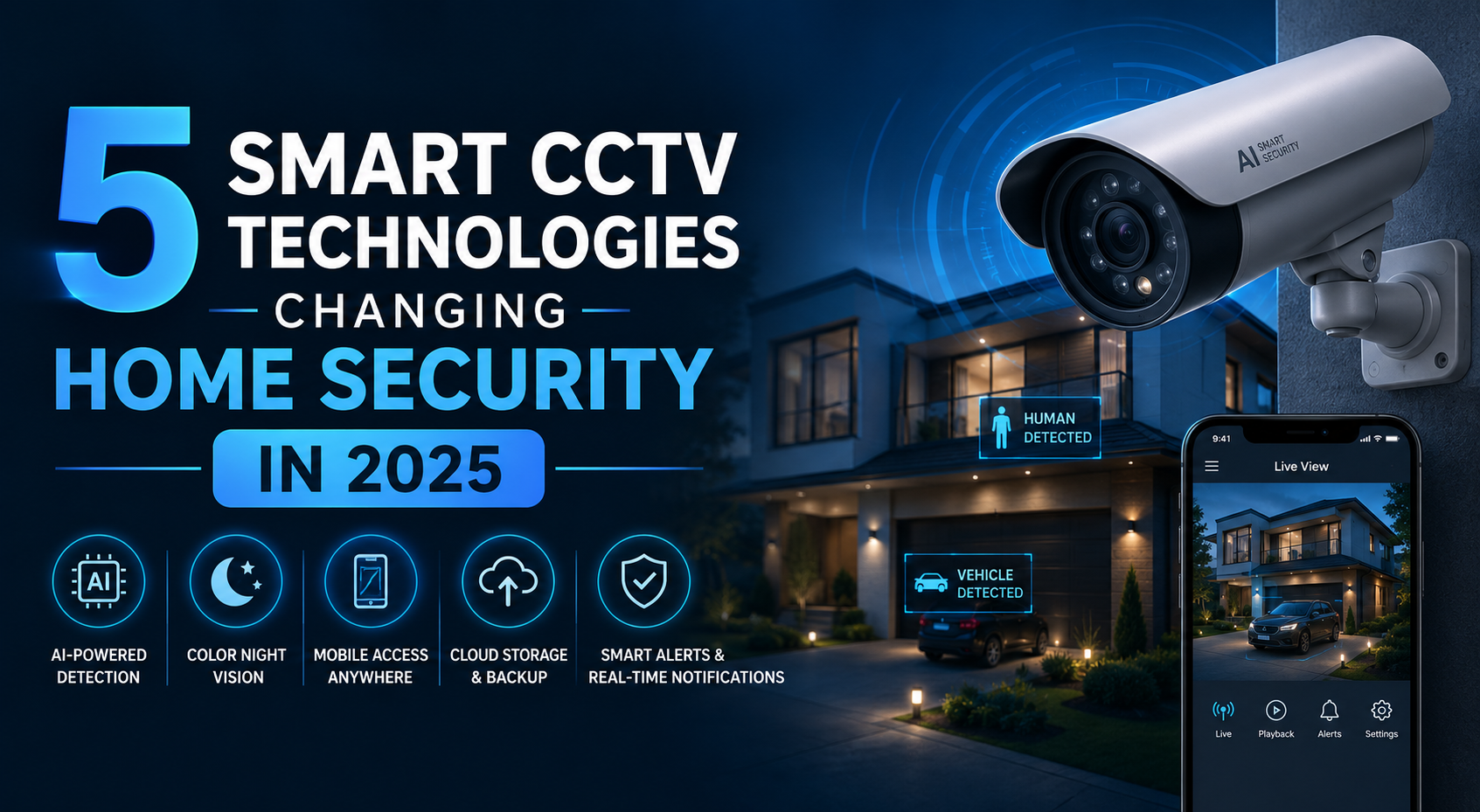
Smart CCTV Technologies for Smarter Home Security (2026 Guide) | Yendra Home Home CCTV Surveillance Smart CCTV Technologies Guide HOME SECURITY · SMART CCTV GUIDE Smart CCTV Technologies for Smarter Home Security Not every camera marketed as “smart” behaves the same way. This guide breaks down the technologies that actually matter, and which ones fit your property, your risks and your daily routine. 9 min read By Yendra Team Updated Sept 2026 Get a Free Site Assessment Jump to Section QUICK ANSWER Smart CCTV differs from conventional CCTV by adding detection, analysis and alerts on top of recording. The technologies that matter most for a home are AI human/vehicle detection, real night vision (not just the label), remote mobile monitoring, perimeter coverage at boundary points, and — only where genuinely needed — integration with alarms or access control. Summary What Makes It Smart 5 Technologies Which Fits Your Home Full System Smart vs Conventional What to Look For Other Environments Bangalore Installs FAQs ●Summary What This Guide Covers Smart CCTV is not about the camera with the most features — it’s about matching the right detection, night vision and monitoring capabilities to what your property actually needs to protect. ✓What separates a smart CCTV system from a conventional one, in practical terms ✓The five smart technologies worth evaluating: AI detection, night vision, remote monitoring, perimeter protection, and automation ✓How the right setup changes across apartments, independent houses, villas and larger properties ✓The six components — beyond the camera itself — that make a complete system ✓A smart vs conventional CCTV comparison, and why “smart” isn’t automatically “better” ✓What to actually check before buying, beyond resolution and megapixels ●The Basics What Makes a CCTV System Smart? Q. What’s the real difference between smart and conventional CCTV? A conventional system captures, records and leaves you to review footage manually. A smart system adds detection, analysis and alerts on top — so it tells you what happened, not just that something moved. A conventional CCTV system primarily does three things: Capture→ Record→ Review A smart CCTV system extends that process: Capture→ Detect & Alert→ Respond The difference isn’t camera resolution — it’s what the system does with the footage it captures. Recording → Detection Traditional cameras record continuously, leaving hours of footage to search through. Smart CCTV identifies activity and generates relevant events, so you can locate what mattered instead of scrubbing through an entire night. Motion → AI Detection Basic motion detection reacts to people, vehicles, animals, trees, shadows, weather and insects alike. Intelligent detection filters this down to relevant events, making alerts more useful and cutting false notifications. Cameras → Connected Security Smart cameras connect with apps, networks and storage — letting you view footage remotely, receive selected alerts, and manage multiple cameras from one interface. Smart CCTV is about making surveillance more meaningful — not simply recording more video. ●Worth Considering 5 Smart CCTV Technologies Worth Considering Not every home needs every smart feature. The right combination depends on the property’s size, layout, entrances and security priorities. 01 AI Human & Vehicle Detection Q. Why does human and vehicle detection matter more than basic motion sensing? It focuses alerts on relevant activity — a person or vehicle — instead of triggering on every leaf, shadow or passing insect near a gate or driveway. This is especially useful for main gates, driveways, parking areas, building entrances, compound boundaries and side passages. For homeowners, the benefit is straightforward: fewer irrelevant events, and more meaningful security information. For a deeper technical breakdown of how AI-based surveillance works, see our AI-Powered CCTV Guide. 02 Advanced Night Vision Q. Does “night vision” mean a camera will perform well after dark? Not on its own. Night-time performance depends on ambient light, infrared illumination, low-light sensor quality, camera positioning, distance from the subject, and lighting around entrances — not just the presence of the feature. A gate camera may need to identify a person several metres away, while a camera over a well-lit entrance needs far less night-time capability. When evaluating smart CCTV, consider what you actually need to see at night — not just whether night vision is listed as a feature. 03 Remote Monitoring & Alerts Q. What does remote monitoring actually give you day to day? Live viewing, event notifications, recorded footage and playback by date and time — most valuable when the property is unoccupied, provided the network and notification settings are configured well. Remote monitoring depends on more than the camera itself — network reliability, system configuration and storage all shape the experience. A good system informs you without overwhelming you with unnecessary alerts. 04 Intelligent Perimeter Protection Q. Why does perimeter coverage matter for independent houses and villas? The boundary can matter as much as the front door. Cameras placed at compound gates, boundary walls, side passages and rear access points catch unwanted access before it reaches the house. The objective isn’t blanket coverage of every square metre — it’s positioning cameras around security-critical zones where unwanted access is most likely, or where early detection is valuable. This is where CCTV planning matters more than simply adding cameras. Not sure which of these five technologies your property actually needs? A short site walkthrough answers that faster than any spec sheet. Talk to a Specialist 05 CCTV & Security Automation Q. Should CCTV connect with other security devices like alarms or access control? Only when it’s driven by an actual security requirement. Integration should create a more coordinated response — more connected devices don’t automatically mean better security. Depending on the property and system design, surveillance can work alongside access control, alarms or other devices to build a coordinated security environment rather than isolated tools. ●Property Type Which Smart CCTV Technology Does Your Home Need? Q. Is there one smart CCTV setup that works for every property? No. Apartments, independent houses, villas and larger properties each have different access points and risk areas, so the right combination of technologies changes by

The Future of Home Security: How AI-Powered CCTV Keeps You Safe in 2025
The Future of Home Security: How AI-Powered CCTV Keeps You Safe In today’s rapidly evolving world, protecting your home and loved ones is more important than ever. Traditional security systems are giving way to smart home security solutions powered by artificial intelligence (AI). At Yendra Techno Solution, we’re proud to offer cutting-edge AI CCTV cameras that not only watch over your property but also learn and predict potential threats—offering you peace of mind like never before. What is an AI CCTV Camera? Unlike conventional CCTV cameras that only record video footage, an AI CCTV camera integrates intelligent algorithms to analyze video in real time. These cameras can: Detect unusual behaviors or movements automatically Differentiate between humans, animals, and objects Send instant alerts to your smartphone when suspicious activity occurs Help law enforcement with clear, actionable evidence This technology transforms passive surveillance into proactive protection. Smart Home Security: More Than Just Cameras Smart home security systems connect various devices—alarms, locks, sensors, and cameras—into one seamless ecosystem. With AI at the core, these systems can predict and prevent security breaches before they happen through predictive surveillance techniques. For example: AI learns your family’s daily routines and identifies unusual activity patterns. The system automatically arms or disarms itself based on your presence. Integration with smart door locks allows remote control and real-time monitoring. Predictive Surveillance: The Game Changer Traditional CCTV systems record events and rely on human monitoring. Predictive surveillance, powered by AI, takes a giant leap forward by analyzing video feeds in real time to forecast potential threats. It enables: Early detection of loitering or suspicious gatherings near your home Immediate alerts when someone tries to tamper with security devices Automated activation of alarms, sirens, or lighting to deter intruders This proactive approach reduces false alarms and helps you act before incidents escalate. Why Choose Yendra Techno Solution for Your AI-Powered Home Security? At Yendra Techno Solution, we specialize in advanced AI CCTV cameras and comprehensive smart home security solutions tailored to your unique needs. Our expert team ensures: Customized security setups for homes of all sizes 24/7 monitoring and quick response services Hassle-free installation and post-sale support Integration with your existing smart devices Secure your home the smart way with Yendra—where technology meets trust. Conclusion The future of home security lies in intelligent, interconnected systems that do more than just record—they predict, protect, and provide peace of mind. Embrace the power of AI CCTV cameras, smart home security, and predictive surveillance to keep your family safe around the clock. Contact Yendra Techno Solution today to upgrade your home security to the next level! Ready to experience the future of home security? Visit Yendra.in or call us now to schedule a free consultation. Contact Us Related news on CBSE CCTV school mandate The Economic Times, July 26 2025 CBSE mandates CCTV with real-time audio-visual monitoring in schools to strengthen student safety The Times Of India, July 21 2025 CBSE mandates CCTV with real-time audio-visual monitoring in schools to strengthen student safety The Economic Times, July 20 2025 CBSE mandates CCTV with real-time audio-visual monitoring in schools to strengthen student safety

Top 5 Smart Surveillance Features Builders Must Consider in 2025 Before Installing CCTV at Their Sites
Top 5 Smart Surveillance Features Builders Must Consider in 2025 Before Installing CCTV at Their Sites Construction sites are bustling hubs of activity and valuable assets, making security a top priority for builders and developers. As the construction industry evolves, traditional CCTV systems are no longer enough. Smart surveillance for construction sites combines advanced technologies to offer enhanced protection, real-time monitoring, and quick incident response. If you’re a builder or developer in Bangalore, here are the top 5 smart surveillance features you must consider before installing CCTV at your site. Remote CCTV Access for Builders Access from Anywhere 24/7 Connectivity Faster Decision-Making Gone are the days when security managers had to be physically present at the site to monitor cameras. With remote CCTV access for builders, you can view live feeds anytime, anywhere via smartphones, tablets, or desktops. This feature ensures you stay connected to your construction site round-the-clock, even when you’re offsite, allowing immediate decision-making and better project oversight. Motion Detection CCTV for Construction Site Detects Unauthorized Activity Sends Instant Alerts Reduces False Alarms Construction sites are dynamic environments, but unauthorized movement can be a major risk factor. Motion detection CCTV for construction site triggers instant alerts when any unusual activity is detected, such as after-hours movement or perimeter breaches. This reduces false alarms and saves valuable time by focusing attention only on real threats, improving site safety and asset protection. Smart CCTV Monitoring Construction AI-Powered Video Analysis Enhanced Accuracy Efficient Security Management Smart surveillance systems integrate AI and machine learning to analyze video streams automatically. Features like AI intrusion detection, object classification, and behavior analysis help differentiate between workers, vehicles, and potential intruders. This smart CCTV monitoring for construction enables proactive security management, reduces manpower requirements, and ensures timely intervention. Night Vision with Infrared & Low Light Capability 24/7 Coverage Clear View in Darkness Improved Safety & Security Construction activity may happen round the clock or during early mornings and late evenings. Night vision CCTV cameras with infrared and low-light sensors provide clear visuals even in total darkness. This ensures your site is protected 24/7, preventing theft, vandalism, or safety hazards when natural light is insufficient. CCTV with Alert System for Builders & Developers An effective CCTV with alert system for developers immediately notifies security personnel or builders of any suspicious activity through SMS, email, or app notifications. These alerts enable swift response to incidents, minimizing damage and loss. Modern alert systems can integrate with sirens, lighting, and access control to deter intruders instantly. Instant Alerts Quick Incident Response Smart Integration Comparison Chart: Top CCTV Brands for Construction Site Surveillance Features Hikvision CP Plus Dahua Resolution Up to 4K Ultra HD Up to 4K Ultra HD Up to 4K Ultra HD AI-Powered Analytics Human & Vehicle Detection (AcuSense) Smart Motion Detection AI Intrusion & Face Recognition Night Vision ColorVu, IR Night Vision IR up to 50 meters Starlight & IR Night Vision Remote Access Mobile App & Web Portal Mobile App & Cloud Access Mobile App & Cloud Access Alert & Notification Instant Alerts with Event Recording Real-Time Alerts via App & Email Push Notifications & Integration Weatherproof & Durability P67 / IK10 IP66 / IK10 IP67 / IK10 Representative Images Of the Respective Brands Smart CCTV Surveillence Implementation in India Bangalore – Prestige Group Construction Site Prestige Group integrated Hikvision AI-enabled cameras with remote monitoring capabilities on their high-rise project. The motion detection and real-time alerts helped prevent theft attempts during night shifts, saving thousands of rupees in losses. Delhi – DLF Construction Site DLF employed Dahua’s smart surveillance cameras equipped with AI intrusion detection. Their remote access feature allowed project managers to monitor the site live from different locations, improving security response times and site safety compliance. Why Builders & Developers in Bangalore Should Invest in Smart Surveillance Enhanced Security: Protect valuable materials and machinery from theft and vandalism. Operational Efficiency: Reduce manpower costs with automated monitoring. Safety Compliance: Ensure timely detection of hazards and unauthorized access. Peace of Mind: Access site monitoring anytime, anywhere for complete control. Planning CCTV installation? Get our comprehensive checklist designed specifically for construction sites to ensure you cover all critical aspects of smart surveillance. Download Your Free Checklist: CCTV Installation on Construction Site Secure your construction site with the best smart surveillance technologies. For expert consultation and installation in Bangalore, contact us today! Related news on CBSE CCTV school mandate The Economic Times, July 26 2025 CBSE mandates CCTV with real-time audio-visual monitoring in schools to strengthen student safety The Times Of India, July 21 2025 CBSE mandates CCTV with real-time audio-visual monitoring in schools to strengthen student safety The Economic Times, July 20 2025 CBSE mandates CCTV with real-time audio-visual monitoring in schools to strengthen student safety

Best CCTV Cameras in India with 4K Resolution: Ultra-HD Clarity for Enhanced Security
Best CCTV Cameras in India with 4K Resolution: Ultra-HD Clarity for Enhanced Security When it comes to robust security, clarity and precision are paramount. 4K CCTV Cameras have transformed the surveillance industry, providing ultra-high-definition footage that ensures detailed identification and monitoring capabilities, especially crucial for facial recognition and reading number plates. If you’re exploring options for CCTV Installation in India, here are the best 4K Security Cameras available today, along with insights into how AI integration enhances their capabilities. TL;DR Summary The best CCTV cameras in India in 2025 combine 4K Ultra-HD resolution, advanced AI features like facial and license plate recognition, and smart integrations. These cameras are ideal for residential, commercial, and public safety applications nationwide. Choosing the right system depends on your security needs, environment, and budget, with top brands like Hikvision, CP Plus, and Lorex leading the market. Why 4K CCTV Cameras Are the Future of Surveillance in India In 2025, CCTV compliance has become essential for security in homes, businesses, and public infrastructure across India. 4K Ultra-HD CCTV cameras, with their unmatched clarity, enable highly detailed monitoring—crucial for facial recognition, license plate reading, and identifying suspicious activity in crowded environments. In a country where security needs are increasing rapidly, investing in the best CCTV cameras in India ensures your facility is protected with the latest technology. These high-resolution cameras surpass traditional 1080p models, providing four times the detail and clarity. Key Features of the Best CCTV Cameras in India 2025 1. Ultra-HD 4K Resolution for Crystal Clear Footage The best CCTV cameras in India feature 8MP (3840×2160) resolution, offering crisp, life-like images that are essential for detailed facial and license plate recognition. 2. AI-Powered Features for Intelligent Surveillance Modern AI features include: Human and vehicle detection Facial recognition Number plate recognition (ANPR) Intrusion detection Smart alerts and activity zones 3. Superior Night Vision Technology Advanced color night vision and IR capabilities enable clear footage even in complete darkness, crucial for 24/7 surveillance in residential complexes, pavements, and highways. 4. Smart Integration and Connectivity Many of the best CCTV cameras in India offer compatibility with smart home systems, enabling remote access via apps and voice assistants. Whether for residential or commercial use, seamless integration enhances security management. 5. Weatherproof and Rugged Construction For outdoor security, weatherproof ratings (IP67, IP66) and vandal-resistant features ensure durability against India’s diverse climate conditions, from monsoons to extreme heat. Top Brands and Models for 4K CCTV Cameras in India Brand / Model Resolution Key Features Applications Lorex 4K Dual-Lens 8MP (4K UHD), panoramic 180° Dual lenses, AI detection, wide angles Properties, yards, large outdoor areas Hikvision 4K Turbo HD 8MP (4K), IR up to 50m HDvision Smart Detection, intrusion alerts Commercial, high-security zones CP Plus 4K IP Cameras 8MP, AI features Facial recognition, remote monitoring Residential complexes, retail spaces Arlo Ultra 2 4K HDR Wireless, AI detection, two-way audio Homes, small offices Note: These brands are trusted for their reliability, cutting-edge AI features, and compliance with Indian CCTV regulations 1. Hikvision DS-2CD2087G2-LU Resolution: 8MP (3840×2160) Night Vision: Advanced ColorVu technology AI Features: AcuSense technology, human and vehicle detection Applications: Ideal for residential apartments, commercial buildings, and parking lots 2. Dahua IPC-HFW5842T-ASE Resolution: 8MP (4K UHD) Night Vision: Starlight Technology AI Features: Face detection, number plate recognition (ANPR) Applications: Highways, gated communities, and high-security facilities 3. CP Plus CP-UNC-TA81L5 Resolution: 8MP Ultra-HD Night Vision: IR up to 50m AI Features: Intelligent analytics for human detection, intrusion alerts Applications: Commercial spaces, industrial premises, apartments Why Choose 4K CCTV Cameras? 4K resolution provides unmatched image clarity, essential for accurately identifying faces, license plates, and minute details that lower-resolution cameras may miss. Ultra-HD CCTV Cameras are particularly effective in busy urban settings such as apartment complexes, roads, and public spaces. How AI Integration Enhances CCTV Security in India AI-driven CCTV systems are transforming surveillance in India by providing: Facial Recognition: Identifies individuals in crowd or restricted zones, aiding police and security personnel. License Plate Recognition: Automates vehicle management at entry points and helps catch stolen vehicles. Behavioral Analytics: Detects suspicious or abnormal activity, alerting security teams instantly. Automated Alerts: Send real-time notifications on mobile devices, reducing response time during security breaches. These AI features are critical for compliance requirements in sensitive environments like schools, malls, and government installations. Real-World Applications and Success Stories Apartments and Gated Communities: AI-enabled 4K CCTV installations significantly improve residential security. Cameras instantly recognize faces, enabling quick identification of authorized residents versus intruders, while automatic number plate recognition ensures smooth and secure vehicle entry. Road Surveillance: The combination of ultra-HD clarity and AI analytics assists in managing traffic, identifying rule violations, and providing real-time alerts for unauthorized or suspicious vehicles. Chandigarh’s recent mandate to install real-time monitoring 4K CCTV in schools and public spaces illustrates the growing reliance on t.hese advanced systems for public safet Benefits of Wireless CCTV with 4K and AI Technology Why Bangalore Trusts Yendra Techno Solution for CCTV Cameras Installation in Bangalore Yendra Techno Solution has established itself as one of the leading providers of CCTV Cameras installation in Bangalore. Their focus on high-quality, weather-resistant cameras, and expert installation ensures maximum security and peace of mind. Bangalore’s diverse climate demands durable solutions, and Yendra’s equipment is tailored to withstand dust, rain, and heat, while their skilled technicians ensure a seamless setup. Why Choose Yendra? Customized security solutions aligned with local needs Latest 4K Ultra-HD CCTV technology with AI features Reliable after-sales support and maintenance Competitive pricing and transparent billing Final Thoughts Investing in best CCTV cameras in India in 2025 means opting for high-resolution, AI-enabled security systems that promise increased safety, smarter alerts, and seamless management. Yendra Techno Solution, with its customer-centric approach, expertise, and top-tier equipment, is your trusted partner for CCTV cameras installation in Bangalore. Secure your property today with technology that’s built to face India’s diverse environment and evolving security needs. Learn more about Yendra CCTV Solutions Best Home Security Cameras in 2025 Smart Surveillance Trends in India Comprehensive Guide to CCTV Cameras for Residential Use Benefits of AI-Enabled Surveillance in India Top Smart Camera Systems for Bangalore Homes
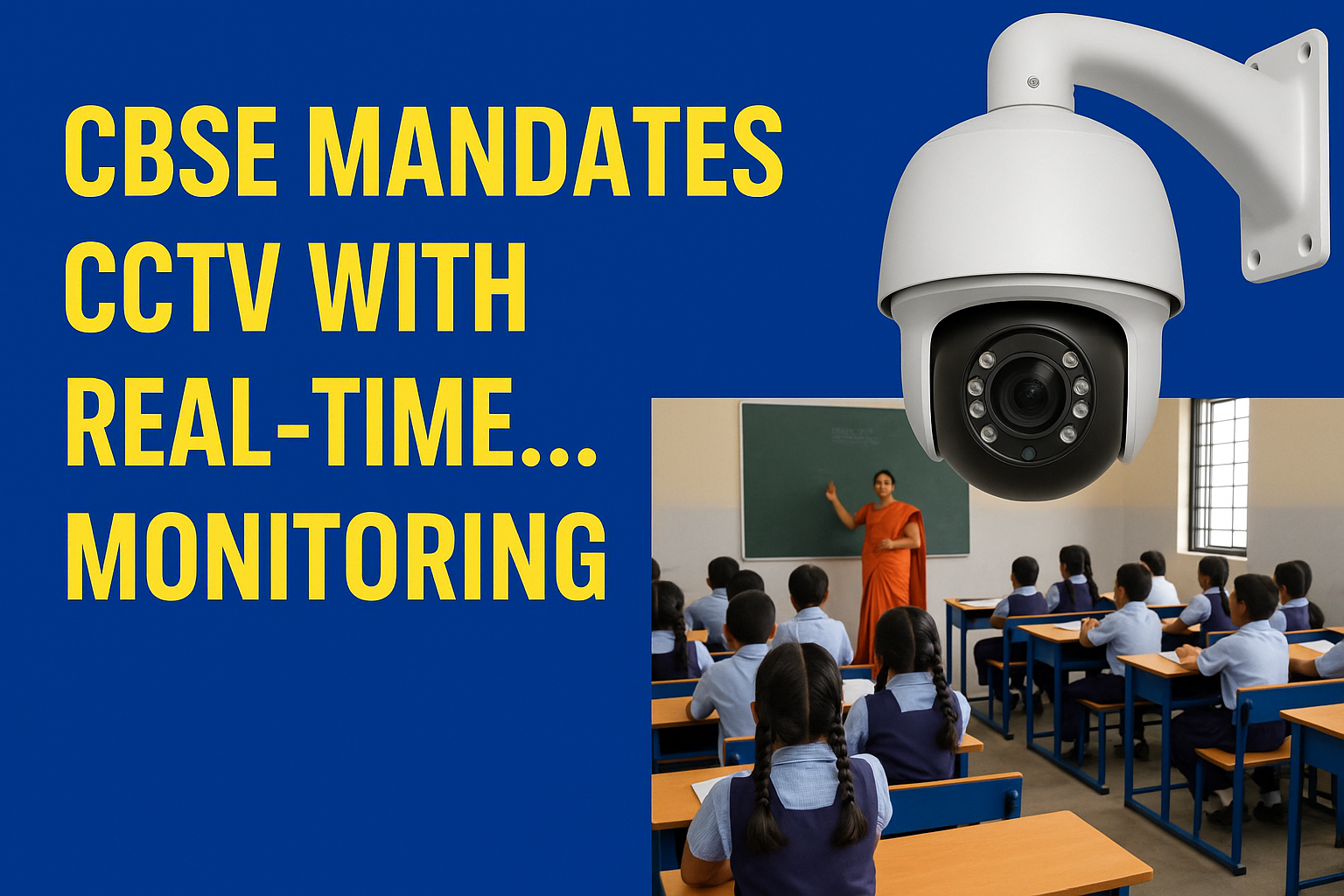
CBSE Mandates CCTV with Real-Time Monitoring: A New Era for School Security
CBSE Mandates CCTV with Real-Time Monitoring: A New Era for School Security The Central Board of Secondary Education (CBSE) has taken a major step forward in enhancing school safety by mandating the installation of high-definition CCTV cameras for schools with real-time audio and visual monitoring capabilities. This new directive affects all CBSE-affiliated schools across India and emphasizes the critical role of CCTV monitoring in safeguarding students. Why is CCTV Surveillance Mandatory In School? Increasing concerns about student safety have driven CBSE to require robust security measures. Implementing AI CCTV cameras with real-time monitoring ensures immediate response during emergencies, deters misconduct, and creates a secure learning atmosphere for students and staff alike. Areas Included in the CCTV Installation Mandate The guidelines specify that security CCTV solutions in Bangalore and across India must cover critical areas such as: Classrooms Corridors Playgrounds Laboratories Libraries Canteens Entry and Exit Points Lobbies and Staircases Storerooms To protect privacy, areas like toilets and washrooms are excluded from surveillance. Technical Specifications and Footage Storage Schools must deploy high-resolution CCTV cameras capable of clear audio-visual recording. Footage must be securely stored for at least 15 days, enabling authorities to access recordings when required. Impact of Non-Compliance CBSE has clarified that non-compliance with these surveillance guidelines may lead to serious repercussions, including potential impacts on the school’s affiliation status. Schools are advised to adhere strictly to these measures to ensure continued affiliation. Challenges and Concerns While widely welcomed for its emphasis on student safety, the mandate has also sparked discussions around privacy and financial implications. Some stakeholders have expressed concerns about: Potential misuse of audio recordings. Privacy issues, especially regarding teachers and staff interactions. Financial challenges, particularly for government schools with limited budgets. Conclusion: Strengthening School Security with Modern CCTV Solutions This landmark directive by CBSE reflects a proactive stance towards ensuring student safety and improving overall security infrastructure in schools. While balancing privacy concerns and practical challenges, schools are now urged to implement these guidelines effectively. For schools looking for reliable and professional CCTV installation in Bangalore, our expert team offers tailored security CCTV solutions that meet CBSE standards while addressing budget and privacy concerns. CCTV Serveillence Solutions From Yendra Techno Solution Stay informed. Stay secure. For consultation on implementing CCTV systems in your educational institution, reach out to our experts today. Contact Us Related news on CBSE CCTV school mandate The Economic Times, July 26 2025 CBSE mandates CCTV with real-time audio-visual monitoring in schools to strengthen student safety The Times Of India, July 21 2025 CBSE mandates CCTV with real-time audio-visual monitoring in schools to strengthen student safety The Economic Times, July 20 2025 CBSE mandates CCTV with real-time audio-visual monitoring in schools to strengthen student safety
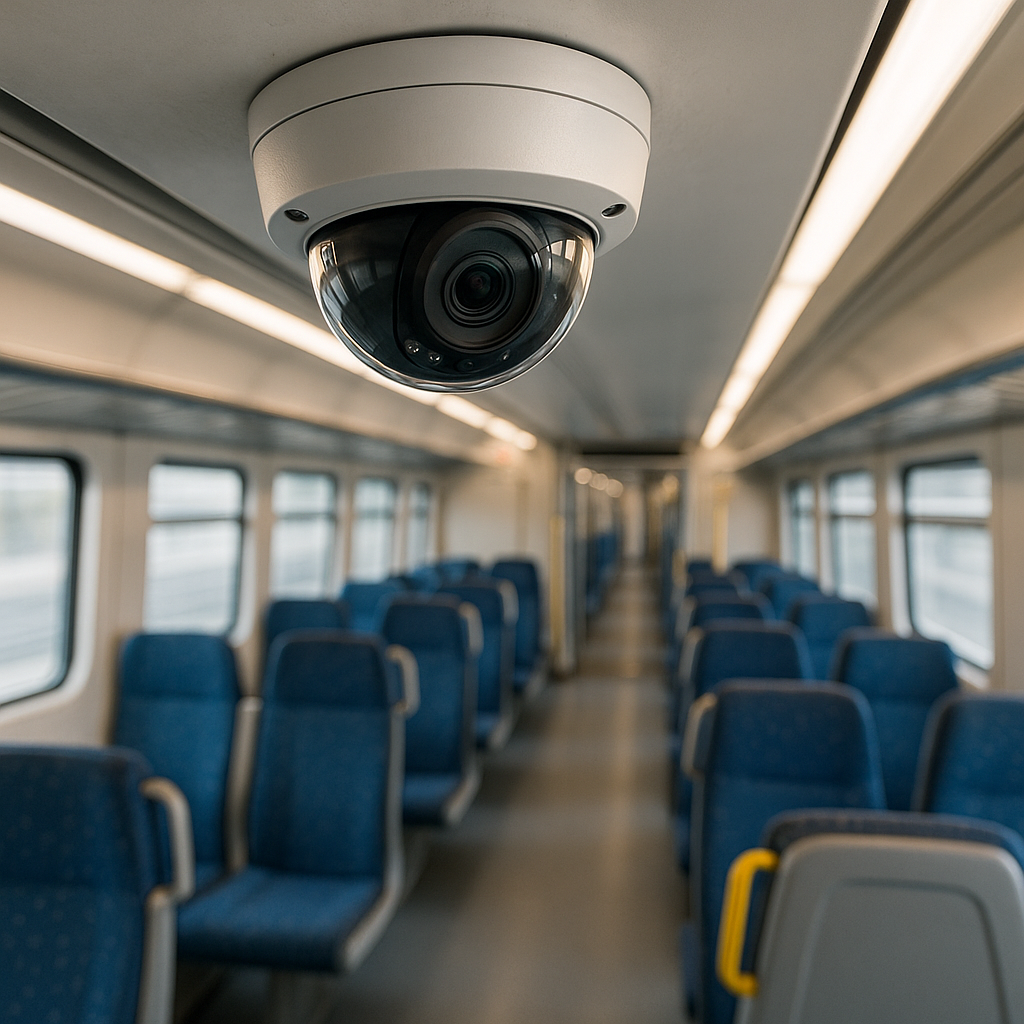
CCTV Cameras on Indian Trains: A Surveillance Revolution for Passenger Safety
CCTV Cameras on Indian Trains: A Surveillance Revolution for Passenger Safety In this video, FactTechz reveals the sweeping CCTV initiative by the Indian government, installing an impressive 380,971 cameras on trains to ensure round-the-clock monitoring and rapid response to incidents. We’ll explore the technology behind these high-definition cameras, their strategic placement in coaches and stations, and the expected impact on passenger safety, crime prevention, and overall journey experience. Join us as we break down what this massive deployment means for millions of travelers across India courtesy FactTechz

cctv surveillance cameras – Surveillance Spotlight: Viral CCTV Footage Shows Scooter Rider Attacked After Deliberate Crash
CCTV Surveillance Cameras – A viral CCTV clip shows an enraged driver crashing into a scooter and assaulting the rider—highlighting the power of surveillance in curbing road rage. In a shocking road-rage incident caught on CCTV last week, an unidentified driver deliberately rammed a scooter and violently assaulted its rider. The harrowing footage has been viewed over 3 million times, underscoring the crucial role of surveillance cameras in enhancing public safety, deterring violent behaviour, and providing irrefutable evidence for investigations. courtesy AutoTech Waqab