

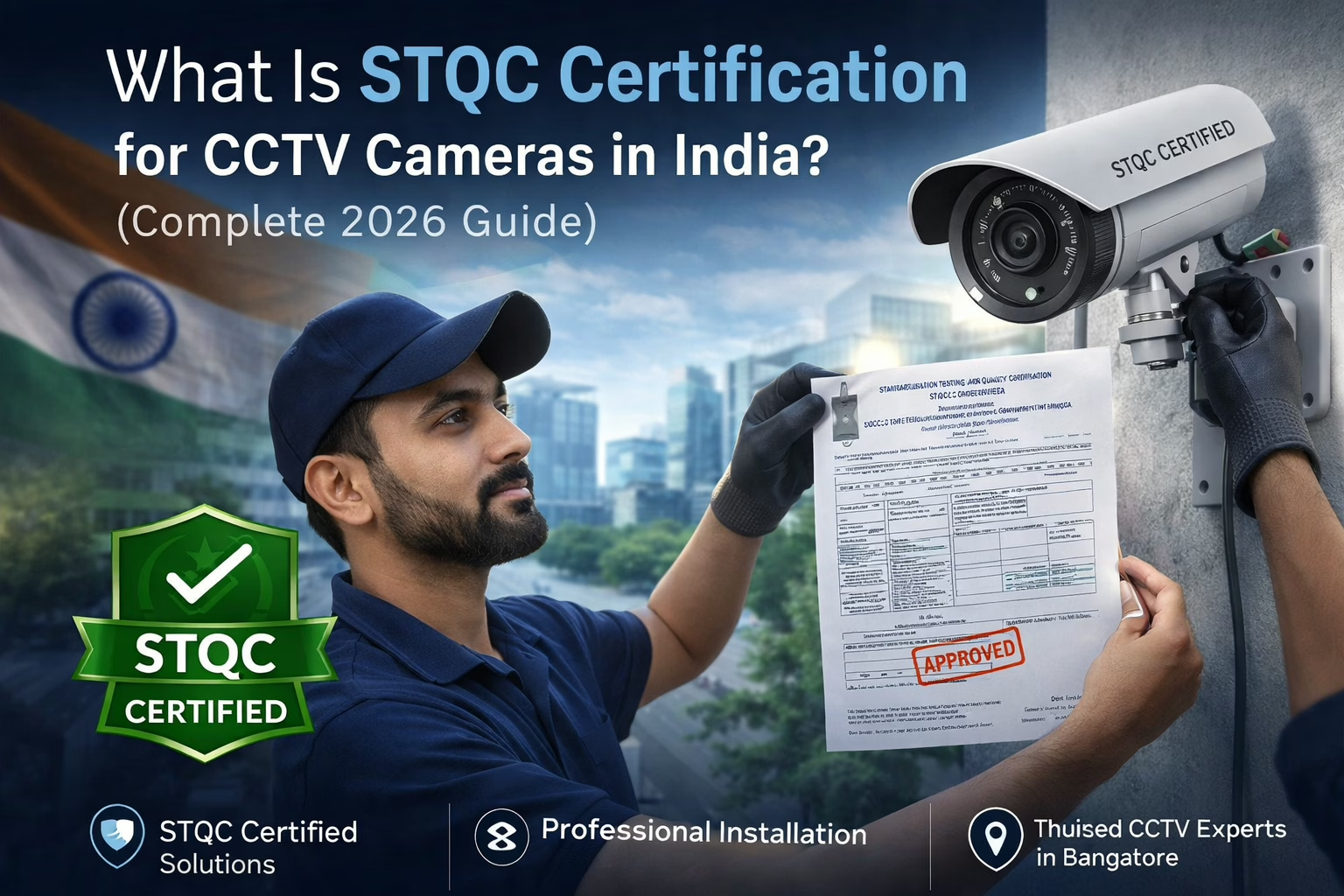
STQC Certification for CCTV Cameras in India (2026 Guide) What Is STQC Certification for CCTV Cameras in India? (2026 Guide) STQC certification for CCTV cameras in India is a government approval issued by the Standardisation Testing and Quality Certification under the Ministry of Electronics and Information Technology that ensures cameras meet cybersecurity, hardware, and data protection standards. From April 2026, only STQC-certified CCTV systems can be legally sold in India. Summary New rule from April 1, 2026: Only STQC-certified CCTV cameras can be sold and installed in India What is SQTC Certification For CCTV cameras in India are explained in details Non-compliant CCTV cameras are effectively banned STQC certification is mandatory ER (Essential Requirements) compliance required Major impact on Chinese CCTV brands Existing CCTV systems are not banned Expected price increase: ~10–20% due to compliance and supply chain changes Who must comply: How to stay compliant: Introduction With the rollout of new surveillance regulations and the ongoing CCTV Ban in India, one term is becoming critical for every buyer—STQC certification. Whether you’re a homeowner, business owner, or system integrator, understanding STQC is no longer optional. From April 2026, only STQC-certified CCTV cameras can be legally sold and installed in India. In this guide, we break down what STQC certification is, why it matters, and how it directly impacts your CCTV buying decisions. What Is STQC Certification for CCTV Cameras? STQC certification for CCTV cameras in India is a government approval issued by the Standardisation Testing and Quality Certification under the Ministry of Electronics and Information Technology that ensures cameras meet cybersecurity, hardware, and data protection standards. From April 2026, only STQC-certified CCTV systems can be legally sold in India. STQC (Standardisation Testing and Quality Certification) is a certification issued by the Standardisation Testing and Quality Certification under the Ministry of Electronics and Information Technology. It ensures that CCTV cameras meet government-defined standards for: Cybersecurity Data protection Hardware integrity Firmware safety 👉 In simple terms:STQC certification ensures your CCTV camera is secure, tested, and approved by the Government of India. Why STQC Certification for CCTV Is Mandatory in 2026 Is STQC Certification for CCTV Mandatory in India? Yes. STQC certification is mandatory for all CCTV cameras sold in India from April 1, 2026. Non-certified cameras cannot be legally manufactured, imported, or sold. The push for STQC compliance is directly linked to the CCTV Ban in India, which restricts the sale of non-compliant surveillance equipment. Key Reasons Behind the Mandate 1. National Security Concerns Unverified CCTV cameras can: Transmit data to unknown servers Be remotely accessed Compromise sensitive locations 2. Rise in Cybersecurity Threats Many low-cost CCTV systems lack: Encryption Secure firmware Access control 👉 STQC ensures these vulnerabilities are eliminated. 3. Government’s “Trusted Electronics” Initiative India aims to: Reduce reliance on foreign surveillance tech Promote secure, locally compliant ecosystems 4. Regulatory Enforcement (April 2026) Only STQC-certified cameras can be: Manufactured Imported Sold 👉 This makes STQC certification legally essential. What Does STQC Certification Test in CCTV Cameras? STQC certification is not just a basic quality check—it is a multi-layer security and performance audit. 1. Hardware-Level Testing Chipset verification Component origin validation Physical reliability 2. Firmware & Software Security No hidden backdoors Secure update mechanisms Verified source code 3. Network & Data Security Encrypted video transmission Secure login protocols No unauthorized remote access 4. Performance & Reliability Video quality standards Stability under continuous operation Environmental durability 5. Compliance with Essential Requirements (ER) STQC certification aligns with: Government-defined Essential Requirements (ER) for electronics STQC Certification vs Non-Certified CCTV Cameras Feature STQC Certified Non-Certified CCTV Government Approval ✅ Yes ❌ No Cybersecurity High Unverified Legal Compliance Mandatory Not allowed after 2026 Data Safety Secure Risky Future Proof Yes No 👉 This is why STQC certification is at the center of the CCTV Ban in India. What Happens If You Use Non-Compliant CCTV? Cannot legally sell or install new systems Risk of compliance failure in audits Higher cybersecurity risks How to Check If a CCTV Camera Is STQC Certified Ask for the STQC certificate document Check product datasheet for ER compliance Verify with the brand or installer Avoid unbranded or grey-market cameras Before buying a CCTV system, follow this checklist: 1. Ask for Certification Documents STQC certificate copy ER compliance details 2. Verify with the Brand Trusted brands clearly mention STQC compliance in: Product datasheets Official websites 3. Check with Installer A professional installer should: Provide compliant product options Explain certification validity 4. Avoid Grey Market Products No certification No documentation High compliance risk Which Brands Offer STQC Certified CCTV Cameras in India? Several brands are aligning with compliance norms: Leading Compliant Brands Prama India CP Plus Matrix Comsec These brands focus on: Secure firmware Local compliance Government-ready documentation Impact of STQC Certification for CCTV on Buyers For Homeowners Safer surveillance Protection from hacking Future-ready systems For Businesses Mandatory for compliance audits Required in tenders & corporate policies For Builders & Developers Essential for project approvals Ensures long-term system reliability Does STQC Certification Increase CCTV Costs? Yes. STQC-certified CCTV systems typically cost 10–20% more due to compliance testing and secure components. But It Saves Cost By: Avoiding replacement after 2026 Preventing security breaches Ensuring legal compliance Yes, but with long-term benefits. Cost Impact 10–20% higher than non-certified cameras Why It’s Worth It Avoid replacement costs after 2026 Prevent security breaches Ensure legal compliance Common Myths About STQC Certification for CCTV STQC Certification & CCTV Ban in India STQC certification is the foundation of the CCTV Ban in India. Non-certified cameras → restricted from sale Certified cameras → allowed and future-proof 👉 This makes STQC compliance non-negotiable in 2026 Myth 1: It’s only for government projects ❌ False✔ Applies to all CCTV sales in India Myth 2: Old CCTV systems are banned ❌ False✔ Only new sales must comply Myth 3: All branded cameras are compliant ❌ False✔ Certification must be verified STQC Certification and the Future of CCTV in India STQC is not just a regulation—it’s a shift toward: Secure surveillance ecosystems Trusted electronics Reduced
CCTV Ban in India: April 2026 Crackdown on Chinese Surveillance Giants Explained
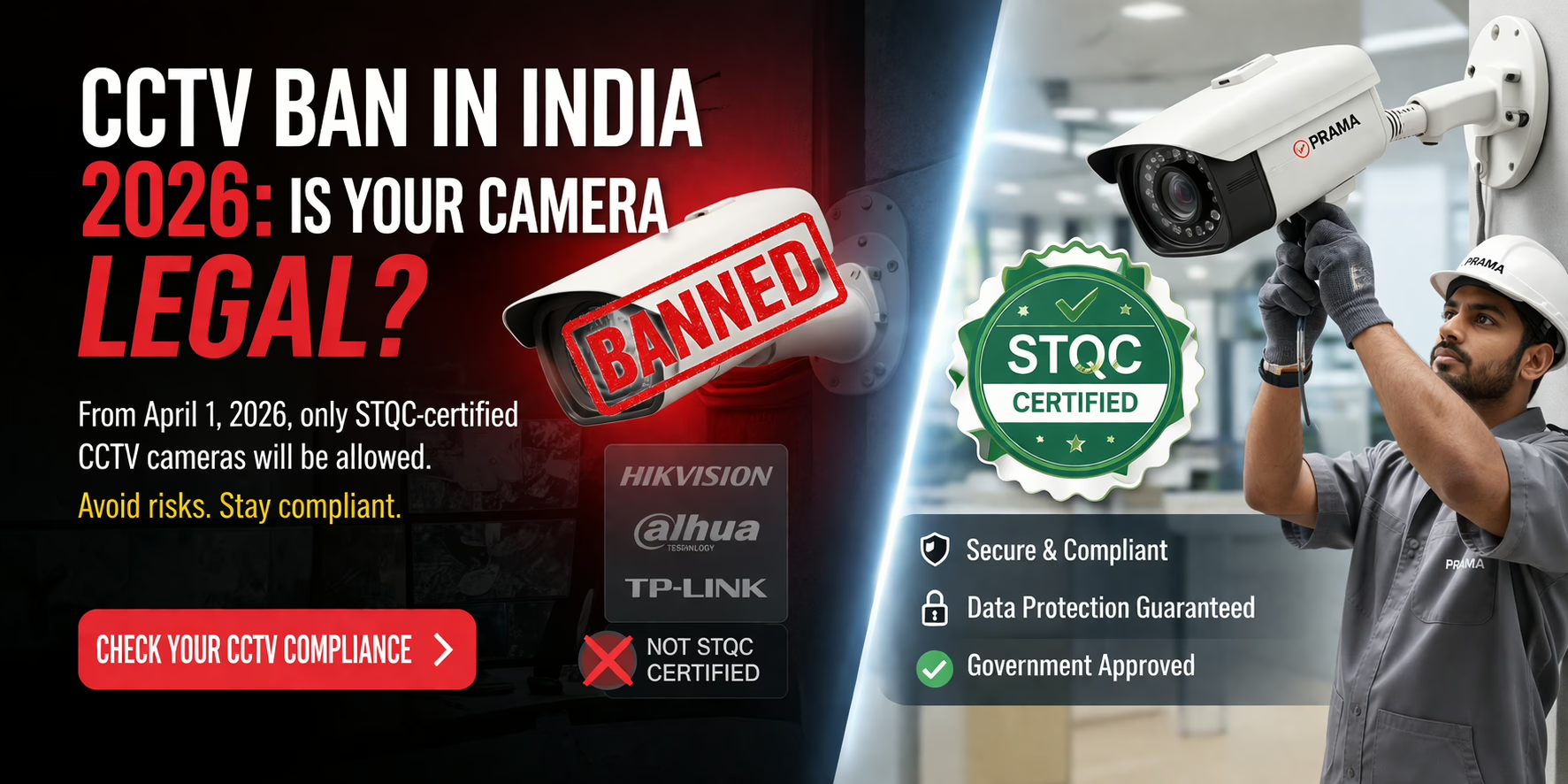
CCTV Ban in India Explained CCTV Ban in India: April 2026 Crackdown on Chinese Surveillance Giants Explained Summary India to restrict sale of certain CCTV brands from April 1, 2026 Major brands impacted Not a direct “ban” — but a compliance restriction Government tightening cybersecurity norms Primary reason: National security concerns Deadline enforcement begins April 2026 Impact on market dynamics Expected price increase No immediate ban on existing users Businesses face higher compliance pressure China has reacted negatively to India’s move Opportunity for Indian ecosystem Bottom Line 👉 The CCTV Ban in India is essentially a compliance-driven market reset👉 Non-certified (especially Chinese-origin) cameras are being phased out👉 Future of surveillance in India = secure, certified, and locally aligned systems Introduction India’s surveillance industry is undergoing its biggest transformation yet. In a decisive regulatory move, the government has effectively triggered a CCTV Ban in India targeting non-compliant and Chinese-origin surveillance equipment starting April 1, 2026. Over the past week, multiple reports from leading publications confirm that brands like Hikvision, Dahua, and TP-Link are being pushed out of the Indian market—not through a direct “ban law,” but via strict certification denial under new cybersecurity and compliance norms. What Is the CCTV Ban in India (April 2026)? Key Rule: From April 1, 2026, only STQC-certified and ER-compliant CCTV cameras can be: Manufactured Imported Sold in India What This Means: Cameras without certification = illegal to sell Devices with Chinese chipsets/firmware = unlikely to get certification Result: Effective ban on major Chinese brands Major News Developments (Last 7 Days) 1. India to Block Hikvision, Dahua & TP-Link Sales Recent reports confirm that India is set to block the sale of internet-connected CCTV systems from Chinese manufacturers. Certification for such devices is being denied under STQC rules These brands previously held ~30% market share in India 👉 This is the strongest indicator of a functional CCTV ban in India 2. Full Ban on Non-Certified CCTV Cameras from April 1 Another major update clarifies: All non-certified CCTV cameras are banned from sale Applies especially to Chinese-origin hardware or firmware Ends a 2-year transition period given to the industry 👉 This confirms that the CCTV ban in India is policy-driven, not sudden. 3. Market Reset: Indian Brands Take Control Reports highlight a massive shift: Indian companies now control ~80% of the market Chinese players are: Exiting Entering joint ventures Facing liquidation risks 👉 The CCTV ban in India is also a Make in India opportunity 4. Prices Expected to Rise by 15–20% Due to supply chain shifts: CCTV system costs may increase 15–20% Component sourcing shifting from China to Taiwan/local suppliers 👉 Short-term pain, long-term security gain. 5. China Reacts Strongly to India’s Decision China has officially reacted: Accused India of violating trade norms Raised concerns over economic impact 👉 Shows geopolitical implications of the CCTV ban in India. Why Is India Enforcing the CCTV Ban? 1. National Security & Surveillance Risks India has growing concerns that: Foreign-controlled cameras may enable: Remote access Data leaks Espionage Earlier global actions (like US bans) influenced this stance. 2. Cybersecurity Compliance (ER + STQC) New rules require: Hardware + firmware disclosure Source code verification Lab testing via STQC 👉 Ensures no backdoors or vulnerabilities 3. Supply Chain Transparency Manufacturers must now declare: Origin of chipsets (SoC) Firmware sources Testing certification 👉 Eliminates opaque Chinese supply chains 4. Push for Atmanirbhar Bharat The CCTV ban in India directly supports: Local manufacturing Indian OEM brands Domestic cybersecurity ecosystem Which Brands Are Affected? Likely Impacted Hikvision Dahua TP-Link Other Chinese OEM/ODM brands 👉 These depend heavily on Chinese chipsets & firmware. Not Directly Banned (But Must Comply) Indian brands (CP Plus, Prama, Matrix, Sparsh) Global brands (Bosch, Honeywell) 👉 As long as they meet certification norms. Is It a Complete Ban? (Important Clarification) Technically: ❌ Not a blanket ban✅ A compliance-based restriction Reality: If a product fails certification → cannot be sold Most Chinese cameras fail due to origin dependencies 👉 So practically, it behaves like a CCTV ban in India Impact on Different Stakeholders 1. Homeowners Existing cameras → No immediate ban New purchases → Must be compliant 👉 Recommendation: Upgrade only when necessary 2. Businesses & Offices Compliance becomes mandatory for audits Non-compliant systems = risk in tenders & insurance 3. CCTV Dealers & Integrators Biggest impact segment: Must shift inventory immediately Risk of dead stock (Chinese brands) Need to educate customers on compliance 4. Builders & Real Estate New projects must install: ER-compliant systems Certified surveillance 👉 Non-compliance can delay approvals Impact on CCTV Prices & Availability Short-Term Effects Price increase: 15–20% Supply shortages Reduced options Long-Term Effects Stable pricing Better quality products Stronger domestic ecosystem Indian Brands Gaining Momentum The CCTV ban in India is creating a massive opportunity: Leading Beneficiaries: CP Plus Prama India Matrix Sparsh Qubo 👉 These brands are shifting to: Non-Chinese chipsets Local firmware Certified manufacturing Global Context: India Is Not Alone India’s move aligns with global trends: USA banned Hikvision & Dahua (FCC) UK restricted Chinese surveillance Australia imposed limitations 👉 India is now part of a global surveillance security shift What Should Buyers Do Now? Before Buying CCTV in India (Post-April 2026) Checklist: ✅ STQC Certification ✅ ER Compliance ✅ Non-Chinese chipset (preferred) ✅ Verified firmware source Avoid: Grey market imports Cheap unbranded IP cameras “Rebranded Chinese OEM” devices Future Outlook of CCTV Ban in India What to Expect Next Stricter enforcement checks Possible audits for enterprises Expansion to: IoT devices Smart home security Market Forecast Indian brands dominance: 80%+ Increased R&D in surveillance tech Rise of AI-based compliant systems CCTV Ban in India: What It Means for Bangalore Homes & Businesses With Bangalore being a major tech and business hub, the impact of the CCTV Ban in India is even more significant here. Why Bangalore Is Highly Affected High adoption of IP-based CCTV systems Widespread use of imported/Chinese OEM cameras Increasing compliance checks in: Tech parks Warehouses Gated communities CCTV Compliance Requirements in Bangalore (2026) For installations across Bangalore,
MeitY CCTV Guidelines India 2026: Why Non-Compliant Cameras Will Be Banned After April 1
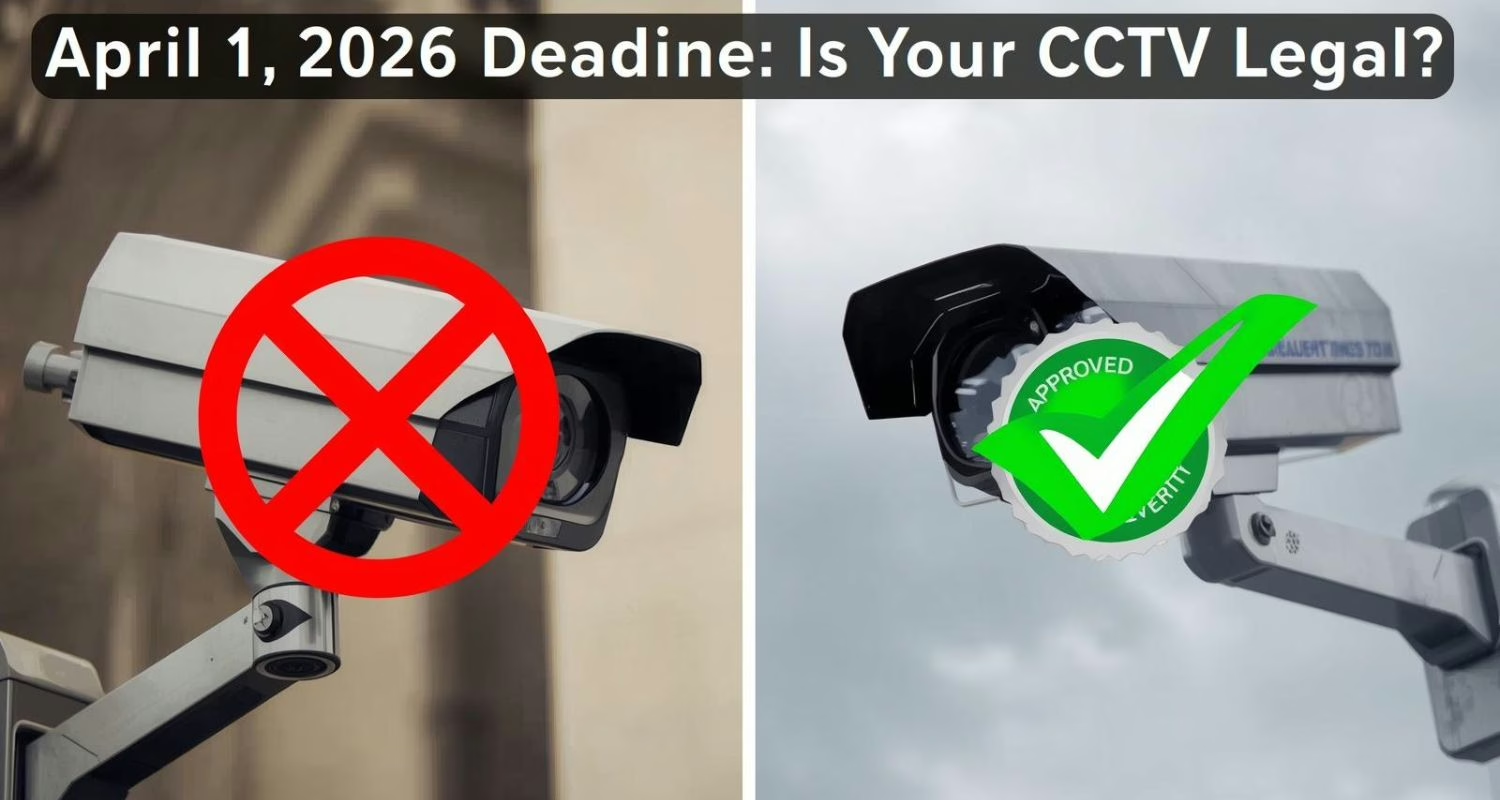
MeitY CCTV Guidelines India 2026: Why Non-Compliant Cameras Will Be Banned After April 1 MeitY CCTV Guidelines India 2026: Why Non-Compliant Cameras Will Be Banned After April 1 The MeitY CCTV guidelines 2026 require all CCTV cameras in India to be STQC-certified and ER-compliant. From April 1, 2026, non-compliant cameras cannot be sold, imported, or installed, effectively enforcing a CCTV ban in India on insecure surveillance devices. Summary From April 1, 2026, all CCTV cameras sold in India must follow MeitY CCTV guidelines India Non-compliant cameras cannot be sold or installed going forward Businesses must shift to ER compliant CCTV cameras STQC Certification is key for compliance Existing systems may still work—but upgrades and expansions must comply Bangalore businesses should act early to avoid risk and ensure security Introduction If you’re planning to install CCTV cameras—or already have a system running—this is something you cannot afford to ignore. On 16 January 2026, the Ministry of Electronics and Information Technology (MeitY) made a decisive move. The extension that allowed older, non-compliant CCTV stock to be sold? It’s now officially withdrawn. From April 1, 2026, only ER compliant CCTV cameras can be sold in India. Now, you might be wondering: Does this affect my existing system? Do I need to upgrade immediately? How do I ensure my CCTV setup is compliant? Let’s walk through this together—step by step—just like we do with our clients at Yendra Techno Solutions. What Are the New MeitY CCTV Guidelines India? The MeitY CCTV guidelines are regulations issued by the Ministry of Electronics and Information Technology requiring all CCTV devices to meet cybersecurity, hardware, and data protection standards through STQC certification. Let’s simplify the regulation. The MeitY CCTV guidelines India mandate that all CCTV cameras sold in the country must meet Essential Requirements (ERs) related to cybersecurity and product integrity. Earlier, the government allowed companies to clear old inventory manufactured or imported before April 9, 2025. That grace period is now gone. 👉 From April 1, 2026: No sale of non-compliant CCTV cameras Only ER compliant CCTV cameras allowed Mandatory adherence to security standards This is not just a policy shift—it’s a structural transformation of the CCTV industry in India. What Are “Essential Requirements (ER)” in CCTV? Mandatory Requirements STQC certification ER compliance Secure firmware Data encryption No unauthorized remote access When clients ask us this, we explain it like this: Earlier, CCTV cameras focused on recording video. Now, they must also focus on protecting data. The Essential Requirements (ERs) introduced by MeitY are designed to ensure that CCTV cameras used in India are secure, reliable, and free from vulnerabilities. These requirements are enforced through certifications such as: STQC Certification Key Security Features Under ER Compliance Cybersecurity-Secure Firmware Ensures software integrity Secure firmware updates Protection from unauthorized remote access No Backdoor Access Eliminates hidden access points often found in low-cost imports Protects against external hacking threats Data Integrity-Data Protection Mechanisms Video data cannot be tampered with easily Ensures that video footage is securely stored and transmitted Trusted Supply Chain Verified hardware and software components Reduced dependency on unverified imports Certification-Cybersecurity Compliance Compliance validated through→ STQC Certification Aligns with India’s broader national security and IT policies Think of ER as a quality + security filter for CCTV systems. Why CCTV Compliance India 2026 Matters More Than You Think Let me tell you something we’ve seen on the ground. Many businesses install CCTV cameras thinking: As long as it records, it’s fine. But here’s the reality. 1. Data Breach Vulnerabilities Non-compliant cameras can: Can be remotely accessed without authorization Leak sensitive footage Become entry points for cyberattacks 2. Legal & Compliance Issues Post-April 2026: Selling non-compliant cameras = illegal Installing them knowingly = potential liability And now, with CCTV compliance India 2026, there’s also a regulatory layer. 3. No Software Updates or Support Non-certified brands: Often lack firmware updates Become obsolete quickly 4. Threat to Business Continuity A compromised CCTV system can: Disrupt operations Expose sensitive footage Damage brand reputation Key Insight: A cheap CCTV system today can become a serious liability tomorrow. Real Impact on Businesses in Bangalore Homeowners No immediate ban on existing systems New purchases must be compliant Businesses Mandatory compliance for audits Risk of penalties Builders Required for approvals and handovers Let’s bring this closer to home. In Bangalore, we typically see three categories of users: 1. Offices & IT Companies High data sensitivity Need for secure surveillance Must align with compliance standards 2. Apartments & Gated Communities Legacy systems installed 5–10 years ago Often using outdated DVR-based setups 3. Warehouses & Industrial Units Heavy reliance on surveillance Often use imported low-cost cameras With CCTV rules India April 2026, all these segments must rethink their systems. CCTV Installation Bangalore Compliance: What Changes? If you’re planning a new installation, here’s what changes: ✅ Earlier: Price-driven decisions Brand didn’t matter much Security rarely evaluated ✅ Now: Compliance-first approach Certified brands only Security architecture matters At Yendra, we now design systems with: ER compliance as baseline Scalable architecture Secure network integration This is what CCTV installation Bangalore compliance looks like in 2026. What Dealers, Distributors & Installers Must Do Now If you are part of the CCTV supply chain, this regulation directly impacts your operations. ✅ Immediate Actions Required Clear old stock before March 31, 2026 Stop procurement of non-compliant devices Shift to certified brands only Educate customers about compliance ✅ Strategic Shift Dealers must move from: “Selling products” → to → “Providing secure solutions” This is where Yendra makes difference for your business, as security consultants,and security architects, not just installers. How to Check If Your CCTV Camera Is Compliant Step-by-Step Verify STQC certification Check ER compliance Confirm with installer Avoid grey-market devices This is one of the most common questions we get. Before installing or upgrading, you must verify compliance. Here’s a simple checklist: ✅ Look for STQC Certification- Is the camera STQC certified? Mandatory for ER compliance ✅ Verify Brand Credibility- Does the brand follow MeitY ER guidelines? Transparent firmware policies Indian or trusted

Don’t Buy Blindly: 8 Expert Secrets to Choose Security Cameras for Offices
CCTV system for office security Don’t Buy Blindly: 8 Expert Secrets to Choose Security Cameras for Offices Summary A CCTV system for office security is essential, but it must be planned strategically Do not rely only on cameras; build integrated workplace surveillance systems with access control and alarms Choose between IP vs analog and wired vs wireless based on scalability and reliability Select the right camera types like dome, bullet, or PTZ based on office zones Use higher resolution cameras for entry points and asset protection areas Ensure professional office CCTV installation to avoid blind spots and failures Always prefer STQC certified cameras for compliance and long-term reliability in India Invest in AI-enabled security cameras for offices for smarter monitoring and alerts Follow a customized approach based on office layout, risks, and future expansion. Build a scalable and future-ready security Trust experienced providers like Yendra Techno Solutions for designing scalable security systems Choose cameras based on business risks, not price Introduction: Build Security, Not Just Surveillance You are not just installing a CCTV system for office security. You are designing a secure and future-ready workplace. However, many office owners treat a CCTV system for office security as a one-time purchase. They often install basic setups without proper planning. As a result, they face blind spots, system failures, and serious security risks. At Yendra Techno Solutions, we have observed this pattern for over 10 years. Businesses invest in a CCTV system for office security, yet they ignore integration and scalability. Therefore, this guide helps you think differently. It shows how to choose the right CCTV system for office security while preparing your workplace for future security needs. Why Do You Need a CCTV System for Office Security? Every office has risks. Some are visible, while others remain hidden. A CCTV system for office security helps you monitor, protect, and control your workplace by preventing threats, ensuring safety, and providing real-time visibility across all critical areas. A reliable CCTV system for office security helps you: Monitor employee and visitor activity Prevent theft and internal fraud Improve workplace safety Maintain compliance and accountability Access real-time footage remotely Moreover, modern workplace surveillance systems provide smart alerts and analytics. That means you stay informed without constant monitoring. What Are the Different Types of Security Cameras for Offices? Not all cameras serve the same purpose. Choosing the wrong type creates coverage gaps. Common Types of CCTV System For Office Security Dome Cameras: Ideal for indoor use with wide coverage Bullet Cameras: Best for outdoor and long-distance monitoring PTZ Cameras: Allow pan, tilt, and zoom control IP Cameras: Offer high-resolution and network-based access Wireless Cameras: Easy to install but require stable connectivity Quick Comparison Table Camera Type Best Use Key Advantage Limitation Dome Indoor offices Discreet design Limited range Bullet Outdoor areas Long-distance view Visible presence PTZ Large spaces Flexible control Higher cost IP Smart offices High resolution Network dependency Wireless Small offices Easy setup Signal issues Why Is a CCTV System for Office Security No Longer Enough? Cameras alone cannot secure a modern office. Today’s risks involve data theft, unauthorized access, and internal threats. Therefore, you need more than basic monitoring. A CCTV system for office security works best when combined with: Access control systems Video door phones Alarm systems AI-powered analytics 👉 Explore smart integrations: https://yendra.in/smart-access-control-systems-for-offices/ https://yendra.in/video-door-phones-alarms-for-commercial-security-yendra/ Moreover, integrated workplace surveillance systems provide complete visibility and control. What Does Yendra Techno Solution Believe About Office Security? At Yendra, security is not a product. It is a system.We believe a CCTV system for office security should be part of an integrated, scalable solution that protects people, assets, and business operations proactively. With 10+ years of industry experience, we understand real business challenges. What We Believe Every office has unique risks Security must scale with business growth Integration is more important than individual devices Prevention is better than reaction What We Understand Blind spots create vulnerability Poor installation reduces system value Cheap cameras fail during critical events Businesses need actionable insights, not just footage Therefore, we design solutions that combine engineering, technology, and strategy. How Do You Choose the Right Security Cameras for Offices? Choosing the right CCTV system for office security requires aligning camera types, resolution, and features with your office layout, risk areas, and future scalability needs. Choosing the right cameras is not about features alone. It is about aligning technology with real office risks. Over the years at Yendra Techno Solutions, we have guided hundreds of businesses across Bangalore. From Indiranagar startups to Whitefield tech parks, every office needed a different approach. Let’s break this down with practical clarity. 1. IP Camera vs Analog Camera: Which One Should You Choose? This is often the first confusion. Feature IP Cameras Analog Cameras Video Quality High (2MP to 4K) Moderate (up to 1080p) Connectivity Network-based Coaxial cable Scalability Easy to expand Limited Cost Higher upfront Lower upfront Smart Features AI, remote access Basic recording Recommendation: Choose IP cameras for modern offices and scalability Choose analog systems only for tight budgets or small setups 👉 Deep dive: https://yendra.in/ip-camera-vs-analog-camera-which-cctv-system-is-better/ 2. Wired vs Wireless Cameras: What Works Better? This decision affects long-term reliability. Wired Cameras: Stable and secure for medium to large offices Wireless Cameras: Flexible but depend on network strength Yendra Insight:In a Whitefield IT office, a client initially chose wireless cameras. However, network drops caused recording gaps. We later upgraded them to a wired IP system. Stability improved instantly. 3. Which Camera Resolution Should You Choose? Resolution defines evidence quality. 2MP (1080p): Basic monitoring 4MP: Clear facial recognition 4K: High-security environments Recommendation: Use 4MP for most office areas Use 4K for entry points and cash handling zones 4. Bullet vs Dome vs PTZ Cameras: Which Is Best? Each camera type serves a purpose. Camera Type Best For Key Benefit Bullet Outdoor security Long-range visibility Dome Indoor offices Discreet and vandal-resistant PTZ Large areas Dynamic control and zoom 5. How Much Storage Do Workplace Surveillance Systems Need? Storage determines how long you can access footage. Many offices
CCTV Maintenance Services in Bangalore: Complete Guide to AMC, Repair & Reliable Security Solutions
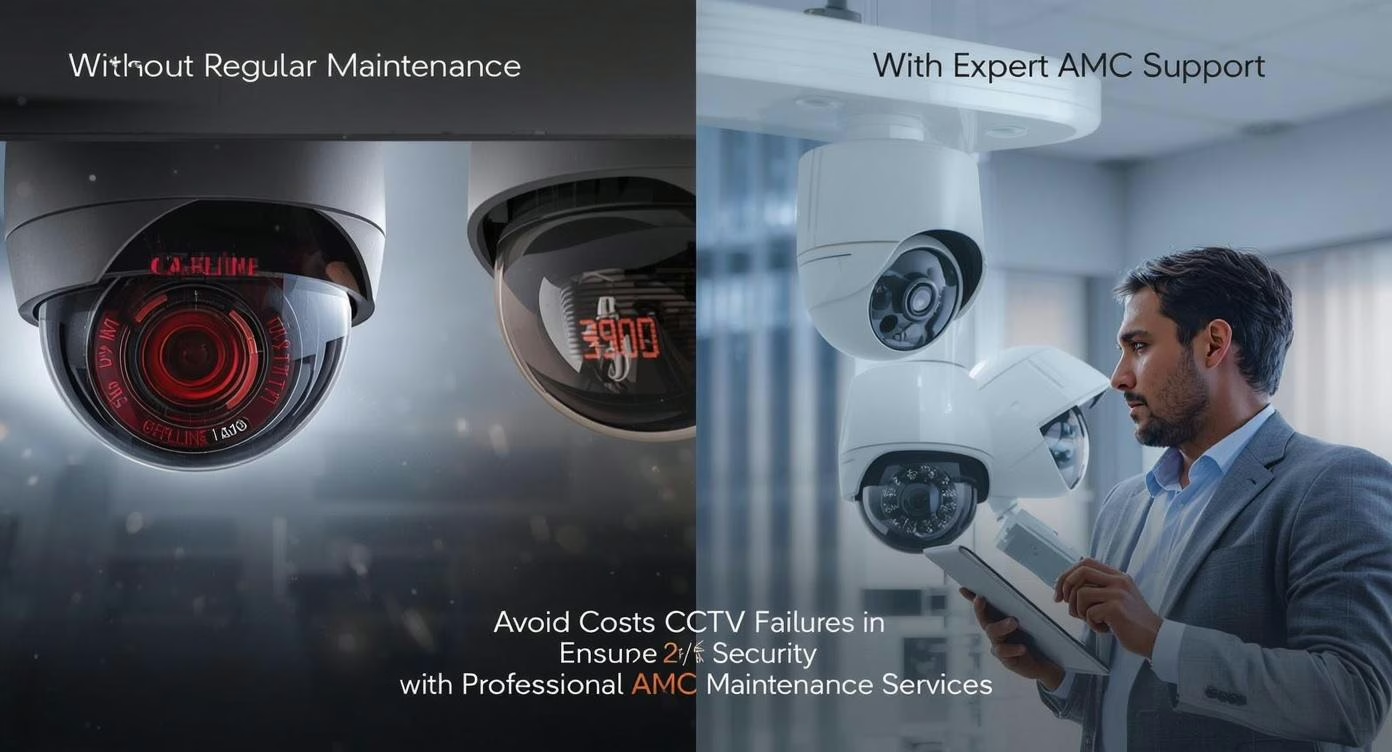
Best CCTV Maintenance Services in Bangalore: Avoid Costly Failures with Expert AMC Solutions Best CCTV Maintenance Services in Bangalore: Avoid Costly Failures with Expert AMC Solutions Summary CCTV systems require regular servicing for optimal performance CCTV AMC Bangalore ensures consistent monitoring and reduced downtime Common issues include recording failure, HDD damage, and network errors AMC plans include basic and comprehensive coverage Costs vary based on system size and requirements Yendra provides AMC services for industries and gated communities Introduction Security systems demand consistent performance. Therefore, CCTV maintenance services in Bangalore remain essential for reliability. Many users install cameras but ignore servicing. As a result, systems fail during critical moments. Moreover, Bangalore’s rapid growth increases security challenges. Regular maintenance ensures uninterrupted monitoring. In addition, it helps identify issues early and reduce repair costs. For a strong setup, consider CCTV installation in Bangalore from trusted professionals. Why CCTV Maintenance is Important CCTV systems operate continuously. Therefore, components experience wear and tear. Without maintenance, performance drops quickly. CCTV maintenance services in Bangalore ensure systems perform without interruption. Dust affects camera clarity. Additionally, outdated firmware reduces efficiency. Loose wiring also interrupts recording. Routine servicing improves system lifespan. Moreover, it prevents sudden failures. Businesses benefit from continuous monitoring. Similarly, homeowners gain reliable protection. Common CCTV Problems Camera Not Recording Recording failures occur frequently. Often, storage or configuration errors cause this issue. Sometimes, settings change unintentionally. Additionally, power disruptions affect recording schedules. Regular checks prevent such failures. Therefore, CCTV maintenance services in Bangalore help resolve these problems quickly. Hard Disk Failure Hard disks store critical footage. However, continuous operation leads to wear. Missing recordings indicate possible failure. In some cases, systems stop saving data entirely. Routine inspections help detect early signs. Consequently, data loss risks reduce significantly. Night Vision Issues Night vision ensures low-light visibility. However, infrared components degrade over time. Dust and moisture reduce image quality. As a result, footage becomes unclear at night. Cleaning and calibration improve performance. Therefore, maintenance remains essential. Network Problems Modern CCTV systems depend on stable networks. Therefore, connectivity issues disrupt monitoring. Slow internet causes delays. Additionally, router failures block camera access. Professional support resolves such issues quickly. For expert consultation, visit professional CCTV installers Bangalore. Bangalore-Specific Challenges for CCTV Systems Bangalore presents unique environmental challenges. Therefore, CCTV maintenance services in Bangalore become even more important. The city experiences heavy dust in certain areas. As a result, camera lenses get blocked. Regular cleaning improves visibility. Frequent rains also affect outdoor cameras. Moisture damages internal components. Therefore, waterproof checks are necessary. Power fluctuations occur in many locations. Consequently, systems may shut down unexpectedly. CCTV maintenance services in Bangalore include electrical checks to prevent such issues. High network usage in urban areas causes connectivity problems. Therefore, regular network optimization becomes essential. What is a CCTV AMC? A CCTV annual maintenance contract ensures regular servicing and system support. It includes inspections, repairs, and optimization. AMC reduces unexpected breakdowns. Furthermore, it ensures priority service when issues arise. Businesses prefer AMC for reliability. Likewise, residential users benefit from hassle-free maintenance. Explore complete solutions at CCTV servicing & maintenance. Types of CCTV AMC Plans In Bangalore Basic AMC Basic AMC covers routine inspections and cleaning. It also includes minor repairs. However, spare parts are excluded. Therefore, additional costs may apply when replacements are needed. This plan suits smaller systems. It also works well for low-usage environments. Comprehensive AMC Comprehensive AMC offers complete coverage. It includes repairs and parts replacement. Additionally, it ensures priority support. Therefore, downtime reduces significantly. Large businesses prefer this option. It also suits high-security environments. Benefits of CCTV Maintenance Services in Bangalore CCTV maintenance services in Bangalore offer several advantages. Firstly, they reduce long-term repair costs. Secondly, they improve system reliability. Scheduled servicing detects issues early. Therefore, major failures are avoided. Additionally, CCTV maintenance services Bangalore ensure better video quality. Moreover, they extend equipment lifespan. Businesses benefit from continuous surveillance. Consequently, security risks decrease significantly. Cost of CCTV AMC in Bangalore Pricing depends on system size and coverage. CCTV maintenance services Bangalore vary based on requirements. Basic plans are affordable. However, comprehensive plans cost more. Small setups require less investment. Meanwhile, large systems need higher budgets. Despite costs, CCTV maintenance services Bangalore save money over time. Best Locations in Bangalore That Need CCTV Maintenance Services Certain areas require frequent servicing. Therefore, CCTV maintenance services Bangalore are highly recommended in these locations. Commercial hubs like Whitefield and Electronic City demand constant monitoring. Residential areas such as Sarjapur Road and Yelahanka also require reliable surveillance. Industrial zones need regular inspections. Consequently, CCTV maintenance services Bangalore become essential for safety. How to Choose a Reliable CCTV Service Provider Selecting the right provider ensures efficiency. CCTV maintenance services Bangalore should come from experienced professionals. Check reviews and certifications. Additionally, verify response time. Reliable providers offer transparent pricing. Moreover, they provide customized AMC plans. Choose local experts for faster service. Therefore, issues get resolved quickly. For standards, refer to: https://www.asis.org https://www.securityindustry.org Expertise in CCTV Maintenance Experienced technicians ensure better results. CCTV maintenance services in Bangalore require technical knowledge and tools. Authoritative providers follow industry standards. Additionally, they deliver consistent service quality. Trustworthy companies maintain transparency. Therefore, customers receive reliable solutions. Pro Tips to Avoid Costly CCTV Failures Schedule CCTV maintenance services in Bangalore every three to six months. This ensures optimal performance. Use surveillance-grade hard drives. Additionally, update firmware regularly. Secure networks to prevent hacking. Furthermore, install surge protectors. Proper camera placement improves coverage. Therefore, blind spots reduce significantly. Yendra AMC Services for Industries and Communities Yendra provides reliable CCTV maintenance services in Bangalore for multiple sectors. The company supports manufacturing units and warehouses. These industries require continuous monitoring. Therefore, proactive servicing ensures efficiency. Warehouses store valuable goods. Consequently, uninterrupted surveillance is essential. CCTV maintenance services in Bangalore from Yendra ensure system reliability. Yendra also serves gated communities. These areas require consistent security monitoring. Regular servicing improves system performance. Customized AMC plans meet different industry needs. Explore solutions at CCTV servicing & maintenance. Explore services: https://yendra.in/cctv-camera-installation-bangalore/ https://yendra.in/cctv-consultation-professional-surveillance-solutions/ FAQs Why is my CCTV camera not recording? Possible causes include storage failure,
Best CCTV Cameras for Home Security in India
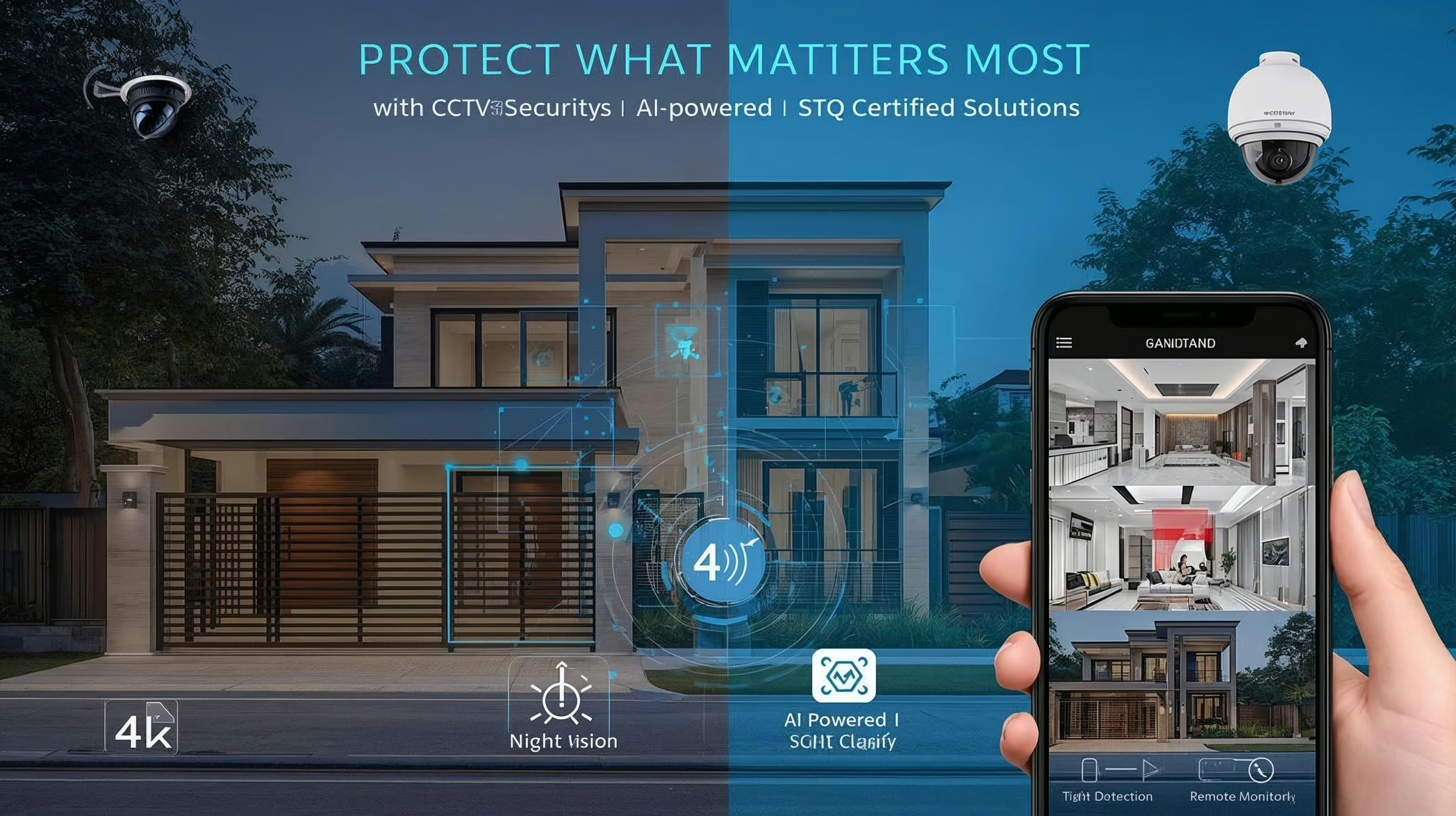
Best CCTV Cameras for Home Security in India Best CCTV Cameras for Home Security in India Summary CCTV cameras are essential for modern home security in Bangalore. Therefore, they protect apartments, villas, and gated homes effectively. Choose cameras with key features like 4K resolution, night vision, motion detection, and remote monitoring. Moreover, these features ensure clear footage and real-time alerts. Different camera types serve different needs. Therefore, use dome cameras for indoors and bullet cameras for outdoors. Additionally, wireless and door cameras suit compact homes. IP cameras outperform analog cameras with better video quality and smart features. Therefore, they are the preferred choice for modern homes A combination of indoor and outdoor cameras ensures full coverage. Moreover, using AI-powered CCTV improves detection and reduces false alerts. 4K and night vision cameras provide superior clarity and round-the-clock security. Trusted brands like CP Plus and Prama India stand out. Moreover, Yendra Techno Solution is an authorized dealer in Bangalore, ensuring genuine products and expert support. STQC-certified CCTV cameras are becoming essential. Therefore, they ensure data security, compliance, and reliability. Proper installation plays a crucial role. Therefore, always choose professional CCTV installation services for optimal performance. Avoid common mistakes like poor placement and low-resolution cameras. Moreover, always plan camera coverage strategically. Yendra Techno Solution offers customized CCTV setups. Therefore, homeowners get tailored security solutions based on their property type. Introduction Home security has become a serious concern across Indian cities. Bangalore homeowners now prioritize safety more than ever. Therefore, investing in the best CCTV cameras for home security in India is essential. Modern systems offer smart monitoring and real-time alerts. Moreover, they ensure peace of mind whether you stay in apartments or villas. Consequently, choosing the right system becomes a crucial decision. Why Does Every Home Need CCTV? Security threats have increased in urban areas. Therefore, CCTV cameras act as the first line of defense. They discourage theft and suspicious activities. Additionally, recorded footage helps during investigations. Moreover, smart cameras allow remote monitoring. You can check your home from anywhere. According to a report by Statista, surveillance adoption continues to rise globally. https://www.statista.com Furthermore, families feel safer with constant monitoring. This reassurance improves daily living comfort. What Features Should You Look for in Best Home Security Cameras in india? Choosing the right features ensures long-term value and help us deciding on Best CCTV Cameras for Home Security in India. Therefore, understanding key aspects becomes important. Resolution High resolution delivers clear video quality. Therefore, choose at least 1080p cameras. Higher resolution helps identify faces and objects easily. Night Vision Most incidents happen during nighttime. Therefore, infrared night vision becomes essential. It ensures clear footage even in darkness. Motion Detection Motion detection alerts you instantly. Moreover, it reduces unnecessary recording. Smart alerts improve response time significantly. Remote Monitoring Remote access allows live viewing via mobile apps. Therefore, you stay connected always. This feature suits working professionals and frequent travelers. Storage Options Storage options include cloud and local systems. Cloud storage offers easy access and backup. However, local storage reduces subscription costs. For more insights, refer to TechRadar’s guide on security cameras:https://www.techradar.com What Are the Best Types of CCTV Cameras for Home Security in India? Selecting the right camera type depends on your property layout and security needs. Therefore, homeowners should understand each option before making a decision. Modern CCTV cameras for house security now include advanced features like AI detection and 4K clarity. As a result, security systems have become smarter and more efficient. Dome Cameras Dome cameras are ideal for indoor use. Therefore, they suit apartments and compact homes. They offer a wide viewing angle. Moreover, their design makes them less noticeable. These cameras work best in living rooms, hallways, and offices. Bullet Cameras Bullet cameras are perfect for outdoor security. Therefore, they are commonly used in villas and independent houses. They cover long distances effectively. Additionally, their visible presence deters intruders. For outdoor setups, follow expert advice from👉 https://yendra.in/outdoor-cctv-camera-guide-for-bangalore-villas-2025/ Wireless Cameras Wireless cameras are easy to install and maintain. Therefore, they are ideal for renters and modern homes. They support remote monitoring and cloud storage. Moreover, they integrate well with smart home systems. If you are exploring wireless options, check👉 https://yendra.in/wireless-cctv-camera-10-best-options-in-india-2025/ Door Cameras Door cameras enhance entry-level security. Therefore, they are essential for apartments and gated communities. They allow real-time visitor monitoring. Additionally, they improve access control. IP Cameras vs Analog Cameras: Which Is Better? Understanding this difference is crucial before choosing a system. IP Cameras offer high-resolution video, remote access, and smart features. Analog Cameras are budget-friendly but provide lower resolution and limited functionality. Therefore, IP cameras are the best choice for modern homes. They deliver better clarity and advanced monitoring. For a detailed comparison, visit👉 https://yendra.in/ip-camera-vs-analog-camera-which-cctv-system-is-better/ Why Should You Choose 4K and Night Vision Cameras? Security demands high-quality footage. Therefore, 4K cameras provide ultra-clear video. They capture fine details like faces and vehicle numbers. Moreover, night vision ensures visibility in low light. If you want the best options in Bangalore, explore👉 https://yendra.in/best-cctv-cameras-in-bangalore-4k-night-vision/ For nationwide recommendations, check👉 https://yendra.in/best-cctv-cameras-in-india-4k-ultra-hd-security/ Are Smart & AI-Powered CCTV Cameras Worth It? Smart CCTV systems are transforming home security. Therefore, many homeowners now prefer AI-powered solutions. These cameras detect motion, recognize faces, and send instant alerts. Moreover, they reduce false alarms significantly. AI-powered systems are especially useful for luxury villas. They offer advanced surveillance and automation. To deep dive into technologies, read our tech guidance based article on latest smart CCTV technologie To understand real-world applications, visit👉 https://yendra.in/home-surveillance-proven-luxury-security-in-indiranagar/ Pro Tips from Yendra Experts Choosing the right mix of cameras improves overall security. Therefore, combine indoor dome cameras with outdoor bullet cameras. Always prioritize IP cameras with 4K resolution. Additionally, ensure night vision for complete coverage. For villas, invest in AI-powered systems. Moreover, place cameras strategically to eliminate blind spots. Yendra Techno Solution recommends customized setups. Therefore, every home gets tailored protection based on layout and risk level Which Are the Top CCTV Brands in India? Choosing a trusted brand ensures long-term reliability and performance. Therefore, homeowners should always prioritize proven manufacturers with strong service networks in

CCTV Installation in Bangalore – Complete Guide to Security Camera Systems
Professional CCTV Installation in bangalore CCTV Installation in Bangalore – Complete Guide to Security Camera Systems Summary CCTV installation in Bangalore helps homeowners and businesses improve security through 24/7 video surveillance and remote monitoring. Different camera types such as dome, bullet, PTZ, IP, wireless, and night-vision cameras are used depending on the property size and security requirements. STQC certified CCTV cameras are recommended in India for better cybersecurity, government compliance, and protection from hacking risks. Installing a CCTV system provides benefits like crime prevention, employee monitoring, evidence recording, and improved safety. Professional installers follow a structured process including site inspection, camera placement planning, installation, system configuration, and testing. CCTV solutions are available for homes, apartments, offices, retail shops, warehouses, and industrial facilities. Modern systems include AI surveillance, motion detection alerts, mobile monitoring, and cloud storage for smarter security. Regular CCTV maintenance and AMC services ensure system reliability, camera performance, and long-term security coverage. Table of Contents Introduction to CCTV Security What is CCTV Installation? Why CCTV Surveillance is Important Types of CCTV Cameras STQC Certified CCTV Cameras Benefits of CCTV Installation CCTV Installation Process Cost of CCTV Installation in Bangalore Cameras in India Residential CCTV Systems Commercial CCTV Systems Smart Surveilance Technology Maintenance & AMC Services Why Choose Our CCTV Installation Services? Recommended Reading FAQs Conslusion Introduction to CCTV Security Security is a major concern for homeowners, apartment communities, offices, retail shops, warehouses, and industrial facilities in Bangalore. With increasing urban development and business activity, installing a reliable surveillance system has become a practical necessity rather than a luxury. CCTV installation in Bangalore helps property owners monitor activities, prevent crime, and maintain safety in both residential and commercial environments. Modern surveillance systems combine high-resolution cameras, remote monitoring, AI-powered analytics, and cloud storage to deliver a comprehensive security solution. Whether you want to secure your home, office, warehouse, or retail shop, professional CCTV installers in Bangalore can design and deploy systems tailored to your needs. What is CCTV Installation? CCTV installation is the process of setting up security cameras, recording devices, and monitoring systems to observe and record activities in homes, offices, and commercial spaces. Professional CCTV installation typically includes: Security assessment Camera placement planning Camera installation and wiring DVR or NVR configuration Mobile remote monitoring setup This helps property owners monitor their premises and improve safety. Protect Your Property with Professional CCTV Installation In Bangalore Looking for reliable CCTV installation in Bangalore for your home or business? Our expert security team provides: Site inspection and security assessment Professional camera installation Remote mobile monitoring setup STQC compliant surveillance solutions Affordable CCTV packages Get a Free Site Survey Today Call Now Request Quote on Whatsapp Book a Consultation Why CCTV Surveillance is Important CCTV systems provide multiple security and operational benefits: Crime deterrence: Visible cameras discourage theft, vandalism, and trespassing. 24/7 monitoring: Surveillance systems record activity around the clock. Remote access: Monitor your property from smartphones or computers. Evidence collection: Recorded footage helps in investigations. Employee monitoring: Businesses can track workplace activities and productivity. Improved safety: Helps prevent accidents in workplaces and public areas. Today, many businesses and homeowners are investing in security camera installation in Bangalore to ensure safety, accountability, and peace of mind. Types of CCTV Cameras Choosing the right camera type is essential for an effective surveillance system. Professional CCTV installers usually recommend camera types based on coverage area, lighting conditions, and monitoring requirements. Below are the most common types of CCTV cameras used in homes and businesses. 1. Dome Cameras Dome cameras are among the most widely used surveillance cameras for indoor and outdoor environments. Key features: Compact and discreet design Wide viewing angle Vandal-resistant housing Suitable for offices, retail stores, homes, and hotels Common applications: Reception areas Retail shops Apartment corridors Restaurants 2. Bullet Cameras Bullet cameras are long and cylindrical cameras designed for outdoor monitoring. Advantages: Long viewing distance Ideal for outdoor installations Weatherproof design Clear night vision capability Best used for: Building entrances Parking areas Perimeter security Warehouses 3. PTZ Cameras (Pan-Tilt-Zoom) PTZ cameras allow operators to remotely control camera movement. Capabilities include: 360-degree rotation Zoom functionality Real-time tracking Wide-area surveillance Typical installations: Large campuses Factories Airports Stadiums Traffic monitoring 4. IP Cameras IP cameras are modern digital cameras that transmit footage through internet networks. Benefits: High-definition video quality Remote monitoring Easy integration with smart security systems Scalable architecture IP cameras are becoming the preferred option for CCTV camera installation in Bangalore due to their flexibility and advanced features. 5. Wireless CCTV Cameras Wireless cameras transmit video over Wi-Fi networks. Advantages: Easy installation Reduced cabling Flexible camera placement Ideal for homes and small offices 6. Night Vision Cameras Night vision cameras capture clear images even in low-light conditions. Key features: Infrared (IR) LEDs Clear nighttime recording Suitable for outdoor surveillance These cameras are commonly installed in: Parking lots Industrial zones Residential gates Perimeter fences STQC Certified CCTV Cameras When installing surveillance systems in India, it is important to consider compliance with government standards. STQC (Standardisation Testing and Quality Certification) certification ensures that CCTV cameras meet cybersecurity and performance standards established by the Indian government. Why STQC Certification Matters STQC certified CCTV cameras offer: Improved cybersecurity protection Compliance with government surveillance regulations Secure data encryption Protection against hacking vulnerabilities Where STQC Cameras Are Required STQC-certified surveillance equipment is often recommended or required in: Government offices Public infrastructure Smart city projects Banking institutions Sensitive facilities Using STQC-compliant devices ensures that your CCTV services in Bangalore follow recommended security guidelines. Benefits of CCTV Installation Installing a surveillance system offers numerous advantages for both residential and commercial properties. 1. Crime Prevention Visible cameras discourage criminal activities such as: Theft Burglary Trespassing Vandalism Criminals are less likely to target properties that have active surveillance. 2. Remote Property Monitoring Modern CCTV systems allow users to monitor their property from anywhere. Using mobile apps, property owners can: Watch
IP Camera vs Analog Camera: Which CCTV System Is Better?
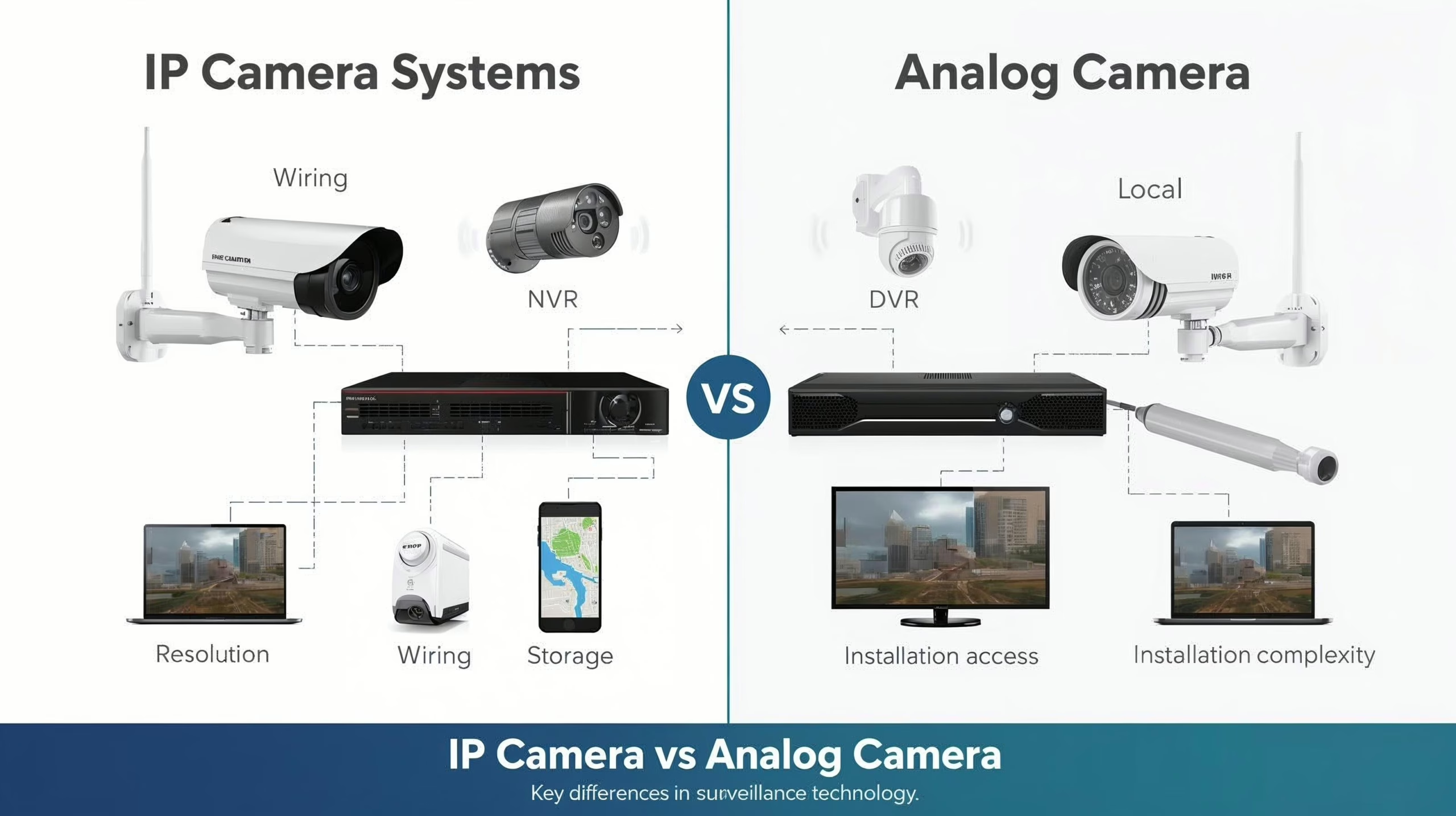
IP Camera vs Analog Camera: Which CCTV System Is Better? IP Camera vs Analog Camera: Which CCTV System Is Better? Summary Analog CCTV uses DVR systems and coaxial cables. It costs less and suits small setups. IP cameras deliver higher resolution and remote access through networks. Analog works well for basic home security. IP CCTV suits businesses and scalable systems. For modern surveillance, most experts recommend IP CCTV systems. Table of Contents Introduction What is an Analog CCTV Camera? What is an IP Camera? Key Differences Between IP and Analog CCTV Pros and Cons When to Choose Analog CCTV When to Choose IP Cameras Which CCTV System is Best for Homes? Which CCTV System is Best for Businesses? Conclusion FAQ Introduction Security cameras protect homes, offices, and commercial spaces. However, buyers often compare IP camera vs analog camera systems before purchasing. Both technologies record video and monitor activity. Yet they differ in image quality, installation, scalability, and remote access. Therefore, understanding the difference between IP and analog CCTV helps decision-makers choose the right system. This guide compares IP CCTV vs DVR CCTV systems clearly and practically. Need help choosing between IP and analog CCTV systems?Get expert guidance from Yendra Techno Solution, a trusted provider of CCTV camera installation Bangalore services. Our security specialists will recommend the right system for your home or business. 📞 Contact us today for a free site inspection and consultation. What is an Analog CCTV Camera? Analog cameras represent traditional surveillance technology. These cameras capture video and send signals through coaxial cables. A Digital Video Recorder (DVR) then converts signals into digital footage. The DVR stores recordings on a hard drive. Analog CCTV systems remain popular due to their affordability. Moreover, installation often requires fewer networking skills.However, analog cameras usually deliver lower resolution than modern IP cameras. What is an IP Camera? An IP camera, or Internet Protocol camera, works through a network connection. These cameras send video data digitally over Ethernet cables or Wi-Fi. Unlike analog systems, IP cameras connect to a Network Video Recorder (NVR) or cloud storage. Therefore, users can view footage remotely using mobile apps or browsers. Additionally, IP cameras support advanced features such as AI detection and motion alerts. What Are the Key Differences Between IP and Analog CCTV? Video Quality Video quality remains the biggest difference. Analog cameras usually support 720p or 1080p resolution. However, IP cameras often deliver 2MP to 12MP resolution. Therefore, IP systems capture clearer faces and license plates. Higher resolution also improves digital zoom accuracy. Installation Complexity Analog CCTV installation uses coaxial cables and a DVR. The setup process remains straightforward. However, IP cameras require network configuration. Additionally, installers must manage switches or routers. Professional installers simplify the process significantly. For example, experts in Yendra Techno Solution , while offering CCTV camera installation Bangalore, ensure optimal camera placement. Scalability Analog systems limit expansion. DVR ports restrict the number of cameras. In contrast, IP CCTV systems scale easily. Users can add cameras through the network infrastructure. Therefore, IP systems suit large properties and growing businesses. Cost Analog cameras cost less initially. DVR systems and cameras remain budget-friendly. However, IP cameras cost more upfront. Yet they deliver better features and long-term value. Additionally, fewer cables sometimes reduce infrastructure expenses. Remote Access Remote monitoring matters for modern users. Analog systems provide limited remote features through DVR software. Meanwhile, IP cameras support seamless remote viewing. Users monitor footage from smartphones anywhere. Therefore, IP systems offer better control and convenience. Feature Comparison Table: Feature Analog CCTV IP CCTV Video Quality Standard HD / 4K Wiring Coaxial Ethernet Remote Viewing Limited Easy Scalability Low High Cost Lower upfront Higher upfront Still unsure which CCTV system fits your property? Our experts at Yendra Techno Solution design customized surveillance systems based on your security needs, property size, and budget. ✔ Professional installation✔ High-quality IP and analog cameras✔ Smart remote monitoring setup 👉 Book a security camera installation Bangalore consultation today. What Are the Pros and Cons of IP Camera vs Analog Camera? Analog CCTV Pros Lower equipment cost Simple installation Reliable wired connections Analog CCTV Cons Limited resolution Restricted scalability Fewer smart features IP Camera Pros High video resolution Remote access and cloud integration Advanced analytics and alerts IP Camera Cons Higher initial investment Network setup required Potential bandwidth usage When Should You Choose Analog CCTV? Analog systems suit small properties and tight budgets. For example, small shops and basic homes often choose DVR CCTV systems. Additionally, analog cameras work well when advanced analytics are unnecessary. Pro Tip – Yendra Techno Solutions:Install analog cameras only when surveillance coverage remains limited. Otherwise, future upgrades may become difficult When Should You Choose IP Cameras? IP cameras suit modern security environments. Businesses often require high-resolution monitoring and remote access. Therefore, IP cameras provide the ideal solution. Additionally, IP systems support AI detection, people counting, and smart alerts. Professional installers offering security camera installation Bangalore often recommend IP systems for scalable surveillance. Which CCTV System is Best for Homes? Both systems can protect residential properties. However, the choice depends on needs and budget. Analog CCTV works well for small homes and apartments. Installation remains affordable and reliable. However, homeowners seeking remote monitoring prefer IP cameras. Therefore, IP cameras offer better long-term value for modern smart homes. Which CCTV System is Best for Businesses? Businesses require advanced surveillance capabilities. Retail stores, warehouses, and offices need high-resolution recordings. Additionally, managers often monitor multiple locations remotely. Therefore, IP CCTV systems usually outperform analog systems in business environments. They also support analytics that improve security management. Protect your property with a professionally installed surveillance system. Yendra Techno Solution helps homes, offices, retail stores, and warehouses deploy reliable CCTV systems across Bangalore. 📍 Expert installation📍 Scalable IP camera solutions📍 Ongoing maintenance support ➡ Schedule your free CCTV security assessment today. Conclusion Choosing between IP camera vs analog camera systems depends on budget, security needs, and scalability. Analog CCTV remains cost-effective and simple. However, IP cameras deliver superior video quality and smart features.
Guide for STQC Certified CCTV Camera Installation in Bangalore: Why STQC Certification Matters in India
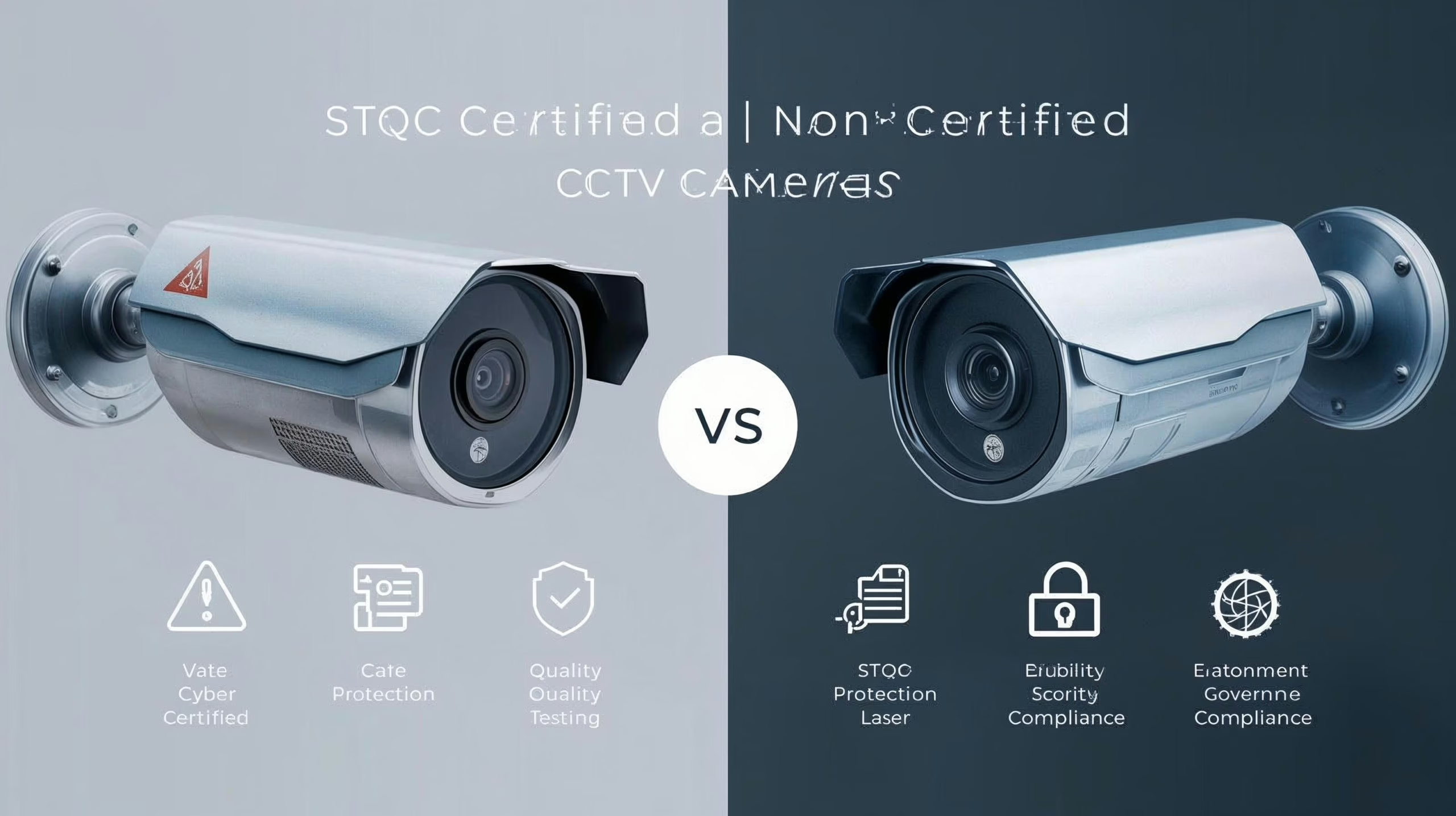
STQC Certified CCTV Camera Installation in Bangalore Guide for STQC Certified CCTV Camera Installation in Bangalore: Why STQC Certification Matters in India Summary For quick understanding, here are the most important points about STQC certified CCTV camera installation in Bangalore: STQC stands for Standardisation Testing and Quality Certification, under the Ministry of Electronics and Information Technology (MeitY). STQC certified CCTV cameras meet strict government compliance requirements. These cameras are designed with strong cyber security protections. STQC certification helps protect surveillance data from hacking and unauthorized access. Certified systems support India’s Make in India initiative. Many government projects and smart city programs require STQC compliant CCTV systems. Professional STQC certified CCTV camera installation in Bangalore ensures proper configuration, secure networking, and long-term reliability. Introduction Security technology is evolving rapidly across India. However, cyber threats and data privacy concerns are also increasing. Therefore, choosing certified surveillance systems has become essential. STQC certified CCTV camera installation in Bangalore ensures compliance with Indian government standards while protecting sensitive surveillance data. This guide explains why STQC certification matters and how it improves security infrastructure for homes and businesses. Table of Contents What is STQC Certified CCTV Technology Why the Indian Government Introduced STQC Standards How STQC CCTV Technology Works Benefits of STQC Certified CCTV Camera Installation in Bangalore Cyber Security and Data Protection in CCTV Systems STQC Cameras and the Make in India Initiative Use Cases of STQC Certified CCTV Systems in India Installation Guide for STQC Certified CCTV Cameras Cost of Home and Office CCTV Camera Installation in Bangalore Why Choose Yendra Techno Solution for CCTV Installation Recommended Reading FAQs What is STQC Certified CCTV Technology STQC stands for Standardisation Testing and Quality Certification. This certification authority operates under the Ministry of Electronics and Information Technology (MeitY), Government of India. The STQC framework ensures that electronic devices meet strict quality, security, and performance standards before deployment. For CCTV systems, STQC certification verifies: hardware integrity firmware security encrypted data communication vulnerability protection secure network access These checks ensure that surveillance systems are protected against cyber threats. Traditional CCTV cameras often rely on imported firmware and unsecured communication protocols. Consequently, such systems may expose surveillance networks to cyber attacks. However, STQC certified CCTV camera installation in Bangalore ensures that the devices used follow India’s cyber security guidelines. Certified cameras undergo rigorous testing before they enter the market. These tests evaluate software, hardware, and network vulnerabilities. As a result, organizations can confidently deploy surveillance systems without worrying about hidden security risks. STQC certification also aligns with national data sovereignty policies. Surveillance footage remains protected within secure systems. Many government projects now mandate the use of certified cameras to protect sensitive locations. Therefore, businesses and homeowners increasingly prefer STQC certified CCTV camera installation in Bangalore to ensure compliance and reliability Why the Indian Government Introduced STQC Standards India has rapidly expanded surveillance infrastructure across cities and industries. Smart cities, transportation hubs, and government offices rely heavily on CCTV networks. However, the increasing use of internet-connected cameras created new cyber security risks. Many imported surveillance devices store data on external servers. As a result, surveillance footage may be vulnerable to unauthorized access. To protect national infrastructure and citizen privacy, the government introduced STQC certification requirements for CCTV systems. The objectives include: strengthening cyber security in surveillance networks protecting sensitive video data ensuring transparency in manufacturing and software development promoting trusted domestic technology These policies ensure that surveillance systems used in India follow secure technology standards. Businesses installing CCTV systems in Bangalore increasingly choose certified cameras to comply with these guidelines. How STQC CCTV Technology Works STQC certified CCTV cameras integrate multiple security layers. First, secure hardware architecture prevents unauthorized modifications. Second, the firmware uses verified digital signatures. Therefore, only approved software updates can run on the device. Third, encrypted communication protects video streams during transmission. Fourth, authentication protocols restrict system access. Finally, penetration testing identifies potential vulnerabilities before the device enters the market. Together, these technologies create a secure surveillance ecosystem. This approach ensures that CCTV systems cannot easily become entry points for cyber attacks. Professional companies offering CCTV installation in Bangalore usually recommend certified devices for these reasons. Benefits of STQC Certified CCTV Camera Installation in Bangalore Choosing certified surveillance systems offers several important advantages. Government Compliance India has introduced strict procurement policies for surveillance equipment. Many public infrastructure projects now require STQC certified CCTV cameras. Therefore, organizations installing surveillance systems must follow these regulations. STQC certified CCTV camera installation in Bangalore ensures compliance with national security standards. Companies using certified cameras can participate in government tenders and projects without regulatory issues. Enhanced Data Security Surveillance footage often contains sensitive information. Without proper encryption, video streams may become vulnerable to unauthorized access. STQC certified cameras implement advanced encryption protocols to secure data transmission. Therefore, STQC certified CCTV camera installation in Bangalore protects surveillance footage from interception and tampering. Stronger Cyber Security Protection Modern CCTV cameras are connected to networks and cloud platforms. However, unsecured devices may act as entry points for hackers. STQC certification requires manufacturers to implement: secure firmware architecture authentication mechanisms encrypted communication protocols These features significantly improve cyber security resilience. As a result, STQC certified CCTV camera installation in Bangalore protects both surveillance systems and connected networks. Reliable and Tamper-Proof Surveillance Certified cameras undergo strict testing to verify operational stability. They provide: accurate timestamps secure recording systems tamper-resistant video storage These features ensure that surveillance footage remains reliable for investigations. Support for Make in India Initiative The Make in India initiative promotes domestic manufacturing of advanced technologies. STQC certification encourages Indian companies to develop secure surveillance solutions. By choosing STQC certified CCTV camera installation in Bangalore, businesses support local manufacturing and technological innovation. This initiative strengthens India’s electronics industry and reduces reliance on imported security devices. Cyber Security and Data Protection in CCTV Systems CCTV cameras have evolved into sophisticated IoT devices. They connect to networks, cloud platforms, and remote monitoring applications. While this connectivity improves convenience, it also introduces cyber security challenges. Unsecured

AI Surveillance for Offices: The Future of Workplace Monitoring
AI Surveillance for Offices: The Future of Workplace Monitoring AI Surveillance for Offices: The Future of Workplace Monitoring Summary AI Surveillance for offices improves security with real-time alerts and smart analytics. It reduces theft, enhances employee safety, and boosts productivity. Modern AI systems detect risks before incidents escalate. Businesses in Bangalore trust Yendra for advanced AI CCTV solutions. Choosing the right system ensures compliance, scalability, and long-term savings. Introduction: Why Workplace Surveillance Is Evolving Workplace security has changed rapidly in recent years. Traditional CCTV systems only record footage. However, businesses now require intelligent monitoring. AI Surveillance for offices provides real-time insights instead of passive recording. It detects suspicious behavior instantly. As a result, companies prevent incidents rather than reacting later. From startups to large enterprises, every workplace needs proactive monitoring. Therefore, AI-powered surveillance has become a strategic investment. What Is AI Surveillance for Offices? AI Surveillance for offices combines artificial intelligence with advanced CCTV cameras. The system analyzes video footage in real time. Instead of depending on manual monitoring, AI detects patterns automatically. Key Capabilities Facial recognition Intrusion detection Behavior analytics Attendance monitoring Fire and smoke detection Crowd management These features transform simple cameras into intelligent security tools. How AI Surveillance for Offices Works AI systems process video data using machine learning algorithms. The software studies patterns and detects anomalies. Step-by-Step Process Cameras capture high-definition footage. AI software analyzes each frame instantly. The system identifies unusual behavior. Alerts are sent to security teams. Reports are generated automatically. Consequently, businesses move from reactive security to proactive protection. Benefits of AI Surveillance for Offices 1. Theft Prevention AI identifies suspicious movement. It flags unauthorized access immediately. Therefore, losses decrease significantly. 2. Employee Safety The system detects accidents and unusual behavior. Quick alerts reduce response time. 3. Improved Productivity Managers analyze workflow trends. They identify inefficiencies quickly. As a result, operations improve. 4. Regulatory Compliance AI logs and stores data securely. It supports audits and legal requirements. What Is the Difference Between AI Surveillance and Normal CCTV? Traditional CCTV records footage. It requires manual review after incidents. AI CCTV Surveillance analyzes video in real time. It detects suspicious behavior instantly. AI systems also provide: Automated alerts Smart search filters Behavior analytics Facial recognition License plate detection Therefore, AI surveillance for offices prevents incidents instead of only recording them. Here is the comparison table: Feature Traditional CCTV AI Surveillance for Offices Monitoring Manual review Automated detection Alerts Post-incident Real-time alerts Analytics Basic Advanced insights Productivity Tracking Not available Available Threat Detection Reactive Proactive Clearly, AI-driven systems provide greater value. How Much Does AI Surveillance for Offices Cost? Pricing depends on system size and features. However, most office installations fall into three categories: Office Size Recommended Setup Small Office (5–20 staff) 4–8 AI cameras Medium Office (20–100 staff) 8–25 AI cameras Large Enterprise Integrated AI system Costs vary based on: Camera resolution Cloud storage duration AI analytics features Installation complexity Annual maintenance Although upfront investment is higher, AI CCTV Surveillance reduces theft and operational losses long term. Contact Yendra Techno Solution For Exact Cost Estimation Latest Trends in AI Workplace Monitoring Technology continues evolving rapidly. Businesses adopt smarter solutions every year. Edge AI Processing Cameras process data locally. Therefore, latency reduces and response improves. Cloud-Based Monitoring Cloud dashboards enable remote access. Managers monitor offices from anywhere. Behavioral Prediction AI predicts potential threats using historical data. Thus, companies prevent incidents early. IoT Integration AI connects with alarms and smart locks. This integration strengthens overall security. According to industry research, AI-based surveillance adoption has increased by over 40% globally in recent years. For cybersecurity best practices, refer to: https://www.nist.gov/cyberframework https://gdpr.eu/ https://www.iso.org/isoiec-27001-information-security.html Does AI CCTV Surveillance Work Without Internet? Modern systems support edge AI processing. Edge-based AI: Processes data locally Sends alerts without cloud dependency Reduces latency Maintains functionality during outages However, cloud connectivity improves reporting and remote access.Therefore, many offices choose hybrid AI surveillance for maximum reliability. Is AI CCTV Surveillance Legal in India? AI surveillance for offices is legal in India. However, businesses must follow compliance standards. Office owners should: Inform employees about monitoring Avoid placing cameras in private areas Secure stored footage Limit access to authorized staff You can refer to India’s Digital Personal Data Protection Act guidelines for compliance best practices. When implemented ethically, AI CCTV Surveillance strengthens safety without violating privacy. Is AI Surveillance for Offices Secure from Hacking? Security depends on configuration quality. Reliable systems offer: End-to-end encryption Multi-factor authentication Role-based access Secure cloud servers Regular firmware updates Choose trusted vendors like Yendra to ensure enterprise-grade cybersecurity. Proper setup prevents unauthorized access and data breaches. Compliance and Privacy Considerations Transparency builds trust in workplace monitoring. Therefore, businesses must follow ethical practices. Best Practices Inform employees about monitoring policies Avoid installing cameras in private spaces Encrypt stored footage Limit access to authorized staff Follow data protection laws Responsible implementation ensures balance between safety and privacy. How to Choose the Right AI Surveillance System Selecting the right system requires careful planning. Buyer Checklist Define security objectives Assess office size and layout Check camera resolution Evaluate AI analytics features Confirm cloud storage options Verify vendor expertise Additionally, request a system demo before finalizing your purchase. Storage Options Explained Businesses can choose from three storage models: Local Storage On-site control Limited scalability Cloud Storage Remote access Automatic backup Scalable capacity Hybrid Storage Combines local and cloud Offers better reliability Most companies prefer hybrid solutions for flexibility. Yendra’s Role in AI CCTV Surveillance in Bangalore Yendra is a trusted provider of AI Surveillance for offices in Bangalore. The company delivers customized solutions tailored to different industries. Why Businesses Choose Yendra Advanced AI-enabled cameras Customized installation plans 24/7 technical support Compliance-ready systems Scalable infrastructure Yendra’s Implementation Process Proper implementation ensures maximum effectiveness. Step 1: Security Audit Identify vulnerable areas and risk zones. Step 2: System Design Create a layout for camera placement. Step 3: Installation Install AI-enabled cameras strategically. Step 4: Training Train staff on system usage