



Best CCTV services Bangalore- Choose Yendra Techno Solution Best CCTV Services Bangalore | 7 Powerful Reasons to Trust Yendra Techno Solution TL;DR Summary Yendra Techno Solution stands out as one of the best CCTV services in Bangalore for homeowners, businesses, and apartment complexes. With a focus on advanced technology, transparent pricing, and reliable support, we provide tailor-made security solutions that ensure complete peace of mind. Here are seven reasons why we’re the city’s most trusted CCTV partner. 1. Expertise in Comprehensive CCTV Solutions We bring years of experience delivering CCTV installation, maintenance, and monitoring services across Bengaluru’s key zones—from premium villas in Whitefield, Marathahalli, and Hoodi, to bustling tech and residential hubs in HSR Layout, Sarjapur Road, and Bellandur, and large industrial clusters in Electronic City and Bommasandra. Our expert team understands the unique security needs of each environment, ensuring reliable protection for homes, offices, and industries alike. Why it matters: Deep technical knowledge ensures flawless installation. We handle projects for homes, offices, and large-scale industries. Every system is designed to match site-specific security needs. Yendra Techno Solution offers the best CCTV services in Bangalore with complete end-to-end expertise 2. Advanced Technology for Modern Security Security demands constant innovation. That’s why we use the latest IP, HD, and AI-enabled CCTV systems from globally trusted brands. Our Technology Highlights: Smart motion detection & real-time alerts. Cloud-based storage for 24/7 access. Integration with mobile apps for remote monitoring. This combination of technology and performance makes Yendra Techno Solution one of the most forward-thinking providers of the best CCTV services in Bangalore. 3. Transparent and Competitive Pricing Unlike many national providers, we believe in 100% transparency. You’ll know exactly what you’re paying for before installation begins. Our Promise: No hidden costs. Free site inspection and quotation. Flexible AMC (Annual Maintenance Contract) options. Service Type Average Cost (₹) Key Inclusions Home Setup 20,000–35,000 4 HD cameras + DVR + Installation Office Setup 45,000–80,000 8 IP cameras + Network setup Commercial Custom Quote Advanced AI-enabled system Transparent pricing is one major reason clients rate us among the best CCTV services in Bangalore 4. Quick Installation and Local Support When it comes to safety, time is critical. Yendra Techno Solution offers same-week installations and 24-hour emergency response within Bangalore city limits. Benefits of our local support: Technicians available across 50+ localities. On-site service within hours for urgent issues. Regular maintenance and performance checks. Our locally rooted team ensures you never wait long for assistance—another reason we’re known for the best CCTV services in Bangalore. 5. Customized Security Plans for Every Property Every property has unique security challenges. Our specialists design custom surveillance layouts for residential, commercial, and industrial spaces. We Customize For: Homeowners: Smart cameras covering entry points & parking. Apartments: Centralized monitoring with community access. Businesses: Integrated CCTV + access control systems. This flexibility and understanding make Yendra Techno Solution a reliable name among those searching for best CCTV services Bangalore. 6. Trusted by Bangalore’s Leading Brands and Builders Over the years, we’ve partnered with top builders, schools, retail chains, and apartment associations in Bangalore. Our reliability and service quality have built long-term trust. Our Clients Include: Premium apartment complexes in HSR Layout. IT offices and showrooms across Koramangala. Manufacturing units in Peenya and Bidadi. Client loyalty is the foundation of our reputation as one of the best CCTV services in Bangalore. 7. After-Sales Support That Sets Us Apart Yendra Techno Solution doesn’t just install your CCTV system—we stay with you for the long run. Our dedicated after-sales team ensures smooth operation year-round. What’s Included in Our Support: Preventive maintenance visits. Priority repairs for AMC customers. 24/7 customer helpline and WhatsApp support. We guarantee minimal downtime and maximum protection—hallmarks of the best CCTV services Bangalore customers deserve. Why Yendra Techno Solution Is the Smart Choice Whether you’re securing a small office or a multi-storey apartment complex, Yendra Techno Solution delivers the ideal mix of technology, service, and reliability. Key Takeaways: Fast local support across Bangalore. Affordable, transparent pricing. Custom solutions for every property type. Trusted by hundreds of clients citywide. That’s why we’re proud to be recognized for offering the best CCTV services in Bangalore. FAQs What makes Yendra Techno Solution one of the best CCTV services in Bangalore? Our commitment to transparent pricing, quick local support, and advanced technology keeps us ahead of competitors. Do you offer CCTV systems for both homes and businesses? Yes. We design and install customized CCTV setups for apartments, villas, offices, and commercial complexes. How fast can installation be completed? Most installations are completed within 2–3 days of site inspection, depending on project size. What kind of cameras do you install? We offer HD, IP, and AI-based cameras from leading global brands suitable for all property types. Do you provide annual maintenance contracts (AMC)? Absolutely. We offer flexible AMC plans to keep your CCTV systems running smoothly year-round. Conclusion: Yendra Techno Solution has earned its reputation as one of the best CCTV services in Bangalore by consistently delivering reliable, affordable, and customized security systems. Our team’s expertise, advanced technology, and commitment to customer satisfaction make us the city’s go-to CCTV partner for homes, apartments, and businesses alike. If you’re ready to secure your property with professional surveillance solutions, contact Yendra Techno Solution today—your trusted CCTV experts in Bangalore. Bureau of Indian Standards – CCTV Guidelines Ministry of Home Affairs – Security Recommendations Bangalore Police Crime Prevention Tips How to Choose the Right CCTV Camera for Your Home Top Mistakes to Avoid When Choosing a CCTV Installer Related Posts, News & Articles October 27, 2025 Best CCTV Services Bangalore |… Read More October 23, 2025 Residential CCTV Camera System in… Read More October 23, 2025 Security Cameras Innovation: CP PLUS… Read More

Residential CCTV Camera System in 2025: What Bangalore Homeowners Need to Know
Residential CCTV Camera System Residential CCTV Camera System in 2025: What Bangalore Homeowners Need to Know Summary The residential CCTV camera system of 2025 offers Bangalore homeowners sophisticated security solutions including full-color night vision, two-way audio, AI-powered motion detection, and remote monitoring via smartphone apps. These systems provide robust protection against intrusions with real-time alerts and enhanced data privacy. Choosing the right CCTV system tailored to your home’s needs ensures peace of mind and safety in an ever-changing urban environment. Why You Need a Residential CCTV Camera System in Bangalore in 2025 Bangalore’s rapid urbanization raises new security challenges for homeowners. A modern residential CCTV camera system goes beyond simple recording to actively protect your home through real-time analytics, clear video capture, and smart alerts. Installing an advanced system is now essential for safeguarding family, property, and valuables Top Features of Residential CCTV Camera Systems in 2025 Full-Colour Night Vision for Clear Surveillance Traditional night vision captures black-and-white images, limiting detail. Today’s CCTV cameras provide full-colour night vision, displaying rich details like clothing and vehicle colors even in low light—crucial for accurate identification. Two-Way Audio to Interact Remotely Modern cameras include built-in microphones and speakers allowing you to communicate with visitors, delivery personnel, or even deter potential intruders directly via the camera’s mobile app. AI-Powered Motion Detection & Human Recognition Advanced AI algorithms filter out false alarms triggered by pets, shadows, or trees. Cameras now detect and notify you only when human movement or suspicious activity occurs, enhancing notification accuracy. Smart Sirens and Sound Detection A smart siren activates automatically upon detecting suspicious motion, scaring off intruders. Sound sensors detect noises like breaking glass or forced entry, adding another layer to your home’s security. Remote Monitoring and Control Access your CCTV footage anytime, anywhere via secure apps on smartphones or tablets. Receive real-time alerts and control camera functions remotely, keeping your home secure even when you are away. High-Capacity Local and Cloud Storage Residential CCTV camera systems support up to 256GB microSD cards or cloud storage, enabling weeks of recorded footage without worrying about losing important evidence What Types of Residential CCTV Cameras Are Popular in 2025? Type Ideal Use Key Advantages Wired Cameras Fixed, permanent setups Stable connection, no interference Wireless Cameras Rental homes, flexible Easy installation, mobile app ready PTZ Cameras Large homes, outdoor Pan, tilt, zoom for wide coverage Indoor Cameras Indoor monitoring Discreet and effective Outdoor Cameras Entrances, driveways Weatherproof and vandal-resistant Choose a camera type aligning with your home layout and security priorities. How Residential CCTV Cameras are Revolutionizing Bangalore Homes Bangalore’s homeowners increasingly demand security systems that are intelligent, user-friendly, and privacy-focused. The latest residential CCTV camera systems deliver: Enhanced Crime Prevention: Clear images and AI alerts enable quick action and evidence capture. Convenience: Voice assistant integration (Google Home, Alexa) and app control simplify usage. Data Security: Encrypted storage and edge computing protect sensitive footage from cyber threats. Customization: Cameras tailored to specific zones like gateways, gardens, or interiors maximize protection. How to Choose the Right Residential CCTV Camera System for Your Bangalore Home Consider your home’s size, layout, and specific security needs. Look for systems offering: High-resolution cameras (minimum 1080p, preferably 4K) AI-enabled motion detection with customizable alerts Robust night vision capabilities User-friendly mobile app with remote access Weatherproof design for outdoor units Reliable storage solutions (cloud or local) Consult local Bangalore security experts for evaluations tailored to your property. Recommended Upgrades in 2025 AI Facial Recognition: For access control and identifying known individuals. Integration with Alarm Systems: Automated alerts linked to security alarms. Two Way Audio Capabilities: For direct communication at entry points. FAQ: What Bangalore Homeowners Often Ask About Residential CCTV Camera Systems Can I view my home cameras remotely? Yes, virtually all modern systems offer secure mobile app access to view live footage and recorded clips anytime. Are these systems compatible with home automation? Most residential CCTV cameras integrate with smart home platforms such as Alexa and Google Assistant for voice control and automation. What’s the difference between wired and wireless cameras? Wired cameras ensure consistent performance and are ideal for permanent setups, while wireless cameras offer easy installation and flexibility, perfect for rentals or quick upgrades. How is my footage protected from hacking? Top systems use encryption, secure passwords, and local edge computing to minimize external access risks. Do I need professional installation? While DIY options exist, professional installation ensures optimal camera placement, wiring, and setup to maximize security coverage. Conclusion: Secure Your Bangalore Home with a Modern Residential CCTV Camera System In 2025, a residential CCTV camera system is no longer a luxury but a necessity for Bangalore homeowners. With cutting-edge features like full-colour night vision, AI-based human detection, and remote monitoring, these systems offer unparalleled safety and convenience. Choosing the right system tailored to your home ensures peace of mind and protection for your loved ones. Explore Best Home Security Cameras for 2025 details Learn about AI in Surveillance Understand Choosing the Right CCTV System Read our Smart Home Automation Guide Discover Benefits of Motion Detection Cameras Check out Home Security Tips for Bangalore Residents Related Posts, News & Articles May 22, 2026 Best CCTV Camera for Home… Read More May 22, 2026 Best Outdoor Surveillance Cameras for… Read More May 14, 2026 Prama Camera Installation in Bangalore:… Read More

Smart Lock Door: The Future of Home Security in Bangalore
Smart Lock Door Smart Lock Door: The Future of Home Security in Bangalore TL;DR:Smart lock doors are revolutionizing home security by offering keyless, remote, and smart control over your door access. Ideal for Bangalore homeowners, these locks provide seamless convenience, advanced security features like biometric access and encryption, and integration with smart home ecosystems. Replace traditional locks with smart lock doors for enhanced control, safety, and peace of mind. What is a Smart Lock Door? A smart lock door replaces your traditional mechanical lock with a digitally controlled locking device. This advanced system enables you to unlock or lock your door using digital credentials such as a smartphone app, PIN codes, fingerprints, or RFID cards. Connecting through Wi-Fi, Bluetooth, or Zigbee, smart lock doors provide flexible access control with real-time activity monitoring. Key advantages include: No need for physical keys Remote control via mobile app Sharing temporary or scheduled access with guests Integration with popular voice assistants and smart home devices For Bangalore homeowners balancing busy urban lifestyles, a smart lock door offers both convenience and heightened security in one package. Benefits of Using a Smart Lock Door in Bangalore Homes Smart lock doors bring a blend of security, control, and smart technology, especially suited to the urban homes in Bangalore: Keyless Convenience: No more lost keys or worrying about duplicate copies. Remote Access: Lock or unlock doors from anywhere using your mobile device. Guest Management: Easily provide temporary access to visitors or service personnel. Smart Home Compatibility: Sync with Alexa, Google Assistant, or other Bangalore smart home ecosystems for voice control. Real-Time Security Alerts: Receive notifications whenever the door is accessed. Auto-Lock Functionality: Ensures doors lock automatically after a set period for added safety. This technology is not just about security; it’s about upgrading to a lifestyle that offers more freedom and peace of mind. How Does a Smart Lock Door Work? Smart lock doors function on a combination of digital authentication, wireless communication, and mechanical locking mechanisms. Here’s a simplified flow of operation: Authentication: User identity is confirmed using a smartphone app, biometric scan, PIN code, or RFID card. Signal Transmission: The lock communicates wirelessly via Bluetooth or Wi-Fi. Lock Mechanism Activation: Upon successful authentication, the motorized bolt locks or unlocks the door. Status Feedback: The app displays the door’s locked or unlocked status and records activity logs. These smart locks also incorporate features like tamper alarms, battery backup, and manual overrides for emergencies, ensuring reliability even during power or network failures. Types of Smart Lock Doors for Bangalore Homes Different types of smart lock doors suit diverse needs and preferences: Type Description Ideal Use Case Bluetooth Smart Lock Unlocks automatically when the phone is nearby Homeowners valuing proximity access Wi-Fi Smart Lock Offers full remote control and monitoring Frequent travelers and remote management Fingerprint Smart Lock Biometric access for personalized, high-security entry Tech enthusiasts and families PIN Code Smart Lock Numeric keypad with customizable codes Renting homeowners or staff access RFID/Card-Based Smart Lock Tap access with cards/tags Offices or large homes with multiple users Hybrid Smart Lock Combines multiple methods Maximum flexibility and backup options Choosing the right smart lock door depends on your lifestyle, home setup, and security priorities. Smart Lock Door vs Traditional Lock: A Clear Comparison Feature Traditional Lock Smart Lock Door Access Method Physical Key Smartphone, PIN, Fingerprint, Card Remote Access ❌ ✅ Auto-Locking ❌ ✅ Security Alerts ❌ ✅ Key Duplication Possible Secure Digital Access Integration None Smart Home Compatible Convenience Moderate Excellent The evidence is clear: smart lock doors provide greater flexibility, enhanced security, and superior convenience—a must-have upgrade for Bangalore’s modern homeowners. Installation and Compatibility for Bangalore Homes Installing a smart lock door is generally straightforward and compatible with most door types including wooden, metal, UPVC, or glass doors. Basic installation steps involve: Removing the existing mechanical lock Mounting the smart lock as per the manufacturer’s instructions Configuring connectivity via Wi-Fi or Bluetooth Pairing with your smartphone app for control Professional installation by trusted providers such as ATSS Smart Security Solutions ensures seamless setup, especially for complex door types or multi-unit homes in Bangalore. Smart Lock Door Security: Is It Safe? Smart locks employ advanced security measures to protect your home: Encryption: Most use AES-128 or AES-256 encryption for data safety. Two-Factor Authentication: Adds an extra layer of security on access attempts. Tamper Alerts: Notify you immediately of any forced entry attempts. Auto-Lock Capabilities: Prevent doors from being left unlocked inadvertently. To maintain maximum security, regularly update your lock’s firmware, use strong passwords, enable two-factor authentication on apps, and avoid public Wi-Fi connections during remote access. Future Trends: What’s Next for Smart Lock Doors? The future promises even smarter doors with innovations like: AI-Based User Behavior Prediction for adaptive access control Geo-Fencing enabling automatic lock/unlock based on your location Voice Biometric Verification for seamless voice-controlled entry Extended Integration with home automation and security systems Bangalore’s fast-paced tech environment makes it an ideal market for adopting these emerging smart lock door features, enhancing home safety with minimal effort FAQs About Smart Lock Doors for Bangalore Homeowners Can I still use a traditional key with a smart lock door? Yes, most smart locks include a manual key override for emergencies or battery failures. What happens if my smartphone battery dies? Smart locks can be accessed using PIN codes, RFID cards, or manual keys, ensuring you’re never locked out Are smart locks compatible with existing doors? Most models fit standard door sizes. Always check compatibility, especially for glass or metal doors. How long do smart lock batteries last? Typical battery life ranges from 6 months to 1 year depending on usage and model. Can I provide temporary access to visitors? Can I provide temporary access to visitors? Conclusion: Upgrade to a Smart Lock Door for Enhanced Security and Convenience For homeowners in Bangalore, upgrading to a smart lock door is an investment in safety, convenience, and smart living. With multiple access methods, remote control capabilities, and seamless integration with home automation ecosystems, a smart lock door modernizes entry management. Experience keyless freedom, real-time alerts, and customized access control while reinforcing your home

Security Cameras Innovation: CP PLUS and L&T Semiconductor Partner to Transform India’s Surveillance Industry
Security Camera Tech: CP PLUS & L&T India Partnership Security Camera Innovation: CP PLUS and L&T Semiconductor Partner to Transform India’s Surveillance Industry TL;DR Summary CP PLUS and L&T Semiconductor Technologies have partnered to manufacture 9 million advanced Security cameras in India over the next three years. These cameras will be powered by India-designed Vision System-on-Chip (SoC), setting a new standard for smart surveillance technology. The partnership marks a major step toward Atmanirbhar Bharat (self-reliance) in the security and surveillance industry. It will reduce dependency on imported components and boost India’s position in the global CCTV and semiconductor markets. The new range of high-performance IP cameras will feature enhanced cybersecurity, reliability, and AI capabilities. This initiative strengthens India’s manufacturing ecosystem and ensures trusted, locally made surveillance solutions for businesses and industries. The Partnership: A New Era for Security Camera Manufacturing The partnership between CP PLUS and L&T Semiconductor Technologies (LTSCT) unites two leaders in Indian innovation to produce millions of CCTV cameras with advanced Vision System-on-Chip (SoC) technology. These high-resolution surveillance cameras support up to 8-megapixel imaging, ensuring sharper, smarter, and more reliable monitoring for modern security needs. This collaboration is especially significant for Bangalore’s businesses, IT parks, and industrial facilities, where strong security camera systems are critical for daily operations and asset protection. The Vision SoCs by LTSCT are designed with advanced cryptographic architecture, offering powerful cybersecurity protection for sensitive data. This innovation helps prevent data breaches and cyber threats, which are growing concerns for enterprises using conventional CCTV systems. According to Aditya Khemka, Managing Director of Aditya Infotech Ltd (CP PLUS), this collaboration marks a new era in India’s surveillance industry: “By integrating LTSCT’s advanced SoC technology, we’re building smarter, more secure, and India-made security cameras that redefine the future of surveillance.” This partnership reinforces India’s capability to deliver world-class surveillance cameras that combine performance, security, and local innovation—ideal for businesses seeking trusted, future-ready CCTV solutions Technology at the Core: Vision SoC and Advanced Features At the core of the CP PLUS and L&T Semiconductor Technologies partnership is LTSCT’s Vision System-on-Chip (SoC) — a major breakthrough in India’s semiconductor and surveillance camera technology. Designed and developed entirely in India, these chips reflect the Atmanirbhar Bharat vision, strengthening India’s independence in high-tech manufacturing and CCTV camera innovation. Key Technological Highlights High-Resolution Imaging: Supports up to 8-megapixel clarity, delivering superior video quality for security cameras used in commercial, residential, and industrial surveillance. Advanced Cryptography: Built-in cybersecurity protection safeguards sensitive data, addressing the biggest challenge faced by conventional CCTV cameras in business environments. Energy Efficiency: Optimized for low power consumption, reducing long-term operating costs for enterprises with large surveillance camera networks. AI Integration: Vision AI SoCs enable advanced features like facial recognition, motion detection, and behavioral analysis, ensuring intelligent and proactive security management. Sandeep Kumar, Chief Executive of L&T Semiconductor Technologies, shared: “Our mission is to design semiconductors that are energy-efficient, high-performing, and vital for India’s technological sovereignty. Partnering with CP PLUS allows us to bring our India-designed Vision AI SoCs into millions of surveillance cameras that protect lives and assets every day.” For more on CP PLUS’s range of security cameras, visit CP PLUS Official Website.To learn about L&T Semiconductor Technologies and their innovations, explore L&T Technology Services. The Atmanirbhar Bharat Vision: Building Technological Sovereignty The CP PLUS and L&T Semiconductor Technologies partnership stands as a powerful example of Atmanirbhar Bharat (Self-Reliant India)—a vision championed by Prime Minister Narendra Modi to strengthen India’s technological independence across key sectors like semiconductors, defense, telecommunications, and security systems. At the SEMICON India 2025 Summit, PM Modi highlighted the country’s growing chip-making ambitions, stating: “The power of the 21st century is limited to a small chip. This chip has the power to accelerate the development of the world… The day is not far when India’s smallest chip will drive the world’s biggest change.” Milestones such as the development of Vikram, India’s first fully indigenous 32-bit microprocessor designed by ISRO, have paved the way for India’s entry into global semiconductor leadership. How the Security Camera Industry is Becoming Atmanirbhar National Security: By using India-designed semiconductor chips, locally manufactured security cameras eliminate foreign dependencies and minimize cybersecurity risks such as data leaks and backdoor access. Data Sovereignty: Indigenous chipsets ensure that video data from CCTV cameras stays protected under India’s privacy and surveillance regulations, ensuring full compliance and trust. Economic Growth: Domestic production of surveillance cameras and semiconductor components creates new jobs, encourages local innovation, and boosts India’s manufacturing ecosystem. Technology Leadership: With collaborations like CP PLUS and L&T Semiconductor, India is positioning itself as a global hub for next-generation CCTV and surveillance technologies. This Atmanirbhar movement is not only making India self-reliant but also redefining the future of security cameras and surveillance systems with smart, secure, and locally engineered innovations. Explore how CP PLUS is driving India’s surveillance manufacturing leadership at CP PLUS Official Website and learn more about L&T Semiconductor Technologies’ role in India’s chip design ecosystem at L&T Technology Services Bangalore: A Hub for Smart Surveillance Solutions Bangalore has become a leading hub for advanced security camera systems, thanks to its position as India’s technology capital and the city’s ongoing Smart City initiatives. Under the Bangalore Safe City Project, implemented by Honeywell, over 7,000 AI-powered surveillance cameras have been installed at more than 3,000 key locations, enabling real-time monitoring and analytics for enhanced urban safety. For business owners in Bangalore—whether managing IT parks, industrial facilities, retail stores, or commercial complexes—the rise of locally manufactured, high-performance CCTV cameras offers multiple strategic advantages: Key Benefits for Bangalore Businesses Enhanced Security: Next-generation CCTV cameras with 8MP resolution, night vision, and AI video analytics ensure 24×7 surveillance for offices, warehouses, and large commercial spaces. Cybersecurity Compliance: Integrated cryptographic protection and adherence to STQC standards safeguard sensitive business data and support compliance with security regulations. Cost Efficiency: Made-in-India surveillance cameras reduce import costs and lower the total cost of ownership—making enterprise-grade protection affordable for SMBs. Reliable Supply Chain: Domestic manufacturing ensures faster delivery, easy

Choosing the Right CCTV Service Provider in Bangalore | Yendra Techno Solution Expert Guide
CCTV Camera Service in Bangalore Top 7 Tips for Choosing the Best CCTV Camera Service Provider in Bangalore TL;DR Summary Choosing the right CCTV camera service in Bangalore is crucial for business security and regulatory compliance in 2025. Evaluate providers based on their experience, reputation, equipment quality, and technological expertise. Ensure they comply with Karnataka’s CCTV regulations, including data protection and privacy laws. Prioritize professional installation, transparent pricing, and reliable after-sales support. Use a checklist covering verified experience, compliance, tailored site surveys, and clear maintenance contracts to select a trusted security partner like Yendra Techno Solution for effective and future-proof surveillance solutions. Introduction Selecting a reliable CCTV Camera Service in Bangalore is critical for securing your business. In today’s fast-evolving landscape, a dependable surveillance partner ensures safety, compliance, and peace of mind.This guide by Yendra Techno Solution helps Bangalore businesses evaluate CCTV providers using essential questions and proven criteria.For an in-depth overview, explore our pillar post: Comprehensive Guide to CCTV Services in Bangalore: Smart Security Solutions for 2025. Understanding Your Business Security Needs Every business in Bangalore has unique security demands. Before shortlisting CCTV providers, assess your premises’ size, layout, and vulnerabilities.Define your scope clearly—indoor or outdoor areas, high-risk zones, and critical assets. Identifying these needs helps choose the right camera types and features.For a detailed breakdown of system types, visit our pillar guide’s section on assessing security needs and system configurations. Reputation and Experience of the Provider A provider’s experience directly impacts the quality of your CCTV installation. Check how long the company has been serving Bangalore businesses.Review case studies, client testimonials, and Google ratings. Positive feedback from commercial and industrial clients reflects reliability.Certifications like ESAI or ISO signify compliance with industry standards. Yendra Techno Solution holds recognized credentials, building trust through proven performance and technical expertise. Equipment Quality and Technological Expertise Modern security requires smart, future-ready technology. Choose providers offering leading CCTV brands with AI-enabled features, HD clarity, night vision, and motion detection.Ask whether they provide wired or wireless systems, cloud storage, and integration with existing infrastructure.A future-proof system ensures scalability and regulatory compliance.Explore our detailed section on CCTV equipment types and innovations in the Comprehensive Guide to CCTV Services in Bangalore: Smart Security Solutions for 2025. Compliance with Karnataka CCTV Regulations With the 2025 Karnataka CCTV compliance mandate, adherence to regulations is non-negotiable.A competent provider must understand local privacy laws and data protection norms.Legal compliance affects system design, data handling, and storage security.Yendra Techno Solution ensures all installations comply with state laws, safeguarding both your assets and reputation. Learn more in our pillar blog’s CCTV compliance and rules section. Installation Process and Service Delivery A professional installation process defines system efficiency. Reliable providers begin with a site survey to design tailored solutions.They ensure strategic camera placement to eliminate blind spots and cover vulnerable areas.Timely deployment, clear communication, and transparent handover build trust.Yendra’s team also trains your staff for effective monitoring, ensuring seamless post-installation operation. After-Sales Support and Maintenance Effective CCTV Camera Service in Bangalore goes beyond installation. Continuous maintenance keeps your system operational and secure.Confirm whether the provider offers Annual Maintenance Contracts (AMC) and quick-response technical support.Yendra Techno Solution provides proactive system checks, preventive maintenance, and timely software updates.Local Bangalore teams ensure prompt assistance whenever issues arise. Transparent Pricing and Value for Money Clarity in pricing reflects professionalism. Always request detailed quotations to avoid hidden charges.Evaluate service packages that include equipment, installation, and maintenance for long-term value.Balancing affordability with quality ensures sustained security performance.At Yendra, pricing is transparent, fair, and aligned with your business goals. Checklist for Evaluating CCTV Service Providers Use this checklist when choosing your CCTV partner in Bangalore: ✅ Verified experience and solid reputation? ✅ Equipment meets performance and technology standards? ✅ Compliance with Karnataka CCTV laws confirmed? ✅ Customized site survey and installation plan provided? ✅ Timelines and professionalism guaranteed? ✅ After-sales support clearly defined? ✅ Transparent pricing with no hidden costs? FAQ on CCTV Camera Service in Bangalore Why is it important to choose a reliable CCTV service provider in Bangalore? Choosing a reliable provider ensures your security system is professionally installed, compliant with Karnataka regulations, and backed by ongoing maintenance and support, providing peace of mind and protection for your business assets What key certifications should I look for in a CCTV service company? Look for certifications such as ESAI membership and ISO standards. These indicate adherence to industry quality and safety standards, ensuring technical expertise and trustworthy service. How do I assess if a CCTV provider’s equipment is up to date? Check if they offer the latest CCTV brands with AI features, HD clarity, night vision, and cloud storage options. Modern equipment is future-proof and scalable for evolving security needs. What does Karnataka’s 2025 CCTV compliance mandate mean for my business? Businesses with significant footfall must comply with new CCTV installation and data protection laws, making it essential to use a service provider familiar with these rules to avoid penalties. How important is after-sales support for CCTV systems? Extremely important—regular maintenance, swift repairs, and software updates through Annual Maintenance Contracts (AMC) ensure your system functions reliably over time What should I expect during the CCTV system installation process? A professional provider conducts a site survey, customizes the camera placement plan, ensures proper wiring, and trains your staff for efficient monitoring post-installation Conclusion Choosing the right CCTV Camera Service in Bangalore safeguards your business against risks and regulatory issues.A professional, compliant, and experienced provider like Yendra Techno Solution ensures unmatched reliability and security excellence.Use this checklist to evaluate vendors thoroughly before making a decision.For broader insights, visit our detailed guide — Comprehensive Guide to CCTV Services in Bangalore: Smart Security Solutions for 2025 To discuss your requirements, contact Yendra.in for a free consultation and expert CCTV solutions customized for Bangalore’s diverse industries. Related Posts, News & Articles October 23, 2025 Choosing the Right CCTV Service… Read More October 23, 2025 Comprehensive Guide to CCTV Services… Read More October 20, 2025 Why Choose Wireless CCTV Camera… Read More

Comprehensive Guide to CCTV Services in Bangalore: Smart Security Solutions for 2025
CCTV Services in Bangalore Comprehensive Guide to CCTV Services in Bangalore: Smart Security Solutions for 2025 TL;DR Summary CCTV surveillance has become essential for homes, offices, and industries in Bangalore as security needs and regulations rise in 2025. Modern systems now feature AI analytics, facial recognition, and cloud storage, offering smarter, real-time protection. Choosing the right CCTV service requires understanding camera types, compliance laws, and integration options with alarms and mobile monitoring. Professional installation, like that provided by Yendra.in, ensures full coverage, reliability, and adherence to Karnataka’s CCTV mandate. Yendra addresses common customer concerns such as blind spots, unclear footage, hidden costs, and delayed maintenance through expert site surveys, transparent pricing, fast support, and AI-powered solutions. Introduction Bangalore’s rapid urban expansion has made security a top concern across homes, offices, and industries. CCTV surveillance now plays a crucial role in safeguarding properties, preventing theft, and ensuring round-the-clock monitoring. With technology advancing quickly, CCTV services in Bangalore are evolving in 2025 with AI-driven analytics, cloud storage, and government compliance mandates. Professional installation and maintenance have become essential for reliable protection. Why CCTV is Essential for Security in Bangalore The city’s growing population has led to rising cases of burglary, vandalism, and unauthorized access. CCTV systems act as a strong deterrent and provide evidence in investigations. For residential spaces, cameras offer peace of mind by monitoring entrances and parking areas. Offices and retail stores use surveillance to prevent internal theft and track customer flow. Factories and public areas rely on continuous video feeds for operational safety. AI-powered CCTV solutions now bring real-time analytics, facial recognition, and smart motion alerts. These technologies allow immediate responses, improving security efficiency and accuracy. Understanding Different Types of CCTV Systems Bangalore’s market offers a variety of CCTV systems to suit different needs. Analog vs. Digital IP Cameras: Analog cameras are cost-effective but limited in clarity. Digital IP cameras deliver HD footage and remote access through mobile apps. AI-Enabled Smart Cameras: Advanced models include facial recognition, motion detection, and behavior analytics, providing proactive threat detection. Cloud-Based vs. Local Storage: Cloud-based CCTV solutions offer remote video access and scalability. Local storage ensures control and privacy but requires maintenance. Wireless vs. Wired Systems: Wireless setups reduce cabling and are ideal for homes, while wired systems offer stable connections for large enterprises. Key Factors to Consider When Choosing CCTV Services Before installation, assess your property’s security needs and identify vulnerable areas. Choose cameras with high resolution, night vision, and weatherproof designs. Compliance is critical in 2025 as Karnataka enforces strict CCTV regulations. Always partner with licensed service providers who follow state guidelines. For complete protection, integrate CCTV systems with alarms, access control, and mobile monitoring tools. This ensures real-time visibility and faster emergency response. The CCTV Installation Process in Bangalore Professional CCTV installation in Bangalore begins with a detailed site survey. Experts evaluate lighting conditions, angles, and entry points. A customized system design follows, considering camera placement, network configuration, and coverage zones. Installation includes precise wiring, secure mounts, and power optimization. After setup, testing ensures clear video output and stable connectivity. Service providers like Yendra.in also train users on operating dashboards and mobile apps for seamless monitoring. Cost and Budgeting for CCTV Installation Pricing for CCTV systems in Bangalore varies by property type and features. Residential setups typically range from basic 2-camera kits to multi-zone configurations. Commercial solutions involve advanced AI features and higher resolution needs. AI-enabled systems and cloud storage options may increase initial costs but reduce long-term maintenance. Service providers often offer annual maintenance contracts (AMC) to ensure system longevity and quick issue resolution. Regulatory Compliance and CCTV Rules in Bangalore Karnataka’s 2025 CCTV compliance mandate requires businesses to install surveillance in critical areas. Retail shops, schools, and commercial complexes must retain footage for a set duration. Housing societies must follow privacy rules, ensuring cameras don’t infringe on personal spaces. Data storage and access must be restricted to authorized personnel. Non-compliance may attract fines or operational restrictions. Common CCTV Installation Concerns and How Yendra Handles Them Professionally When investing in CCTV systems, many Bangalore homeowners and businesses share a few common concerns. Issues like camera blind spots, unclear footage, hidden charges, and poor after-sales service can make surveillance systems frustrating rather than secure. As a trusted expert in CCTV services in Bangalore, Yendra Techno Solution addresses each of these concerns with professionalism, transparency, and advanced technical expertise. 1. Concern: Camera Blind Spots and Limited CoverageOne of the biggest worries customers face is missing crucial areas during surveillance. Poor camera placement can leave blind zones that compromise security.Yendra’s Solution: Yendra’s engineers conduct a detailed site survey using modern mapping tools. They identify all vulnerable spots and design a layout that ensures 360° coverage. Every camera is strategically positioned for maximum visibility, leaving no area unmonitored. 2. Concern: Low Video Quality and Technical GlitchesCustomers often experience unclear footage, connectivity drops, or poor night vision. These issues can make CCTV systems unreliable during emergencies.Yendra’s Solution: Yendra installs high-resolution, AI-enabled cameras designed for Bangalore’s weather conditions. Each system undergoes rigorous testing to ensure stable connectivity, superior clarity, and flawless performance day and night. 3. Concern: Delayed Support and Slow MaintenanceAfter installation, many users struggle with unresponsive service teams or long downtime during repairs.Yendra’s Solution: Yendra provides a dedicated support desk for quick assistance. Customers can request service through calls or the Yendra app, ensuring same-day response from certified engineers. Their annual maintenance contracts (AMC) guarantee timely system checks and updates. 4. Concern: Hidden Costs and Lack of TransparencyUnclear quotations and unexpected costs can make CCTV projects stressful.Yendra’s Solution: Yendra follows a 100% transparent pricing model. Every quote details the cost of cameras, installation, and maintenance with no hidden fees. Customers receive honest recommendations tailored to their property and budget. 5. Concern: Weak After-Sales Support and Warranty IssuesMany CCTV providers disappear after installation, leaving clients without help or warranty coverage.Yendra’s Solution: Yendra believes in long-term partnerships. Each installation includes comprehensive after-sales service, warranty coverage, and free product training. The support team ensures customers can

Why Choose Wireless CCTV Camera for Construction Site?
Wireless CCTV Camera For Constructoin Site in Bangalore Why Choose Wireless CCTV Camera for Construction Site? TL;DR:Wireless CCTV cameras offer builders and homeowners in Bangalore real-time security, flexible installation, and cost savings. With Yendra’s professional CCTV setup during the planning phase, you ensure reliable monitoring, theft prevention, and project efficiency. The Growing Need for Security at Construction Sites Construction sites in Bangalore face frequent issues like theft, trespassing, and equipment loss. Traditional wired systems can’t keep up with the constant changes in site layout. A wireless CCTV camera for construction site delivers unmatched mobility, quick setup, and live monitoring from any location. Builders, architects, and homeowners increasingly choose wireless systems for their flexibility, reduced downtime, and smarter surveillance capabilities. What Makes Wireless CCTV Cameras Ideal for Construction Sites? A wireless CCTV camera for construction site uses Wi-Fi or cellular networks instead of extensive wiring. This makes them perfect for temporary or changing work environments. Key benefits include: Quick installation: No need for complex cabling. Remote monitoring: Access footage anytime through mobile apps. Scalability: Easily add or move cameras as the site expands. Real-time alerts: Get instant notifications of suspicious activities. Cost efficiency: Save on cabling and reinstallation during phase shifts. When professionally installed by companies like Yendra, wireless systems integrate smoothly with your construction schedule, minimizing disruptions. Cost Benefits of Choosing Wireless Over Wired CCTV Let’s look at how wireless systems outperform wired ones in cost-effectiveness. Feature Wired CCTV Wireless CCTV Installation Time Long Short Flexibility Low High Reinstallation Cost High Minimal Maintenance Frequent Low Remote Access Limited Excellent Over time, the wireless CCTV camera for construction site becomes a smarter investment. You save money not only on installation but also on long-term maintenance and labor. Enhanced Safety and Theft Prevention Construction sites store valuable materials and machinery. Theft or damage can lead to project delays and increased costs. Wireless CCTV cameras ensure 24/7 surveillance coverage. How wireless CCTV enhances safety: Detects unauthorized access in real time. Supports night vision and motion sensors. Records and stores footage in the cloud for future reference. Sends alerts directly to site managers’ smartphones. Yendra’s security experts customize your system layout for maximum coverage, ensuring every angle of your site is protected. The Role of Yendra in Professional CCTV Planning Involving Yendra, a professional CCTV installation company in Bangalore, during your construction planning phase brings major advantages. Their team evaluates site layout, signal strength, and power sources to create a cost-efficient and high-performing surveillance setup. Why choose Yendra: Expertise in wireless system design. On-site consultation and demo before installation. Integration with smart devices for remote management. Post-installation support and maintenance. By collaborating early, builders and architects can save time, avoid costly retrofits, and ensure compliance with local safety regulations. Remote Monitoring for Real-Time Site Management A wireless CCTV camera for construction site allows remote monitoring from laptops or smartphones. Project managers can supervise progress and verify worker safety from anywhere. Advantages include: Live video feeds 24/7. Cloud backup for recorded footage. Multi-user access for developers, architects, and homeowners. Custom alert settings for different site zones. This real-time visibility increases accountability and transparency across all stages of construction. Eco-Friendly and Future-Ready Technology Wireless CCTV systems consume less power and can integrate with solar panels, making them an eco-friendly security option. They also support AI-driven analytics like facial recognition and motion tracking, ensuring smarter site management. Builders in Bangalore can future-proof their projects by choosing sustainable and upgradable systems that grow with their needs. FAQs About Wireless CCTV Camera for Construction Site Are wireless CCTV cameras reliable for large construction sites? Yes. Modern wireless systems cover large areas effectively, using signal boosters and mesh networks for consistent performance. How much does installation cost? Costs vary by project size, but wireless systems generally save 30–40% compared to wired setups due to minimal cabling and faster installation. Can I access footage remotely? Absolutely. You can view live or recorded footage anytime via a secure mobile app or desktop dashboard. Should I hire professionals for installation? Yes. Partnering with experts like Yendra ensures optimal placement, strong connectivity, and seamless integration with other security systems. What happens if there’s no Wi-Fi at the site? Wireless CCTV cameras can use 4G/5G cellular networks, allowing reliable monitoring even in remote construction zones. Conclusion: Smarter Site Security Starts with Yendra For builders, developers, and homeowners in Bangalore, investing in a wireless CCTV camera for construction site ensures enhanced safety, flexibility, and long-term savings. Early collaboration with Yendra’s professional CCTV installation team guarantees a tailored system that supports your project’s security goals. Don’t wait for an incident to act—secure your construction site today with the right technology and expert planning. References Best Smart Home Security Systems in Bangalore How to Plan CCTV Layout for Residential Buildings Top 5 Tips to Secure Your Construction Site Yendra Official Website Bangalore Builders Association CCTV Security Standards India Related Posts, News & Articles October 20, 2025 Why Choose Wireless CCTV Camera… Read More October 20, 2025 Construction CCTV Camera Installation Cost… Read More October 18, 2025 How to Prevent Theft at… Read More
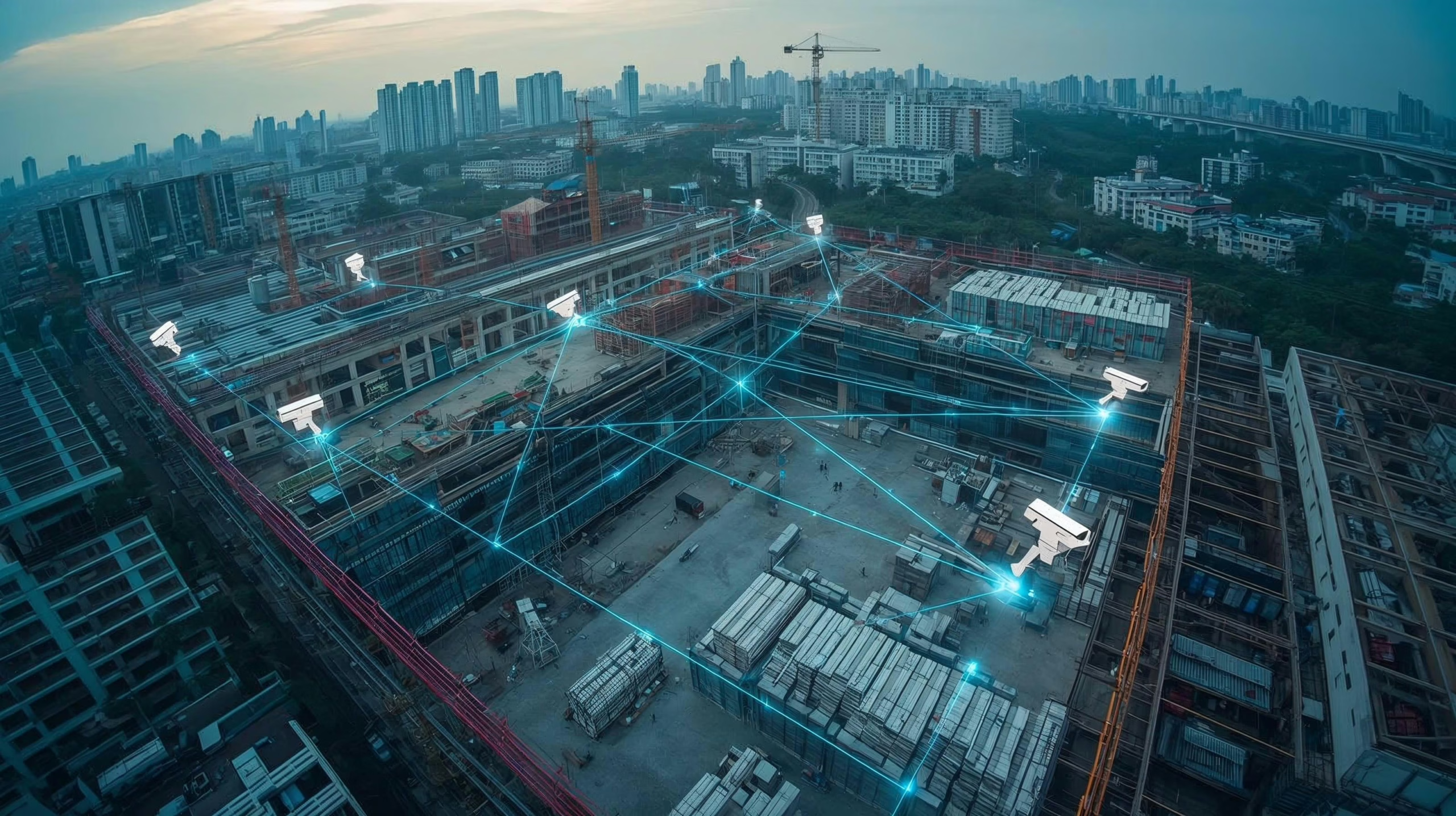
How to Prevent Theft at Construction Site Bangalore with CCTV Cameras
Smart Door Locks and AI Integration How to Prevent Theft at Construction Site Bangalore with CCTV Cameras TL;DR Summary Construction site theft in Bangalore causes huge financial losses. Installing a CCTV camera for construction site deters criminals, monitors activities, and secures materials. Combine surveillance with strategic planning, lighting, and professional support from Yendra for complete protection. Why Theft Is a Major Concern at Construction Sites in Bangalore Bangalore’s booming construction industry attracts thieves targeting tools, raw materials, and heavy equipment. These thefts delay projects and increase insurance costs. Installing a CCTV camera for construction site is the most effective way to deter criminals and protect your investment. Surveillance footage provides vital evidence and ensures safety compliance. How a CCTV Camera for Construction Site Enhances Security Modern CCTV cameras for construction sites are designed for harsh environments. They provide night vision, motion detection, and remote monitoring. These systems keep watch even during non-working hours. Key Advantages Deters theft and vandalism Tracks worker activity and safety Provides crucial evidence in case of incidents Sends real-time alerts for quick action Lowers insurance risks and claims According to Hikvision, AI-powered CCTV cameras now detect unusual movement and send instant notifications to site supervisors. Strategic Placement of CCTV Cameras for Construction Sites Placement is the backbone of any effective surveillance plan. Misplaced cameras leave gaps that thieves can exploit. Essential Areas to Cover Site entry and exit points Material storage sections Machinery and equipment zones Parking and loading areas Temporary fencing and perimeters Mount each CCTV camera for construction site on elevated poles or building corners for a wider angle and better coverage. How Yendra Supports Effective CCTV Planning and Installation Yendra plays a crucial role in securing construction sites from the ground up. The company collaborates closely with builders, architects, and homeowners right from the planning phase. Yendra’s Integrated Approach Early Consultation: Yendra joins initial site meetings to understand layout, lighting, and high-risk zones. Customized Planning: Their experts design CCTV camera placement plans tailored to project size and scope. Collaboration with Stakeholders: Builders and architects receive detailed drawings integrating camera wiring, power supply, and coverage zones. On-Site Coordination: Yendra’s engineers work alongside construction teams to ensure wiring and camera installation align with the project timeline. Post-Installation Testing: The team conducts quality checks to confirm all CCTV cameras for construction sites deliver clear footage and remote connectivity. This partnership ensures no blind spots, minimal disruption, and long-term reliability. By collaborating early, Yendra helps prevent security oversights that often occur during the construction phase. For more guidance on professional surveillance planning, visit our Smart Construction Site Management article. Complement CCTV with Other Security Measures A CCTV camera for construction site performs best when supported by additional safety protocols. Construction Site Security Checklist Access Control: Use ID cards or biometric systems. Perimeter Protection: Install high fencing and gates. Lighting: Motion-based floodlights deter intruders. Alarm Systems: Link CCTV with intrusion alarms. Security Guards: Ensure round-the-clock human supervision. Combining these strategies forms a multi-layered defense system against theft and vandalism. Choosing the Right CCTV Camera for Construction Site in Bangalore Different projects demand specific camera types based on their environment and risk levels. Camera Comparison Table Camera Type Ideal Use Core Feature Bullet Camera Boundary areas Long-range coverage Dome Camera Indoors or storage areas Anti-vandal design PTZ Camera Large, open sites Pan, tilt, zoom functions Wireless Camera Temporary projects Easy relocation Brands such as CP Plus and Dahua offer rugged models suited for Indian construction conditions. Remote Monitoring and Smart Alerts A CCTV camera for construction site lets managers monitor real-time footage through mobile apps. Smart alerts notify teams about unauthorized movement or after-hours activity. Cloud storage ensures data safety even if DVRs are stolen or damaged. This feature guarantees uninterrupted security coverage. Legal and Compliance Considerations CCTV installation must follow privacy guidelines. Inform all workers through visible signage. Avoid surveillance in restrooms or private cabins. This transparency aligns with Indian privacy standards and prevents legal conflicts. Best Practices to Prevent Theft at Construction Sites Keep your site secure with these practical steps: Maintain daily inventory of tools and supplies. Use unique identification tags for all valuable equipment. Restrict deliveries to authorized working hours. Lock containers and storage units after every shift. Review CCTV camera for construction site footage regularly for suspicious activity. Explore more in our Worksite Safety Strategies blog Cost of Installing CCTV Cameras for Construction Sites in Bangalore Prices vary based on site size and system complexity. A small project may cost ₹30,000–₹1,00,000, while large sites can exceed ₹1 lakh. Despite the cost, the protection and peace of mind offered by CCTV cameras for construction sites are invaluable. Future of Construction Site Security in Bangalore AI-based systems are transforming surveillance. Smart CCTV cameras for construction sites can now recognize license plates, track vehicles, and detect unauthorized access. These technologies ensure proactive security rather than reactive response. FAQs About CCTV Camera for Construction Site in Bangalore How many cameras are needed for a medium-sized construction site? Usually, 8–12 cameras cover critical areas effectively. Can Yendra help with camera maintenance? Yes. Yendra offers maintenance packages and regular inspections to ensure smooth camera operation. Is remote monitoring possible? Absolutely. Most modern CCTV cameras for construction sites support mobile apps and web access. Why involve Yendra during planning? Early involvement ensures optimized camera layout and cost-effective installation without rework. Do I need permission for CCTV installation? No specific permit is required, but it’s important to inform all site workers for transparency. Conclusion: Strengthen Your Site Security with Yendra Preventing theft at construction sites in Bangalore demands foresight and professional planning. A CCTV camera for construction site deters theft, enhances worker safety, and improves operational efficiency. By partnering with Yendra from the design phase, builders, architects, and homeowners can implement a seamless surveillance system that safeguards their investments from day one. Invest in professional CCTV planning and installation now to ensure your site remains secure and theft-free throughout the construction journey. Related Posts, News & Articles October 18, 2025 How

How Integrated CCTV and Access Control Systems Revolutionize Warehouse Security
Integrated CCTV and Access Control How Integrated CCTV and Access Control Systems Revolutionize Warehouse Security TL;DR Summary: Integrated CCTV and access control solutions unify security for people, vehicles, and assets. ANPR (Automatic Number Plate Recognition) enables 70% automation in Bangalore warehouses. Integration minimizes manual checks, cuts costs, and improves access consistency. Ideal for logistics and manufacturing firms managing high traffic and fleet movement What Is an Integrated CCTV and Access Control System? An integrated CCTV and access control system combines video surveillance with entry authorization mechanisms. Instead of managing separate systems for cameras and doors, both operate through one unified platform. This approach simplifies monitoring by: Allowing instant video verification of access events. Enabling centralized command over multiple facilities. Offering audit trails for security compliance. Modern integrated systems also link with vehicle tracking and personnel management modules, forming a complete security ecosystem. Why Logistics Companies Are Moving Toward Integration Warehouses in cities like Bangalore face increasing challenges with vehicle inflow and workforce management. Standalone CCTV or access systems often fail to provide real-time insights. By merging the two technologies, organizations gain: Automated Entry & Exit: ANPR cameras identify and log vehicles. Fleet Tracking: Integration enables seamless vehicle movement tracking. Visitor Management: Entry approvals happen digitally, reducing queues. Consistent Security: Central dashboards unify control across multiple access points. According to recent trends, over 70% of Bangalore warehouses have adopted integrated CCTV and access control setups to streamline operations. How ANPR and Access Control Work Together Component Function Benefit ANPR Cameras Detect and record license plates automatically. Eliminates manual gate logs. Access Controller Grants or denies access based on verified data. Improves entry accuracy. CCTV Surveillance Captures visual proof of every entry/exit. Enhances accountability. Central Platform Integrates and synchronizes data in real time. Enables unified monitoring. This setup not only automates fleet management but also strengthens security consistency. Every vehicle movement is tracked and verified without human intervention. Benefits of Integrated CCTV and Access Control Systems 1. Operational Efficiency Integration removes redundancy. Security staff manage fewer devices and dashboards. Automatic logging reduces paperwork and delays. 2. Enhanced Accuracy Real-time video verification ensures every access event is validated. Unauthorized entries trigger instant alerts. 3. Cost Savings By combining platforms, organizations reduce hardware duplication and maintenance expenses. Over time, automation lowers operational overhead significantly. 4. Compliance and Reporting Digital records simplify audits and compliance with safety standards. Reports are accessible instantly across departments. 5. Scalability As facilities grow, integrated systems easily expand without major rewiring or new software. Key Features to Look for in Integrated CCTV and Access Control Systems When evaluating systems, ensure they include: Cloud-based management dashboards. AI-enabled analytics and face/plate recognition. Multi-site control capabilities. Mobile alerts and remote access. Data encryption and cybersecurity safeguards. These features allow logistics and manufacturing firms to manage security at scale while maintaining flexibility Real-World Use Case: Bangalore Warehouses Bangalore’s booming logistics sector has adopted integrated CCTV and access control solutions to handle high vehicle traffic. Results include: 70% automation in gate management. 25% reduction in security staff workload. Zero manual log entries for fleet movement. These numbers reflect not just efficiency but also enhanced trust and reduced bottlenecks at entry points. 1: Read about ANPR technology benefits2: Smart warehouse automation trends3: Access control integration best practices Checklist: Implementing an Integrated CCTV and Access Control System Conduct a site audit. Identify existing CCTV and access devices. Choose compatible integration software. Configure centralized monitoring. Test with real-time access events. Train staff on dashboard operations Common Challenges and Solutions Challenge Solution Integration with legacy systems Use APIs or middleware for compatibility. Data privacy concerns Implement end-to-end encryption. Staff resistance Provide training and demonstrations. Maintenance issues Opt for cloud-based service updates. How Yendra Seamlessly Delivers Integrated CCTV and Access Control Solutions in Bangalore When it comes to integrated CCTV & access control systems in Bangalore, Yendra stands out as a trusted expert. With years of experience in CCTV installation, surveillance systems integration, and security automation, Yendra provides end-to-end solutions tailored to complex facility environments like logistics hubs, warehouses, and manufacturing units. Expertise in CCTV Installation and Integration Yendra’s certified engineers specialize in high-definition CCTV installation that ensures maximum coverage with minimal blind spots. Their team designs systems that connect seamlessly with access control, fire alarms, intrusion detection, and time attendance systems, creating a single, intelligent platform for complete facility management. Unified Security with Advanced Integration Through cutting-edge integration frameworks, Yendra connects CCTV surveillance systems with various access control mechanisms — from biometric devices to RFID gates and ANPR-based vehicle tracking systems. This unification allows real-time monitoring of personnel and vehicle movement across multiple entry points without manual intervention. Key capabilities include: Integration of IP cameras and smart NVRs for centralized video management. Automated license plate recognition (ANPR) for vehicle authentication. Role-based access control ensuring secure entry for staff and visitors. Real-time event alerts synchronized across all connected systems. Proven Results Across Bangalore’s Logistics and Industrial Facilities Yendra has successfully deployed integrated CCTV & access control setups across major logistics parks, industrial estates, and warehousing clusters in Bangalore. These installations have resulted in: Improved operational efficiency through automation. Enhanced visibility across multiple warehouse gates. Consistent security enforcement without manual oversight. Each deployment is customized to meet client requirements, ensuring scalability, reliability, and compliance with local and international security standards. Why Choose Yendra for Integrated Security Solutions End-to-End Expertise: From consultation and design to installation and maintenance. Vendor-Neutral Integration: Compatible with leading brands of CCTV and access control systems. 24/7 Support: Continuous monitoring and maintenance ensure zero downtime. Data-Driven Insights: AI-enabled analytics for predictive security and operational efficiency. Yendra’s commitment to seamless integration helps organizations transition from fragmented systems to unified, intelligent security networks — strengthening control, enhancing safety, and optimizing resource utilization across all access point Learn more about Yendra’s integrated CCTV solutions Conclusion: Why Integration Is the Future of Security Integrated CCTV & access control systems represent the next step in unified security infrastructure. They provide automation, consistency, and real-time intelligence — crucial for logistics and manufacturing

Can Smart Door Locks Work Without Internet Connectivity or Power?
Smart Door Locks Work without Power Or Internet Can Smart Door Locks Work Without Internet Connectivity or Power? TL;DR Summary:Yes, most modern smart door locks continue working during internet or power outages. They typically offer: Mechanical key backups for manual access. Bluetooth connectivity to unlock via smartphones locally. Battery-powered operation, ensuring uninterrupted performance.Understanding these features is key to choosing the right smart lock for your home security setup. Why Homeowners Worry About Internet or Power Loss When installing smart door locks, homeowners often ask: “What happens if Wi-Fi goes down?” “Will I get locked out if the electricity fails?” “Can I still enter my home without my phone or internet?” These are valid concerns. While smart locks rely on connectivity for features like remote control or activity logs, they’re designed with fail-safes to keep you secure and provide access even when the network or power fails. How Smart Door Locks Function Without Internet Most smart locks use internet primarily for remote access, notifications, and integration with smart home ecosystems. However, the core locking/unlocking mechanism usually works offline. 1. Bluetooth Connectivity for Local Access Many smart door locks come with built-in Bluetooth modules. This allows your smartphone to connect directly to the lock without the internet. You can unlock doors using the brand’s app when you’re within Bluetooth range. Guest access codes can be preloaded, so visitors can still enter even if Wi-Fi is down. Some locks use geofencing to auto-unlock when you approach with your phone. For example, brands like August, Yale, and Godrej Smart Locks offer seamless Bluetooth unlocking when the internet isn’t available. 2. Keypad Entry with Pre-Set PIN Codes Many smart locks feature keypads or touchscreens. You can set offline PIN codes that work even without internet. Ideal for family members, staff, or Airbnb guests. PIN codes can be programmed to work permanently or for a set time duration. Offline PIN mode ensures uninterrupted access. How Smart Door Locks Function During Power Cuts Power cuts are common in many regions. Fortunately, smart door locks are battery-operated, not dependent on the home’s electrical grid. 1. Battery-Powered Operation Most smart locks use AA batteries or rechargeable lithium-ion batteries. Average battery life ranges from 6 months to 1 year, depending on usage. You receive low-battery alerts well in advance via the app. 2. Emergency Power Options Some advanced locks offer emergency power terminals (e.g., 9V battery connectors) on the outside panel. If the internal battery dies unexpectedly, you can power the lock temporarily with a 9V battery to enter and replace the internal batteries. 3. Mechanical Key Overrides Almost all smart door locks include a physical keyhole hidden behind a panel. This ensures manual entry is always possible in case of complete power failure or app issues. It’s a critical backup for households and commercial spaces alike. Comparison Table: Smart Lock Operation With vs Without Connectivity Feature With Internet/Power Without Internet/Power Remote Unlock ✅ Via app ❌ Not available Local Bluetooth Unlock ✅ ✅ Within range Keypad / PIN Unlock ✅ ✅ Offline PIN works Mechanical Key Entry ✅ Backup ✅ Fully functional Smart Home Integration ✅ Alexa, Google, HomeKit ❌ Temporarily unavailable Battery Power ✅ ✅ Battery continues operation Top Smart Door Locks with Reliable Offline Features — Available in Bengaluru If you’re shopping for a smart door lock in Bengaluru, it’s wise to prioritise models that not only connect to Wi-Fi or apps, but also work reliably without the internet or during power cuts. Below are some excellent options available in the city (2025 edition): Model Highlights / Offline Features Yale YDM‑4115 Mortise Smart Door Lock Premium brand with multiple access modes – fingerprint, PIN, RFID, mechanical key. In India’s buying guide: “Yale Zuri … offers fingerprint, PIN, RFID card, Bluetooth app control …” (SmartHouseGears) Godrej Smart Door Lock Strong local presence; built for Indian conditions. Offline features like mechanical key backup and PIN/RFID access are mentioned in local listings. (Justdial) QUBO Smart Door Lock Recently refreshed 2025 models launched in India. Includes PIN, fingerprint, card and app access. Even if WiFi fails, local access modes still work. (The Times of India) LAVNA LA15/LA16 Smart Door Lock Budget-friendly Indian brand (available in Bengaluru) that advertises “6-way unlock: fingerprint, mobile app, OTP, PIN, RFID card & manual key”. Good offline fallback. (LAVNA Locks) Atomberg SL 1 Smart Door Lock A newer entrant endorsed for multiple unlocking methods (fingerprint, PIN, NFC, key) with “Bluetooth” mode and offline manual key too — useful when network/power is patchy. (Smartprix) Why these models work well in Bengaluru Power/outage resilience: Many models advertise external power-ports or mechanical key overrides to keep you covered during power cuts (frequent in some areas). Offline access modes: Even if the router or internet fails, you can still use PIN, fingerprint, RFID or mechanical key to enter. Indian-condition readiness: Heat, dust, metallic or wooden doors common in Bengaluru homes are addressed (for example, Indian buying guides mention models made for Indian doors). SmartHouseGears+1 Support & service: Brands like Yale, Godrej offer service networks in Bengaluru (see pricing/service schedules listing Bengaluru among cities). Key Offline Features to Check Before Buying Mechanical key fallback (manual override) Local Bluetooth unlock in case internet is down PIN/RFID card access that doesn’t rely on cloud Battery powered with clear low-battery alerts / backup power port Installation compatibility with your door (wood/metal/thickness) Practical Tips to Stay Secure During Outages Even the best smart door locks benefit from a little preparation: ✅ Keep at least one mechanical key accessible to family members. 🔋 Replace batteries proactively every 6–8 months. 📶 Store offline PINs or share Bluetooth access with trusted users. 📝 Maintain a backup unlocking method for emergencies. Related Guides o make the most of your smart door locks and home automation system, explore: Why AI CCTV Surveillance Is More Effective in Bangalore Smart Door Locks and AI Integration Smart Home Trends 2025 Guide 6. Health & Wellness Smart Devices Health-focused smart devices for home surged post-2020 and continue to rise in 2025.