


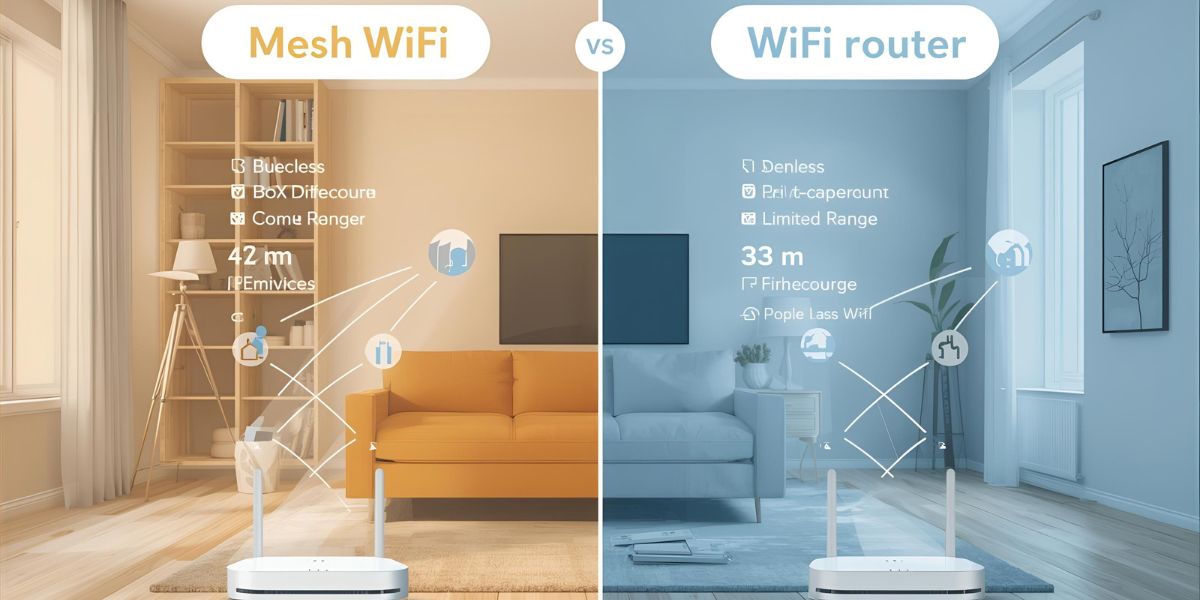
Mesh Wi-Fi vs Router: Which One Gives You Better Speed and Reliability? A fast and reliable internet connection is no longer a luxury—it’s a necessity. Whether you’re gaming, streaming, or managing smart devices, your Wi-Fi setup directly impacts performance. At Yendra Techno Solution, we’ve tested both mesh Wi-Fi systems and traditional routers to help you choose the best Wi-Fi setup for gaming and streaming. Mesh Wi-Fi Speed vs Router Performance Throughput: Which Delivers More Bandwidth? Traditional routers can provide excellent throughput if placed correctly. However, performance often drops as you move away from the device. Dead zones appear in larger homes or offices. Mesh Wi-Fi eliminates this problem. Multiple nodes spread across your space create a seamless network. This ensures consistent mesh Wi-Fi speed across all rooms. In our in-house tests, mesh systems maintained up to 90% of maximum bandwidth, even at 40 feet away. Routers, by contrast, dropped to nearly 50%. Mesh Wi-Fi vs Router: Real Speed Test Comparison To give you a clear picture, we tested both a premium router and a mesh Wi-Fi system in a two-story, 2,500 sq. ft. house. We measured throughput, latency, and stability at three locations: near the router, one floor away, and in the farthest corner. Speed Test Results (Mbps) Location Router (Single Unit) Mesh Wi-Fi (3 Nodes) Near Device 475 Mbps 460 Mbps One Floor Away 210 Mbps 420 Mbps Farthest Corner 95 Mbps 375 Mbps Latency: The Real Test for Gamers For gamers, latency matters more than raw speed. A router can achieve low latency when you are close to it. Unfortunately, latency spikes as the distance grows. Mesh Wi-Fi performs better here. With intelligent routing, it chooses the shortest path to your device. In our tests, a premium router showed an average latency of 32ms in a two-story house. A mesh setup consistently stayed under 20ms, making it the best Wi-Fi setup for gaming. Latency Test (ms) Location Router (Single Unit) Mesh Wi-Fi (3 Nodes) Near Device 18 ms 19 ms One Floor Away 32 ms 21 ms Farthest Corner 57 ms 23 ms Multiple Device Handling Modern homes often have more than 20 connected devices. Routers tend to slow down when overloaded. Streaming 4K content while gaming can choke bandwidth. Mesh Wi-Fi systems are built for high device density. Each node manages nearby devices, balancing the load. This ensures smooth performance even with heavy multitasking. In real scenarios, mesh handled double the devices without significant slowdown. Lesson learned: Mesh Wi-Fi transforms connectivity in large homes with multiple floors. Reliability: Seamless vs Spotty Coverage Routers depend heavily on placement. Obstacles such as walls and furniture degrade the signal. Mesh Wi-Fi creates overlapping zones that prevent signal drops. Users can roam between rooms without reconnection issues. At Yendra Techno Solution, we’ve seen mesh outperform routers in multi-floor buildings. Businesses and large households benefit the most from this reliability. Best Wi-Fi Setup for Gaming and Streaming If you are a gamer or streamer, you need: High bandwidth throughput. Consistent low latency. Reliable multi-device handling. While a high-end router may suffice in a small apartment, a mesh Wi-Fi system wins for larger spaces. The performance gap widens when multiple devices are active. Mesh ensures uninterrupted streaming and smooth gameplay, even at the farthest corner of your home. Pro Tips from Yendra Techno Solution Choose tri-band mesh systems for gaming to separate traffic lanes. Use wired backhaul between mesh nodes for faster throughput. Place nodes strategically in hallways or central locations for maximum coverage. Optimize QoS settings to prioritize gaming or streaming devices. Regularly update firmware to enhance stability and security. FAQ: Mesh Wi-Fi vs Router Is mesh Wi-Fi faster than a router? Mesh Wi-Fi provides more consistent speed across larger areas. A router can be faster at close range but loses performance with distance. Do I need mesh Wi-Fi for a small apartment? Not always. A high-performance router may be enough if your space is under 1,000 sq. ft. Is mesh Wi-Fi good for gaming? Yes. Lower latency and balanced device handling make mesh ideal for competitive gaming. Does mesh Wi-Fi replace my router? Yes. Mesh nodes act as both routers and access points, simplifying the setup. Which is better for streaming 4K content? Mesh Wi-Fi offers smoother performance in multi-device scenarios. Conclusion When comparing mesh Wi-Fi speed vs router performance, the winner depends on your space and usage. Routers work well in smaller areas, but mesh Wi-Fi shines in larger homes or offices with multiple devices. For gamers and streamers, mesh ensures superior reliability, lower latency, and consistent speeds. At Yendra Techno Solution, we help clients design the best Wi-Fi setup for gaming, streaming, and business productivity. Whether you need a robust router or a cutting-edge mesh system, our experts ensure your network runs at peak performance. Book A Free Consultation With Yendra Today Related Posts, News & Articles July 29, 2025 Best CCTV Cameras in India… Read More July 29, 2025 Top 5 Smart Surveillance Features… Read More August 5, 2025 Top 5 CCTV Cameras for… Read More
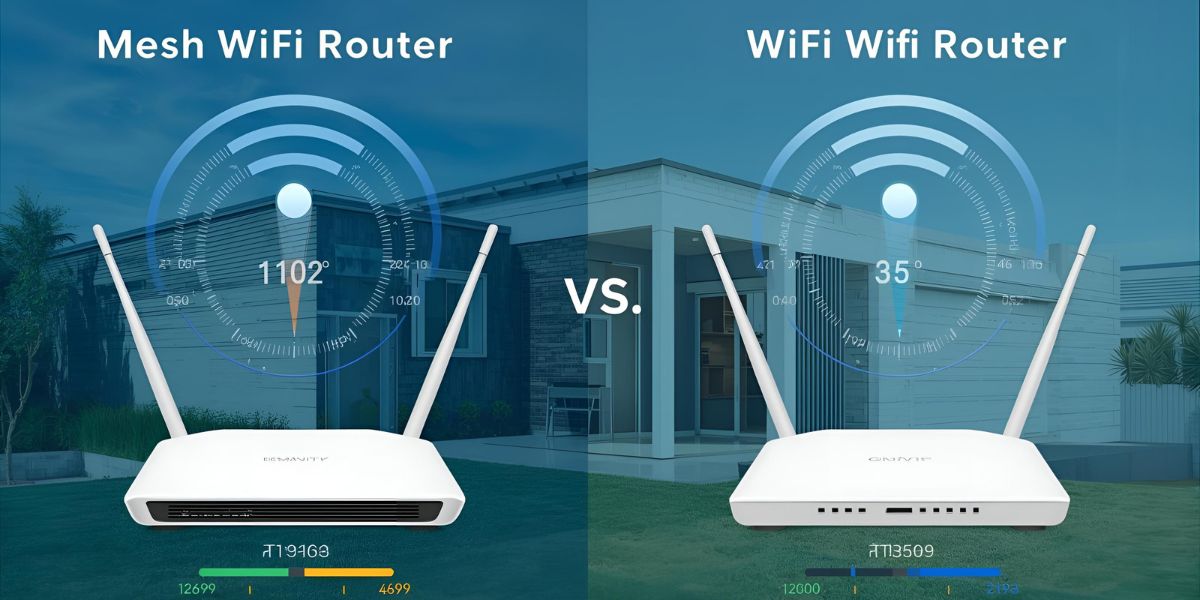
Router vs Mesh Wi-Fi Performance: Real-Life Test & Comparison by Yendra Techno Solution
Router vs Mesh Wi-Fi Performance: Real-Life Test & Comparison by Yendra Techno Solution Public transportation systems face constant pressure to improve safety, efficiency, and passenger experience. Modern CCTV for public transport is now more than a security tool. With AI-driven analytics, it is transforming how bus stations, metros, airports, and fleet operators manage daily operations. The Real-Life Test: Apartment vs Multi-Floor Home At Yendra Techno Solution, we often help customers choose between a traditional Wi-Fi router and a mesh system. To give you a real perspective, I tested both setups in two living spaces—my small apartment and my parents’ multi-floor house. The results surprised me. What worked in one setting completely failed in another. Let me walk you through the experience. Traditional Wi-Fi Router in an Apartment In my apartment, I set up a single traditional Wi-Fi router. The coverage was surprisingly solid. Every corner of the living room, bedroom, and kitchen had strong signals. Streaming 4K videos was seamless. Zoom calls were stable. Even gaming on Wi-Fi was smooth. But there was a catch. Once I crossed into the hallway outside or tried using the balcony, the signal dropped. Dead zones were limited, but still noticeable. Key takeaway: A traditional router is great for smaller spaces with fewer walls. Traditional Wi-Fi Router in a Multi-Floor Home Things changed dramatically in my parents’ two-story home. The router was placed in the living room on the ground floor. Upstairs, the Wi-Fi signal was weak. Bedrooms on the top floor barely connected. Video calls lagged. Streaming stopped to buffer. Even worse, more than 15 devices connected at once caused constant slowdowns. I tried using range extenders, but they didn’t fix the problem. Instead, they created multiple network names, which was frustrating to manage. Result: Dead zones everywhere. Device limits made the experience worse. Mesh Wi-Fi System in a Multi-Floor Home I switched to a mesh Wi-Fi system for large homes and placed one node on each floor. Immediately, the difference was clear. No more dead zones. Whether in the kitchen, upstairs bedroom, or even the backyard, the signal was consistent. All devices stayed connected under one network name. Streaming 4K movies on multiple TVs worked without a glitch. My parents could use smart home devices, while I joined work calls without lag. The mesh system handled more than 25 connected devices smoothly. Lesson learned: Mesh Wi-Fi transforms connectivity in large homes with multiple floors. Router vs Mesh Performance: The Real Difference Coverage: A router works well for small apartments, but mesh dominates in large homes. Dead Zones: Routers often leave gaps, while mesh eliminates them. Device Limits: Routers struggle with many devices; mesh supports dozens. Network Management: Mesh keeps a single seamless network; extenders create confusion. Pro Tips for Choosing Between Router and Mesh Apartment or small home? A high-quality traditional router is enough. Multi-floor or large home? Invest in a mesh Wi-Fi system. Device-heavy household? Mesh handles smart TVs, IoT devices, and phones better. Future-proofing? Mesh systems scale easily with additional nodes. At Yendra Techno Solution, we recommend evaluating your space and device load before deciding. FAQs About Mesh Wi-Fi and Traditional Routers Does a mesh system replace my existing router? Yes. The primary mesh node connects directly to your modem, replacing your old router. Is mesh Wi-Fi worth the price? For large or multi-floor homes, yes. The performance boost and elimination of dead zones justify the cost. Can a router work as well as mesh with extenders? Not really. Extenders often create separate networks and reduce speed. Mesh offers seamless performance How many mesh nodes do I need? Typically, 2–3 nodes cover most large homes. Very large spaces may require 4 or more. Final Thoughts After testing both systems, my conclusion is simple. A traditional router is reliable for small spaces, while a mesh Wi-Fi system is the clear winner for large homes with multiple floors. At Yendra Techno Solution, we’ve seen countless households upgrade to mesh and finally say goodbye to Wi-Fi dead zones. If you’re struggling with poor connectivity, it might be time to make the switch. Book A Free Consultation With Yendra Today Related Posts, News & Articles July 29, 2025 Best CCTV Cameras in India… Read More July 29, 2025 Top 5 Smart Surveillance Features… Read More August 5, 2025 Top 5 CCTV Cameras for… Read More

Wi-Fi Router vs. Mesh System: What’s the Difference & Why It Matters
Wi-Fi Router vs. Mesh System: What’s the Difference & Why It Matters A stable internet connection is essential for modern homes and offices. Yet, many people still struggle with weak signals, dead zones, or inconsistent speeds. Choosing between a traditional Wi-Fi router vs mesh system is often the first step toward fixing these issues. Let’s break down the differences and explore which option makes the most sense for your space. Traditional Wi-Fi Routers Explained A router is the heart of most home networks. It connects directly to your modem and broadcasts a wireless signal throughout your home. Routers work best in small to medium spaces with minimal obstacles. However, a single router has limitations. The farther you move from the device, the weaker the signal becomes. Walls, floors, and interference from other electronics also reduce performance. If you only need Wi-Fi in a small apartment or single-story home, a router may be enough. Mesh Wi-Fi Explained A mesh system uses multiple nodes that work together to create a seamless Wi-Fi network. Instead of relying on one device, each node communicates with the others, ensuring coverage across the entire space. Unlike range extenders, mesh nodes form a unified network under one name and password. This means your devices automatically switch to the strongest signal without interruptions. Mesh systems shine in large homes, multi-story buildings, or environments with thick walls. Coverage: Which Wins? When comparing router vs mesh, coverage is the biggest difference. A router covers a limited area, often up to 1,500 square feet. A mesh system can expand coverage to 5,000 square feet or more with additional nodes. If your home has dead spots or inconsistent signal strength, mesh delivers a clear advantage. Speed and Performance Differences Both routers and mesh systems can support high-speed internet. However, performance depends on how the signal is distributed. A single router often delivers faster speeds near the device but drops off with distance. A mesh system spreads the load across multiple nodes, maintaining more consistent speeds throughout your home. Pro Tip: Choose a dual-band or tri-band mesh system if you use multiple devices simultaneously. This prevents bottlenecks and keeps your connection smooth. Interference and Reliability Wi-Fi signals face interference from neighbors, microwaves, and even Bluetooth devices. Traditional routers often struggle in crowded environments because they rely on one access point. Mesh systems minimize interference by allowing nodes to find the best path for data. This redundancy ensures greater reliability and fewer connection drops. Scalability and Flexibility Scalability is where mesh truly stands out. With routers, you’re limited to the signal range of one device. Adding range extenders can help but often creates multiple networks. Mesh systems are built for growth. You can add nodes anytime to extend coverage without disrupting the existing network. Pro Tip: For future-proofing, consider a mesh system if you plan to expand your home office, upgrade devices, or move to a larger space. Which Should You Choose? The choice between a Wi-Fi router vs mesh system depends on your environment: Choose a router if you live in a small apartment, have few devices, and want a budget-friendly option. Choose a mesh system if you have a large home, multiple floors, or frequently experience dead zones. Both options can deliver reliable internet, but mesh offers more flexibility and consistency FAQs on Router vs Mesh Wi-Fi Is a mesh Wi-Fi worth it? Yes, mesh Wi-Fi is worth it if you need strong coverage in a large or multi-story home. It eliminates dead zones and ensures stable connectivity across all devices. Does mesh Wi-Fi replace a router? Yes, mesh systems replace a traditional router. The main node connects to your modem and acts as the primary router, while additional nodes expand the coverage. Which is faster: router or mesh Wi-Fi? A high-end router may deliver faster peak speeds close to the device. However, mesh Wi-Fi offers more consistent speeds across larger areas, making it better for whole-home performance. Do I need mesh Wi-Fi for a small apartment? Not usually. A quality router should be enough for a small apartment. Mesh becomes useful if you face signal drops or plan to expand your space. Can mesh Wi-Fi work with any internet provider? Yes, mesh Wi-Fi works with all major internet providers. You only need to connect the main node to your modem. Final Thoughts Understanding the difference between a router vs mesh system helps you make smarter decisions about your network. Routers remain a solid choice for compact spaces, while mesh systems excel in larger or more complex layouts. In today’s connected world, reliable Wi-Fi isn’t a luxury—it’s a necessity. If coverage, speed, and scalability matter most, mesh systems are the clear winner. But for smaller homes or budget-conscious users, a traditional router still gets the job done. Book A Free Consultation With Yendra Today Related Posts, News & Articles July 29, 2025 Best CCTV Cameras in India… Read More July 29, 2025 Top 5 Smart Surveillance Features… Read More August 5, 2025 Top 5 CCTV Cameras for… Read More
CCTV Installation in Bangalore: Smart Security Solutions
CCTV Installation in Bangalore: Expert Video Surveillance for Homes & Businesses Security is a top concern in growing cities, and CCTV installation in Bangalore has become a necessity for homeowners and businesses alike. Whether you want to protect your family or secure your office, professional video surveillance ensures complete peace of mind. Let’s explore why local CCTV installers in Bangalore are the best choice for reliable security. Why Choose CCTV Installation in Bangalore? Bangalore is a bustling hub with busy neighborhoods and commercial zones. Unfortunately, rising cases of theft and security breaches make surveillance crucial. Professional CCTV installation provides continuous monitoring and deterrence. With expert camera placement, you get maximum coverage, quick response, and reliable footage when you need it most. CCTV Installation for Homes in Bangalore Every homeowner values safety. Installing home CCTV cameras in Bangalore helps you monitor entrances, parking areas, and common spaces. Modern systems allow smartphone access, so you can check your home while at work or traveling. Burglars avoid houses with visible cameras, making surveillance an effective crime deterrent. Business Security with CCTV in Bangalore Business owners face challenges like shoplifting, employee safety, and inventory loss. Commercial CCTV installation in Bangalore secures retail outlets, offices, warehouses, and restaurants. IP cameras offer high-definition clarity and remote access, making management easier. With surveillance in place, you can reduce theft, resolve disputes, and increase workplace accountability. Advanced CCTV Features Available in Bangalore Local CCTV dealers in Bangalore now offer advanced systems with: AI Motion Detection – Alerts for unusual activity. Remote Monitoring – Live viewing on mobile apps. Cloud Storage – Safe and accessible video backup. Integration – Seamless connection with alarms and access control systems. These features bring smarter security for modern lifestyles. How to Choose the Best CCTV Installation Company in Bangalore When searching for “CCTV installation near me in Bangalore”, keep these points in mind: Local Expertise – Choose installers familiar with Bangalore’s residential and commercial areas. Transparent Pricing – Request detailed cost estimates to avoid surprises. Customization – Ensure packages match your property size and needs. After-Sales Service – Reliable companies provide regular maintenance. Compliance – Installers should follow privacy and data protection guidelines. Reputed companies often offer a free site survey before installation. CCTV Installation Cost in Bangalore The cost of CCTV installation in Bangalore depends on factors like: Camera Type: Analog (budget) vs. IP (premium). Number of Cameras: More cameras = higher cost. Storage System: DVR (cheaper) vs. NVR (advanced). Installation Complexity: Wiring, drilling, and networking. Additional Features: Motion sensors, AI, night vision, cloud storage. On average, a basic home package starts affordably, while commercial projects may require larger investments. Always compare quotes from multiple installers for the best deal. Most installers offer Annual Maintenance Contracts (AMC), covering cleaning, updates, and repairs. Why Professional Installers in Bangalore Are the Right Choice Professional CCTV installers provide faster response, personalized service, and better support. They understand city-specific challenges—whether it’s apartment security in Whitefield or shop protection in Jayanagar. Choosing a CCTV installation company in Bangalore ensures quick maintenance and long-term reliability. FAQs: CCTV Installation in Bangalore What is the average CCTV installation cost in Bangalore? The cost of CCTV installation in Bangalore varies depending on the property’s size, the number of cameras required, camera resolution, recording duration, installation complexity, cabling distance, storage capacity, and any advanced features such as AI video analytics or remote monitoring. Rather than choosing a system based on price alone, it’s important to ensure the surveillance solution is designed around your property’s security requirements. A professionally planned CCTV system provides better coverage, minimizes blind spots, supports future expansion, and delivers long-term reliability. The most accurate way to determine the right investment is through a site survey, where factors such as camera placement, network infrastructure, recording requirements, and integration with other security systems are evaluated before recommending a solution. How many cameras do I need? Homes: 2–4 cameras. Villas/Apartments: 6–8 cameras. Shops/Offices: 4–6 cameras. Warehouses: 12+ cameras. Do I need permission to install CCTV in Bangalore? Homes don’t require permission. Businesses and apartments must follow privacy laws and display CCTV signage. Wired vs. Wireless—Which is better? Wired: More reliable, long-term solution. Wireless: Easier to install, flexible, slightly higher cost. Can I monitor CCTV on my phone? Yes, most modern systems include mobile apps for live viewing and playback. How long does installation take? Basic setups take 3–4 hours. Large projects may take 1–2 days. What features should I look for? Night vision, AI alerts, HD clarity, cloud storage, and mobile access. Why choose Professional CCTV installers in Bangalore? They provide faster support, customized solutions, and better pricing. Can CCTV footage be used in court? Yes, high-quality CCTV footage is valid legal evidence in India. Final Thoughts Investing in CCTV installation in Bangalore is no longer optional—it’s a necessity for ensuring safety in homes, businesses, and communities. With packages starting at ₹7,000, both residents and business owners can find solutions that fit their needs. By choosing trusted local installers, you not only get expert setup but also ongoing support and maintenance. Whether you live in Whitefield, Jayanagar, or Electronic City, a reliable CCTV system will give you round-the-clock protection and unmatched peace of mind. If you’re ready to protect your home or business, search for trusted CCTV installation services in Bangalore today and secure what matters most. Book A Free Consultation With Yendra Today Related Posts, News & Articles July 29, 2025 Best CCTV Cameras in India… Read More July 29, 2025 Top 5 Smart Surveillance Features… Read More August 5, 2025 5 Smart CCTV Technologies Changing… Read More Frequently Asked Questions 1. Is CCTV surveillance enough for business security? CCTV surveillance is a good starting point, especially for small offices, shops, and cafés. It helps deter theft, monitor activity, and provide video evidence. However, for larger businesses or high-risk environments like factories and warehouses, a complete security solution is recommended for better protection 2. What makes AI CCTV cameras different from traditional cameras? Unlike traditional cameras that only record, AI CCTV

Video Surveillance Installation Near Me: Secure Your Home & Business with Experts
Video Surveillance Installation Near Me: Secure Your Home & Business with Experts When safety becomes a priority, investing in professional video surveillance installation near me is the smartest step. Whether you own a home, shop, or office, CCTV cameras protect what matters most. Let’s explore why expert CCTV installation is essential and how you can choose the best service. Why Choose Professional CCTV Installation? DIY setups often fail to deliver reliable coverage. Certified installers understand strategic placement and technical requirements. They ensure cameras capture blind spots, entrances, and vulnerable areas. With professional service, you also get after-sales support and quick troubleshooting. Benefits of Video Surveillance for Homes Homeowners need peace of mind. Modern CCTV systems allow remote viewing from smartphones. This means you can monitor your kids, elderly parents, or pets anytime. Surveillance cameras also deter burglars and provide crucial evidence in case of break-ins. Investing in home CCTV installation ensures round-the-clock family protection. CCTV Installation for Businesses Business owners face risks like theft, workplace disputes, and unauthorized access. A reliable surveillance system helps manage staff, monitor visitors, and secure assets. Many businesses now prefer IP camera installation for high-definition clarity and cloud storage. Professional CCTV installers customize setups for offices, retail stores, and warehouses. Advanced Features in Modern CCTV Systems Today’s surveillance solutions go beyond basic recording. Popular features include: Remote Access: View live feeds from mobile apps. AI Integration: Detect suspicious movements or unauthorized entry. Cloud Backup: Store footage safely off-site. Integration: Connect CCTV with alarm systems and access controls. These features provide smarter and stronger security. How to Select the Right CCTV Installation Service Near You Choosing the right installer makes all the difference. Here’s what to look for: Local Expertise – Nearby professionals know neighborhood security challenges. Transparent Pricing – Ask for a detailed cost breakdown with no hidden charges. Customization – Solutions must suit your property size and needs. Maintenance Support – Ensure they provide regular servicing and upgrades. Legal Compliance – Confirm they follow privacy and data protection laws. A good installer will also offer a free site survey before finalizing the setup. CCTV Installation Cost Factors The cost of CCTV installation varies by camera type, property size, and storage options. Wired systems may require higher installation charges, while wireless setups are quicker but may cost more per device. Many installers provide bundled packages that include cameras, DVR/NVR, wiring, and installation. Always compare packages before making a decision. Why CCTV Installers Near You Are the Best Choice Searching for “CCTV installation near me” connects you to local experts. Local services respond faster to emergencies and offer personalized solutions. They also provide better after-sales support compared to distant providers. With strong knowledge of area-specific security challenges, they ensure a more effective installation Final Thoughts Professional video surveillance installation is no longer optional—it’s a necessity. From protecting families to securing businesses, CCTV cameras deliver unmatched peace of mind. By hiring certified local installers, you ensure proper setup, ongoing support, and long-term reliability. If you’re ready to upgrade your security, search for trusted CCTV installation services near me and safeguard your world today. Book A Free Consultation With Yendra Today Related Posts, News & Articles July 29, 2025 Best CCTV Cameras in India… Read More July 29, 2025 Top 5 Smart Surveillance Features… Read More August 5, 2025 Top 5 CCTV Cameras for… Read More Frequently Asked Questions 1. Is CCTV surveillance enough for business security? CCTV surveillance is a good starting point, especially for small offices, shops, and cafés. It helps deter theft, monitor activity, and provide video evidence. However, for larger businesses or high-risk environments like factories and warehouses, a complete security solution is recommended for better protection 2. What makes AI CCTV cameras different from traditional cameras? Unlike traditional cameras that only record, AI CCTV cameras can detect unusual movement, recognize faces, read license plates, and send real-time alerts. This makes surveillance proactive instead of reactive. 3. Do warehouses need complete security solutions or just CCTV? CCTV for warehouse setups are essential for monitoring entry points and storage areas. But for maximum security, warehouses benefit from a complete solution that includes intrusion alarms, access control, and AI-powered monitoring to prevent unauthorized entry. 4. Why are complete security solutions better for factories? Factories require compliance with safety standards and worker protection. A CCTV for factory setup helps with monitoring, but complete solutions integrate fire detection, accident alarms, and restricted access controls, ensuring safety and security on all levels. 5. Can offices rely only on a security camera system? Smaller offices can manage with a basic security camera system, but larger offices benefit from complete security solutions that integrate biometric access, AI surveillance, and fire safety systems. This ensures both security and productivity.
Business Security 2025: Why CCTV Installation Quality Matters More Than Price
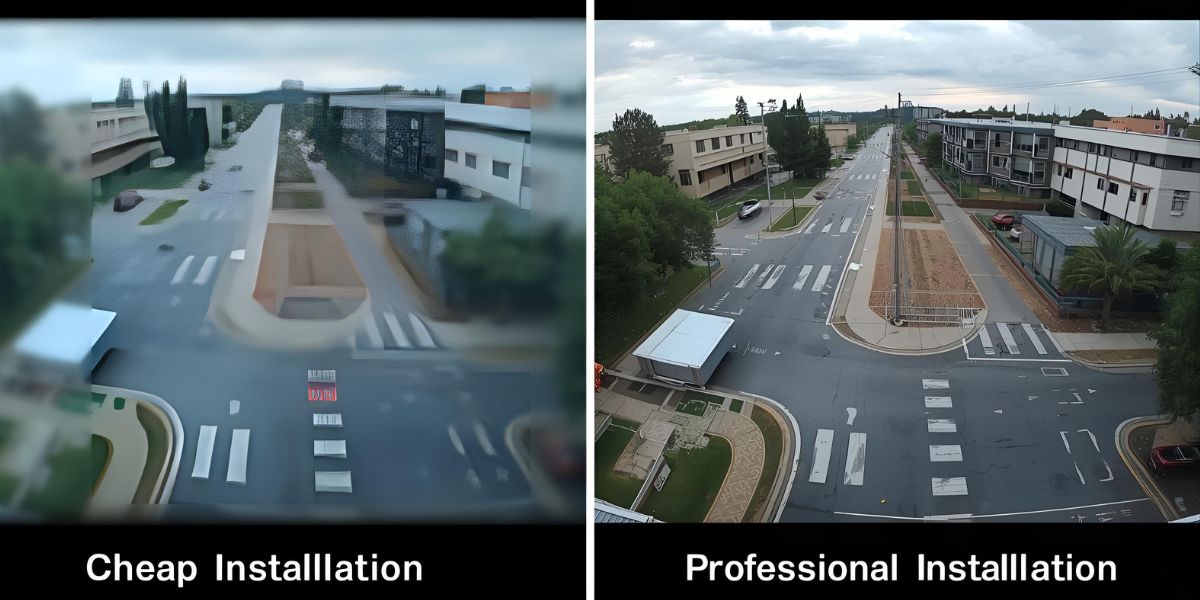
Business Security 2025: Expert Guide to CCTV Installation Business Security 2025: Why CCTV Installation Quality Matters More Than Price In the rapidly evolving landscape of Business Security 2025, the debate often centers on cost-cutting versus investing in quality—especially regarding CCTV installation. As businesses face increasingly sophisticated security threats, the priority must be installation quality, not just price. Modern CCTV systems are no longer standalone cameras; they form critical components of a smart security ecosystem that demands precision, expertise, and strategic foresight. Quality installation ensures reliable monitoring, compliance, and long-term protection. Pro Tips for Business Leaders: Partner with certified CCTV providers for compliant, high-performance systems. Focus on high-resolution cameras, optimal placement, and secure storage. Integrate CCTV with alarms and access control for holistic security. Regularly audit and maintain systems to prevent failures or vulnerabilities. Investing in quality today positions your business for smarter, safer operations in Business Security 2025 and beyond. Understanding the Stakes: Security Without Compromise Pro Tip 1: Prioritize Professional Site Assessment and Planning For effective Business Security 2025, begin with a comprehensive site survey that evaluates physical architecture, lighting, access points, and environmental risks. This process highlights high-risk areas such as entrances, blind spots, parking zones, and sensitive facilities like server rooms. Professional CCTV installers leverage this information to create a customized installation plan that maximizes coverage and minimizes vulnerabilities. Why it matters: Strategic camera placement ensures clear identification, reduces the need for costly repositioning, and mitigates interference from environmental factors such as glare, shadows, or weather exposure, strengthening overall business security. Pro Tip 2: Invest in High-Quality Cameras and Hardware For robust Business Security 2025, choose cameras with high-resolution video, wide dynamic range, and reliable low-light performance. Quality hardware ensures clear footage, accurate monitoring, and long-term durability, reducing maintenance costs and system downtime. Why it matters: Superior equipment enhances threat detection, supports evidence collection, and integrates seamlessly with other security components for a smart, future-ready system. Pro Tip 3: Integrate CCTV with Complete Security SystemsModern Business Security 2025 demands more than standalone cameras. Integrate CCTV with alarms, access control, and motion detection systems for a unified security ecosystem. Why it matters: Integration allows real-time alerts, faster response to incidents, and comprehensive monitoring, ensuring maximum protection for assets, employees, and visitors. Pro Tip 4: Regular Maintenance and Compliance AuditsEnsure ongoing Business Security 2025 by scheduling regular system inspections, software updates, and compliance audits. Check camera alignment, storage integrity, and connectivity for optimal performance. Why it matters: Proactive maintenance prevents failures, ensures regulatory adherence, and sustains high-quality surveillance, keeping your business secure and compliant. Pro Tip 5: Think Beyond Price—Prioritize Value and ROI For effective Business Security 2025, focusing solely on price can be costly. Cutting corners during CCTV installation may result in frequent repairs, security gaps, and disruptions to business operations. Investing in high-quality installation creates a reliable surveillance environment that enhances employee safety, deters crime, and safeguards critical assets—delivering long-term value and measurable ROI well beyond the initial expenditure. Conclusion In conclusion, business security 2025 requires a fundamental shift: moving beyond treating CCTV systems as mere commodities and recognizing them as vital assets that demand professional installation expertise. Businesses that prioritize high-quality installation gain resilience, regulatory compliance, and peace of mind—benefits that far outweigh any upfront cost. For any organization serious about safeguarding assets, investing in professional installation is no longer optional—it’s essential for success in business security 2025. Book A Free Consultation With Yendra Today Related Posts, News & Articles October 3, 2025 Best Security Systems for Apartments… Read More October 1, 2025 AI-Powered Construction Site Security: How… Read More September 29, 2025 Future of Surveillance in India… Read More Frequently Asked Questions 1. Is CCTV surveillance enough for business security? CCTV surveillance is a good starting point, especially for small offices, shops, and cafés. It helps deter theft, monitor activity, and provide video evidence. However, for larger businesses or high-risk environments like factories and warehouses, a complete security solution is recommended for better protection 2. What makes AI CCTV cameras different from traditional cameras? Unlike traditional cameras that only record, AI CCTV cameras can detect unusual movement, recognize faces, read license plates, and send real-time alerts. This makes surveillance proactive instead of reactive. 3. Do warehouses need complete security solutions or just CCTV? CCTV for warehouse setups are essential for monitoring entry points and storage areas. But for maximum security, warehouses benefit from a complete solution that includes intrusion alarms, access control, and AI-powered monitoring to prevent unauthorized entry. 4. Why are complete security solutions better for factories? Factories require compliance with safety standards and worker protection. A CCTV for factory setup helps with monitoring, but complete solutions integrate fire detection, accident alarms, and restricted access controls, ensuring safety and security on all levels. 5. Can offices rely only on a security camera system? Smaller offices can manage with a basic security camera system, but larger offices benefit from complete security solutions that integrate biometric access, AI surveillance, and fire safety systems. This ensures both security and productivity.

Top Mistakes to Avoid When Choosing a CCTV Installer for Your Home or Business
Top Mistakes to Avoid When Choosing a CCTV Installer for Your Home or Business Security is one of the most critical investments you will make—whether for your family, your business, or your assets. Yet many people treat CCTV installation like buying a gadget, focusing only on cost or brand. The truth is: your CCTV system is only as reliable as the installer behind it. As business leaders and homeowners, avoiding common mistakes during vendor selection can save you from costly regrets later. Here’s a thought leadership perspective with pro tips you can apply immediately. Mistake 1: Choosing Based on Price Alone The cheapest quote is often the most expensive mistake. Installers who cut costs use low-grade cables, underpowered DVRs, or skip service contracts. Within a year, the system fails, and support vanishes. 👉 Pro Tip: If budget is tight, reduce the number of cameras—not the quality of equipment or service agreement Mistake 2: Ignoring After-Sales Support Unlike smartphones, CCTV cameras don’t have walk-in service centers. Your entire support depends on the installer. If they disappear, so does your warranty, troubleshooting, and maintenance. 👉 Pro Tip: Always sign an AMC (Annual Maintenance Contract) with clear service-level commitments. It guarantees uptime and accountability. Mistake 3: Hiring Non-Specialists Electricians, IT vendors, or mobile dealers may offer CCTV as an “add-on” service. But they lack expertise in surveillance design, compliance, and integration. The result? Blind spots, poor video quality, and non-compliant systems. 👉 Pro Tip: Work only with Security System Integrators (SSIs). They specialize in CCTV and align installations with compliance, insurance, and safety needs. Mistake 4: Overlooking Compliance & Scalability Businesses often forget that CCTV systems are part of audits, insurance claims, and safety regulations. A system installed without compliance in mind can result in penalties or rejected insurance claims. 👉 Pro Tip: For commercial setups, ask installers how their solution supports compliance, integrates with access control, and scales as your operations grow. Mistake 5: Skipping Proper Site Survey Installing cameras without a detailed survey is like locking only the front door of your house. Critical blind spots remain uncovered, reducing system effectiveness. 👉 Pro Tip: Demand a professional site survey before installation. In warehouses or offices, ensure coverage of entrances, exits, loading zones, and storage areas. Mistake 6: Buying CCTV Online Without Service Backup Online platforms may tempt you with low-cost camera kits. But without an accountable installer, you’re left stranded during breakdowns. Warranty support is often useless without a registered vendor. 👉 Pro Tip: Never separate product purchase from installation. Always buy through an integrator who provides installation, service, and warranty under one roof Mistake 7: Ignoring Technology Trends Many still install basic cameras when AI-enabled or cloud-based options can provide smart analytics, remote access, and compliance advantages. Outdated technology limits ROI. 👉 Pro Tip: For businesses, explore AI-powered CCTV with intrusion alerts, people-counting, and cloud backup. For homes, consider Wi-Fi-enabled systems for remote monitoring. Final Word: Choose Partners, Not Just Cameras CCTV is not a plug-and-play product. It is a security ecosystem that protects lives, assets, and reputations. Avoiding these mistakes ensures you select a partner who provides reliability, compliance, and peace of mind—not just cameras on walls. 👉 Pro Tip: Treat CCTV installation as a strategic investment. The right installer doesn’t just sell cameras—they become your long-term security partner. Book A Free Consultation With Yendra Today Related Posts, News & Articles July 29, 2025 Best CCTV Cameras in India… Read More July 29, 2025 Top 5 Smart Surveillance Features… Read More August 5, 2025 Top 5 CCTV Cameras for… Read More Frequently Asked Questions 1. Is CCTV surveillance enough for business security? CCTV surveillance is a good starting point, especially for small offices, shops, and cafés. It helps deter theft, monitor activity, and provide video evidence. However, for larger businesses or high-risk environments like factories and warehouses, a complete security solution is recommended for better protection 2. What makes AI CCTV cameras different from traditional cameras? Unlike traditional cameras that only record, AI CCTV cameras can detect unusual movement, recognize faces, read license plates, and send real-time alerts. This makes surveillance proactive instead of reactive. 3. Do warehouses need complete security solutions or just CCTV? CCTV for warehouse setups are essential for monitoring entry points and storage areas. But for maximum security, warehouses benefit from a complete solution that includes intrusion alarms, access control, and AI-powered monitoring to prevent unauthorized entry. 4. Why are complete security solutions better for factories? Factories require compliance with safety standards and worker protection. A CCTV for factory setup helps with monitoring, but complete solutions integrate fire detection, accident alarms, and restricted access controls, ensuring safety and security on all levels. 5. Can offices rely only on a security camera system? Smaller offices can manage with a basic security camera system, but larger offices benefit from complete security solutions that integrate biometric access, AI surveillance, and fire safety systems. This ensures both security and productivity.
CCTV Camera Installation: Smart Guide for Businesses 2025
Installing CCTV Cameras the Smart Way: A Guide for Businesses Security is not a product you buy—it is a long-term investment you manage. For business owners, facility managers, and infrastructure leaders, CCTV cameras are more than a deterrent; they are part of a compliance framework, an operational monitoring tool, and a cornerstone of workplace safety. Yet, too often, organizations treat CCTV like a one-time purchase instead of a strategic decision. Here’s how to approach CCTV installation the smart way, with lessons and pro tips every decision-maker should know. Why Businesses Regret CCTV Investments Many enterprises fall into the trap of comparing prices instead of partners. Within a year, the system underperforms, footage becomes unusable, or service calls go unanswered. Unlike IT equipment, CCTV brands don’t provide direct service centers. Your system’s reliability is only as strong as your installer’s expertise. 👉 Pro Tip: Don’t chase the lowest quote. If you must cut costs, reduce the number of cameras, not the quality or service contract. Who Should You Trust with CCTV Installation? The market is crowded with IT vendors, electricians, and even mobile dealers offering cameras as an add-on. But for critical infrastructure and businesses, Security System Integrators (SSIs) are the only choice. SSIs specialize in surveillance systems, offer AMC (Annual Maintenance Contracts), and remain accountable long after installation. They understand compliance, scalability, and system uptime—essentials for any business environment. 👉 Pro Tip: Always check if your vendor is ESAI (Electronic Security Association of India) registered. It’s your safety net for genuine expertise and complaint redressal. Smart Installation: The 5-Step Framework 1. Strategic Site Survey A proper survey maps out entry points, high-risk areas, and operational blind spots. For businesses, it also aligns with safety audits and insurance compliance. 👉 Pro Tip: In warehouses and factories, don’t just monitor perimeters—cover operational choke points like loading docks and storage areas. 2. Right Camera Selection Not all cameras serve the same purpose: Dome Cameras: Subtle indoor coverage. Bullet Cameras: Outdoor visibility and deterrence. PTZ Cameras: Large area monitoring with zoom controls. AI/Smart Cameras: Analytics for workforce tracking, intrusion alerts, and compliance checks. 👉 Pro Tip: For high-footfall areas, AI-enabled cameras with facial recognition and people-counting offer compliance benefits beyond security. 3. Professional Installation Cabling, power backup, and network integration decide your system’s reliability. Professional installers align your CCTV with existing IT and access control systems. 👉 Pro Tip: Demand proper labeling of cables and ports. It reduces downtime during maintenance. 4. Testing & Handover Businesses often skip thorough testing due to time pressures. This is a mistake. Testing ensures coverage, clarity, and night vision are up to standard. 👉 Pro Tip: Simulate real scenarios like fire drills or mock thefts during testing to validate effectiveness. 5. Maintenance & AMC Dust, weather, and software glitches degrade performance. An AMC guarantees uptime and quick issue resolution—critical for compliance-driven industries. 👉 Pro Tip: Negotiate SLA-driven AMC contracts with defined response times, not vague service commitments. The Hidden Risks of Online CCTV Purchases Buying cameras online and outsourcing installation to an electrician may look cost-effective. But when systems fail, you face: No warranty claims. No accountability for service. Long downtime during breakdowns. 👉 Pro Tip: For mission-critical facilities, avoid “box-pushing” vendors. Insist on integrators who bundle installation, service, and compliance support. Why Price Shouldn’t Drive the Decision For corporates, hospitals, and factories, CCTV is not just surveillance—it’s liability protection. Poor installation can result in: Insurance claims being rejected. Non-compliance penalties. Security breaches leading to financial and reputational loss. 👉 Pro Tip: When comparing vendors, weigh service quality, AMC terms, and compliance experience higher than upfront cost. Final Word: Security as a Strategic Asset CCTV cameras are not just about “watching.” They are about safeguarding your people, assets, and reputation. Smart installation means working with specialists, prioritizing long-term service, and aligning systems with operational and compliance goals. Business leaders and facility owners must stop viewing CCTV as a one-time procurement exercise. Treat it as an operational backbone—because when incidents happen, it’s not the camera price you’ll remember, but the footage you wish you had. 👉 Pro Tip: Think long-term. Choose the right partner, not just the right camera. Security is too important to gamble on short-term savings. Book A Free Consultation With Yendra Today Related Posts, News & Articles July 29, 2025 Best CCTV Cameras in India… Read More July 29, 2025 Top 5 Smart Surveillance Features… Read More August 5, 2025 Best CCTV Camera for Home:… Read More Frequently Asked Questions 1. Is CCTV surveillance enough for business security? CCTV surveillance is a good starting point, especially for small offices, shops, and cafés. It helps deter theft, monitor activity, and provide video evidence. However, for larger businesses or high-risk environments like factories and warehouses, a complete security solution is recommended for better protection 2. What makes AI CCTV cameras different from traditional cameras? Unlike traditional cameras that only record, AI CCTV cameras can detect unusual movement, recognize faces, read license plates, and send real-time alerts. This makes surveillance proactive instead of reactive. 3. Do warehouses need complete security solutions or just CCTV? CCTV for warehouse setups are essential for monitoring entry points and storage areas. But for maximum security, warehouses benefit from a complete solution that includes intrusion alarms, access control, and AI-powered monitoring to prevent unauthorized entry. 4. Why are complete security solutions better for factories? Factories require compliance with safety standards and worker protection. A CCTV for factory setup helps with monitoring, but complete solutions integrate fire detection, accident alarms, and restricted access controls, ensuring safety and security on all levels. 5. Can offices rely only on a security camera system? Smaller offices can manage with a basic security camera system, but larger offices benefit from complete security solutions that integrate biometric access, AI surveillance, and fire safety systems. This ensures both security and productivity.
CCTV Camera for Home: Smart Buying & Easy Installation.
CCTV Camera Buying Guide: Installing CCTV Cameras the Smart Way Security has become a top priority for both homeowners and businesses. With increasing threats of burglary, theft, and compliance requirements, investing in CCTV cameras is no longer optional—it’s essential. However, buying and installing CCTV cameras the wrong way can cost more in the long run. This guide will help you choose wisely and install CCTV systems the smart way. Why Choosing the Right CCTV Installer Matters Unlike smartphones or laptops, CCTV cameras don’t come with direct service centers. After-sales support depends entirely on your installer. If you choose an inexperienced or cheapest vendor, you risk poor service, breakdowns, and wasted investment. The smarter choice is always a professional Security System Integrator, who treats CCTV installation as their core expertise. Who Really Sells CCTV Cameras? Today, CCTV cameras are available from multiple sellers: Security System Integrators (experts in CCTV ✅) IT vendors and networking companies Electrical contractors and electricians Mobile and laptop dealers Fire alarm and safety equipment suppliers The problem? For most of them, CCTV is just an add-on service. That’s why relying on a specialist system integrator ensures professional installation and reliable service. Understanding the CCTV Supply Chain The CCTV market in India follows a structured flow: Sales Flow: Manufacturer → National Distributor → State Distributor → System Integrator Service Flow: System Integrator → Distributor → Manufacturer This structure shows why your system integrator is your lifeline during and after installation. They handle everything from setup to warranty claims and ongoing support. Residential vs Business CCTV Buying Journey Residential Buyers Triggered by safety concerns—burglary, kids, or elderly care. Prefer easy-to-use, wireless systems. Often make decisions based on cost, not service. ⚠️ Risk: Cheapest installation leads to poor long-term support. Business Buyers Driven by compliance, insurance, and theft prevention. Consider AMC contracts, server storage, and integration with access control. Evaluate multiple vendors but the smartest choose service reliability over cost. ✅ Insight: Businesses must think long-term. Poor service could mean compliance issues and downtime. Smart Steps to Install CCTV Cameras Site Survey & Planning – Identify vulnerable areas and entry points. Choosing the Right Camera – Dome, bullet, PTZ, Wi-Fi, or AI-based models. Professional Installation – Ensure correct wiring, monitoring setup, and power backup. Testing & Maintenance – Schedule regular checks to avoid failure Pro Tips for Effective CCTV Installation Position cameras at all entry and exit points. Avoid blind spots with proper placement. Use cloud storage for critical recordings. Always sign an AMC (Annual Maintenance Contract) for ongoing support. Why Online CCTV Purchases Can Be Risky Buying cameras online may look affordable, but it comes with risks: No brand-backed warranty support Installers not accountable for service Troubleshooting becomes difficult during breakdowns Unlike gadgets, CCTV cameras don’t have direct service centers. You remain fully dependent on the installer. Choosing the Right Vendor For reliable installation and service, always pick an ESAI (Electronic Security Association of India) registered vendor. Benefits include: Verified expertise in CCTV installation Complaint redressal in case of poor service Genuine product warranty Long-term service through AMCs Avoid Falling for the Cheapest Quote Many buyers finalize the lowest price quote. This often results in vendors cutting corners and disappearing when support is needed. 👉 Pro Tip: If budget is tight, reduce the number of cameras—not the quality or vendor reliability. Best Practices for CCTV Installation Work with professional security integrators, not side-business sellers. Choose trusted brands like CP Plus, Hikvision, and Dahua. Sign a multi-year AMC for guaranteed support. Never buy cameras online without service backup. Focus on quality and service, not the lowest price. Final Word: Security Is an Investment Installing CCTV cameras is a long-term investment in safety and peace of mind. The cheapest deal may look attractive but often turns into the costliest mistake. Choose wisely:✅ Trusted brand✅ Professional system integrator✅ AMC contract for long-term support When it comes to security, never compromise. Invest smartly, and your CCTV system will protect you for years to come Book A Free Consultation With Yendra Today Related Posts, News & Articles July 19, 2025 cctv surveillance cameras – Surveillance… Read More July 19, 2025 CCTV Cameras on Indian Trains:… Read More July 29, 2025 CBSE Mandates CCTV with Real-Time… Read More Frequently Asked Questions 1. Is CCTV surveillance enough for business security? CCTV surveillance is a good starting point, especially for small offices, shops, and cafés. It helps deter theft, monitor activity, and provide video evidence. However, for larger businesses or high-risk environments like factories and warehouses, a complete security solution is recommended for better protection 2. What makes AI CCTV cameras different from traditional cameras? Unlike traditional cameras that only record, AI CCTV cameras can detect unusual movement, recognize faces, read license plates, and send real-time alerts. This makes surveillance proactive instead of reactive. 3. Do warehouses need complete security solutions or just CCTV? CCTV for warehouse setups are essential for monitoring entry points and storage areas. But for maximum security, warehouses benefit from a complete solution that includes intrusion alarms, access control, and AI-powered monitoring to prevent unauthorized entry. 4. Why are complete security solutions better for factories? Factories require compliance with safety standards and worker protection. A CCTV for factory setup helps with monitoring, but complete solutions integrate fire detection, accident alarms, and restricted access controls, ensuring safety and security on all levels. 5. Can offices rely only on a security camera system? Smaller offices can manage with a basic security camera system, but larger offices benefit from complete security solutions that integrate biometric access, AI surveillance, and fire safety systems. This ensures both security and productivity.

CCTV Compliance by Industry: How Karnataka’s 2025 Mandate Impacts Every Sector
CCTV Compliance by Industry: How Karnataka’s 2025 Mandate Impacts Every Sector CCTV surveillance is no longer optional across Karnataka. With the 2025 CCTV compliance mandate, the state has tightened rules around camera installation, coverage, storage, and data responsibility. The Karnataka Public Safety (Measures) Enforcement Act 2025 makes it mandatory for businesses with 100+ daily visitors or 500+ monthly footfall to install CCTV systems. While the rule applies across industries, each sector faces unique compliance needs. Choosing the right CCTV surveillance solutions ensures both safety and legal protection. As a result, businesses, factories, construction sites, commercial buildings, and even residential complexes must reassess their surveillance systems. This guide explains CCTV compliance by industry, what Karnataka’s 2025 rules mean in practice, and how different sectors can stay compliant without unnecessary cost or disruption. TL;DR: Karnataka CCTV Compliance 2025 – Key Takeaways CCTV compliance is mandatory across most public-facing sectors Camera placement matters more than camera quantity Storage duration and data access are critical compliance points Construction sites require flexible, temporary CCTV systems Non-compliance can lead to penalties, shutdowns, or legal risk What Is the Karnataka CCTV Compliance Mandate 2025? The Karnataka government’s 2025 CCTV mandate strengthens surveillance requirements to improve public safety, crime investigation, and accountability. While earlier guidelines focused on limited commercial spaces, the updated mandate expands scope and enforcement. Core Objectives of the Mandate Improve crime detection and evidence availability Standardize CCTV coverage in public and semi-public spaces Ensure responsible data storage and access Prevent misuse of surveillance footage The mandate does not prescribe one-size-fits-all rules. Instead, CCTV compliance varies by industry, risk level, and public exposure. Who Must Follow CCTV Compliance in Karnataka? CCTV compliance applies to any entity that: Allows public access Employs workers at scale Handles valuable assets or sensitive operations Operates in shared or high-risk environments This includes: Offices and IT parks Retail and commercial spaces Manufacturing units Construction sites Warehouses and logistics hubs Gated communities and large residential complexes Key CCTV Compliance Requirements (Common Across Industries) Before diving into sector-specific rules, it’s important to understand the baseline requirements common to most industries. 1. Mandatory Camera Coverage Entry and exit points Perimeter access areas Common movement zones Blind spots that affect safety or accountability are discouraged. 2. Functional Recording Systems Cameras must be operational at all times Recording devices (DVR/NVR) must be functional Footage should be retrievable when required Dummy or non-functional cameras do not meet compliance. 3. Minimum Storage Retention While exact duration may vary, most sectors are expected to retain footage for: 7–30 days, depending on risk category Storage must be secure and tamper-resistant. 4. Data Privacy and Access Control Footage access limited to authorized personnel No misuse or public sharing of recordings Clear accountability for data handling CCTV compliance includes how footage is used, not just how it is recorded. CCTV Compliance for Offices & Commercial Buildings Offices and IT parks are among the most closely monitored sectors due to high footfall and employee density. Compliance Focus Areas Main entrances and exits Reception and lobby areas Parking facilities Emergency exits Workstations and private cabins usually do not require cameras unless justified. Common Compliance Mistakes Over-monitoring employee work areas Poor camera angles that miss entry points Insufficient storage duration Compliance Tip Focus on movement and access, not constant employee surveillance. This ensures legal safety and workforce trust. Retail Businesses Retail outlets, supermarkets, and malls face high visitor footfall daily. Monitor shop floors, billing counters, and entrances. Reduce theft and manage staff productivity. Recommended: Retail CCTV solutions with wide-angle and dome cameras Why Compliance Matters Retail CCTV footage is often used for: Theft investigations Payment disputes Insurance claims Non-compliance weakens legal standing. Manufacturing & Industrial Units Factories and warehouses must protect equipment, raw materials, and workers. Cover assembly lines, loading bays, and hazardous areas. Ensure worker safety and reduce workplace disputes. Recommended: Manufacturing security systems with rugged cameras and thermal monitoring. Compliance Challenge Large factory layouts often lead to blind spots. Strategic placement matters more than camera quantity. CCTV Compliance for Construction Sites Construction sites are dynamic, temporary, and high-risk. Karnataka’s mandate recognizes this uniqueness. Construction-Specific Compliance Needs Theft prevention Labor activity monitoring Safety incident evidence Accepted CCTV Practices Temporary camera installations Pole-mounted or container-based setups Local recording with optional remote access What Is Not Required Permanent wiring infrastructure Aesthetic concealment Flexibility is key, but recording and access accountability remain mandatory. Healthcare & Hospitals Hospitals and clinics must meet healthcare surveillance compliance standards. Monitor waiting areas, emergency wards, and pharmacies. Secure restricted medical storage without compromising patient privacy. Recommended: Network cameras with secure access control. Banking & Financial Institutions Banks, ATMs, and financial offices need round-the-clock surveillance. Cover teller counters, strong rooms, and ATM kiosks. Prevent fraud and enhance customer confidence. Recommended: High-resolution cameras with extended storage. Hospitality & Entertainment Hotels, restaurants, cinemas, and event venues attract large gatherings. Monitor entrances, lobbies, and guest areas. Support crowd control and improve visitor safety. Recommended: Complete business security solutions with fire alarm and access control integration. Education Institutions Schools, colleges, and universities require strict monitoring. Cover gates, corridors, classrooms, and playgrounds. Enhance student safety and prevent unauthorized access. Recommended: Centralized IP-based CCTV with remote monitoring. Transportation & Logistics Airports, bus stations, metro networks, and warehouses handle heavy footfall and cargo. Monitor passenger entry points and cargo storage. Prevent theft, regulate traffic, and ensure staff safety. Recommended: Wide coverage cameras with AI-powered analytics. Operational Benefits of Compliance Shipment dispute resolution Loss prevention Vendor accountability Many logistics firms now treat CCTV footage as operational data. Food & Beverage Outlets Restaurants, cafes, and pubs face both customer and staff security challenges. Monitor kitchens, cash counters, and dining spaces. Enforce hygiene compliance and prevent customer disputes. Recommended: Dome cameras with audio-enabled features. Real Estate & Residential Complexes Individual homes face fewer obligations. However, gated communities and large apartments fall under shared-space compliance. Mandatory Areas Main gates Visitor entry points Parking areas Common corridors and amenities Privacy Considerations No cameras inside individual homes No intrusion into neighboring properties Clear signage informing