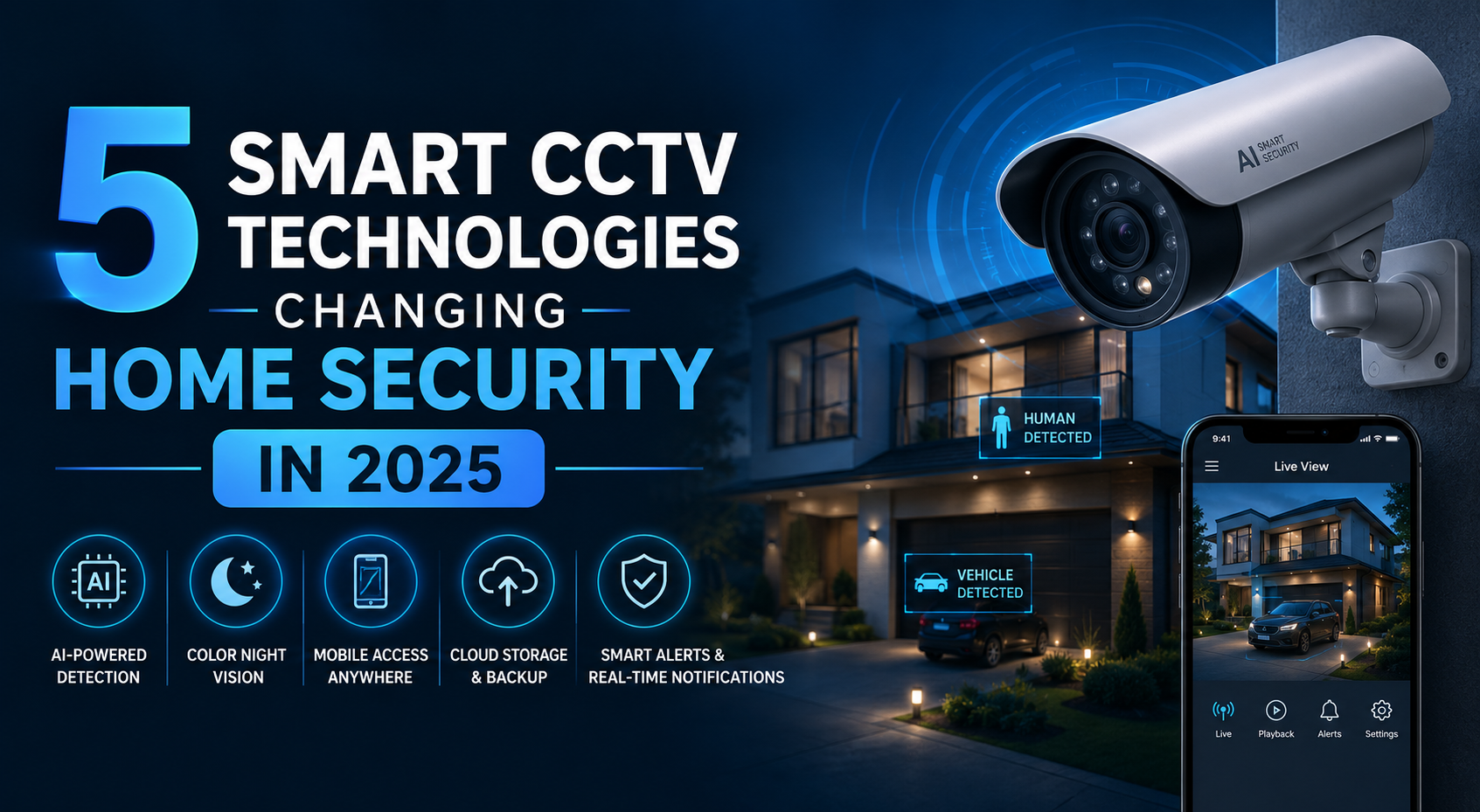
Security is not a product you buy—it is a long-term investment you manage. For business owners, facility managers, and infrastructure leaders, CCTV cameras are more than a deterrent; they are part of a compliance framework, an operational monitoring tool, and a cornerstone of workplace safety. Yet, too often, organizations treat CCTV like a one-time purchase instead of a strategic decision.
Here’s how to approach CCTV installation the smart way, with lessons and pro tips every decision-maker should know.
Many enterprises fall into the trap of comparing prices instead of partners. Within a year, the system underperforms, footage becomes unusable, or service calls go unanswered. Unlike IT equipment, CCTV brands don’t provide direct service centers. Your system’s reliability is only as strong as your installer’s expertise.
👉 Pro Tip: Don’t chase the lowest quote. If you must cut costs, reduce the number of cameras, not the quality or service contract.
The market is crowded with IT vendors, electricians, and even mobile dealers offering cameras as an add-on. But for critical infrastructure and businesses, Security System Integrators (SSIs) are the only choice.
SSIs specialize in surveillance systems, offer AMC (Annual Maintenance Contracts), and remain accountable long after installation. They understand compliance, scalability, and system uptime—essentials for any business environment.
👉 Pro Tip: Always check if your vendor is ESAI (Electronic Security Association of India) registered. It’s your safety net for genuine expertise and complaint redressal.
1. Strategic Site Survey
A proper survey maps out entry points, high-risk areas, and operational blind spots. For businesses, it also aligns with safety audits and insurance compliance.
👉 Pro Tip: In warehouses and factories, don’t just monitor perimeters—cover operational choke points like loading docks and storage areas.
2. Right Camera Selection
Not all cameras serve the same purpose:
Dome Cameras: Subtle indoor coverage.
Bullet Cameras: Outdoor visibility and deterrence.
PTZ Cameras: Large area monitoring with zoom controls.
AI/Smart Cameras: Analytics for workforce tracking, intrusion alerts, and compliance checks.
👉 Pro Tip: For high-footfall areas, AI-enabled cameras with facial recognition and people-counting offer compliance benefits beyond security.
3. Professional Installation
Cabling, power backup, and network integration decide your system’s reliability. Professional installers align your CCTV with existing IT and access control systems.
👉 Pro Tip: Demand proper labeling of cables and ports. It reduces downtime during maintenance.
4. Testing & Handover
Businesses often skip thorough testing due to time pressures. This is a mistake. Testing ensures coverage, clarity, and night vision are up to standard.
👉 Pro Tip: Simulate real scenarios like fire drills or mock thefts during testing to validate effectiveness.
5. Maintenance & AMC
Dust, weather, and software glitches degrade performance. An AMC guarantees uptime and quick issue resolution—critical for compliance-driven industries.
👉 Pro Tip: Negotiate SLA-driven AMC contracts with defined response times, not vague service commitments.
Buying cameras online and outsourcing installation to an electrician may look cost-effective. But when systems fail, you face:
No warranty claims.
No accountability for service.
Long downtime during breakdowns.
👉 Pro Tip: For mission-critical facilities, avoid “box-pushing” vendors. Insist on integrators who bundle installation, service, and compliance support.
For corporates, hospitals, and factories, CCTV is not just surveillance—it’s liability protection. Poor installation can result in:
Insurance claims being rejected.
Non-compliance penalties.
Security breaches leading to financial and reputational loss.
👉 Pro Tip: When comparing vendors, weigh service quality, AMC terms, and compliance experience higher than upfront cost.
CCTV cameras are not just about “watching.” They are about safeguarding your people, assets, and reputation. Smart installation means working with specialists, prioritizing long-term service, and aligning systems with operational and compliance goals.
Business leaders and facility owners must stop viewing CCTV as a one-time procurement exercise. Treat it as an operational backbone—because when incidents happen, it’s not the camera price you’ll remember, but the footage you wish you had.
👉 Pro Tip: Think long-term. Choose the right partner, not just the right camera. Security is too important to gamble on short-term savings.
CCTV surveillance is a good starting point, especially for small offices, shops, and cafés. It helps deter theft, monitor activity, and provide video evidence. However, for larger businesses or high-risk environments like factories and warehouses, a complete security solution is recommended for better protection

Unlike traditional cameras that only record, AI CCTV cameras can detect unusual movement, recognize faces, read license plates, and send real-time alerts. This makes surveillance proactive instead of reactive.
CCTV for warehouse setups are essential for monitoring entry points and storage areas. But for maximum security, warehouses benefit from a complete solution that includes intrusion alarms, access control, and AI-powered monitoring to prevent unauthorized entry.
Factories require compliance with safety standards and worker protection. A CCTV for factory setup helps with monitoring, but complete solutions integrate fire detection, accident alarms, and restricted access controls, ensuring safety and security on all levels.
Smaller offices can manage with a basic security camera system, but larger offices benefit from complete security solutions that integrate biometric access, AI surveillance, and fire safety systems. This ensures both security and productivity.
WhatsApp us