CCTV Installation Bangalore Compliance: Mandatory Checklist for 2026
CCTV Installation Bangalore Compliance: Mandatory Checklist for 2026
CCTV installation Bangalore compliance in 2026 requires businesses to follow the MeitY CCTV Guidelines India 2026, which mandate the use of STQC Certification for CCTV Cameras in India-approved cameras, secure firmware, encrypted data storage, and protected network architecture. Non-compliant systems may be banned after April 1, 2026, making it essential to design surveillance systems that meet Essential Requirements (ER) and cybersecurity standards defined by the Ministry of Electronics and Information Technology.
Quick Compliance Checklist
✔ Use STQC certified cameras ✔ Ensure ER compliance ✔ Remove default passwords ✔ Secure network (no open access) ✔ Define data storage policies ✔ Verify firmware authenticity ✔ Choose a compliance-focused integrator
Introduction: Why Compliance Is Now Non-Negotiable
If you’re planning a CCTV installation in Bangalore in 2026, you’re no longer just choosing cameras—you’re navigating a regulated security ecosystem.
In 2026, CCTV installation bangalore compliance is no longer optional, as regulatory enforcement and audit risks have made compliance a critical business requirement. With the enforcement of the MeitY CCTV Guidelines India 2026, businesses, apartments, and industries must ensure their surveillance systems meet strict compliance standards. Non-compliant systems risk legal penalties, system bans, and complete replacement costs after April 1, 2026.
Key Compliance Facts (2026)
Mandatory regulation: MeitY CCTV Guidelines India 2026
Certification required: STQC Certification for CCTV Cameras in India
Enforcing authority: Ministry of Electronics and Information Technology
Deadline impact: Post April 1, 2026
Applies to: Businesses, apartments, industries, public infrastructure
Risk: Ban on non-compliant CCTV systems
What Does CCTV Installation Compliance Mean in 2026?
What is CCTV installation compliance in Bangalore (2026)?
CCTV installation compliance in Bangalore refers to adhering to MeitY guidelines, including using STQC-certified cameras, ensuring secure firmware, implementing encrypted data storage, and deploying protected network architecture to meet India’s 2026 surveillance regulations.
CCTV compliance is no longer limited to installation quality. CCTV installation bangalore compliance in 2026 means deploying
Hardware certification
Firmware security
Data handling protocols
Network protection
Vendor accountability
At the center of this regulation is Ministry of Electronics and Information Technology (MeitY), which mandates that only certified and secure surveillance systems be deployed across India.
Why Bangalore Businesses Are Under Higher Scrutiny
What Changed in 2026 CCTV Regulations?
The MeitY CCTV Guidelines India 2026 introduced strict controls to eliminate insecure surveillance systems in India. Under these rules:
Only trusted hardware supply chains are allowed
Devices must pass STQC testing protocols
Data protection is now mandatory—not optional
This shift aligns India with global surveillance security standards.
Due to rapid urban digitization and regulatory focus, CCTV installation bangalore compliance is being closely monitored across IT parks, industries, and commercial spaces. Bangalore, as India’s tech capital, faces elevated compliance expectations due to:
High density of IT parks and startups
Increased cyber surveillance risks
Smart city infrastructure integration
Data protection enforcement trends
This means CCTV installation Bangalore compliance is not optional—it’s a risk mitigation strategy.
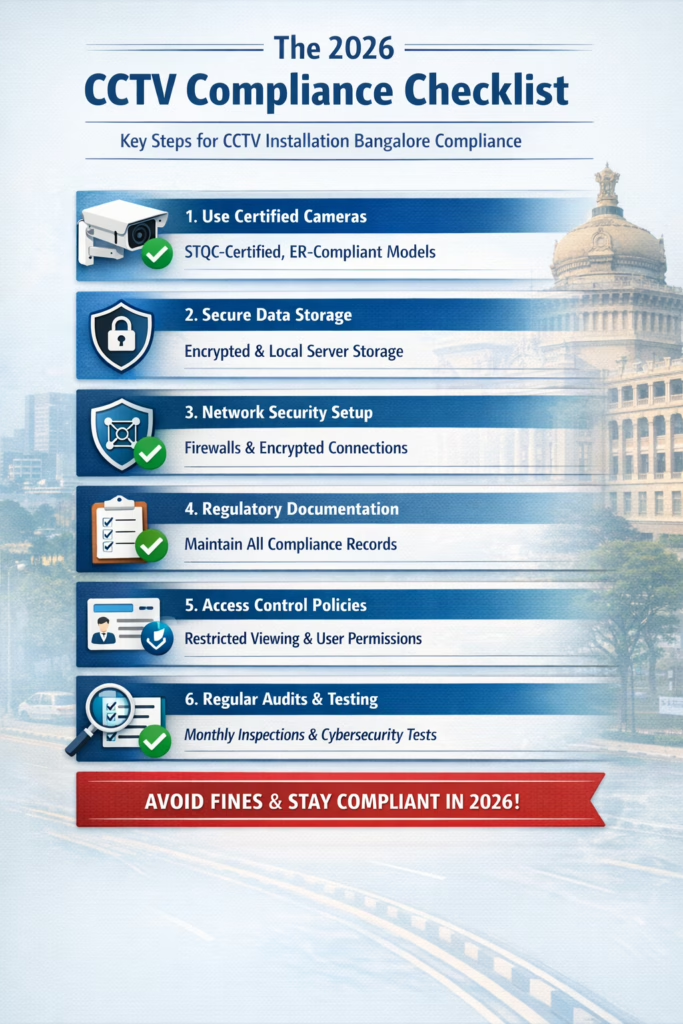
The 2026 CCTV Compliance Checklist (Step-by-Step)
How to Ensure CCTV Installation Compliance in Bangalore (Step-by-Step)
Choose STQC-certified CCTV cameras only
Verify compliance with MeitY Essential Requirements (ER)
Replace default passwords with secure authentication
Design a closed and secure network (no open ports)
Implement encrypted video storage and access control
Use verified firmware from trusted OEMs
Work with a compliance-focused CCTV integrator
Following a structured approach to CCTV installation bangalore compliance ensures your system meets all certification, security, and legal requirements from day one.
1. Use Only STQC Certified Cameras
The first and most critical requirement:
✔ Cameras must be certified under STQC Certification for CCTV Cameras in India
This ensures:
No hidden backdoors
Secure firmware
Trusted hardware origin
Non-STQC cameras will be phased out under the CCTV ban policy.
❌ Default credentials still active ❌ Shared admin access
✔ Compliance requires:
Unique passwords for every device
Multi-level user roles
Periodic password rotation
4. Secure Network Architecture (No Open Ports)
Improper network setup is one of the biggest compliance violations.
✔ Best practices:
VLAN segmentation for CCTV network
No direct internet exposure
Firewall-restricted access
VPN-based remote viewing
5. Ensure Data Storage Compliance
CCTV footage is now considered sensitive data.
✔ You must define:
Storage location (local/NVR/cloud)
Retention period
Access logs
Backup policies
For enterprises, this aligns with broader data governance frameworks.
6. Verify OEM & Firmware Integrity
Compliance isn’t just about the camera—it’s about the ecosystem.
✔ Ensure:
Firmware is signed and verified
Regular updates are available
OEM is authorized for Indian compliance
Cheap imports without traceability = compliance risk
7. Work with a Compliance-Aware Integrator
This is where most projects fail.
A typical installer focuses on:
Camera placement
Cabling
Cost reduction
A compliance-focused integrator (like Yendra) ensures:
Regulation alignment
Documentation readiness
Future-proof system design
Common Non-Compliance Mistakes in Bangalore
Most failures in CCTV installation bangalore compliance occur due to poor vendor selection, non-certified hardware, and lack of system design expertise.
From real-world projects, here’s what goes wrong:
Installing non-STQC cameras to save cost
Ignoring firmware updates
Using open cloud storage without encryption
No audit trail for footage access
Poor documentation
These mistakes often lead to complete system reinstallation.
Compliant vs Non-Compliant CCTV Systems
Factor
Compliant System
Non-Compliant System
Certification
STQC Certified
No certification
Security
Encrypted & secure
Vulnerable
Firmware
Verified & updated
Unknown source
Network
Protected
Open access
Legal Status
Approved
Risk of ban
Understanding the difference is key, as CCTV installation bangalore compliance directly impacts system reliability, data security, and legal validity.
How Yendra Designs Compliance-Ready CCTV Systems
At Yendra, every project is engineered with CCTV installation bangalore compliance at its core, ensuring audit-ready, secure, and future-proof surveillance systems.
At Yendra Techno Solutions, compliance is integrated at the design stage, not as an afterthought.
Our Approach:
Requirement Mapping
Industry-specific compliance needs
Risk assessment
Certified Hardware Selection
Only STQC-aligned OEMs
Verified supply chain
Secure Architecture Design
Network isolation
Controlled access layers
Documentation & Audit Readiness
Compliance reports
Configuration logs
Future-Proofing
Upgrade-ready systems aligned with evolving policies
🧠 Expert Insight from Yendra
Most CCTV failures in Bangalore are not due to camera quality—but due to non-compliant system design.
A compliant system is:
Designed with regulation in mind
Built with certified components
Secured at network and firmware level
This is where professional system architecture makes the difference.
If your system records people, assets, or operations—you must comply.
Cost of Non-Compliance in 2026
What is the cost of non-compliance for CCTV systems in Bangalore (2026)?
The cost of non-compliance includes legal penalties, forced system replacement, loss of contracts, cybersecurity risks, and insurance claim rejection. Businesses may end up paying 2–4 times more than the initial compliant installation cost.
In 2026, non-compliant CCTV installations in Bangalore can lead to legal penalties, forced system replacement, operational disruption, and security failure risks. Businesses using non-STQC or non-ER compliant cameras risk government action, tender disqualification, and data vulnerability exposure, making compliance a critical investment rather than an optional upgrade.
Why Non-Compliance Is Expensive in 2026
1. Regulatory Penalties & Legal Risk With stricter enforcement of MeitY guidelines, installing non-compliant CCTV systems can result in:
Fines and notices from regulatory authorities
Mandatory removal of non-compliant equipment
Legal liability in case of surveillance misuse or data breaches
Impact: Immediate financial loss + reputational damage
2. Full System Replacement Cost Non-STQC cameras are increasingly being phased out. If your system fails compliance:
Entire infrastructure may need replacement (not just cameras)
Rewiring, storage, and integration costs add up
Downtime during replacement disrupts operations
Impact: 2x–4x higher cost than installing compliant systems initially
3. Tender & Contract Disqualification For businesses working with:
Government projects
IT parks / SEZs
Large enterprises
Non-compliance leads to:
Immediate disqualification from bids
Loss of high-value contracts
Impact: Lost revenue opportunities outweigh installation savings
4. Data Security & Cyber Risk Exposure Non-ER compliant CCTV systems often:
Transmit data to foreign servers
Lack firmware integrity and encryption
Are vulnerable to hacking or unauthorized access
Impact:
Risk of surveillance leaks
Potential violations under data protection laws
Long-term liability exposure
5. Insurance & Liability Issues In case of incidents:
Insurance claims may be rejected if CCTV is non-compliant
Footage may not be admissible in legal proceedings
Impact: Zero protection when it matters most
Real-World Insight
From a system design perspective, most failures in Bangalore are not due to camera quality—but compliance gaps in procurement and architecture. Businesses often:
Choose low-cost imports without certification
Ignore firmware validation
Overlook network security layers
This results in systems that fail audits, fail security tests, and fail when incidents occur..
Bottom Line
In 2026, the cost of non-compliance is not just financial—it’s operational, legal, and strategic.
Investing in STQC-certified, ER-compliant CCTV systems from day one is significantly cheaper than fixing a non-compliant system later.
Yes. Under MeitY CCTV Guidelines India 2026, non-compliant CCTV systems may be banned or replaced.
STQC Certification for CCTV Cameras in India ensures cameras meet security and safety standards defined by the Indian government.
Only if they meet compliance requirements. Most legacy systems will require upgrades or replacement.
You may face legal risks, forced replacement, or security vulnerabilities.
Work with certified integrators, use compliant hardware, and follow a structured compliance checklist.
CCTV installation compliance means following MeitY CCTV Guidelines India 2026, including using STQC Certification for CCTV Cameras in India-approved cameras and secure system architecture.
Yes. Non-compliant systems may be restricted or replaced under MeitY enforcement policies.
Conclusion: Compliance Is the New Standard
CCTV installation in Bangalore in 2026 must comply with the MeitY CCTV Guidelines India 2026, requiring STQC Certification for CCTV Cameras in India, secure firmware, encrypted storage, and protected networks. Businesses that ignore compliance risk system bans, legal issues, and security failures.
The CCTV industry in India is undergoing a structural shift.
With MeitY CCTV Guidelines India 2026, surveillance is no longer just about visibility—it’s about security, trust, and accountability.
If you’re planning a CCTV installation in Bangalore, the right question is not:
❌ “Which camera is cheapest?” ✔ “Is my system compliant, secure, and future-ready?”
Need a compliance-ready CCTV system in Bangalore?
Yendra Techno Solutions helps businesses design and deploy fully compliant, audit-ready surveillance systems aligned with 2026 regulations.