CCTV Ban in India: April 2026 Crackdown on Chinese Surveillance Giants Explained
Summary
India to restrict sale of certain CCTV brands from April 1, 2026
Major brands impacted
Not a direct “ban” — but a compliance restriction
Government tightening cybersecurity norms
Primary reason: National security concerns
Deadline enforcement begins April 2026
Impact on market dynamics
Expected price increase
No immediate ban on existing users
Businesses face higher compliance pressure
China has reacted negatively to India’s move
Opportunity for Indian ecosystem
Bottom Line
👉 The CCTV Ban in India is essentially a compliance-driven market reset 👉 Non-certified (especially Chinese-origin) cameras are being phased out 👉 Future of surveillance in India = secure, certified, and locally aligned systems
Introduction
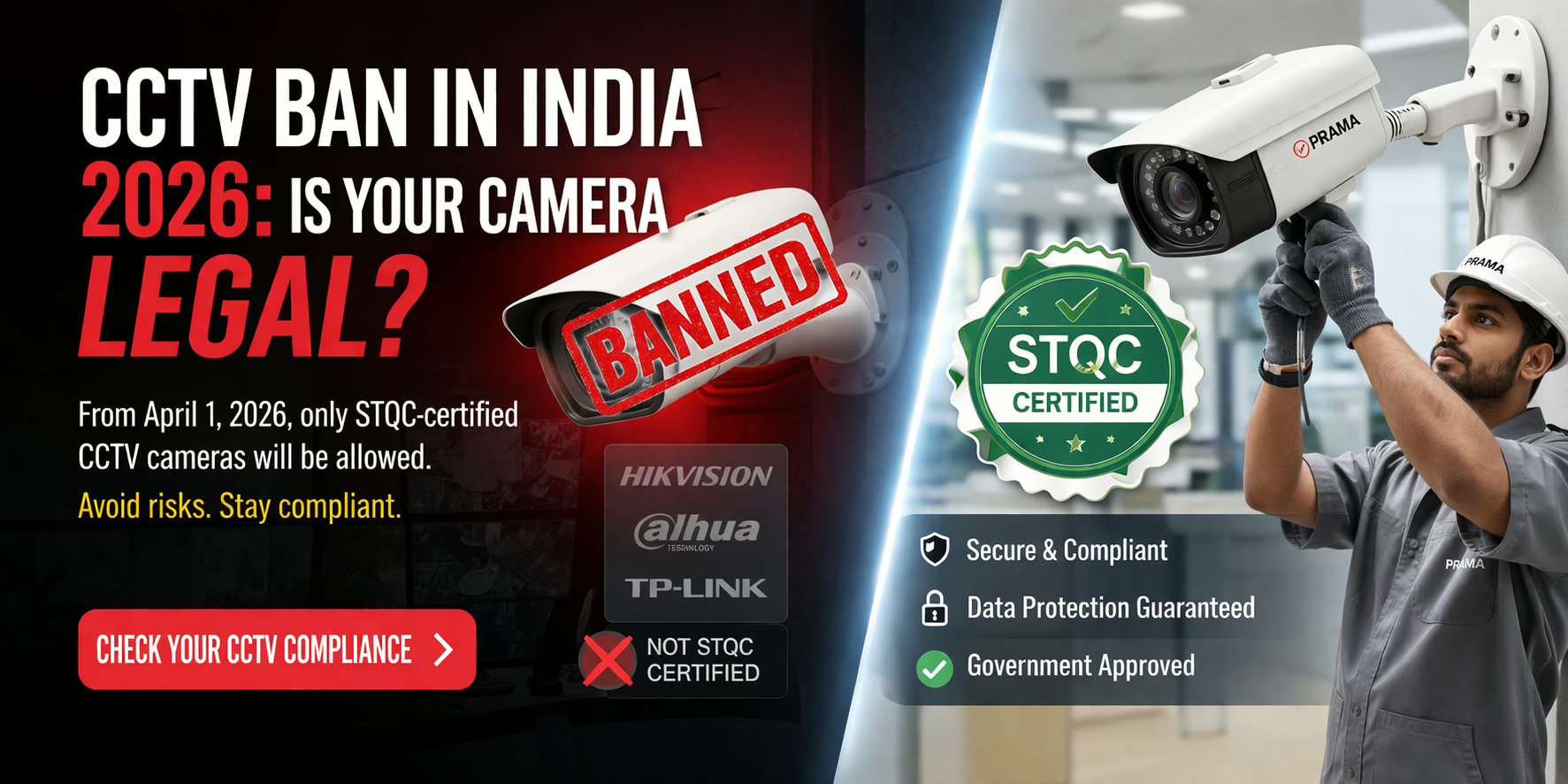
India’s surveillance industry is undergoing its biggest transformation yet. In a decisive regulatory move, the government has effectively triggered a CCTV Ban in India targeting non-compliant and Chinese-origin surveillance equipment starting April 1, 2026.
Over the past week, multiple reports from leading publications confirm that brands like Hikvision, Dahua, and TP-Link are being pushed out of the Indian market—not through a direct “ban law,” but via strict certification denial under new cybersecurity and compliance norms.
No. Only non-certified CCTV cameras are banned from sale.
Brands like Hikvision, Dahua, and TP-Link are effectively restricted due to certification issues.
It is a government certification ensuring:
Cybersecurity compliance
Hardware and firmware verification
Yes. Existing systems are not banned, but upgrading is recommended.
Yes, by 15–20% initially, due to supply chain shifts.
Yes. Many now offer:
Certified systems
Secure firmware
Better compliance
You may face:
Legal issues (in business setups)
Compliance failures
Security risks
Final Thoughts
The CCTV Ban in India marks a turning point in the country’s surveillance ecosystem. What appears as a restriction is actually a strategic shift toward secure, transparent, and locally controlled surveillance infrastructure.
For businesses and homeowners, this is not just about compliance—it’s about future-proofing security systems against cyber threats and regulatory risks.
The message is clear:
👉 Non-compliant CCTV is no longer an option in India.
Stay Compliant. Stay Secure. Upgrade Your CCTV Before It’s Too Late
The CCTV Ban in India is not just a regulation—it’s a deadline that directly impacts your security system’s legality and reliability.
If your current CCTV system is:
Non-STQC certified
Installed before 2024
Using unknown or imported firmware
👉 You may already be at compliance risk.et a Free CCTV Compliance Check in Bangalore
Yendra Techno Solution helps homeowners, offices, and industries transition to fully compliant, STQC-certified CCTV systems—without confusion or hidden risks.