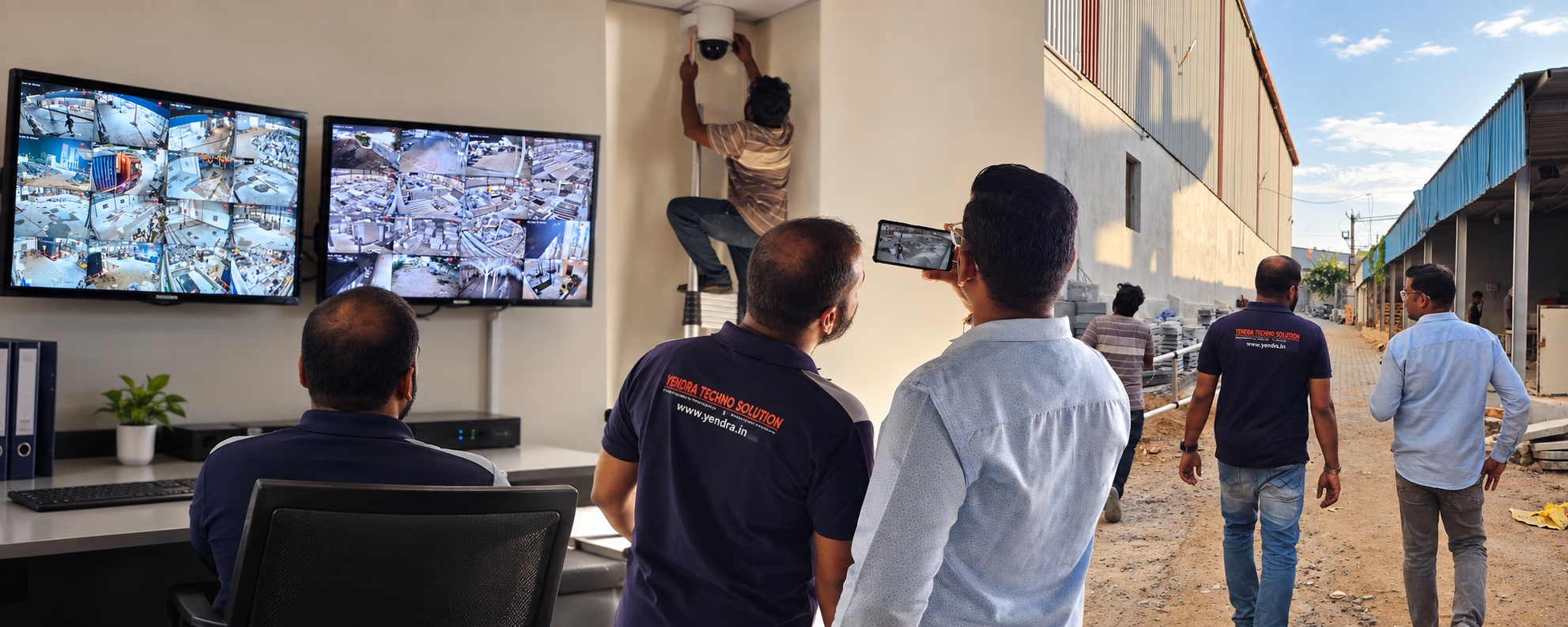
 01
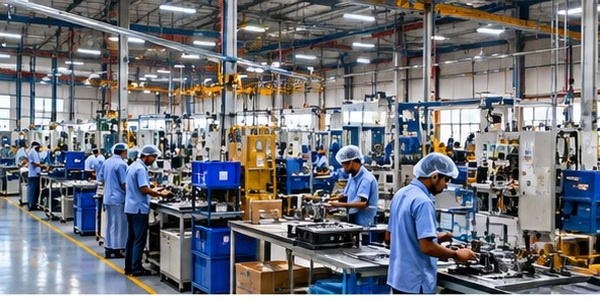
01Production Areas
Monitor production activity, movement and operational areas where visibility is important.
- Production activity
- People & material movement
- Operational visibility




Plan the right cameras, coverage and system for your factory.
Looking at complete factory security?
Factory & Industrial Security arrow_forward
Start with the question that matters to you.
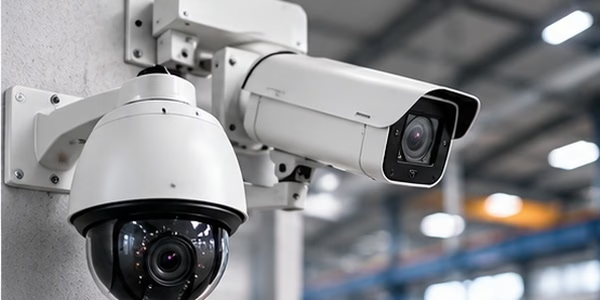
Understand which camera types suit production areas, warehouses, gates, yards and perimeter zones.
Explore Cameras arrow_forward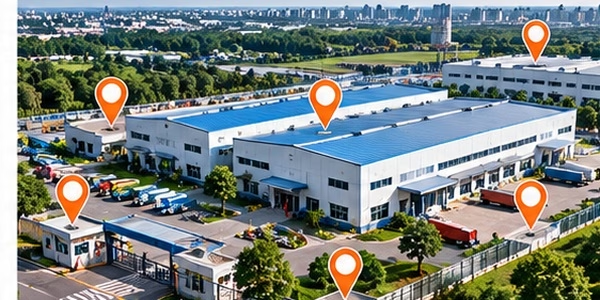
See the factory areas that typically require CCTV coverage and what each area needs to achieve.
Explore Coverage arrow_forward
Understand what determines camera count instead of relying on a simple cameras-per-square-foot formula.
Understand Camera Planning arrow_forward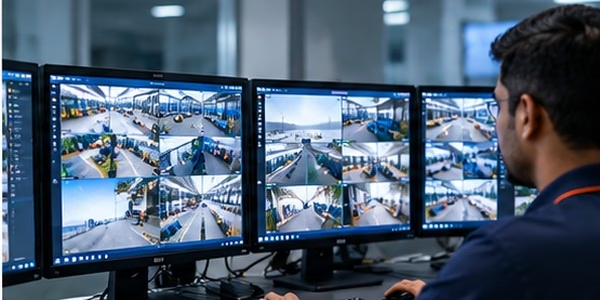
See how cameras, networking, recording, storage and monitoring work together.
Explore the System arrow_forward
Understand the factors that influence the cost of a factory CCTV system.
Understand Cost arrow_forward
Follow the process from factory site assessment to coverage validation.
See the Design Process arrow_forwardswipe Swipe to see all six
Factory CCTV is a surveillance system designed to provide visibility across the areas of a manufacturing facility that matter for security, operations and monitoring. Depending on the facility, this can include production areas, warehouses, gates, loading zones, yards, perimeter areas and restricted spaces.
The right system depends on what needs to be seen, from what distance, under what lighting conditions and whether the requirement is general monitoring, identification, detection or recording.
 Production
 Warehouse
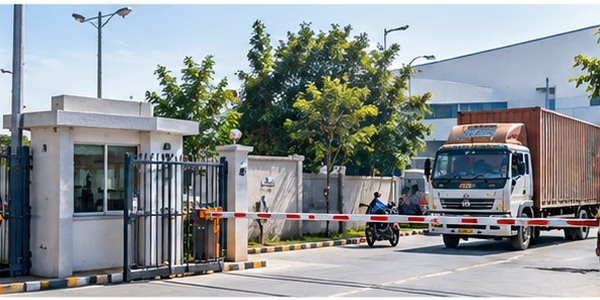 Entry / Exit
 Loading & Dispatch
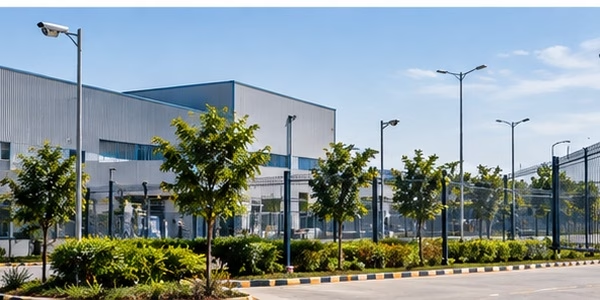 Yard & Perimeter
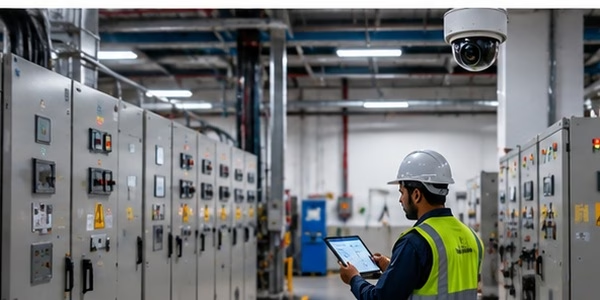 Critical Areas
Factory CCTV should be designed around the facility and its requirements — not simply around the number of cameras.
CCTV planning starts with the zones your factory needs to monitor.
01Monitor production activity, movement and operational areas where visibility is important.
 02
02Cover storage areas, aisles, loading points and movement of materials.
 03
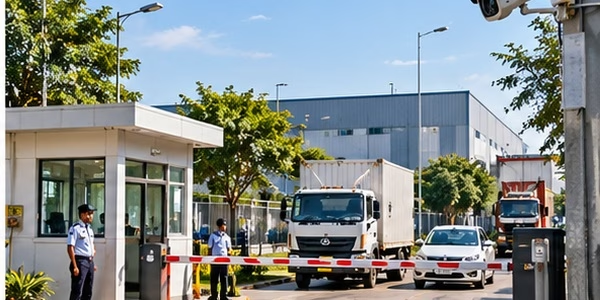
03Monitor people, vehicles and movement through access points.
04Monitor receiving, loading and dispatch activities where people, vehicles and materials interact.
 05
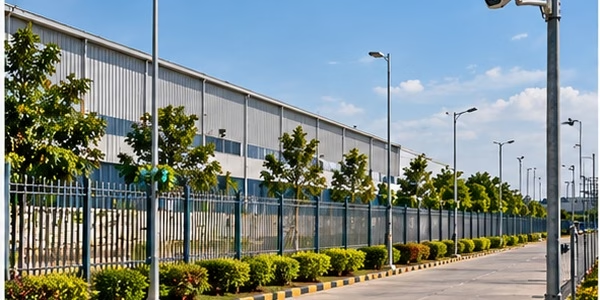
05Cover outdoor areas, boundaries, vehicle movement and approaches to the facility.
 06
06Protect areas where access needs closer monitoring, such as control rooms, server rooms or restricted operational zones.
swipe Swipe to see all zones
Not every zone requires the same camera type or level of coverage. The objective is to achieve the visibility required for that particular area.
Not sure what your factory needs covered?
Plan My Factory CCTV Coverage arrow_forwardThe right camera depends on the area, distance, lighting and purpose.
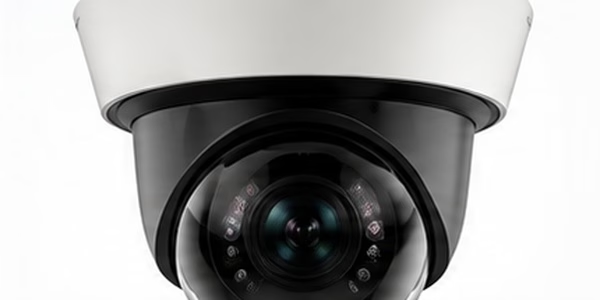
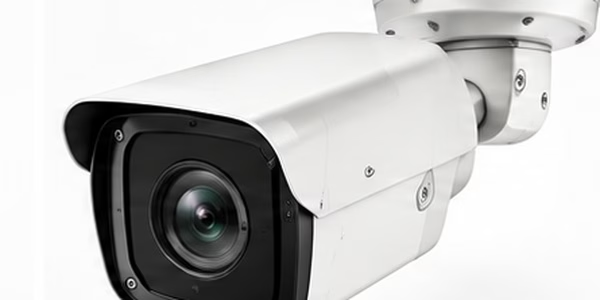
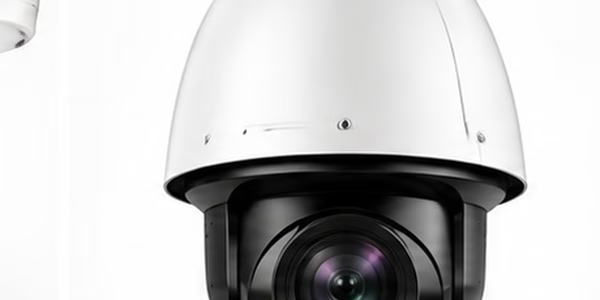
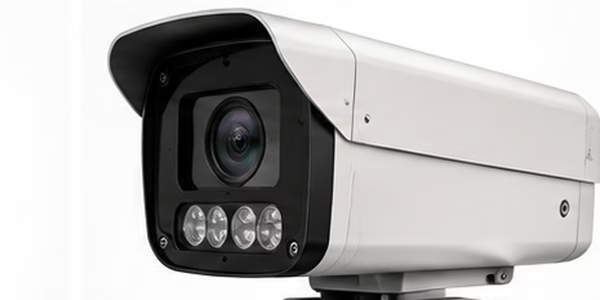
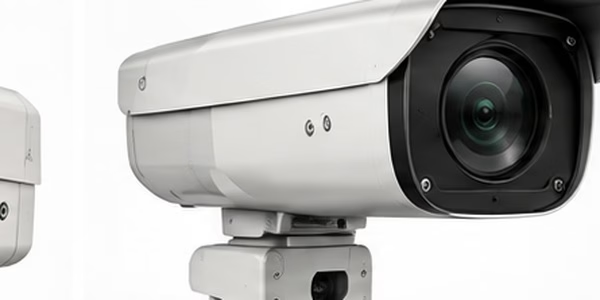
swipe Swipe camera types
Not sure which cameras suit your factory?
Discuss My Camera Requirements arrow_forwardCamera count depends on your facility, not floor area alone.
There is no reliable "one camera per X square feet" formula for factory CCTV.
Buildings, floors, corridors, open yards and separated production units.
Production, warehouse, gates, perimeter, loading and critical areas.
How far the camera needs to see and the level of detail required.
General monitoring, detection or identification.
Whether planned positions leave areas that can't be adequately viewed.
Based on your facility and its objectives — not a formula.
Two factories of similar size can require very different CCTV systems.
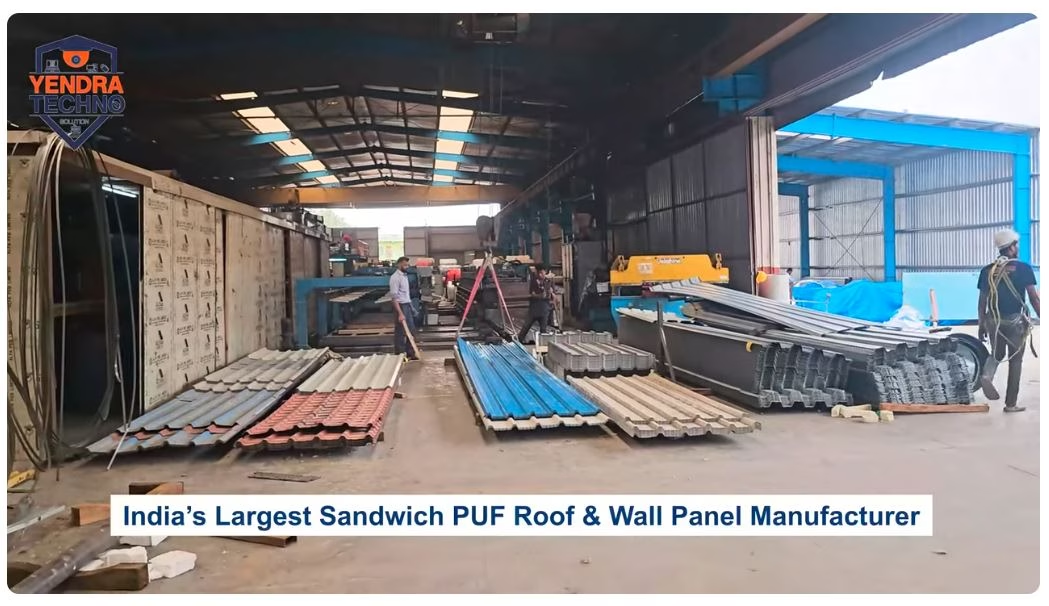 49 Cameras
49-camera IP CCTV deployment · Manufacturing
32 Cameras32-camera deployment · Shoolagiri, Tamil Nadu
Find out what your factory requires
Request a Factory CCTV Assessment arrow_forwardCameras are one part — recording, storage, network and power complete it.
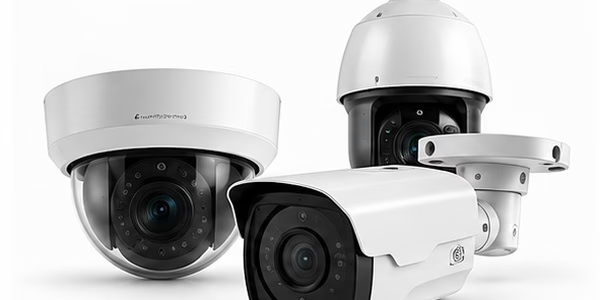
Capture video from the required locations.
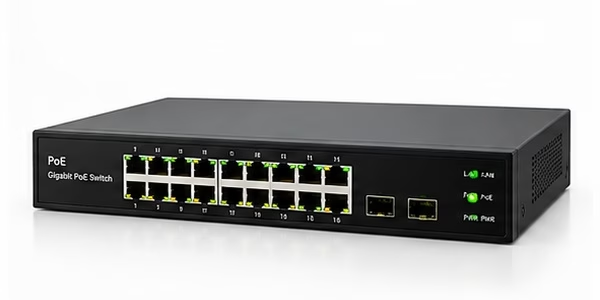
Connect cameras and transport video/data across the facility.
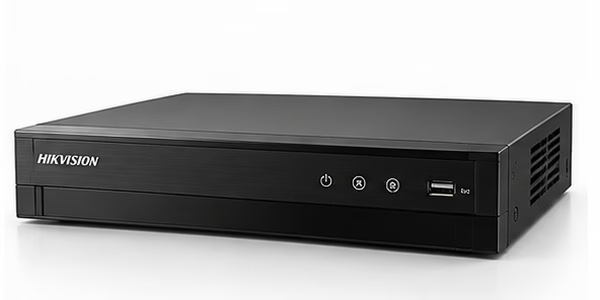
Manage cameras and recording.
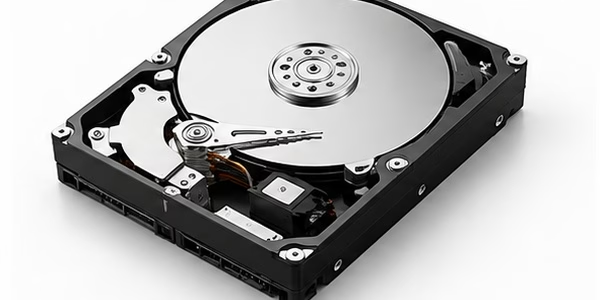
Retain footage for the required period.
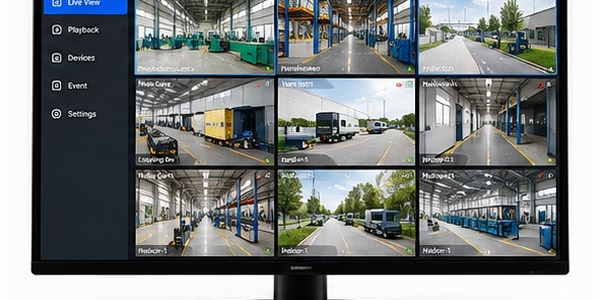
Local and/or remote access to live and recorded footage.
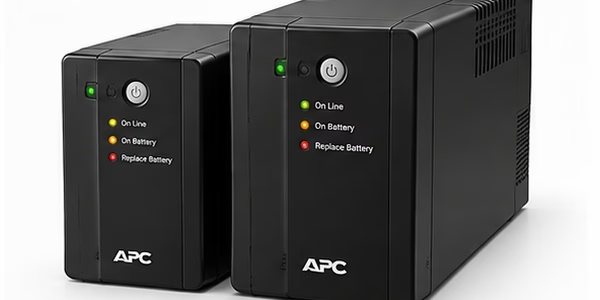
Supports system availability and protects critical equipment.
swipe Swipe through the system
For larger or multi-building factories, network design becomes an important part of CCTV planning.
Planning the infrastructure behind your cameras?
Discuss My CCTV System Requirements arrow_forwardGood design starts with the facility, not a camera package.
Understand the facility, buildings, access points, operational areas and existing infrastructure.
Identify areas requiring monitoring, detection or identification.
Match camera type and specifications to each zone.
Plan cabling, PoE, network connectivity, recording and storage requirements.
Check camera views, blind spots and whether the planned system achieves the intended coverage.
The result should be a CCTV design that fits the factory's actual environment rather than a standard camera package.
See how Yendra handles factory CCTV installation arrow_forwardCost follows the system your facility needs, not just camera count.
More coverage zones generally mean more cameras and infrastructure.
Distance and purpose may need different camera capabilities.
Resolution, camera count and retention period drive storage.
Distance, routing and existing infrastructure affect effort.
Large or distributed sites may need extra networking.
Height, access, multiple buildings and operations matter.
Detection and analytics can change system requirements.
Get an accurate estimate for your facility.
Get a Factory-Specific CCTV AssessmentTwo factories of the same size can have very different CCTV costs.
How real industrial sites were covered.
49 CamerasPre-engineered building manufacturing facility
32 CamerasGranite processing & export unit · Shoolagiri, Tamil Nadu
Go deeper on the topic that matches your need.
Camera types, viewing distances, night vision, AI cameras and ANPR.
The infrastructure behind a reliable industrial CCTV system.
Remote monitoring, alerts and intelligent video capabilities.
See what happens when a factory CCTV project moves from planning to implementation.
Factory CCTV Installation Bangalore arrow_forwardQuick answers to common factory CCTV questions.
Factory CCTV is a surveillance system planned around a manufacturing facility's layout, activities and security-critical zones. It typically covers production areas, warehouses, gates, loading bays, yards, perimeters and restricted spaces, and includes cameras, networking, recording and monitoring.
There is no single best camera. The right choice depends on the zone, viewing distance, lighting, mounting position and purpose — turret/dome cameras often suit indoor areas, bullet and ANPR cameras suit gates, PTZ cameras suit large yards, and AI-enabled cameras suit detection needs.
Camera count is determined by the factory layout, the areas requiring coverage, viewing distance, identification requirements and blind-spot analysis — not by floor area alone.
How camera requirements are planned arrow_forwardDepending on requirements: production areas, warehouse and storage, entry and exit gates, loading and dispatch, yard and perimeter, and critical or restricted areas such as control and server rooms.
Cameras, PoE and network infrastructure, an NVR or VMS for recording and management, storage, power backup (UPS) and monitoring — local and/or remote.
Storage depends on the number of cameras, resolution, compression, recording mode (continuous or event-based) and how long footage must be retained.
CCTV Storage GuideYes — remote viewing of live and recorded footage is possible, subject to the system design, internet connectivity and a secure network configuration.
Yes, depending on the use case and compatible equipment — for example intrusion detection, people and vehicle detection, or alerts for restricted zones.
AI CCTV GuideIt depends on cable distances, building layout, network architecture and existing infrastructure. Network cabling with PoE is common within buildings, while longer or inter-building links may need fibre or additional network equipment.
Cost depends on camera count, camera types, storage, cabling, network infrastructure, installation complexity and any AI or analytics — so a site-specific assessment gives a far more reliable figure than a generic price.
What determines the cost arrow_forwardYes, depending on the existing cameras, cabling, NVR/VMS, network infrastructure and compatibility with newer equipment.
Facility assessment → coverage requirements → camera positions → infrastructure planning → system recommendation.
Factory CCTV Installation Process arrow_forwardA site assessment turns your questions into a practical CCTV plan.
We understand your facility first
Zones, camera positions and blind spots
Cameras, network, storage and monitoring